Wooden chopping board OEM programs usually start at 500 to 1,000 pieces per design, with lead times of 30 to 60 days after sample approval. The first decision is not the handle or the logo — it is the wood type, because the wood determines the board’s hardness, water resistance, price point, and how well it survives shipping to your market.
Importers come to us with three questions: which wood sells best, what finish is food safe, and what MOQ a factory will actually accept. This guide answers all three, using the questions we hear from retail buyers and brand owners every month.
Why wood type decides your product story
Cutting boards are one of the most tactile kitchenware products. Customers feel the surface before they read the label. Harder woods show fewer knife marks, denser grains resist moisture better, and lighter woods are easier to keep looking clean. The wood you choose also drives the price tier: a walnut board can sell for two to three times a bamboo board at retail, and your cost follows the same curve.
For an OEM program, the wood type also affects what your supplier can do with edges, juice grooves, handles, and engraving. Some woods cut cleanly; others split at thin points. Confirm the wood before you design the shape, not after.
Wood types compared
| Wood | Hardness | Water resistance | Typical price tier | Best for |
|---|---|---|---|---|
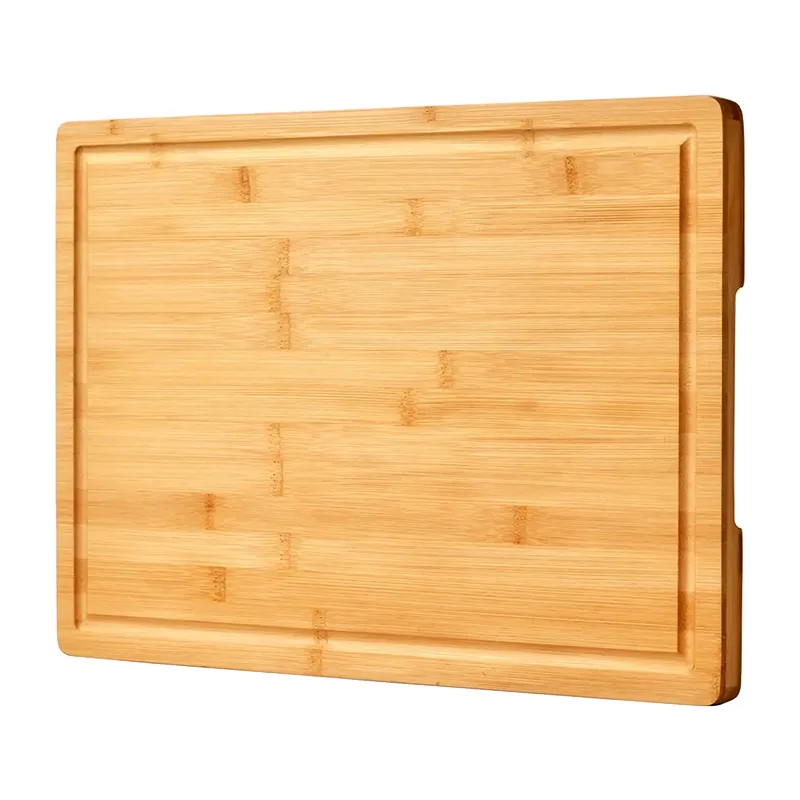
| Bamboo | Medium-hard | Good when sealed | Entry | Budget retail, eco positioning, light chopping |
| Beech | Hard | Moderate | Entry to mid | European-style kitchen boards, butchers |
| Maple | Hard | Good | Mid | End-grain boards, commercial kitchens |
| Rubberwood | Medium | Moderate | Entry to mid | Flat boards, serving boards |
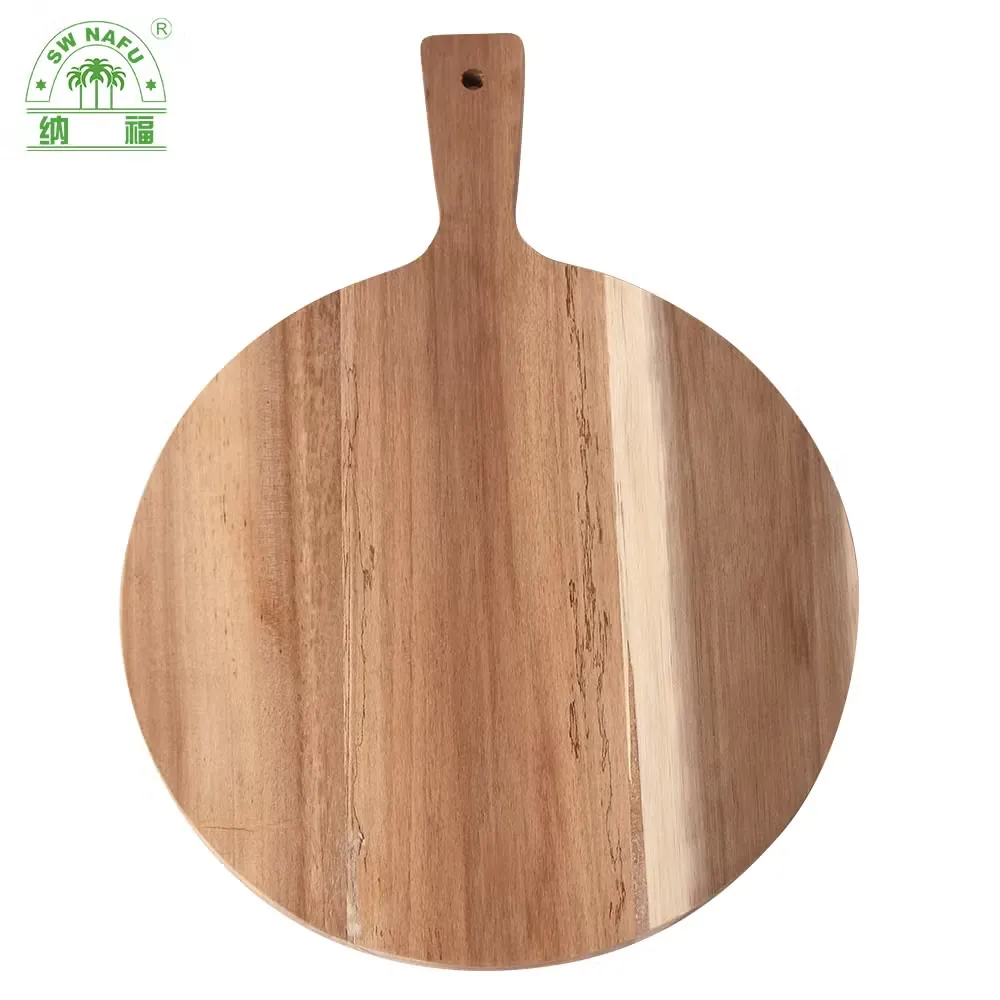
| Acacia | Hard | Good | Mid | Serving boards, charcuterie, gifts |
| Walnut | Hard | Good | Premium | Gift sets, high-end retail, branded lines |
These are general tendencies, not fixed rules. Wood density and finishing vary between suppliers, so always test the actual sample rather than choosing from a chart alone.
Finishes and food-safety coatings
The finish protects the board and decides whether it is safe for direct food contact. Common options are:
- Mineral oil. The standard food-safe choice. It does not go rancid and is easy to reapply. Most wholesale boards ship with one or two oiled coats.
- Beeswax or wax blends. Often applied over oil for a smoother surface and better water beading. Check the blend for food-safety labelling.
- Food-safe lacquer or varnish. Used on boards that are mainly decorative or for light use. Confirm the coating is certified food contact, especially for EU or US retail.
Ask the supplier which finish is included in the price, how many coats, and whether the finish is applied before or after the logo is printed or engraved. A cheap board with a poor finish can develop hairline cracks within weeks of retail shelf life, which hurts your brand more than it saves money.
The OEM process step by step
| Stage | What happens | What you should receive |
|---|---|---|
| 1. Inquiry | Send target wood, size, quantity, and finish | Preliminary quote and MOQ confirmation |
| 2. Sample | Factory produces one or more samples | Sample, material spec, and finish details |
| 3. Specification lock | Agree exact dimensions, edge profile, engraving area | Approved drawing or CAD file |
| 4. Production | Bulk manufacturing and drying/moisture control | Production schedule and progress photos |
| 5. QC and inspection | Check moisture, dimensions, finish, and packaging | Inspection report or third-party report |
| 6. Packing and shipping | Retail-ready or bulk packing per your spec | Packing list and shipping documents |
MOQ and lead times: what to expect
MOQ is the question importers get wrong most often. For a simple flat bamboo board, a factory may accept 500 pieces. For a walnut board with custom engraving and retail packaging, expect 1,000 to 2,000 pieces per design. The MOQ depends on the wood cost, the machining steps, and whether the factory already produces that board shape for other buyers.
Lead times are usually 30 to 60 days after sample approval, plus shipping. Sample production itself takes 7 to 15 days, and a good factory will charge for the sample or refund it against the bulk order. Confirm the moisture content spec in the technical sheet, because boards shipped with high moisture can warp in a container or crack in a heated warehouse.
Common mistakes when sourcing cutting boards
- Choosing wood by photo. The same “walnut” can look very different after finishing. Judge the sample, not the catalogue.
- Ignoring moisture control. Ask about drying and moisture testing before packing. This prevents the most common container-quality claim.
- Assuming the logo is included. Engraving and printing have separate costs and minimums. Confirm the branding process and its MOQ.
- Skipping packaging approval. A retail-ready board needs a printed carton or hang tag design. Get packaging samples with the board sample.
FAQ
What is the typical MOQ for wooden chopping board OEM?
It varies by wood and design. Simple flat boards may start around 500 pieces per design, while premium or engraved boards usually require 1,000 to 2,000 pieces. Confirm the MOQ for your exact specification before sampling.
Which wood is best for an entry-level retail board?
Bamboo and rubberwood are common entry-level choices because they are affordable and available in large volume. Beech is another good option for European retail programmes. Test the sample to confirm hardness and finish quality.
Is mineral oil safe for food contact on cutting boards?
Food-grade mineral oil is widely used on wooden boards and is considered safe for food contact. Confirm the specific oil or wax blend used by your supplier and ask for the food-safety label or declaration.
How long does a wooden cutting board sample take?
Sample production usually takes 7 to 15 days depending on the wood type and finishing. Add courier time, and budget about three weeks for the full sample cycle.
Can I engrave my brand logo on a wooden chopping board?
Yes, laser engraving and printing are standard options. Confirm the minimum quantity for branding, the engraving area on the approved drawing, and whether the finish is applied before or after the logo is added.
Final recommendation
Start with a two-piece sample order: one board in your preferred wood and one alternative wood at a different price point. That gives you a real feel for the product and a fallback if the first option disappoints in testing.
If you are planning a tableware or cutting board line, tell us the wood, target quantity, and branding plan. Our sourcing team can match you with a production line that fits your MOQ.
Request a quote for wooden chopping board OEM or send your specification for a first-round price.