US brands order OEM kitchen knives from Chinese factories in two ways: stock designs with your logo stamped on the blade, or fully custom knives built to your specification. In both cases the three numbers that decide whether the program works are the steel grade, the MOQ, and the lead time. Get those right before sampling and the rest of the project usually moves smoothly.
This guide is written for buyers who import kitchenware products under their own brand. It covers the steel grades US retailers actually ask for, realistic MOQ expectations, how long each stage of an order takes, and the questions that separate a serious factory from a broker with a catalogue.
What “kitchen knife OEM” means in practice
OEM knife production ranges from simple logo engraving to a completely new blade design. A US importer typically starts with a factory catalogue knife, requests a handle or blade modification, and adds branding. That path keeps tooling costs low and shortens the first order. A true custom program — new blade shape, new bolster, branded packaging — costs more in development and usually takes longer.
Your target price point decides which route is realistic. For a $10–15 retail knife, an existing blade with a branded handle and laser logo is the normal starting point. For a $40+ premium line, factories expect you to discuss blade geometry, steel, and heat treatment in detail.
Steel grades US buyers actually specify
Knife steel is described by Chinese factories with their own grade names and by western brands with German or Japanese equivalents. The same blade can be listed three different ways, so confirm the exact grade and chemical composition in writing.
| Grade | Common label | Hardness range (HRC) | Typical use |
|---|---|---|---|
| 3Cr13 (3Cr13MoV) | Budget stainless | 52–55 | Cheap sets, promotion knives; easy to sharpen, softer edge |
| 5Cr15MoV | Mid-range stainless | 55–57 | Common in mid-price sets; better edge retention than 3Cr13 |
| 8Cr13MoV | Near-AUS-8 | 57–59 | Popular with US private label brands for chef and santoku lines |
| 9Cr18MoV | High-carbon stainless | 58–60 | Premium lines, harder edge, more difficult to sharpen |
| X50CrMoV15 (1.4116) | German-type steel | 55–58 | Common in Solingen-style blades requested by European-style programs |
| VG-10 | Japanese-type steel | 60–61 | High-end blades; costs more and needs precise heat treatment |
Most US brands that sell in the $20–40 range choose 5Cr15MoV or 8Cr13MoV. The steel is familiar to factories, keeps costs predictable, and holds an edge long enough for typical home use. If you ask for VG-10 or a Japanese powder steel, confirm the factory actually runs that heat treatment — several factories quote it but only process it on a separate, higher-price line.
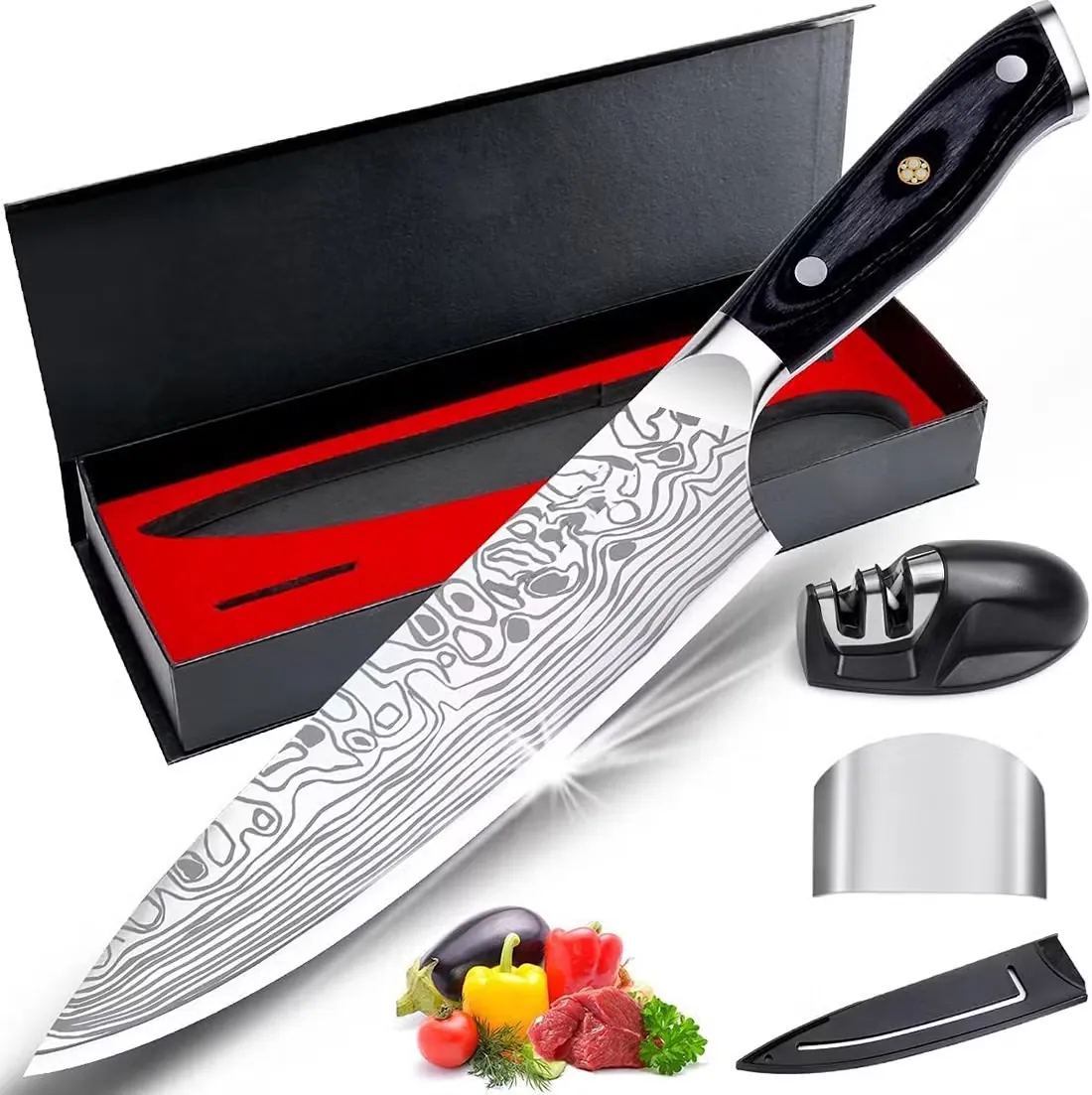
Hardness, edge retention and sharpening
Hardness is a trade-off, not a race. A 58 HRC blade keeps an edge longer but is harder to resharpen at home; a 53 HRC blade sharpens easily but loses its edge faster. US retailers usually sell to consumers, so the practical balance sits around 55–58 HRC. Ask the factory for the hardness range on the finished blade and, if possible, a small test batch so your team can verify edge behavior before the full order.
The edge angle matters too. Many Chinese factories grind chef knives at 20 degrees per side by default. European-style blades are often ground finer. Specify the angle in your RFQ rather than leaving it to the factory’s standard process.
MOQ: what factories expect
Knife MOQ depends on whether the item is a stock design or custom. For a stock knife with laser branding, 500–1,000 pieces per model is common. For a modified handle or new packaging, expect 1,000–3,000 pieces. A fully custom blade with new tooling usually starts around 3,000–5,000 pieces per model, and some factories ask for more because stamping and grinding dies are expensive.
| Program type | Typical MOQ | Development time | Notes |
|---|---|---|---|
| Stock design + laser logo | 500–1,000 pcs | 2–4 weeks | Fastest entry; confirm logo position and blade finish |
| Modified handle / packaging | 1,000–3,000 pcs | 4–6 weeks | Handle material and rivets affect price more than steel |
| Custom blade + new tooling | 3,000–5,000 pcs | 6–10 weeks | Tooling cost usually quoted separately |
| Knife set (multi-piece) | 1,000–2,000 sets | 5–8 weeks | Sets raise packaging cost; check the block or box sourcing |
These are typical ranges, not fixed rules. A factory with an existing export program may accept a smaller first order, especially if you commit to a repeat order. Ask directly: “What is the MOQ for this model with laser branding?” — the answer tells you whether the item is really produced in-house.
Lead times by order stage
A knife order is not one lead time but several. Sampling usually takes 1–3 weeks after you approve the specification. Production for 1,000–3,000 pieces commonly runs 25–40 days depending on factory load. Packaging and quality inspection add a few days, and sea freight to a US port adds roughly 20–35 days from departure.
In practice, plan 8–12 weeks from confirmed PO to goods on the water for a first order. Reorders of the same model are usually faster because the tooling and packaging are already set.
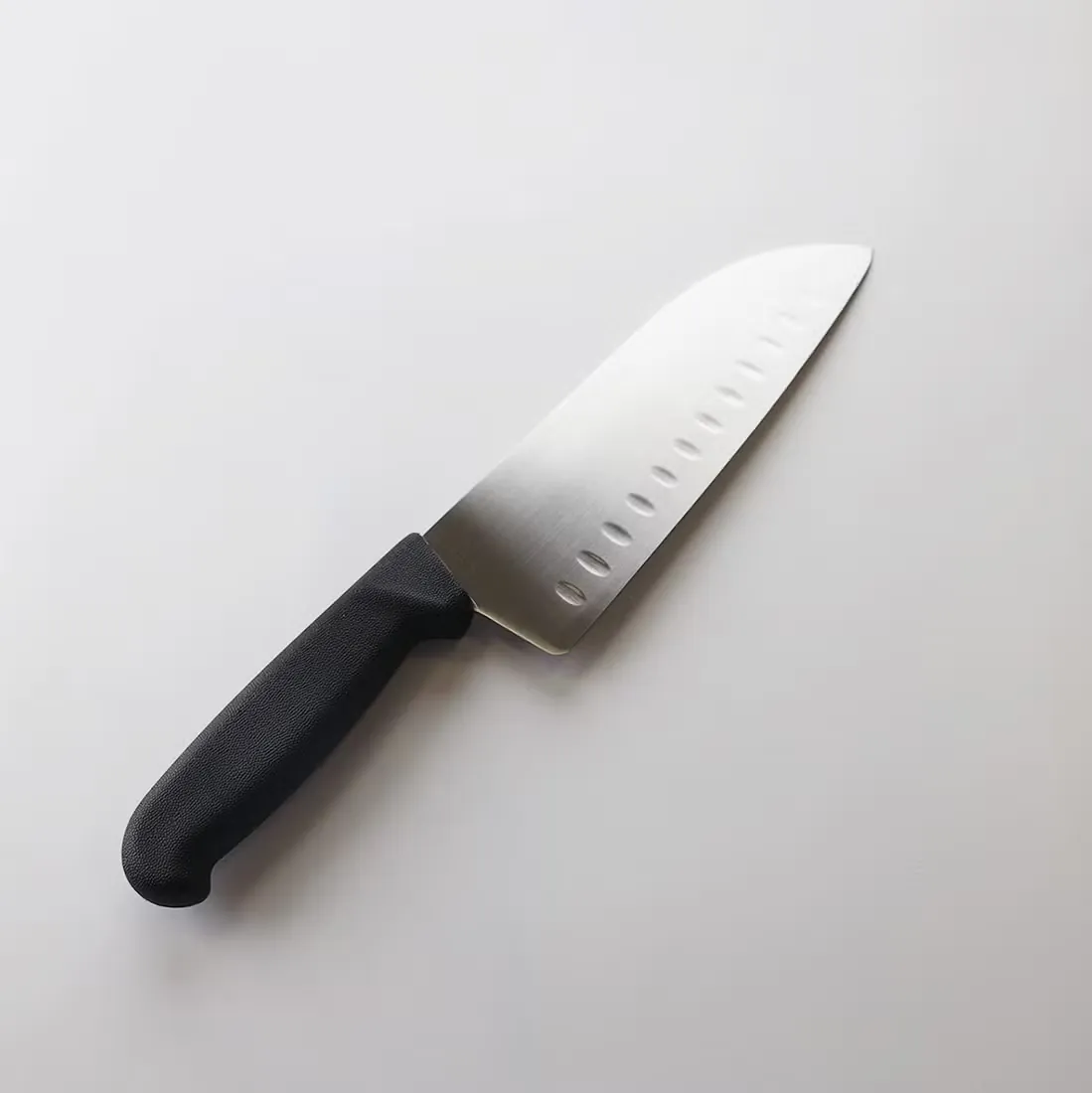
Handle, finish and packaging decisions
Handle materials change cost more than most buyers expect. ABS and PP handles keep the price low; wooden handles add a premium look but need a food-safe finish and better QC on seams. Stainless steel full-tang handles are heavier and more expensive, and they make the knife feel more solid — a common choice for stainless steel product lines.
Packaging is where US retail programs gain or lose margin. A simple cardboard sleeve is cheap but does not protect the blade in transit. Many brands use a plastic sheath plus a printed box, and some ask for eco-friendly pulp trays. Confirm the packaging cost per unit early; it can be 10–20% of the total item cost on low-priced knives.
What to send with your RFQ
A clear RFQ saves weeks of back-and-forth. Include: target price range, steel grade or hardness requirement, blade length and type (chef, santoku, utility), handle material, branding method (laser, etching, embossed), packaging type, target MOQ, and your delivery deadline. Add photos or a link to the catalogue item you have in mind.
If you do not know the steel grade yet, say “recommend a grade for a $X retail knife” and compare what two or three factories propose. The differences in their answers are often more informative than the samples.
How to check a sample
When the sample arrives, test it the way your end customer would. Cut through a dense vegetable, check the edge after repeated use, and inspect the handle-to-blade joint for gaps. Weigh the knife and confirm the blade thickness matches the spec sheet. Then check the branding: laser logos on cheap steel can fade or smear if the factory skipped the passivation step.
FAQ
What is the minimum order quantity for OEM kitchen knives?
For a stock knife with laser branding, MOQs usually start around 500–1,000 pieces per model. Modified handles or custom blades push the minimum to 1,000–5,000 pieces. Confirm the exact number with the factory for the specific model you want.
Which steel grade is best for a private label kitchen knife?
For most US retail programs, 5Cr15MoV or 8Cr13MoV offer the best balance of cost, edge retention and easy sharpening. Premium lines may use 9Cr18MoV or VG-10, but confirm the factory’s heat treatment process before paying the premium.
How long does a kitchen knife OEM order take?
Allow 8–12 weeks from confirmed PO to goods on the water for a first order: 1–3 weeks for samples, 25–40 days for production, then packing, inspection and freight. Reorders are usually faster.
Can I put my brand logo on a stock knife?
Yes. Laser etching is the most common and lowest-cost method. You can also use printed blades or embossed handles, but each method affects the minimum order and lead time, so specify the branding method in your RFQ.
Are kitchen knife samples free?
Some factories offer free samples for stock designs with freight paid by the buyer. Custom or engraved samples usually carry a small fee. Confirm the sample policy before ordering to avoid surprises.
Final recommendation
Start with a stock knife in 5Cr15MoV or 8Cr13MoV, add laser branding, and run a small trial order before committing to a custom blade. That sequence builds the supplier relationship with the least risk and gives you real sales data to justify a bigger program later.
If you are planning a kitchen knife line for the US market, tell us your target price range and retail channel, and our sourcing team will help you shortlist suitable OEM knife programs from verified production lines.
Request a quote for OEM kitchen knives or contact our sourcing team directly.