Choose a kitchenware supplier the way you would choose a co-founder: check what they have already shipped, not what they promise in the sales chat. The fastest way to filter suppliers is to ask for a list of similar export orders, a sample, and their QC process. If any of those three are missing from the conversation, the relationship will cost you later.
This guide walks through the seven checks that matter most for importers buying kitchenware products for the first time or switching suppliers. Use it before you send a deposit, and it will save you the expensive lessons that usually come after a bad first container.
Check 1: Factory type — manufacturer or trading company?
Both manufacturers and trading companies can deliver good product. The difference is control. A factory owns the machines, the steel stock and the QC line; a trading company coordinates those things across multiple factories. Trading companies are useful for mixed orders of many small items, but the price includes their margin and you depend on their relationship with the workshop.
Ask directly: “Are you the factory or a trading company?” Then verify with a video call, a factory address that matches the license, and photos of the production line. A manufacturer should show you the machines that make your product, not just a showroom.
Check 2: Category match
A supplier that makes stainless steel cookware may have no experience with silicone molds. The production processes, materials and QC checks are completely different. Ask what percentage of their output is in your exact category, and request references or photos of recent orders in that category.
Category match matters most for technical products: non-stick coatings, food-grade silicone, knife heat treatment, and anything with a safety requirement. For simple items like stainless steel mixing bowls, a general housewares factory is often fine.
Check 3: Sample quality
Order a sample before discussing price in detail. A good sample tells you more than a week of email negotiation. Check the sample against your spec sheet: material thickness, finish, weight, packaging, and any printed branding. Keep the sample and compare it with the production batch later.
Some suppliers send a “golden sample” — a hand-polished piece that the production line cannot reproduce. Ask for a random production sample or a photo from the packing line to see what the bulk order will really look like.
Check 4: Documentation
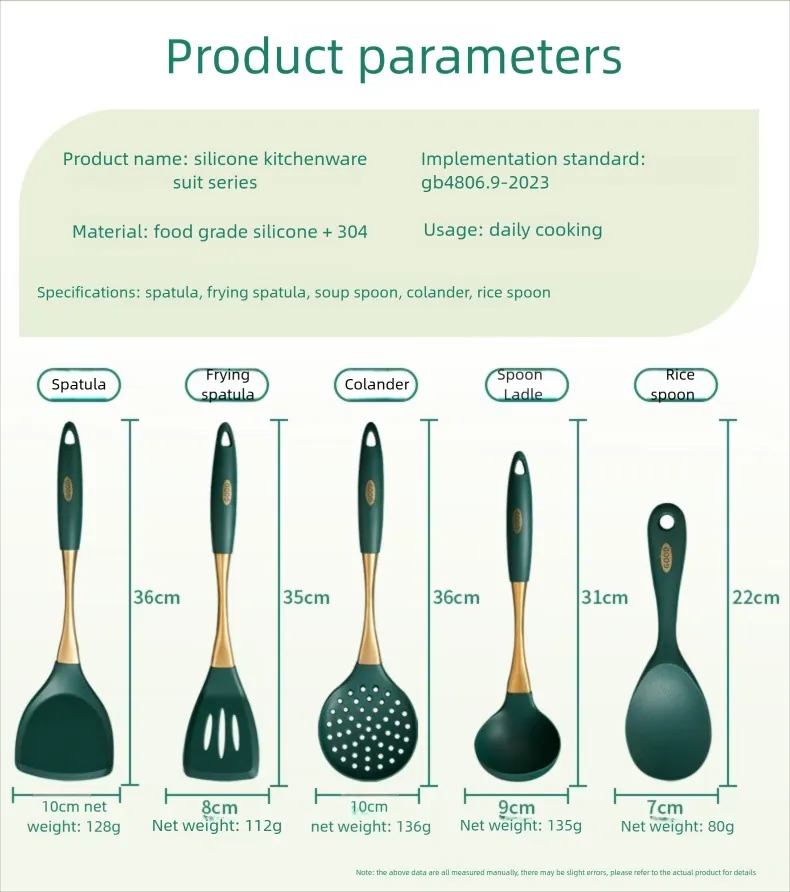
For kitchenware sold in the US and Europe, documentation is part of the product. Ask what the supplier can provide: material test reports, food-contact compliance documents, and inspection records. A supplier exporting to the EU or US regularly will have these ready without long delays.
If your target market needs specific certifications, list them in the RFQ and confirm the supplier can produce them from an accredited lab. Do not rely on a general statement like “we are FDA approved” — ask for the actual report or certificate number.
Check 5: MOQ and pricing structure
MOQ is not one number; it varies by item. A stock item may have a MOQ of 500 pieces, while a custom color or logo raises it to 1,000–2,000. Ask for the MOQ per item type and how it changes with customization.
| Order type | Typical MOQ | What affects it |
|---|---|---|
| Stock item, standard color | 500–1,000 pcs | Factory line setup and packing |
| Custom color or logo | 1,000–2,000 pcs | Color change and branding setup |
| Custom mold or tooling | 2,000–5,000 pcs | Tooling cost amortized per piece |
| Mixed container order | Negotiable | Often quoted per item with a total container minimum |
Ask for the price breakdown at your target quantity, including packaging and tooling. A low unit price with a high tooling charge may be more expensive than a higher unit price with no tooling. Compare total landed cost, not the headline number.
Check 6: QC process
Ask how the factory checks quality before shipping. Look for: incoming material inspection, in-process checks on the line, final random inspection (AQL), and whether they offer a pre-shipment inspection report. If they outsource final inspection to a third party, that is a good sign, not a weakness.
For your own protection, plan a pre-shipment inspection on the first two orders. The cost is small compared with a container of rejected goods.
Check 7: Communication and responsiveness
Slow or vague answers during the quotation stage predict slow production updates later. A supplier that answers specification questions with “no problem, we can do it” without asking details is usually not reading your requirements carefully.
Time zones matter. A supplier that replies within 24 hours and sends production photos when requested will keep your program on schedule. A supplier that disappears for a week at payment time is a risk you do not need.
Red flags to watch
- Unusually low price with no explanation of the cost difference.
- No factory address, or a residential address that does not match the license.
- Pressure to pay the full amount before sampling.
- No answer to questions about materials or certifications.
- A catalogue that covers every kitchenware category — a possible sign of a trading company presenting itself as a factory.
How to run a trial order
Start with a small order for one or two best-selling items rather than a full container of new products. Use the trial order to test quality, packaging, lead time and communication under real conditions. Measure everything against your checklist, then scale up.
FAQ
Should I work with a kitchenware manufacturer or a trading company?
Both can work. A manufacturer gives you more control over quality and price for a single product line; a trading company helps with mixed orders across categories. Verify whichever you choose with a video call, license check and samples.
How do I verify a kitchenware supplier is a real factory?
Ask for the business license, factory address and production photos, then do a video call. Cross-check the address and see the machines that make your product. A trading company can still be a good partner, but you should know which one you are dealing with.
What is a reasonable MOQ for kitchenware?
Stock items usually start around 500–1,000 pieces. Custom colors, logos or molds raise the MOQ to 1,000–5,000 pieces depending on the product. Confirm the MOQ per item type before negotiation.
Do I need a pre-shipment inspection?
For your first two orders, yes. A third-party pre-shipment inspection checks quantity, quality and packaging before the container leaves the factory. It is inexpensive compared with the cost of a bad shipment.
What documents should a kitchenware supplier provide?
Ask for material test reports, food-contact compliance documents for your target market, and inspection records. If your market needs specific certifications, request the actual report or certificate number, not a general claim.
Final recommendation
Shortlist three suppliers, order samples from each, and run a small trial order with the one that scores highest on documentation, QC process and communication. Price should be the tiebreaker, not the first filter.
If you want a shorter path, our sourcing team works with cookware products and other kitchenware categories from verified production lines. Tell us your target items and market, and we will help you evaluate the right supplier fit.
Contact our sourcing team to start the supplier evaluation.