Source kitchen utensils wholesale, and the material grade is the first thing to pin down, because it decides durability, food safety and price in one decision. Stainless steel 304 heads the list for commercial use, food-grade silicone works for heat-resistant tools, and nylon and wooden tools fill the budget and eco segments.
Utensils are a high-turnover kitchenware category: spoons, spatulas, ladles, tongs and turners move steadily through retail, hotel supply and promotional channels. The margins are attractive and the shipping cost is low, but the category also rewards buyers who know how to read a material spec, because cheap tools fail fast and generate complaints.
What sells in kitchen utensils wholesale
Most importers build their range from a core set of tools, then add sets and seasonal items:
- Turners and spatulas — the fastest-moving single items in most programs.
- Ladles, spoons and slotted spoons — staple kitchen tools for soups and sauces.
- Tongs and whisks — strong in both home and commercial supply.
- Set packages — 6 to 12-piece sets with a storage stand; higher order value per SKU.
- Chef and cooking tool kits — boxed sets for gifting and retail shelves.
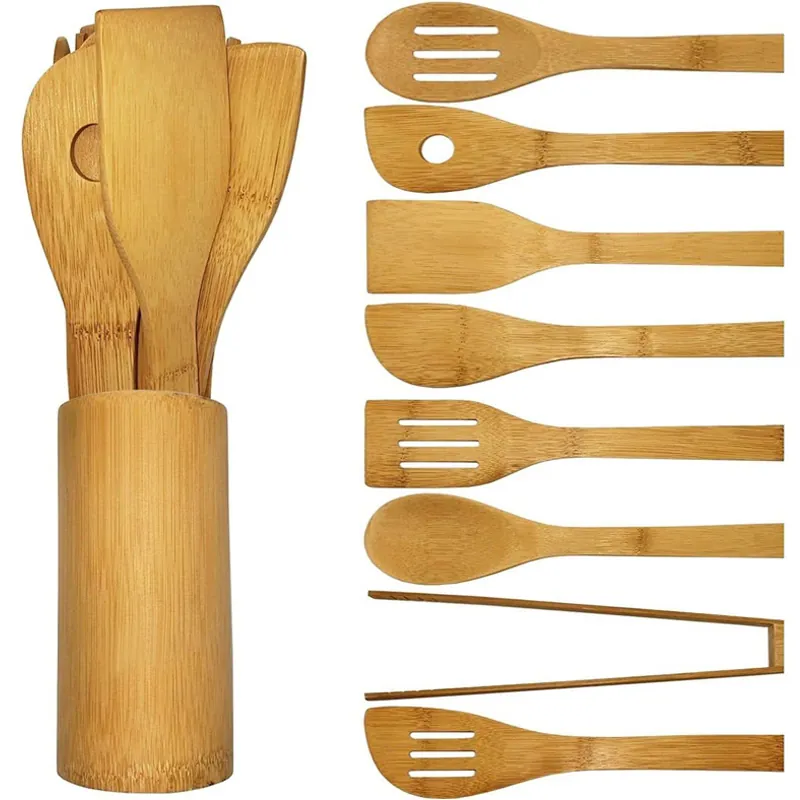
Sets sell fewer units but lift the average order value, which matters when freight is priced per cubic meter. Singles build volume but need more SKU management.
Material grades to know before you order
Each material family has a usable grade range, and the difference between grades shows up in the first year of use.
| Material | Common grades / variants | Typical use | What to confirm |
|---|---|---|---|
| Stainless steel | 201, 304, 410 | Slotted spoons, ladles, tongs | Grade and finish; 304 is common for food contact, 201 is lower cost |
| Silicone | Food-grade, with metal or nylon core | Spatulas, scrapers, basting brushes | Food-contact test report and temperature range |
| Nylon / PA | PA66, PA6 | Non-scratch tools for non-stick cookware | Heat resistance; some nylon melts on hot pans |
| Wood / bamboo | Natural, oiled, lacquered | Spoons, salad servers, eco lines | Finish safety and moisture resistance in storage |
| Metal + coating | Stainless with non-stick or colored coating | Budget sets and branded promotions | Coating durability and scratch resistance |
A common shorthand: if the product touches food and you cannot confirm the grade, ask the supplier to state it on the spec sheet. Buyers who order “stainless steel” without a grade often receive 201 or 410 and only discover it at QC.
How utensils are made and what it means for sourcing
Stamped stainless tools are cut from sheet steel, then bent, welded or riveted into shape. Cast or forged tools are heavier and less common in budget ranges. Silicone tools are molded around a nylon or steel core, which is why the core material matters almost as much as the silicone itself.
The production route affects your OEM options. If you plan to brand the tools, confirm whether the factory can apply your logo by stamping, engraving or printing, and ask for the minimum quantity per option. If you sell stock items only, standardizing on a small set of proven shapes keeps your warehouse simple.
Packaging formats for retail and bulk
Packaging changes both cost and shelf appeal, so decide the format before you ask for prices.
| Format | Best for | Trade-offs |
|---|---|---|
| Bulk carton | Hotel supply, distributors, commercial kitchens | Lowest cost; no shelf appeal |
| Polybag with header | Retail singles, promotions | Cheap, hanging display; less premium feel |
| Boxed set | Gift programs, higher retail price points | Higher cost and volume per carton |
| Hang card / blister | Retail shelves with brand branding | Better presentation; adds packaging material cost |
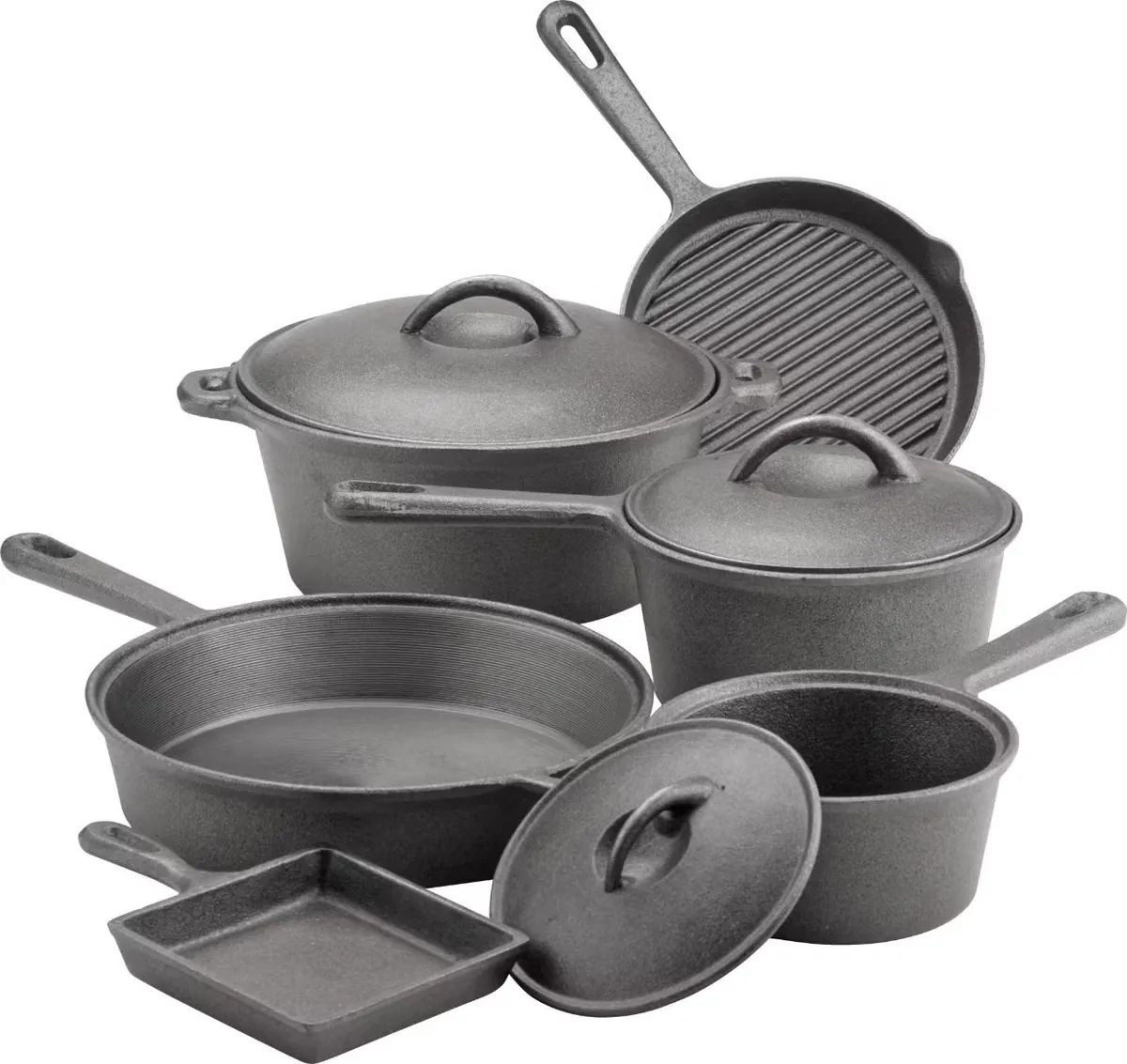
Ask the supplier to confirm carton dimensions and weight for your shipping quote. Tool sets with a storage stand can be bulky, and the difference between a 45 cm and 55 cm carton changes your freight cost noticeably.
QC checklist for a utensil order
- Check the material grade against the spec sheet, not the catalog name.
- Confirm food-contact compliance for your destination market where required.
- Test edge smoothness on stamped metal tools; sharp edges cause complaints.
- Check silicone heads for a secure bond to the handle and core.
- Inspect surface finish for scratches, discoloration or rust spots.
- Verify printed logos and packaging against the approved artwork.
For large quantities, a pre-shipment inspection is worth the cost. Utensil defects are small per item but visible to every end customer, and returns eat the margin quickly.
Samples and packaging approval before production
Order a sample of every tool you plan to stock before production starts. For stamped steel tools, the sample confirms the material grade, finish and edge quality. For silicone tools, it confirms the bond between head and handle and the temperature rating printed on the product. Keep the approved sample sealed and labeled; it becomes the reference for the pre-shipment inspection.
If you are branding the tools, approve the logo placement and the packaging artwork at the same time. Changes made after production starts cost money twice — once for the rework, once for the delay — while changes made at the sample stage usually cost nothing.
For large first orders, many importers ask for a production sample from the first batch rather than only a pre-production sample. The difference matters: the pre-production sample shows what the factory can do, while the batch sample shows what the factory actually does at volume.
FAQ
What is the best material for wholesale kitchen utensils?
There is no single best material. Stainless steel 304 is the standard choice for durable food-contact tools, food-grade silicone suits heat-resistant and non-scratch needs, and nylon or wooden tools fill budget and eco segments. Match the material to the tool’s use and your price point.
What is the difference between 201 and 304 stainless steel utensils?
304 stainless contains more nickel and chromium, giving better corrosion resistance and food-contact performance. 201 is cheaper and more magnetic, and is common in budget ranges, but it may rust or discolor in some conditions. Confirm the grade on the spec sheet if your market or brand requires 304.
Can kitchen utensils be made with my own brand?
Yes. Many factories offer OEM and ODM options for utensil sets, including logo stamping or engraving, custom colors, and branded packaging. Custom branding usually raises the MOQ and lead time; confirm both before you commit.
What is the typical MOQ for kitchen utensils from a Chinese factory?
MOQs vary by item. Simple stamped tools may start around 500 to 1,000 pieces per design, while molded silicone tools or branded sets often need higher quantities. Ask for the per-SKU MOQ and confirm whether it applies per color and per packaging variant.
Are silicone kitchen utensils safe for non-stick pans?
Yes, food-grade silicone tools are generally safe for non-stick cookware because they are soft and do not scratch the coating. Confirm the temperature rating and food-contact compliance, and check that the handle or core cannot expose metal that could scratch.
If you are building or refreshing a utensils range, send us the target tools, quantities and packaging format. Start from the stainless steel products and kitchenware range pages to see the categories we consolidate, then request a quote with your spec sheet and we will confirm grades, MOQ and lead time before you order.