If you are adding woks to a wholesale kitchenware range, start with carbon steel for the traditional cooking market, non-stick for casual home buyers, and cast iron when you want a heavy, heat-retaining option. Most importers build a line around one of these three, then add sizes and handles to match their customers.
A wok looks like a simple bowl with a handle, but the material choice changes how the product cooks, how it is packaged and how many returns you can expect. This guide walks through the options that actually sell in export markets and the spec details worth confirming before you order.
Why woks earn their place in a wholesale line
Woks are one of the few cookware items used across both restaurant and home kitchens. A commercial kitchen stir-fries at high heat with a seasoned carbon steel wok; a home cook wants an easy-care pan for noodles, vegetables and one-pan dinners. That dual demand gives you two buyer segments from one product category, and both reorder when the quality is right.
Carbon steel woks: the traditional workhorse
Carbon steel is what most professional kitchens use. The material is thin enough to heat and cool quickly, which is exactly what stir-frying needs, and it develops a natural seasoning layer with use. Typical carbon steel wok gauge is around 1.2 to 1.5 mm, but confirm the actual thickness on the spec sheet because it affects weight, price and heat behavior.
Carbon steel woks are usually sold unseasoned or with a light protective oil coating. That coating is important for export: it protects the steel in transit, but your customers need clear care instructions about washing, drying and seasoning before first use. Retailers that skip the instructions usually get the most confusion returns.
Cast iron woks: heat retention with weight
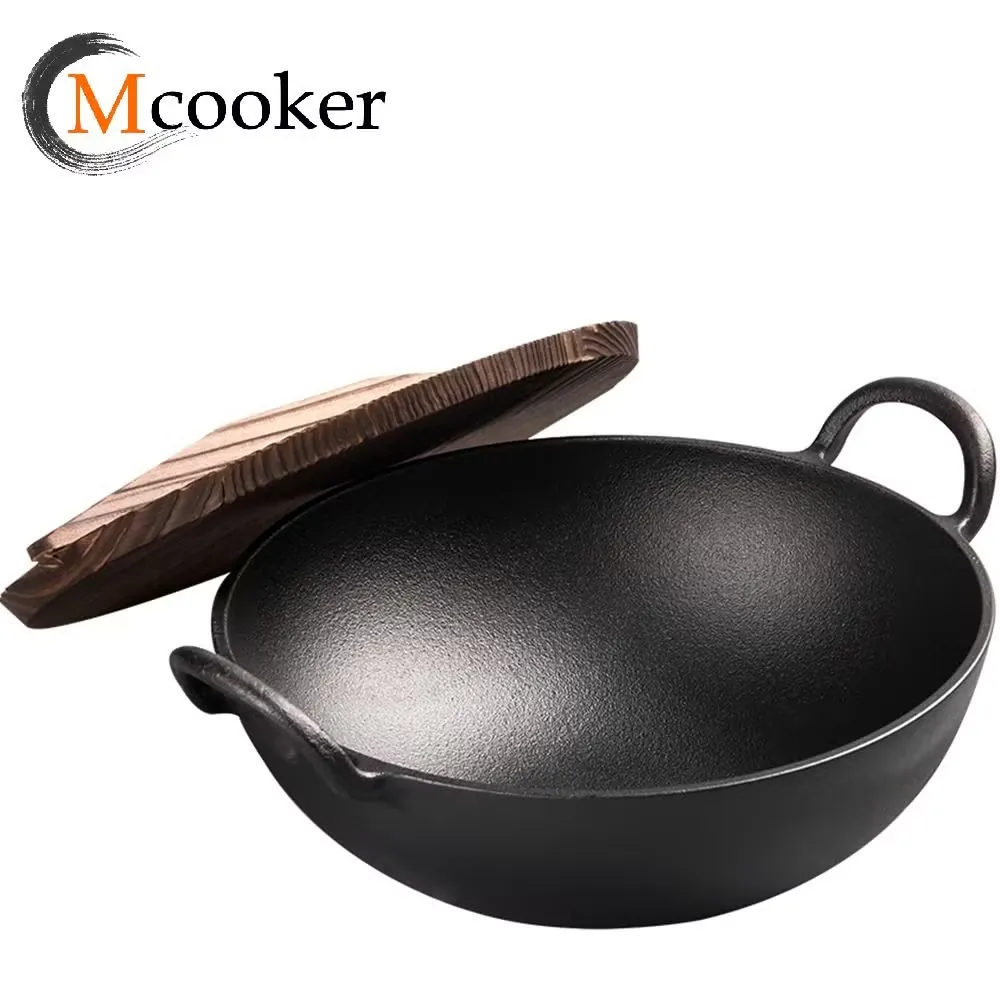
Cast iron woks hold heat far better than carbon steel, which suits braising, deep-frying and slow cooking. They are noticeably heavier, so they are a harder sell for everyday home use but popular with buyers who want a durable, traditional product. Many cast iron woks ship with a vegetable-oil coating or are pre-seasoned; confirm which one you are quoting, because pre-seasoned lines cost more and need different packaging care.
Non-stick and stainless steel woks: easy care for home buyers
Non-stick woks (usually PTFE or ceramic coated) are the volume option for retail. They release food easily, need less oil and are simple to clean, which makes them the default choice for casual home cooks. The trade-off is the usual non-stick limitation: they should not be used on very high heat, and metal utensils shorten the coating’s life.
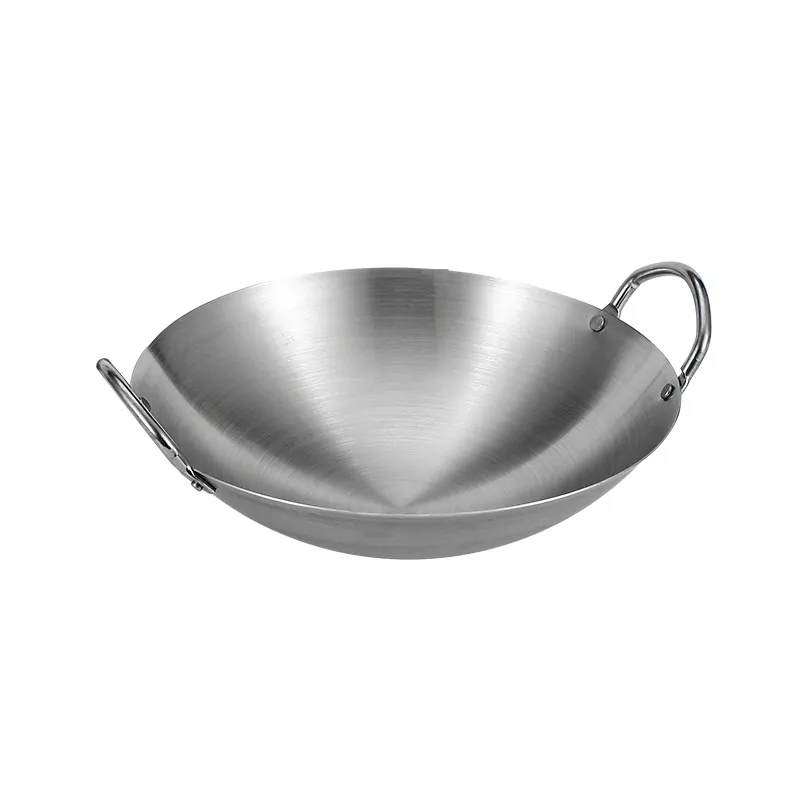
Stainless steel woks are heavier and more durable, often built as tri-ply with an aluminum core for even heating. They suit induction cooktops well, but they do not have the natural non-stick behavior of carbon steel or coated pans, so they need more oil and technique. They are a smaller niche in most wholesale ranges, usually at a premium price point.
Wok types compared for wholesale buyers
| Type | Weight feel | Heat response | Care needed | Typical buyer |
|---|---|---|---|---|
| Carbon steel | Light to medium | Fast heating and cooling | Seasoning and hand wash | Restaurants, traditional cooks |
| Cast iron | Heavy | Excellent heat retention | Seasoning; heavy to handle | Durability-focused buyers |
| Non-stick coated | Medium | Moderate; avoid high heat | Easy care, no metal utensils | Casual home cooks, retail volume |
| Stainless steel | Medium to heavy | Even with tri-ply core | Easy care, more oil needed | Induction users, premium lines |
Sizes, bottoms and handles: what the spec sheet should say
Common wok diameters in export lines are 30 cm, 32 cm and 36 cm, measured at the rim. Larger woks sell better to restaurants; 30-32 cm covers most home markets. Two bottom styles exist: round-bottom, which is traditional but needs a wok ring or gas flame, and flat-bottom, which sits on electric and induction cooktops. If your buyers cook on induction, flat-bottom is usually the safer order.
Handle options affect packaging size and breakage risk in transit:
- Wooden handle: classic look, comfortable, but check that the wood is heat-resistant enough for the market’s safety expectations.
- Steel helper handle: common on larger woks for lifting with two hands; check rivet or weld quality.
- Bakelite or silicone-covered handle: stays cooler, common on non-stick woks; confirm heat-test documentation if your retailer asks.
Ask for the handle attachment method on the spec sheet. A wok whose handle loosens in the first month is a return you will pay for twice.
Packaging and QC checks for wok orders
Woks are awkward to pack because of their size and handle shape. Confirm the packing method before production: bulk cartons with protective corners for restaurant orders, or retail-ready blister, color box or hang-card packaging for home lines. For coated woks, protect the surface from scratching during packing; scratched coating is the fastest visual defect a buyer will reject.
| QC check | What to look for | Why it matters |
|---|---|---|
| Material and gauge | Confirm steel grade and thickness match the spec | Thinner material is cheaper but behaves differently in cooking |
| Coating finish | Even color, no bubbles, scratches or peeling edges | Coating defects drive the majority of wok returns |
| Handle tightness | Rivets, welds and screws are firm | A loose handle is both a safety and a quality issue |
| Bottom flatness | Flat-bottom woks sit level on a cooktop | A wobbling wok fails inspection and frustrates users |
| Seasoning oil | Even, light oil coating with no rancid smell | Uneven oil shows as rust spots after the first wash |
| Packaging | Protective corners, correct carton size, no rattling | Transit damage is usually a packing problem, not a product problem |
FAQ
Which wok type sells best for wholesale?
For retail volume, non-stick woks usually sell fastest because they are easy to use. For restaurant and professional buyers, carbon steel is the standard. A balanced import line often carries both, plus a cast iron option for the durability segment.
What is the most common wok size for home use?
30 cm and 32 cm are the most common sizes for home kitchens, measured at the rim. Larger sizes, typically 36 cm and above, are more common for restaurants and high-volume cooking.
Are woks induction-compatible?
Only flat-bottom woks with a magnetic base work on induction cooktops. Round-bottom woks and some thin stainless models do not. Confirm the bottom style and material on the spec sheet before ordering for induction-heavy markets.
Do carbon steel woks need seasoning before first use?
Usually yes. Carbon steel woks ship with a protective oil coating, and the user should wash, dry and season the surface before first cooking. Provide clear care instructions with the product; this single step prevents most early rust complaints.
What should I confirm about wok handles for export?
Confirm the handle material, attachment method and heat-resistance documentation. Wooden and bakelite handles have different heat behavior, and some markets or retailers require heat-test reports for cookware handles.
Ready to build a wok line for your market? Tell us which type and sizes you want, and we will confirm the material, gauge, handle options and packing method before you commit. Contact our sourcing team for a quote, or browse the rest of our cookware products to build a mixed container.