If you are sourcing stainless steel bowls wholesale, specify 304 stainless steel for food-contact lines in most Western markets, confirm the grade on the spec sheet, and decide the finish based on how the bowls will be used. Mirror finish sells well for serving, brushed finish hides scratches better for prep and mixing, and the grade matters more than any marketing name.
Bowls look like a simple category, but they are a steady reorder line for importers: mixing bowl sets for home cooks, prep bowls for restaurants, serving bowls for tableware ranges. The details that separate a good container from a problem container are grade, finish, edge quality and packing.
Why bowls are a reliable wholesale line
Stainless steel bowls appear in almost every kitchen segment. A home buyer wants a nesting mixing bowl set; a restaurant wants sturdy prep bowls that stack; a tableware buyer wants serving bowls that match a dinner set. Because the product is durable and simple, repeat orders are common once a buyer trusts the quality.
The downside is that bowls are easy to compare on price, which pushes some suppliers to cut grade or finish quality. That is exactly why the spec sheet matters.
304 vs 201 stainless steel: what the grade means
Stainless steel grades describe the alloy, not a quality rating. 304 stainless steel contains roughly 18% chromium and 8-10% nickel, which gives strong corrosion resistance and is the common food-contact choice in the EU, US and most export markets. You will also see it labeled 18/8 or 18/10, referring to the chromium and nickel percentages.
201 stainless steel contains less nickel and more manganese, which makes it cheaper. It is less corrosion-resistant than 304, especially around acidic food and in dishwashers, and it can be slightly magnetic. Some suppliers offer 201 to lower the price; if your market or retailer expects food-grade stainless, 304 is usually the safer specification.
A quick warning: the magnet test does not reliably separate the grades, because some 304 processing steps can leave it slightly magnetic. Ask for the grade on the spec sheet and, if needed, a material test certificate from the steel supplier.
| Aspect | 304 (18/8 or 18/10) | 201 |
|---|---|---|
| Chromium / nickel | ~18% / 8-10% | ~16-18% / low nickel, more manganese |
| Corrosion resistance | Better, especially for acidic food | Lower; more risk of surface staining |
| Typical food-contact use | Widely used in EU/US food-contact lines | More common in budget and industrial lines |
| Cost position | Higher | Lower |
| Magnetic response | Usually non-magnetic, but can vary after forming | Often slightly magnetic |
Finishes: mirror, brushed and matte
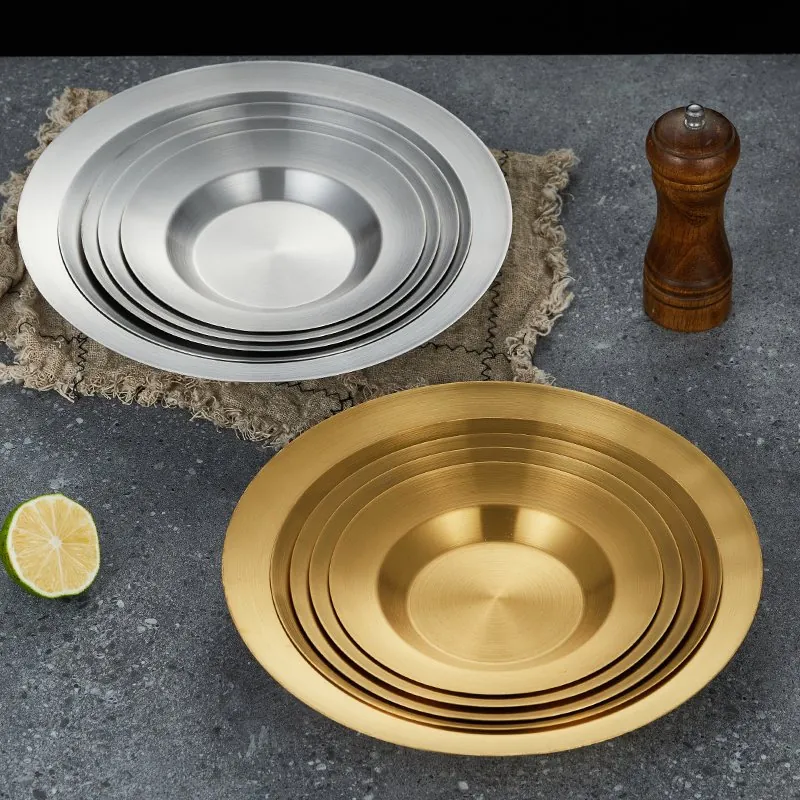
The finish changes both the look and the maintenance of the bowl. Mirror (bright) finish is polished and reflective; it looks great for serving but shows fingerprints and small scratches quickly. Brushed (satin) finish has a fine linear texture that hides scratches better, which makes it the practical choice for mixing bowls and prep bowls that see daily use. Matte finish sits between the two in look and is often used for premium tableware.
Ask the supplier which finish process they use and check the surface on the sample. Uneven polishing, visible tool marks or cloudy areas are the most common finish defects in cheap bowls.
Common bowl types, sizes and set configurations
Most wholesale orders fall into three groups:
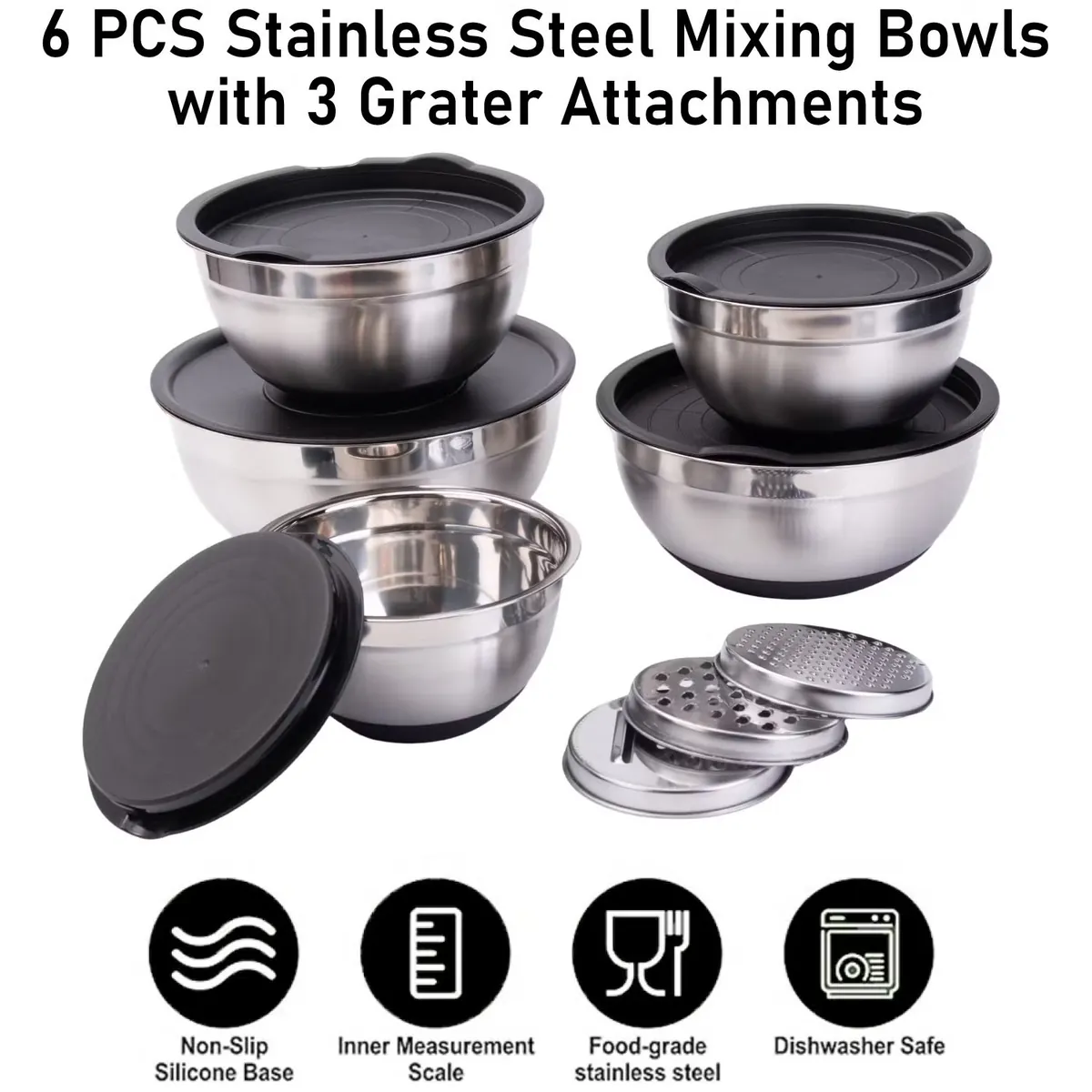
- Mixing bowl sets: typically 3, 5 or 6 pieces, nesting for storage, from about 10-14 cm up to 24-28 cm. Look for a non-slip base option, which is a popular upgrade.
- Prep and restaurant bowls: individual sizes from about 12 cm to 36 cm, stackable, often sold in dozens or by the carton.
- Serving bowls: single pieces or matched sets for tableware ranges, often with a mirror finish or an added design detail.
Confirm the measurement basis for sizes (rim diameter, capacity in ml or both) and the nesting behavior of sets. Bowls that do not nest cleanly waste warehouse space and arrive with more transit damage.
Capacity is the spec that gets confused most often. A bowl’s rim diameter does not tell a buyer how much it holds, because depth and wall angle vary between designs. If your order is sold by capacity, ask the supplier to state both ml capacity and rim diameter on the spec sheet, and spot-check a sample with water. This prevents a common mismatch: a retailer lists a 20 cm bowl as a 2.5 L bowl, the customer fills it, and the bowl overflows on first use.
Packaging options for bowl orders
Bulk carton packing with protective paper or foam between bowls is the cheapest option for prep and restaurant lines. Retail-ready options include blister packs for single bowls, color boxes for sets and hang-card packaging for display. For mixing bowl sets, inner trays that hold each bowl in place significantly reduce transit scratches; the extra cost is usually worth it on premium lines.
QC checks for stainless steel bowl orders
| QC check | What to look for | Why it matters |
|---|---|---|
| Grade confirmation | Material certificate or supplier spec for 304/201 | The grade decides corrosion resistance and market fit |
| Edge and rim quality | Smooth rolled or folded rim, no sharp burrs | Sharp edges are a safety complaint and a return driver |
| Surface finish | Even polish, no scratches, pits or cloudy spots | Surface defects are the most visible reason for rejection |
| Weld and base | Flat, stable base; clean weld if present | A wobbling bowl fails both inspection and daily use |
| Nesting fit | Sets nest without force and separate easily | Tight nesting scratches the finish and slows packing |
| Packing protection | Paper or foam between bowls, correct carton fit | Prevents transit scratches and dented rims |
FAQ
Is 304 stainless steel the same as 18/10?
Roughly, yes. 304 stainless steel typically contains about 18% chromium and 8-10% nickel, so suppliers may label it 18/8 or 18/10 depending on the exact nickel content. Both labels usually refer to the 304 family. Confirm the exact grade and test certificate with your supplier.
Can I use the magnet test to check if a bowl is 304?
No, not reliably. Some 304 bowls become slightly magnetic after deep drawing or other forming processes, while some 201 can test similarly. The only dependable way is to request the material spec and, if needed, a test certificate from the steel supplier.
Which finish is best for mixing bowl sets?
Brushed (satin) finish is usually the best balance for mixing bowls because it hides the small scratches that daily use creates. Mirror finish looks more premium for serving but shows fingerprints and scratches quickly.
What sizes should I order for a mixing bowl set?
Common sets run from about 10-14 cm up to 24-28 cm in 3, 5 or 6 pieces. Confirm both rim diameter and capacity with the supplier, and choose sizes that nest cleanly for storage and shipping.
Do stainless steel bowls need food-contact test reports?
Depending on your destination market and retailer, yes. Food-contact stainless is usually expected to comply with applicable regulations such as EU food-contact rules or US FDA food-contact expectations, and your buyer may ask for supporting test documentation. Confirm the exact documents required before production.
Planning a bowl line or a mixed stainless steel order? Send us your target sizes, finish and packaging, and we will confirm the grade, edge treatment and packing method on the spec sheet before you commit. Request a quote on our contact page, or view related options in our stainless steel products range.