If you are sourcing baking trays for retail, the practical answer is: decide your market first, then match sizes, material and packaging to the retailers you sell into. A half-sheet aluminum tray with a light non-stick coating that works for a US home baker will not suit a European bakery supplier ordering GN pans by the pallet. Get these three decisions right — size, finish, packaging — and most other problems (returns, complaints, slow turnover) shrink dramatically.
What Sizes Should You Order When Buying Baking Trays Wholesale?
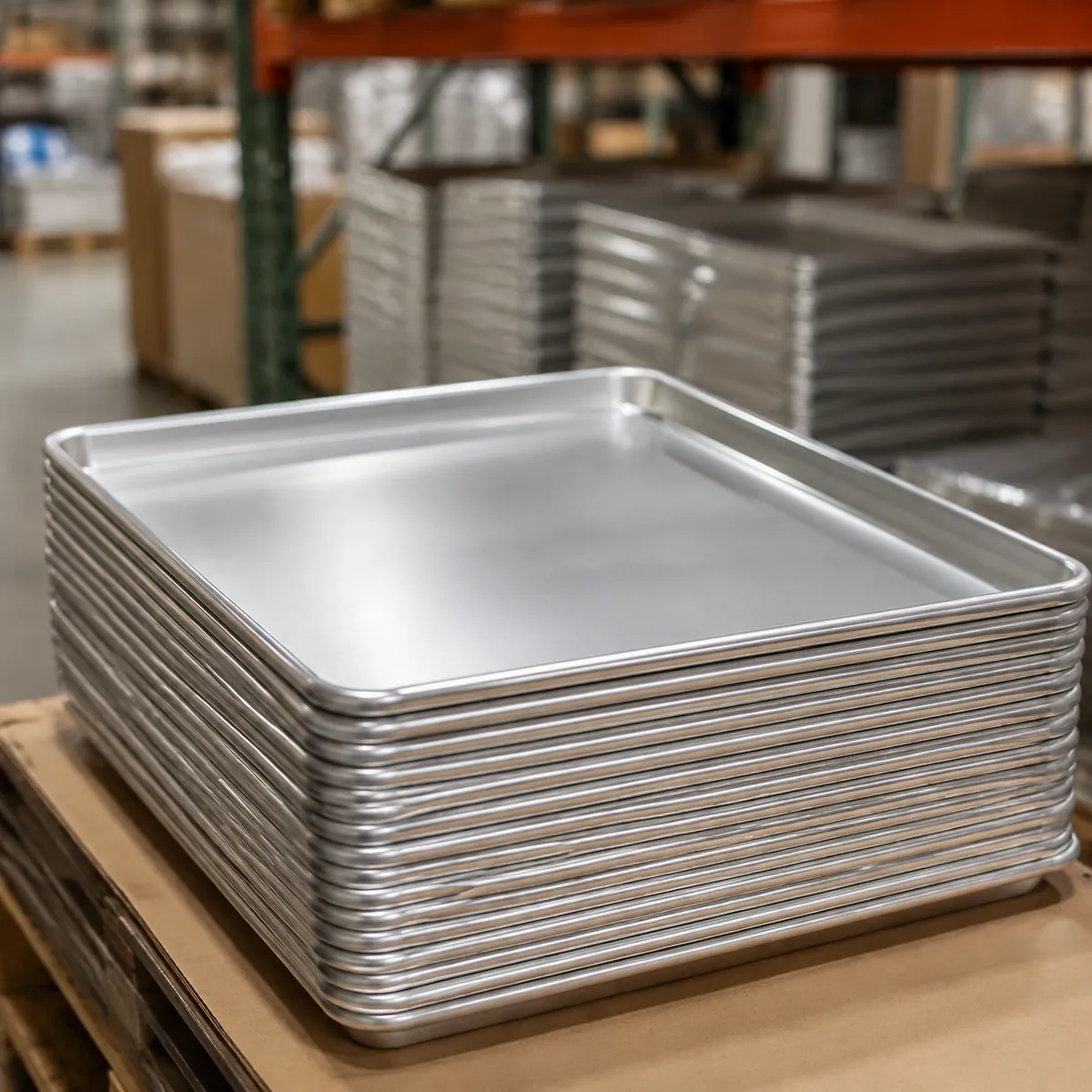
Baking tray sizes follow two systems, and importers usually need to know both. The GN (gastronorm) system is standard for commercial kitchens across Europe: GN 1/1 measures about 530 x 325 mm, with GN 1/2 and GN 2/3 as common splits. The US retail market runs on half-sheet (about 460 x 330 mm) and quarter-sheet (about 330 x 230 mm) sizes, plus jelly-roll pans for soft doughs. Industrial baking customers in many markets also order the 600 x 400 mm format that fits standard rack ovens.
Chinese suppliers routinely produce both systems, but a factory that mainly makes GN pans may quote US sheet sizes with longer lead times. Ask for the exact outer dimensions in millimeters on the quotation — “half sheet” is interpreted slightly differently between brands, and a 5 mm difference can matter when trays are sold as sets.
| Market / Use | Common Size | Typical Buyer |
|---|---|---|
| Europe, commercial kitchen | GN 1/1 (530 x 325 mm) | Bakery chains, hotels, catering suppliers |
| US retail | Half sheet (460 x 330 mm) | Home baking brands, kitchenware retailers |
| US retail / gifts | Quarter sheet (330 x 230 mm) | Gift sets, small cookware sets |
| Industrial baking | 600 x 400 mm or 40 x 60 cm | Commercial bakeries, food production |
Aluminum, Steel or Non-Stick: Which Finish Works for Retail?
Material choice changes both the price point and the sales story. Aluminum trays heat quickly and evenly, are light to ship, and accept anodizing or non-stick coatings well. They are the default for retail bakeware. Stainless steel trays are heavier, more expensive and better at resisting corrosion, which matters in commercial dishwashing, but they bake less evenly unless they have an encapsulated base — a detail many importers overlook when they switch from aluminum.
Carbon steel conducts heat almost as well as aluminum, holds up to heavy commercial use and is common in European bakery supply. The catch: it rusts if not seasoned or coated, so it is a harder sell to home consumers who expect zero-maintenance bakeware. You can build a premium story around it, but only if your packaging explains the care step.
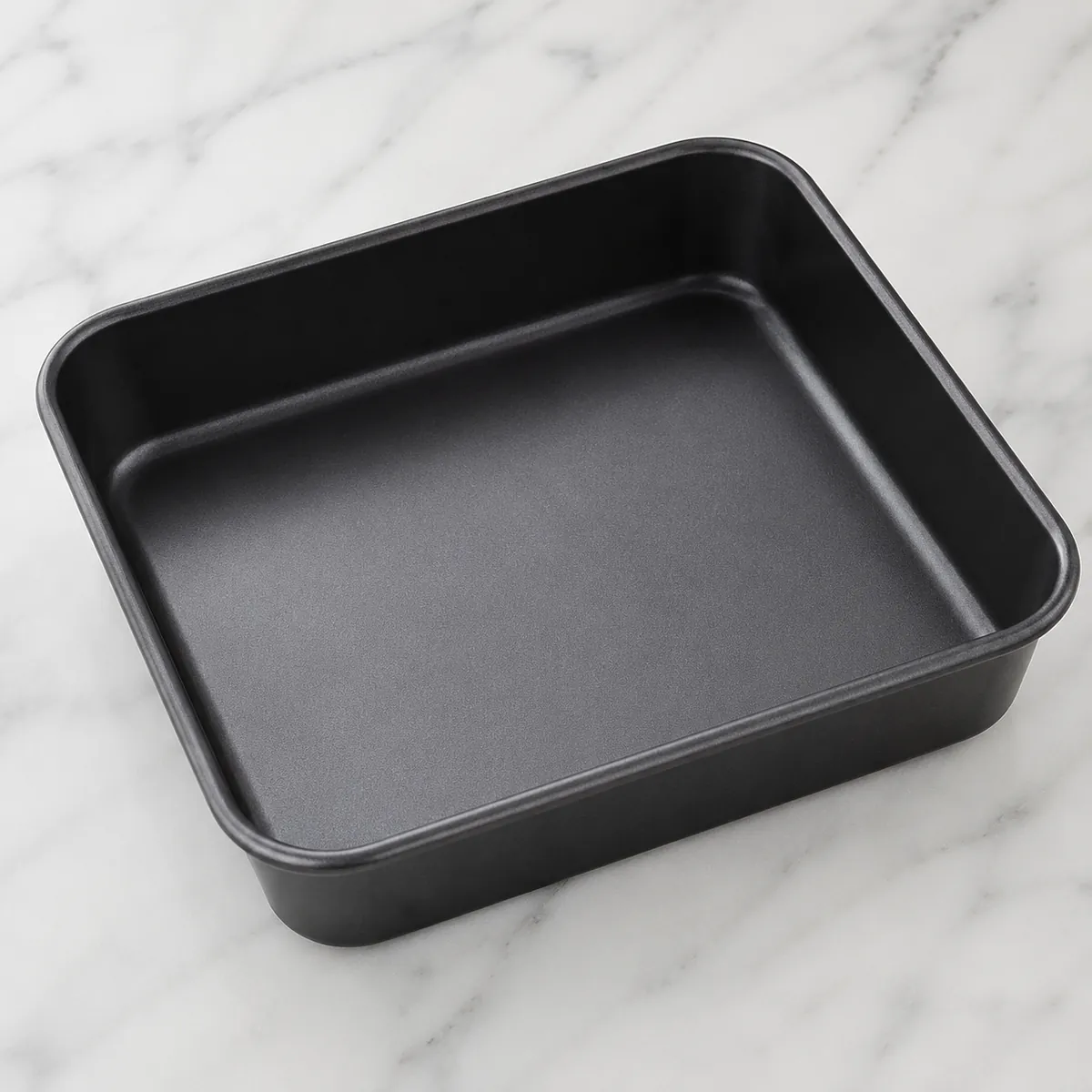
On finishes, you will usually choose between bare aluminum, anodized, PTFE non-stick and ceramic non-stick. Coated trays carry a higher price and a stronger retail story, but they need more care in transit (scratches kill the coating) and you should confirm the coating supplier’s food-contact documentation for your destination market. If you cannot verify the coating standard, say so in your listing rather than guessing — buyers in the EU and UK increasingly ask for this paperwork before they commit.
How Should Baking Trays Be Packaged for Retail and Export?
Retail-ready packaging means a printed box or sleeve that survives the shelf. For baking trays, the biggest failure mode is scratching: bare aluminum and coated trays both mark easily, so most factories use a thin protective film, foam edge protectors, or a sleeve between stacked trays. Ask which one your supplier uses before approving samples — a cheap box that lets trays slide will produce visible scuffs by the time the container lands.
For bulk export, trays nest well, and a 40HQ can hold a large number of pieces, but nesting also creates scratching. Edge protectors and interleaving paper are low-cost insurance. Also confirm whether the supplier can print your retail packaging or only supply plain boxes — this changes your landed cost per unit and your shelf-readiness in the destination market.
QC Checks for Baking Tray Orders
Before approving a production run, check the four things that cause most retail returns:
- Flatness — warped trays rock on the oven rack and get returned. Ask whether the factory does an in-line flatness check.
- Coating coverage — pinholes or thin edges in non-stick coatings show up fast under use.
- Rim burrs — sharp edges are a safety complaint and a liability issue for retailers.
- Dimension tolerance — trays that do not fit standard oven racks are dead stock.
On a first order, a pre-shipment inspection (either the factory’s own report or a third party) is usually worth the cost, especially for coated trays where defects are invisible until the coating is used.
A Quick Sourcing Checklist for Baking Tray Wholesale
When you compare quotations, line up these points side by side:
- Exact sizes in mm for every SKU, plus rim height and material gauge.
- Finish type per SKU, with coating documentation if coated.
- MOQ per size, per finish and per packaging option (they are not always the same).
- Packaging standard: retail box, plain box, or polybag with edge protectors.
- Inspection and QC steps included in the price, and lead time for the first production run.
Suppliers who answer these specifics quickly are usually the ones who will handle your first order without surprises. Vague answers on gauge or coating documentation are a warning sign, not a negotiating point.
What MOQ Should You Expect for Baking Tray Wholesale?
MOQs vary by material and coating. Plain aluminum trays can often be ordered in a few hundred pieces per size; non-stick coated trays usually start higher because coating lines run in batches; printed retail packaging may push the MOQ up further unless you accept plain boxes. Custom sizes and custom colors raise MOQs again. The usual rule: get the MOQ quoted per size, per finish and per packaging option, because suppliers bundle them differently and the bundle that looks cheapest may not match your retail plan.
FAQ
What is the difference between a baking tray and a baking sheet?
In retail language the terms overlap, but a baking tray usually has raised edges (about 20–30 mm) for roasts and sheet cakes, while a baking sheet is flat or has very low rims for cookies. Confirm the rim height on the spec sheet rather than relying on the name.
Are aluminum baking trays safe for food contact?
Bare aluminum and anodized aluminum trays are widely used for food contact, and coated trays add a barrier layer. Food-contact compliance depends on the coating and the destination market’s rules (for example EU Regulation (EC) No 1935/2004 and related measures). Ask the supplier for coating documentation and confirm it covers your target market.
Can I get custom sizes for baking trays?
Usually yes, but custom tooling or minimum runs apply. Suppliers may ask for a higher MOQ or a tooling fee for non-standard sizes, so it is cheaper to build your range from standard GN or sheet sizes where possible.
Do baking trays need to be seasoned like cast iron?
Bare carbon steel trays may need seasoning or an oil coating to prevent rust, especially in humid climates. Aluminum and coated trays do not. If you stock carbon steel, the packaging insert should explain the care step to the end customer.
If you are planning a baking tray line and want to compare sizes, finishes and packaging options side by side, send us your target market and quantities — we can confirm which configurations are practical and quote accordingly. Request a quote for baking tray wholesale or message us on WhatsApp with your spec sheet.