Match the material to the channel, not to your own taste. Porcelain sells best to mid-range restaurants and gifting programs, stoneware wins in casual dining and retail lines that want a handmade feel, and melamine dominates cafeterias, canteens and outdoor dining where breakage costs money. Importers who try to carry all three with one positioning usually end up with returns and slow stock — the three materials answer different questions.
Porcelain: The Safe Premium Choice
Porcelain is fired at a higher temperature than other ceramic tableware, which makes the body denser, whiter and less porous. That translates into what buyers actually see: a clean white surface that does not absorb stains easily, good chip resistance for a ceramic, and a familiar look that works in hotels, restaurants and retail sets. Porcelain also takes decoration well — a band of color, a logo, a reactive glaze — which is why most branded tableware programs start with it.
For importers the trade-off is cost and weight. Porcelain is heavier and more expensive per piece than melamine, and it chips if handled roughly. It is the material to choose when the sales story is about quality, not about surviving abuse.
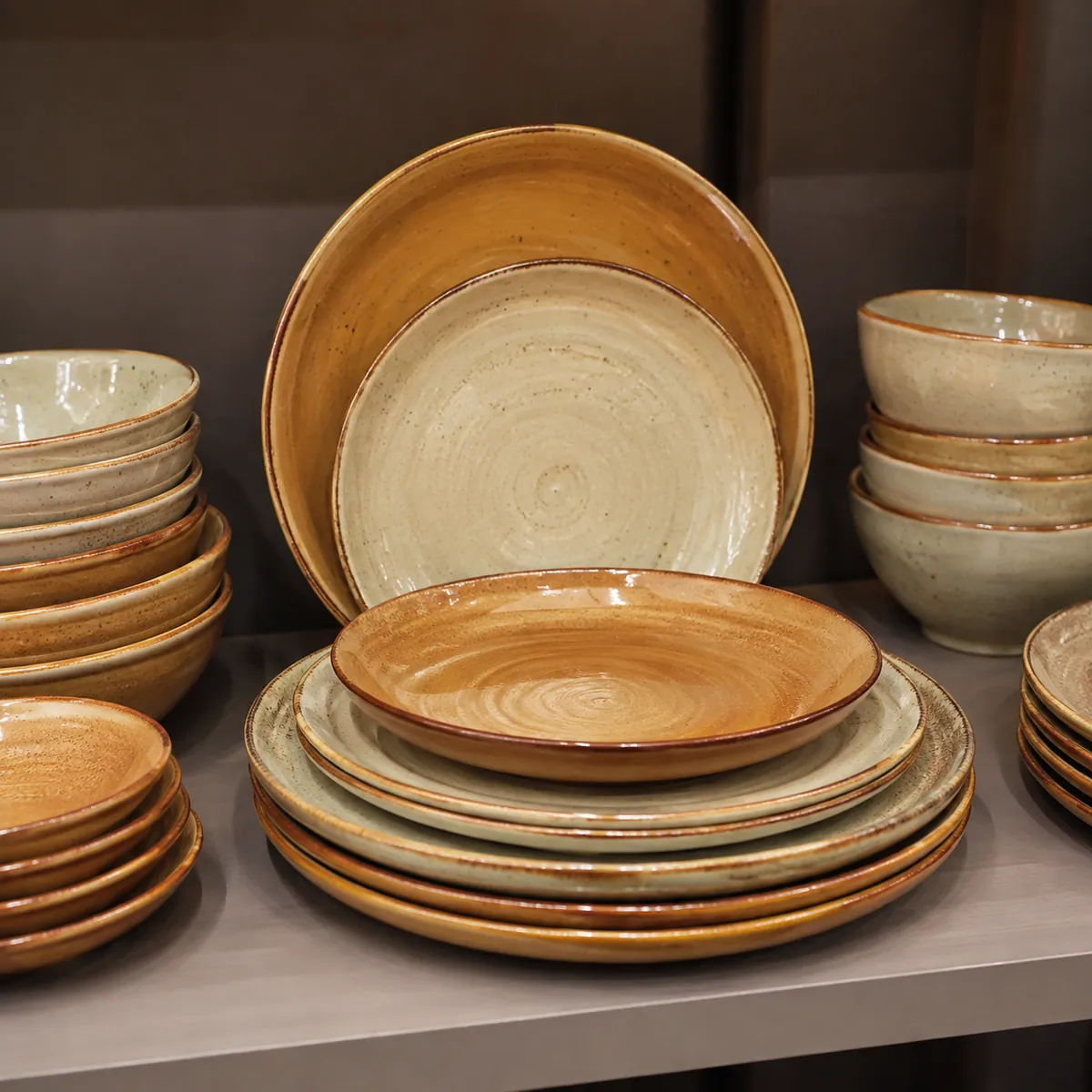
Stoneware: Texture and Casual Appeal
Stoneware is fired at a lower temperature than porcelain, so the body stays slightly more porous and the surface often gets a colored glaze. The result is a warmer, more textured look that reads as artisanal — the style that drives a lot of retail dinnerware sets today. Stoneware is durable for everyday use, holds heat well and usually costs a little less than porcelain of similar quality.
Two sourcing notes: stoneware bodies vary a lot between factories, so color and surface finish can differ from batch to batch — confirm the glaze reference and ask for a production sample before a large run. And because stoneware is heavier per piece than porcelain in many ranges, your freight cost per service set can climb faster than you expect.
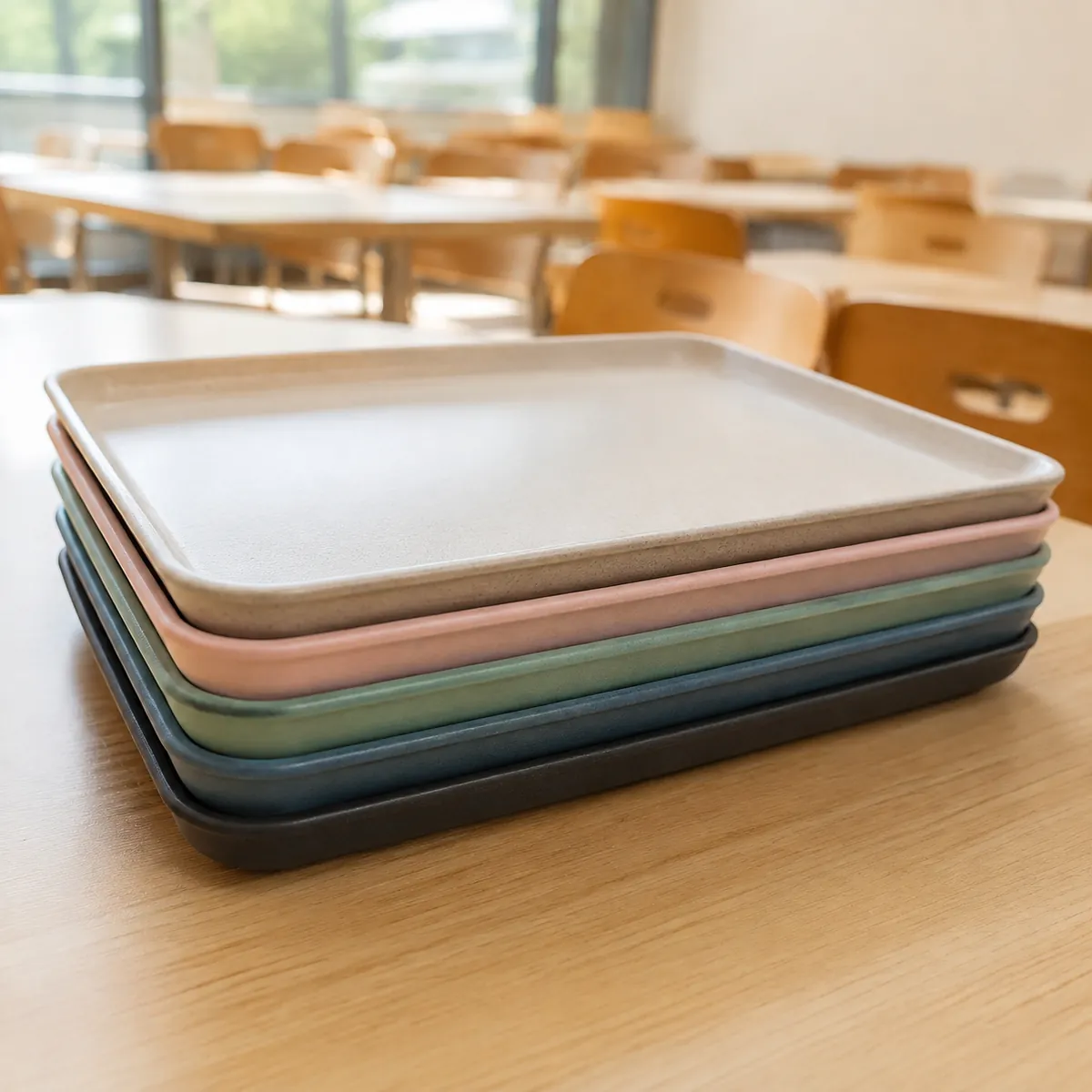
Melamine: Where Breakage Is the Enemy
Melamine tableware is molded resin, not ceramic, and it exists for one main reason: it does not break. Canteens, school kitchens, cafeterias, campsites and outdoor dining all run on melamine because dropped plates bounce instead of shattering, and the weight is a fraction of ceramic. It also stacks tightly, which cuts storage and freight costs.
The safety question comes up in every negotiation, so be ready for it: melamine tableware sold in the EU must comply with food-contact rules (EU 1935/2004 and the specific measure for plastics, which sets migration limits), and the same logic applies in other regulated markets. It is not suitable for microwave or oven use in most cases, and it should not be used for very hot or acidic foods. A reputable supplier can provide migration test reports; if a factory cannot show documentation, treat that as a red flag rather than a price point.
Porcelain vs Stoneware vs Melamine: Comparison Table
| Factor | Porcelain | Stoneware | Melamine |
|---|---|---|---|
| Look and feel | White, dense, premium | Warm, glazed, artisanal | Matte or glossy, uniform |
| Breakage resistance | Chips under hard impact | Chips under hard impact | Does not break on drop |
| Weight | Medium-heavy | Heavy | Light |
| Microwave / oven | Microwave safe, not oven-safe in most lines | Microwave safe, not oven-safe in most lines | Usually not suitable |
| Typical channels | Restaurants, hotels, gifting, premium retail | Casual dining, retail sets, lifestyle brands | Canteens, schools, outdoor, food service |
| Price point | Mid to premium | Mid | Entry to mid |
What to Check Before You Import a Tableware Range
Whichever material you choose, put these checks into the order:
- Ask for the body and glaze details per SKU, and match the glaze reference on production samples.
- Confirm stacking and packaging specs — ceramic needs dividers, melamine can ship more densely but still needs surface protection.
- For melamine, request migration test documentation for your destination market before you commit to the MOQ.
- Check whether the factory offers mixed-material container loading if you plan a combined range.
- Order production samples, not just stock samples, for any custom color or logo — glaze color can shift between sample and batch.
How to Position a Mixed Tableware Range
Retailers do not usually buy one material; they buy a story per collection. A practical structure: porcelain for the formal dinnerware sets, stoneware for the casual everyday line, and melamine for the outdoor or kids range. That way each material carries its own shelf position and price point, and the supplier can quote per collection instead of forcing one material across the whole program.
Batch Consistency: Why Tableware Needs Production Samples
Ceramic tableware has a problem metal products do not: color and surface finish can shift between batches. Glaze recipes depend on raw materials, firing temperature and kiln position, so the plate you approved in March can come out slightly warmer or darker in June. That matters for retailers because customers notice when a dinner set does not match, and for importers because a mixed batch becomes unsellable stock.
Mitigate it with three habits. First, keep the glaze reference and the production sample from your approved order — that is your baseline for the next batch. Second, ask the factory how they control batch-to-batch color: some use color measurement tools on every kiln load, others visually compare against a master sample. Third, request a production sample, not a stock sample, before any large reorder of a colored or decorated line. Melamine is more consistent because it is molded resin, but color chips still vary between suppliers, so the same rule applies to custom colors.
FAQ
What is the difference between porcelain and stoneware?
Firing temperature and body density. Porcelain is fired hotter, producing a denser, whiter, less porous body that resists staining. Stoneware is fired cooler, keeping a slightly more porous body that is usually covered with a colored glaze, giving a warmer, more textured look.
Which tableware material is best for restaurants?
Porcelain is the common choice for mid-range and upscale restaurants because of its clean, dense white body and chip resistance. Casual and high-volume venues often mix stoneware for style and melamine for areas where breakage is a real cost.
Is melamine tableware safe for food?
Melamine tableware sold in regulated markets must meet food-contact migration limits, for example under EU Regulation (EC) No 1935/2004 and the applicable plastic measure. It is usually not suitable for microwave or oven use and should not hold very hot or highly acidic foods. Ask the supplier for test documentation before importing.
Which material is cheapest to import?
Melamine is lightest and cheapest to ship, and entry-level melamine sets are the lowest-cost option overall. Stoneware sits between melamine and porcelain on both price and freight. Porcelain is the most expensive per piece but supports higher retail prices.
If you are building a tableware range and want to compare porcelain, stoneware and melamine options for your channel, send us your target market and retail price points — we can confirm which collections travel well and quote per collection. Request a tableware quote or message us on WhatsApp with your plan.