Start with a 6-piece set in 3Cr13 or 5Cr15 stainless steel with molded handles, add one step-up line with full-tang construction, and you have a workable retail range for most markets. Knife sets outsell single knives in retail because they bundle a story — the right tool for each job — and they give you a higher ticket price per unit. The sourcing decisions that matter are the steel grade, the handle construction, and the packaging that keeps edges protected in transit.
Which Steel Grade Should Your Knife Sets Use?
Most wholesale kitchen knife sets use stainless steel grades from the 3Cr13 to 5Cr15 range. The numbers describe carbon content and alloying: higher carbon content generally means a harder blade that holds an edge longer, at the cost of being slightly harder to sharpen. 3Cr13 is the entry grade, fine for everyday sets and budget lines. 5Cr15 adds carbon and often chromium, giving better edge retention and corrosion resistance, which is why it is common in mid-range sets. 8Cr13MoV and similar grades appear in premium lines and hold an edge noticeably longer.
German-style steel (often labeled X50CrMoV15 or 1.4116) and Japanese-style steel (VG-10, AUS-8 and others) sit at the premium end, and you will see those names on higher-priced sets. What matters for your sourcing decision: confirm the actual steel grade on the quotation, not just “stainless steel” — the grade drives both the price and the retail story.
How Many Pieces Should a Retail Knife Set Have?
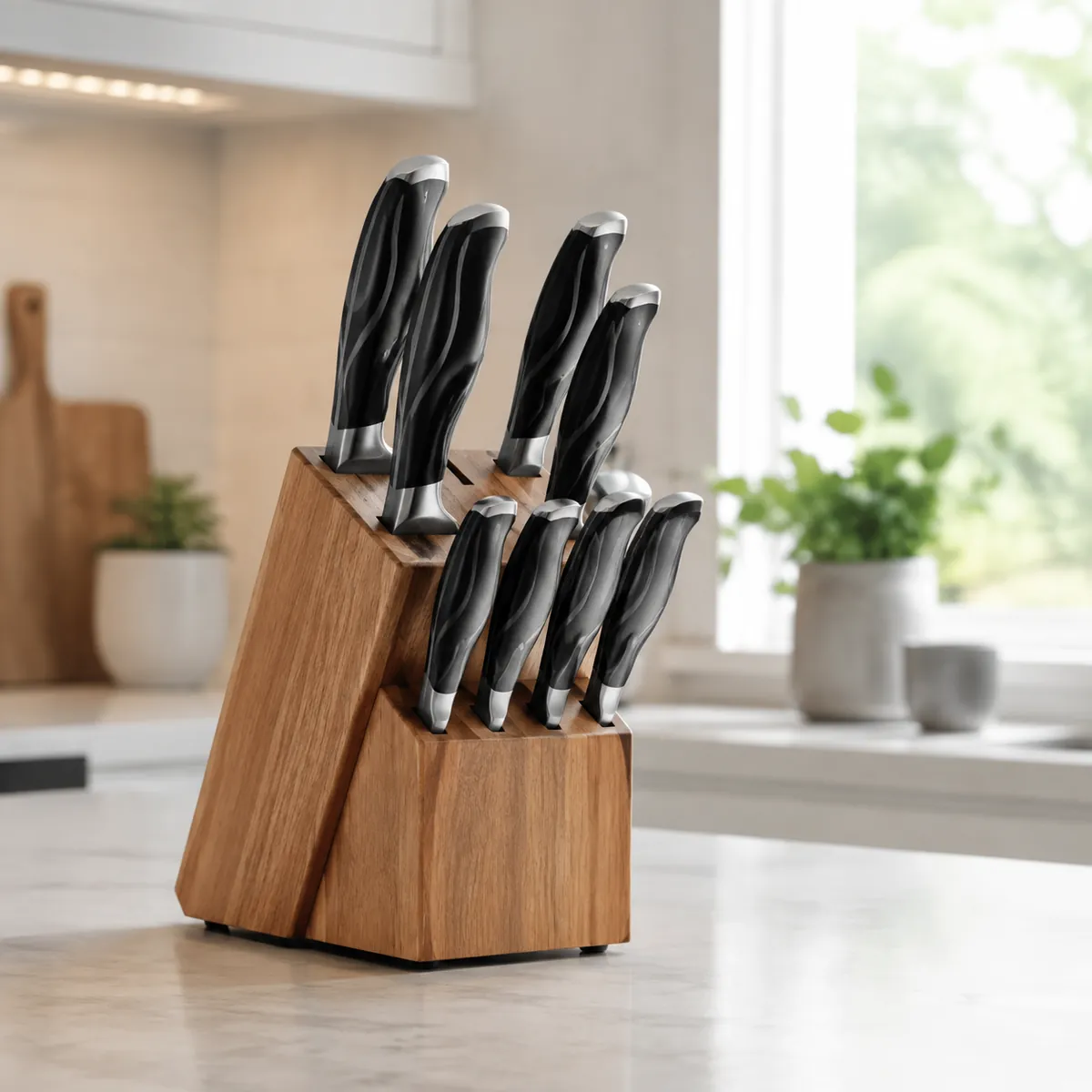
Set configurations follow retail price points more than logic. The standard 6-piece set (chef, bread, utility, paring, plus shears and a block) covers most home kitchens. Larger sets of 9 to 14 pieces add steak knives or additional utility blades and justify a higher price point, but they also add freight weight and packaging complexity. A common retail structure is: a 6-piece entry set, a 9-piece mid set, and a 14-piece premium set with a heavier block and better steel. Ask the factory which block options they make in-house — wooden, bamboo and PP blocks all change the set’s look and cost.
Handle Construction: Full Tang vs Molded
Handle construction decides the durability story. Full-tang knives have the blade metal running the full length of the handle, usually held by rivets — this is the premium construction that resists loosening and signals quality to the customer. Molded or partial-tang handles are cheaper, lighter and perfectly fine for entry sets, but they can loosen over years of use and dishwasher cycles.
Matching handle material to market matters too: wooden handles sell well in European retail and gifting, while PP and silicone handles dominate budget lines and are easier to keep clean. Confirm whether the handle is riveted or glued, and whether the knife is dishwasher-safe — a claim many retailers ask for even when the factory would rather avoid it.
Common Knife Set Configurations for Wholesale
| Set Size | Typical Contents | Block | Typical Positioning |
|---|---|---|---|
| 6-piece | Chef, bread, utility, paring, shears | Wood or PP block | Entry to mid retail |
| 9-piece | 6-piece plus steak knives or extra utility | Wood or PP block | Mid retail, gifting |
| 14-piece | Full kitchen range plus steak knives | Wood block, premium | Premium retail, gifting |
| 3-4 piece starter | Chef, paring, utility | No block or magnetic strip | Entry, promotion |
Packaging That Survives Freight
Knife sets have one packaging job that matters more than aesthetics: keeping edges protected. Blade sheaths on every knife, or a block design that fully encloses the blades, are the minimum for export. Loose knives sliding inside a box arrive scratched and sometimes damaged, and they are a safety problem for warehouse staff. Confirm the blade protection on the production sample, and ask whether the factory can add edge guards at low cost.
For retail presentation, the block itself is the packaging — a good-looking wooden block sells the set on the shelf. For budget lines, a printed sleeve around a molded block or a compact case works. Confirm the box design handles both the retail display and the export carton; a design that is beautiful on the shelf but fails in the carton is a claims generator.
QC Checks for Knife Set Orders
Put these checks into your pre-shipment inspection:
- Edge quality — every blade should be sharpened to a consistent edge; dull blades are the top retail complaint.
- Rivet and handle fit — wobbly handles and proud rivets fail fast under use.
- Blade finish — pitting or uneven polish is visible to customers immediately.
- Block slots — blades should seat firmly but not be forced in; loose or tight slots cause returns.
- Sheath and edge guard presence on every knife.
Blade Finishes and Edge Angles
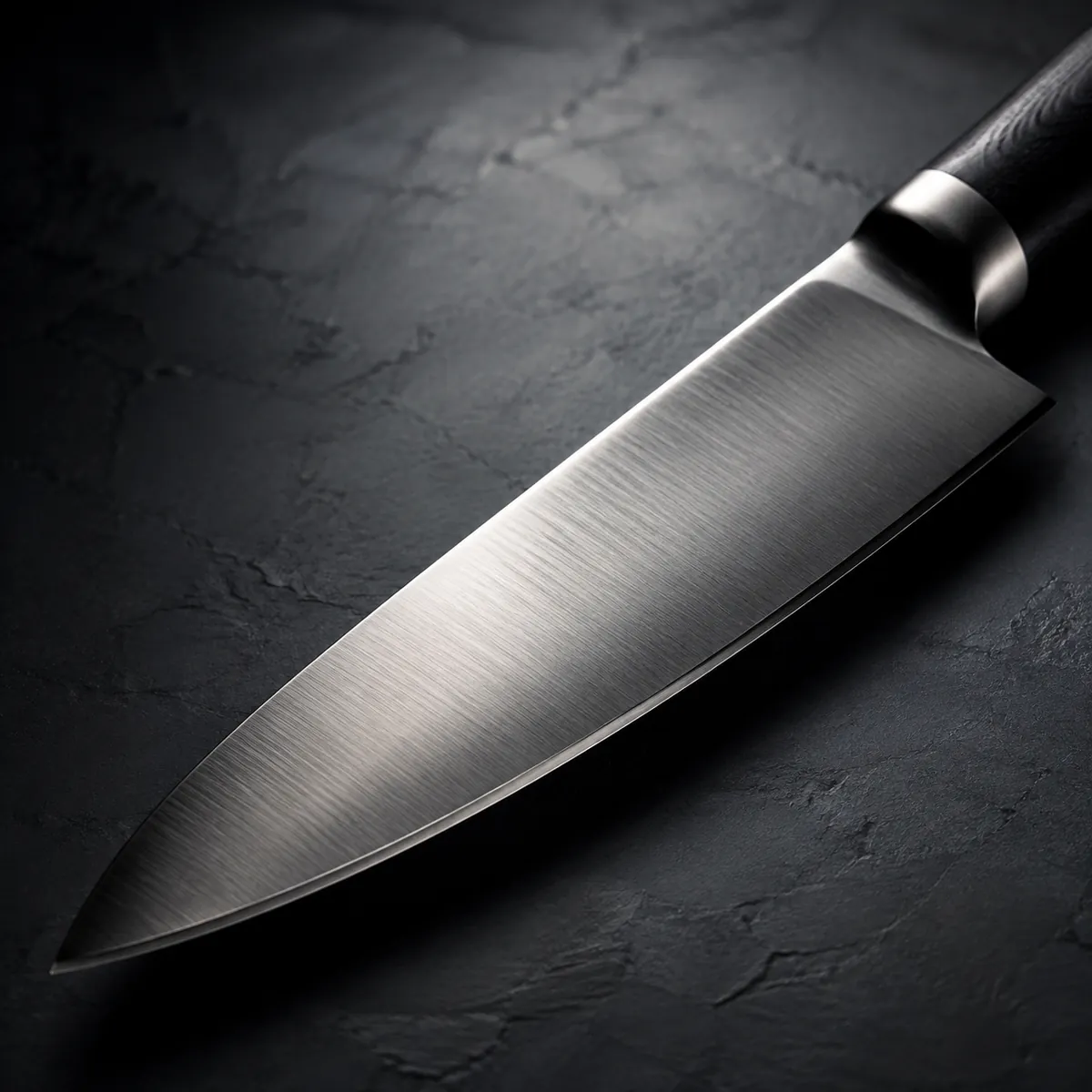
Two details separate a knife set that feels premium from one that feels like a promotional giveaway. The first is the blade finish: mirror-polished blades look expensive but show fingerprints, while satin or brushed finishes hide marks and are common in everyday sets. The second is the edge angle. Most Western-style chef knives are sharpened to a 20-degree angle per side, which balances sharpness and durability for home use. Japanese-style blades often use a narrower angle, around 15 degrees per side, which cuts more precisely but is more delicate.
For a wholesale program, decide the edge angle per set type and confirm it on the quotation. Retail customers rarely ask, but chefs and serious home cooks notice, and your marketing can legitimately mention the angle if it is consistent. Also confirm whether the factory sharpens by machine or by hand — machine sharpening is more consistent across a production run, which is what you want for repeatable quality.
On a first knife set order, test the sample the way a customer would: cut a tomato, slice bread, and check how the knife feels balanced in hand. Tomatoes expose a dull edge immediately, bread tests the serrated blade, and the balance test reveals whether the set was designed or just assembled. If the sample fails any of these, ask for a revised sample before committing to production — the cost of one more sample is trivial compared with a container of knives that disappoint at the shelf.
FAQ
What is the best steel for a wholesale kitchen knife set?
For most retail ranges, 3Cr13 to 5Cr15 stainless steel is a reliable and cost-effective choice. Premium lines use 8Cr13MoV or higher grades, or steels branded as German- or Japanese-style, which hold an edge longer but cost more. Confirm the exact grade on the quotation.
How many pieces should a knife set have?
Six pieces is the retail standard and the safest starting configuration. Larger sets of 9 to 14 pieces support higher price points and gifting programs but add freight weight and packaging complexity.
Can I get my brand on a wholesale knife set?
Yes. OEM options usually include laser engraving or printing your logo on the blade and block, plus custom packaging. Confirm the minimum order for custom branding and ask for a sample of the logo application before production.
Are knife sets dishwasher-safe?
It depends on the handle and blade finish. Molded PP handles are generally more dishwasher-tolerant than wood, and some blade finishes resist spotting better than others. Confirm the factory’s dishwasher recommendation and print the care instruction on the packaging if you claim it.
If you are building a knife set range and want to compare steel grades, set configurations and packaging options for your retail channel, send us your target price points and quantities — we can confirm practical specifications and lead times. Request a knife set quote or message us on WhatsApp with your plan.