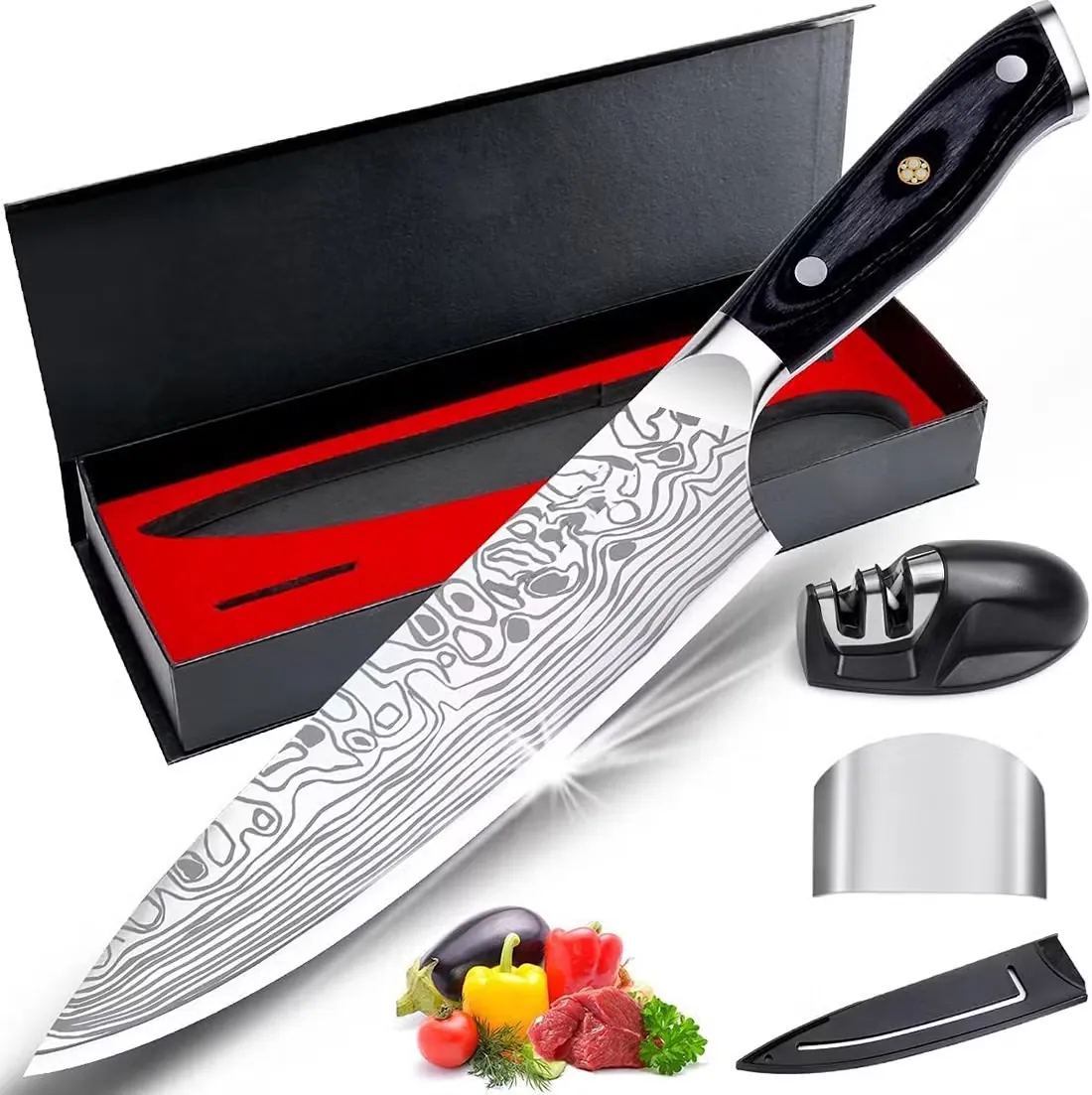
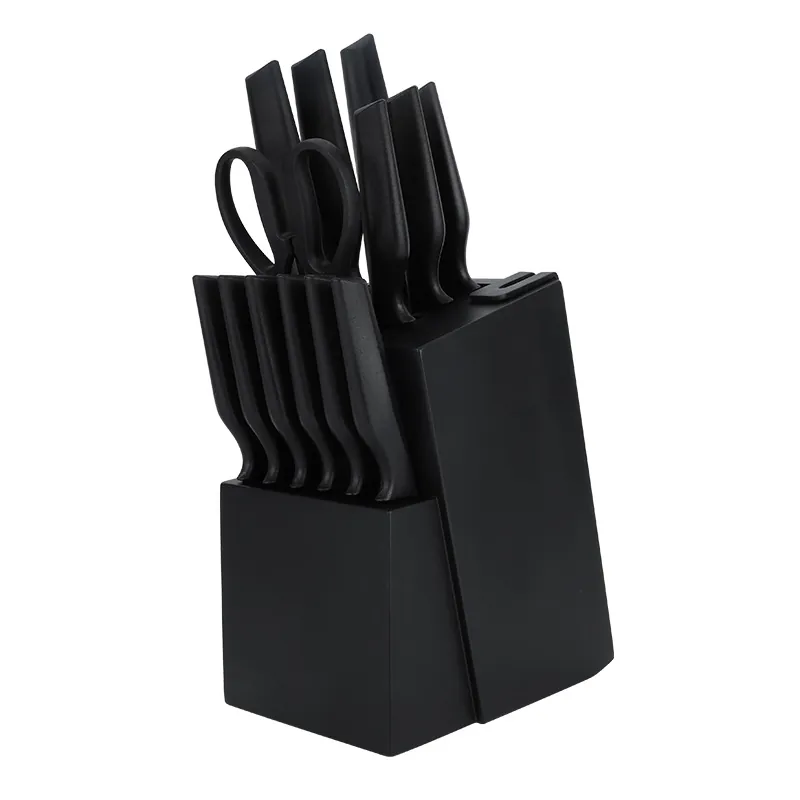
The short answer for buyers: German-style knives usually use X50CrMoV15, Japanese-style knives often use VG-10 or AUS-10, and Chinese OEM factories typically offer 3Cr13, 5Cr15, or 8Cr13MoV for budget-to-mid ranges. The right grade for your line depends on your retail price point and the end user, not on which country label sounds more premium. This guide walks through the common grades you will see in supplier datasheets, what each one actually changes in the kitchen, and what to confirm before you place an order.
Why Steel Grade Matters More Than the Country Label
A knife blade is defined by three properties: hardness, edge retention, and corrosion resistance. Hardness is usually quoted as HRC on the Rockwell scale. A harder blade holds its edge longer, but it is harder to sharpen and more likely to chip. A softer blade sharpens easily but dulls faster. There is no perfect grade, only a grade that matches your target customer.
Country labels add confusion. A knife stamped “German” may use steel produced anywhere, and a Japanese-style santoku made in China can be a perfectly good seller. What you can verify is the grade name, the target hardness, and the heat treatment process. Those three facts matter more than the flag on the packaging.
| Grade | Typical HRC | Edge Retention | Corrosion Resistance | Typical Use |
|---|---|---|---|---|
| 3Cr13 | 52-55 | Low | Good | Budget kitchen knives, chef sets |
| 5Cr15 | 54-57 | Low-mid | Good | Mid-range home knives |
| 8Cr13MoV | 57-59 | Mid | Good | Mid-premium outdoor and kitchen blades |
| X50CrMoV15 | 55-58 | Mid | Very good | German-style chef and utility knives |
| VG-10 | 60-61 | High | Moderate | Japanese-style premium blades |
| AUS-10 | 59-61 | High | Moderate | Premium santoku and gyuto lines |
The HRC figures above are typical ranges used across the industry; the exact number depends on the factory’s heat treatment, so always confirm the target range and test method with your supplier.
German Steel Grades: What You Are Actually Getting
X50CrMoV15 is the workhorse of German-style blades. The name describes the alloy: roughly 0.5 percent carbon, with chromium, molybdenum, and vanadium. Chromium gives corrosion resistance, molybdenum adds toughness, and vanadium improves edge-holding. Factories typically run it around 55-58 HRC, which keeps the blade easy to sharpen and resistant to chipping.
For wholesale buyers, this grade is a safe middle ground. It suits home cooks, professional kitchens that sharpen frequently, and gift sets where the buyer expects a classic look. It will not hold an edge as long as a high-hardness Japanese blade, but it is far more forgiving for a first-time user.
Japanese Steel Grades: VG-10 and the Sharpness Trade-off
VG-10 is a high-carbon vanadium stainless steel that factories usually harden to around 60-61 HRC. That hardness delivers long edge retention and a very fine edge, which is why premium santoku and gyuto knives carry a price premium. The trade-off is real: a VG-10 blade is more brittle, needs proper sharpening equipment, and can chip if used on bones or frozen food.
AUS-10 is a close alternative in the same family. It has a slightly different alloy balance that some factories treat as easier to grind. For retail, Japanese-style steel makes sense when your customer already owns a whetstone or paid for a high-end knife before. For a first knife, it may be more than they need.
Chinese OEM Steel Grades: What Factories Actually Offer
Most Chinese knife factories quote three grades for export orders. 3Cr13 is the budget option, fine for promotional sets and hotel amenity knives. 5Cr15 is the most common mid-range choice and covers most home chef knives. 8Cr13MoV behaves similarly to AUS-8 and appears in mid-premium tactical and kitchen blades.
These grades are alloy descriptions, not quality ratings. A well-heat-treated 5Cr15 knife can outperform a badly treated premium steel, and the opposite is also true. Before you commit, ask for the datasheet, the target HRC, and, if possible, a sample to test edge retention yourself. Reputable factories usually provide this documentation without resistance.
German vs Japanese vs Chinese Steel: Sourcing Comparison
| Factor | German-style | Japanese-style | Chinese OEM |
|---|---|---|---|
| Typical price point | Mid-premium | Premium | Budget to mid |
| Target buyer | Home cooks, chefs | Enthusiasts | Mass retail, hotels |
| Care requirements | Low | High | Low |
| OEM flexibility | Moderate | Moderate | High |
| MOQ typical | 500-1000 pcs | 500-1000 pcs | 300-1000 pcs |
MOQ figures are typical ranges, not guarantees; confirm exact minimums with each factory.
Quick check: Is higher HRC always better?
No. Higher hardness means longer edge retention but lower toughness. For a retail line that goes to ordinary home kitchens, a 55-58 HRC blade usually reduces complaints and returns compared with a brittle 61 HRC blade that chips on first use. Match hardness to the user, not to the marketing story.
FAQ: Kitchen Knife Steel Grades for Sourcing
Which steel grade is best for a budget knife line?
5Cr15 is the usual default for a budget-to-mid line because it balances sharpness, corrosion resistance, and low reject rates in production. If the price point is very tight, 3Cr13 still works for promotional sets, but expect faster dulling.
Do I need a hardness certificate from the factory?
It helps, but a certificate alone does not prove quality. Ask for the target HRC range, the heat treatment method, and a physical sample. Test the sample yourself or with your QC partner before approving mass production.
Can I mix steel grades in one knife set order?
Usually yes. Factories commonly produce one set with, for example, a 5Cr15 chef knife and 3Cr13 utility knives. Confirm the grade per SKU in writing so the invoice, packaging, and QC checklist all match.
What does “German steel” mean on a Chinese-made knife?
It usually refers to a German-style alloy formula such as X50CrMoV15, not the country of origin. Check the actual grade name on the datasheet instead of relying on the label.
What to Confirm in a Knife Datasheet
When a factory sends a knife datasheet, check four lines before anything else: the steel grade, the target hardness range, the blade thickness at the spine, and the edge angle. The grade tells you the alloy family, but the hardness range and heat treatment determine real performance. Ask how hardness is tested and whether the reading comes from the blade or from the handle area. Also confirm the blade finish, because a mirror finish adds polishing time and cost, while a satin finish is faster and hides small scratches better.
For export orders, check the packaging spec and the sharpness policy. Some factories ship knives fully sharpened; others ship a working edge and let the retailer do the final polish. Both models work, but they need different packaging and instructions, so confirm which one your quote covers before you approve the artwork.
Final Recommendation
Map the grade to your channel. Mass retail and hotel programs work well with 3Cr13 or 5Cr15. Mid-premium home lines suit X50CrMoV15 or 8Cr13MoV. Enthusiast-focused SKUs can carry VG-10 at a justified price premium. Whatever you choose, ask for datasheets, confirm the HRC target, and test a pre-production sample before mass production.
If you are planning a knife program and want a factory-side review of your specification, send us your target grades and quantities. We reply with sourcing notes, sample options, and lead-time estimates. Request a quote or contact us directly via WhatsApp — a real sourcing specialist will respond, not an autoresponder.