The short version for buyers: end grain boards are built from blocks glued side by side, are gentler on knife edges, and cost more; edge grain boards are made from long strips glued face to face, are simpler and cheaper, and cover most retail price points. Choose the construction that matches your price point and your end user, then verify the wood, the glue, the finish and the moisture content with the factory. This guide walks through the production differences, the OEM details that matter, and the QC checks that prevent returns.
End Grain vs Edge Grain: What Changes in Production
The grain direction is not decoration — it decides how the board behaves under a knife. In an end grain board, the knife cuts across the wood fibers, which close up after cutting and make the surface self-healing and knife-friendly. That is why butcher blocks are end grain. The trade-off is production cost: end grain boards need more wood, more gluing, more sanding and more drying time. Edge grain boards show the wood grain along the surface, are cheaper to produce, and still look premium with a good finish. Both constructions sell well; they simply sit at different price points.
| Factor | End grain | Edge grain |
|---|---|---|
| Construction | Blocks glued side by side | Long strips glued face to face |
| Knife friendliness | High; fibers close after cutting | Moderate |
| Production cost | Higher | Lower |
| Typical retail price point | Premium | Budget to mid |
| Durability | Very good | Good |
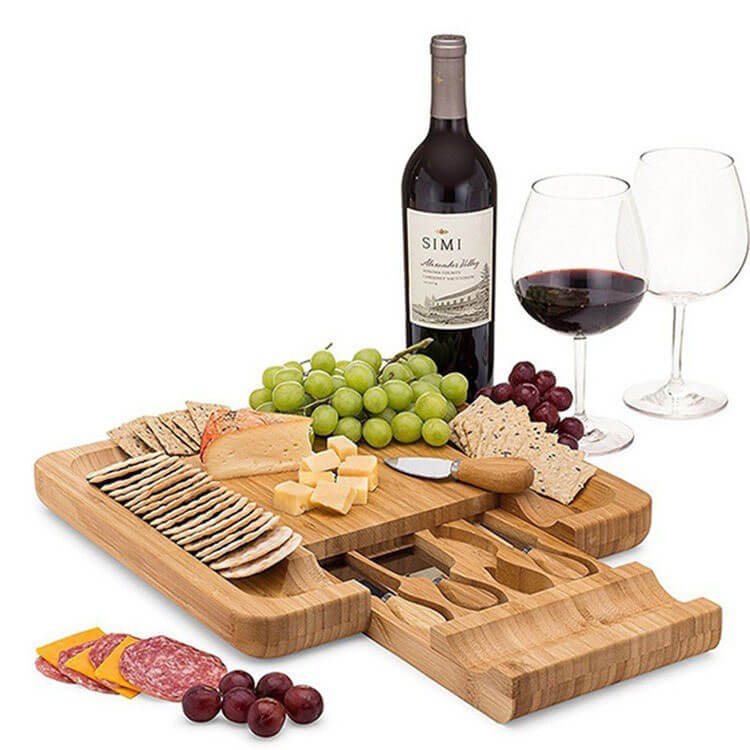
| Typical use | Chef boards, butcher blocks | Everyday cutting boards, charcuterie |
The cost and durability differences above are typical patterns; confirm exact pricing with the factory because wood costs vary by species and by season.
Wood Species and Moisture Control
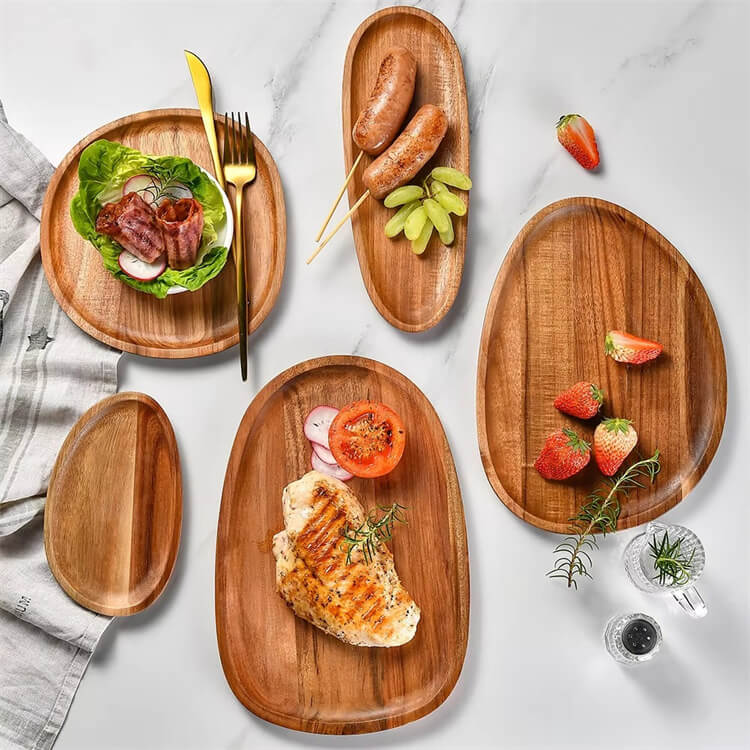
Common OEM species include bamboo, rubberwood, acacia, walnut and sometimes beech. Each has a different hardness, color and price. Bamboo is light-colored, hard and inexpensive but can dull knives faster. Rubberwood is a popular mid-range choice with a clean, light look. Acacia has a pronounced grain and a warm tone. Walnut is the premium option with rich dark color and good stability. Whatever the species, moisture content is the hidden spec: boards that are not kiln-dried to the right level warp or crack after export, especially when they move from a humid factory to a dry retail market. Ask for the moisture content target and confirm how the factory stores the wood before production. In the same conversation, ask about the wood supply chain: where the timber comes from, whether the factory holds any sustainable sourcing documentation, and whether the species you want is stable in supply. A factory that can name its timber source and show the drying records is a factory that treats wood as a material, not just as a commodity.
Wooden boards fit naturally into a broader kitchenware order. Our kitchenware product range includes boards alongside utensils and tools, and the full product catalogue shows the complete range you can consolidate.
Finishes and Food-Safe Oils
Most wooden boards ship with a mineral oil or a mineral oil and beeswax finish. Mineral oil is food-safe and the standard choice; beeswax adds a soft sheen. Confirm what finish is applied and whether it is applied at the factory or left for the retailer. For private-label programs, decide whether the customer should oil the board on arrival or receive it pre-oiled — this is a labeling decision as much as a production decision. Also confirm that the finish does not contain solvents that would need special labeling, and ask whether the finish is suitable for the market you are selling into.
Glue, Construction and QC Checks
An end grain board is only as good as its glue joints. Confirm that the adhesive is food-safe, that the joints are tight with no visible gaps, and that the surface is sanded smooth after gluing. Common QC checks for wooden boards are: visible glue lines, sanding quality at the edges, corner and edge routing, presence of cracks or knots, and dimensional accuracy against the spec. For boards with a juice groove or handle hole, check the routing quality — a rough groove collects water and invites complaints. Ask for photos of the finished pieces from the production line, and approve a sample before mass production.
OEM Details: Logo, Edge Shape and Packaging
Wooden boards are one of the easiest kitchenware items to brand, which makes them popular for OEM programs. Confirm the logo method — laser engraving is the most common, and it is permanent, but the engraved area may need a finish touch-up. Edge shape options include rounded, beveled and handled designs; each changes the CNC or routing time and therefore the price. On packaging, most retail programs use a printed sleeve or a gift box, and some add a care card explaining how to oil the board. Confirm the carton size and inner packing, and check whether the packaging is retail-ready or bulk, before you compare quotes.
Care Instructions and Retail Support
Wooden boards come with a care burden that metal and plastic boards do not, and the label is the cheapest way to manage it. Decide what the end customer should do: hand wash, oil periodically, and avoid the dishwasher and long soaking. Put the care steps on a small card or on the back label, because an unlabeled wooden board gets treated like plastic and comes back stained or warped. For premium boards, some brands include a small bottle of mineral oil in the package — it raises perceived value and reduces care complaints at the same time. Confirm the care card artwork and the oil bottle option with the factory before the quote, because both change the packaging cost.
Quick check: Should a first order mix end grain and edge grain?
Usually not. Start with one construction to keep QC simple, then add the second line after you have sell-through data. The two constructions have different price points and different quality issues, so managing both at once in a first order doubles the inspection work.
FAQ: Wooden Chopping Board OEM
Which construction is better for retail: end grain or edge grain?
It depends on the price point. Edge grain covers the budget-to-mid range and sells in volume; end grain justifies a premium price and attracts serious home cooks. Match the construction to the customer you already serve.
What wood species should I use for an OEM board?
Bamboo and rubberwood are common for budget-to-mid lines, acacia works well for a warm mid-range look, and walnut is the premium option. Confirm the moisture content target and the factory’s drying process for whichever species you choose.
Is laser engraving safe for food-contact boards?
Laser engraving is the standard branding method for wooden boards. Confirm the engraving depth and whether the engraved area is refinished, and ask the factory for their standard process before approving artwork.
How do I prevent warping complaints after export?
Confirm the moisture content spec and the factory’s kiln-drying process, approve a pre-production sample, and include care instructions on the label. Most warping complaints trace back to moisture, not to the wood species itself.
Final Recommendation
Choose the construction by price point, then verify the hidden specs: moisture content, glue, finish and packaging. A wooden chopping board looks simple, but the difference between a premium seller and a returns problem is usually in the drying and gluing steps that no photo can show. Sample first, keep the approved sample, and put every spec in writing.
If you are planning a wooden chopping board OEM program, send us your target species, construction and quantities. We reply with material options, finish samples and lead-time estimates. Request a quote or contact us directly via WhatsApp — a real sourcing specialist will respond.