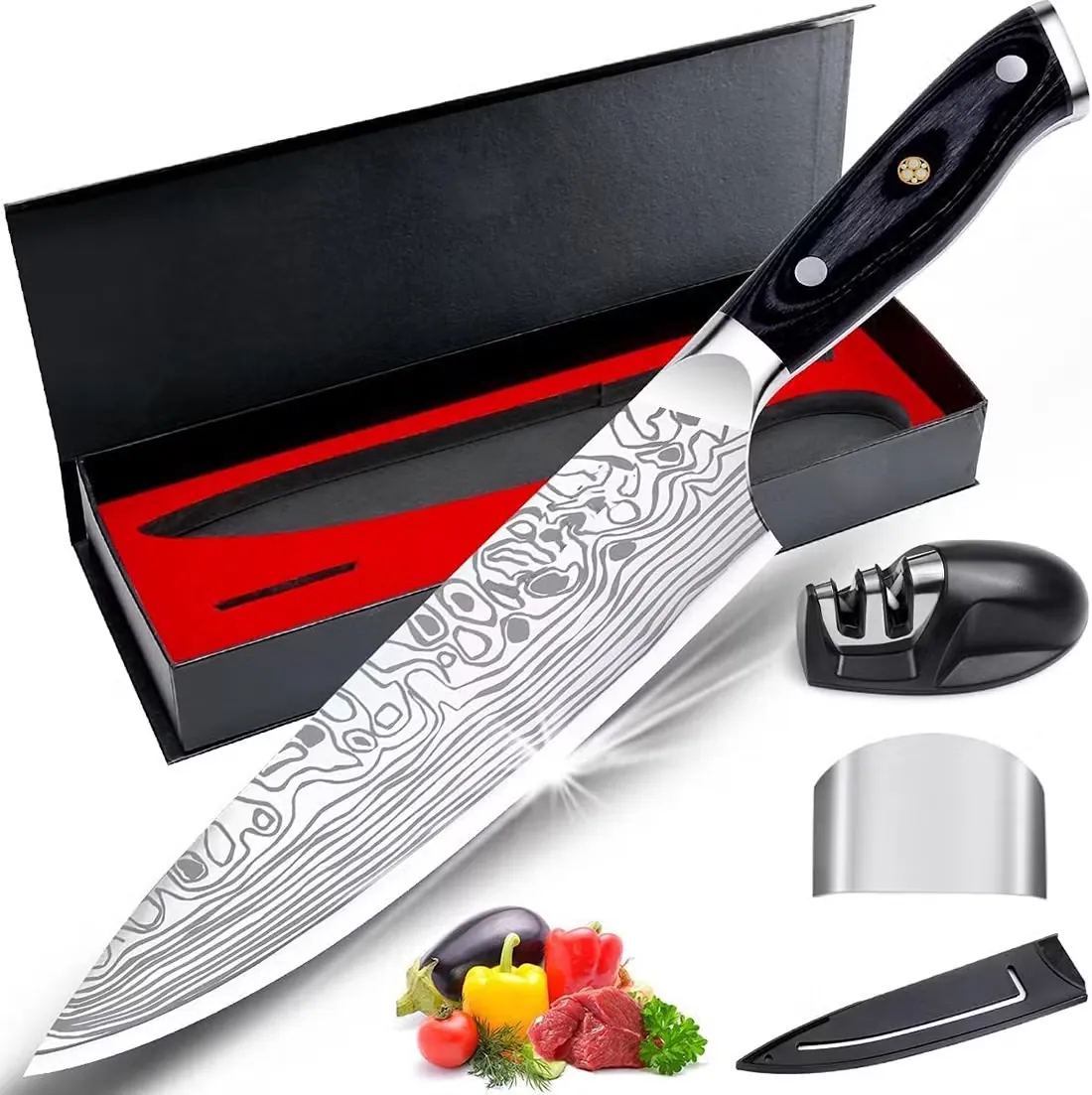
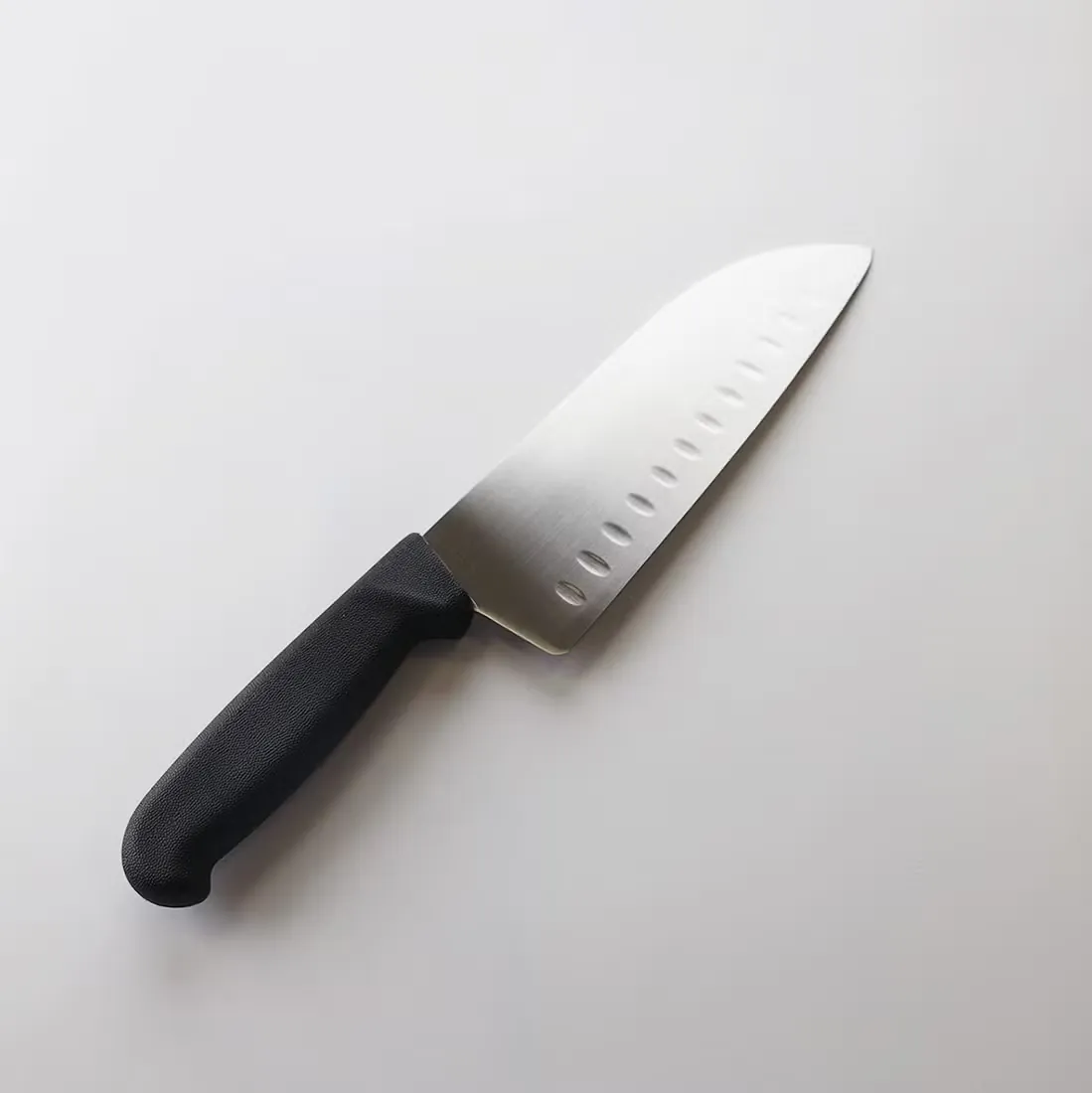
Kitchen knife OEM quality is decided by the blade blank and the heat treatment, not by the handle or the logo. A knife with a good steel blank and a consistent heat treatment will hold an edge and feel balanced; a knife with a weak blank will disappoint no matter how nice the packaging looks. This guide covers the blank, hardness and edge retention questions to discuss with a knife manufacturer before production.
Blade Blank versus Full Custom Forging
Most OEM kitchen knives start from a blade blank — a pre-shaped piece of steel that the factory buys or stamps, then grinds, heat-treats and finishes. Working from blanks is cheaper and faster than full custom forging, and it is the right choice for most branded knife lines. Full custom forging means the blade shape, steel composition and forging process are developed for you, which usually requires tooling and much higher minimums.
Ask the factory which steel grade the blank uses and where the blank comes from. Steel grade names matter less than consistent sourcing: a factory that switches blank suppliers between orders can change the hardness and edge behavior of the same model.
| Steel type | Typical traits | Common use in OEM knives |
|---|---|---|
| German-style stainless | Balanced hardness, easy to sharpen, corrosion resistant | General chef and utility knives |
| Japanese-style high-carbon stainless | Higher hardness, thinner edge, holds edge longer | Chef, santoku and slicer knives |
| Molybdenum-vanadium stainless | Good edge retention at moderate hardness | Mid-range kitchen knife lines |
Do not rely on the steel name alone. Confirm the actual hardness range after heat treatment, because the same grade can behave differently with different heat treatment processes.
Heat Treatment and Hardness
Heat treatment is the heating, quenching and tempering cycle that sets the steel’s hardness and toughness. Kitchen knives usually target a hardness in the range of 52 to 58 HRC, with higher-carbon blades sometimes reaching higher values. Higher hardness holds an edge longer but is harder to sharpen and can chip more easily; lower hardness is tougher but dulls faster.
Ask the factory for the target HRC range and how it is verified. A factory that controls hardness with testing on the production line can show you the results; one that cannot state a range is likely treating knives “by recipe” without measurement.
What hardness should a kitchen knife be?
Most kitchen knives are heat-treated to a hardness around 52 to 58 HRC. The right target depends on the steel grade and the product position: softer knives are easier to sharpen, harder knives hold an edge longer but chip more easily. Confirm the HRC range with the manufacturer and check it on the sample.
Edge Retention and Sharpening
Edge retention is how long the knife stays sharp in normal use, and it depends on steel, hardness, edge geometry and how the edge is finished. There is no universal number that predicts retention across different cutting styles, so test the sample in your own use case rather than relying on a marketing claim.
Ask the factory for the edge angle and finish. A thinner edge at a lower angle cuts more aggressively but is more delicate; a thicker edge is more durable but less sharp. Match the edge geometry to your target user — home cooks and professional kitchens behave differently.
Ask the factory whether the blade is sharpened before or after the handle is fitted, because that affects the final edge angle and the production tolerances. A factory that can describe the sharpening step in detail, including the grit sequence and any final honing, is usually running a controlled process. If the answer is vague, plan to test the edge on your own sample before approving the order.
Handle, Assembly and Branding
The handle affects how the knife feels and how much it costs to assemble. Common options are full tang with riveted handles, partial tang with molded handles, and one-piece stamped designs. Full tang knives are heavier and more balanced; molded handles are cheaper and easier to produce in custom colors.
For branding, confirm the logo method — laser marking, etching, printing or embossing on the blade, handle or packaging — and where the logo is placed. Laser marking on the blade is common, but the marking may fade or react with the finish if the steel is not prepared correctly. Approve the logo position on a pre-production sample before bulk production.
QC Checks on a Knife Sample
Run these checks on the pre-production sample:
- Hardness reading within the agreed HRC range, verified on the sample.
- Blade geometry — edge angle, thickness and grind consistency along the blade.
- Balance — the knife should feel balanced at the handle when held.
- Handle fit — no wobble, no exposed tang edges, rivets flush.
- Logo placement and finish, matching your artwork.
- Packaging that protects the edge and matches your retail format.
Keep the approved sample as the shipment reference. Compare every production batch against it, especially the hardness reading and the edge geometry, because those two fields change with process drift.
FAQ: Kitchen Knife OEM
What is a blade blank in knife OEM?
A blade blank is a pre-shaped piece of steel that the factory grinds, heat-treats and finishes into a knife. Most OEM programs start from blanks because they are cheaper and faster than full custom forging, which needs new tooling and much higher minimums.
What hardness should a kitchen knife be?
Most kitchen knives are heat-treated to a hardness around 52 to 58 HRC. The right target depends on the steel grade and product position. Confirm the HRC range in writing and verify it on the pre-production sample.
How is heat treatment verified in knife production?
Ask the factory for the target HRC range and its testing method. Production-line hardness testing shows you the actual results; a factory that cannot state a range is likely treating knives without measurement, which is a quality risk.
What edge retention should I expect from an OEM knife?
Edge retention depends on steel, hardness, edge geometry and use pattern, so there is no single number that applies everywhere. Test the sample in your own use case and compare batches against the approved reference rather than relying on marketing claims.
Can I brand kitchen knives with my logo?
Yes. Common methods are laser marking, etching, printing or embossing on the blade, handle or packaging. Approve the logo position and method on a pre-production sample, because some markings interact with the blade finish.
Final Recommendation
Treat the blade blank and heat treatment as the core of the specification, verify the HRC range on the sample, and keep that sample as the reference for every shipment. The handle, logo and packaging are important, but they do not compensate for an inconsistent blade.
Browse the kitchenware product range for knife references and the tableware range for cutlery and serving pieces that pair with a knife line. If you are planning a knife OEM program and want help structuring the spec or shortlisting manufacturers, contact us with your target models, steel preference and quantities. Request a quote or message us on WhatsApp — we will review your knife specification with you.