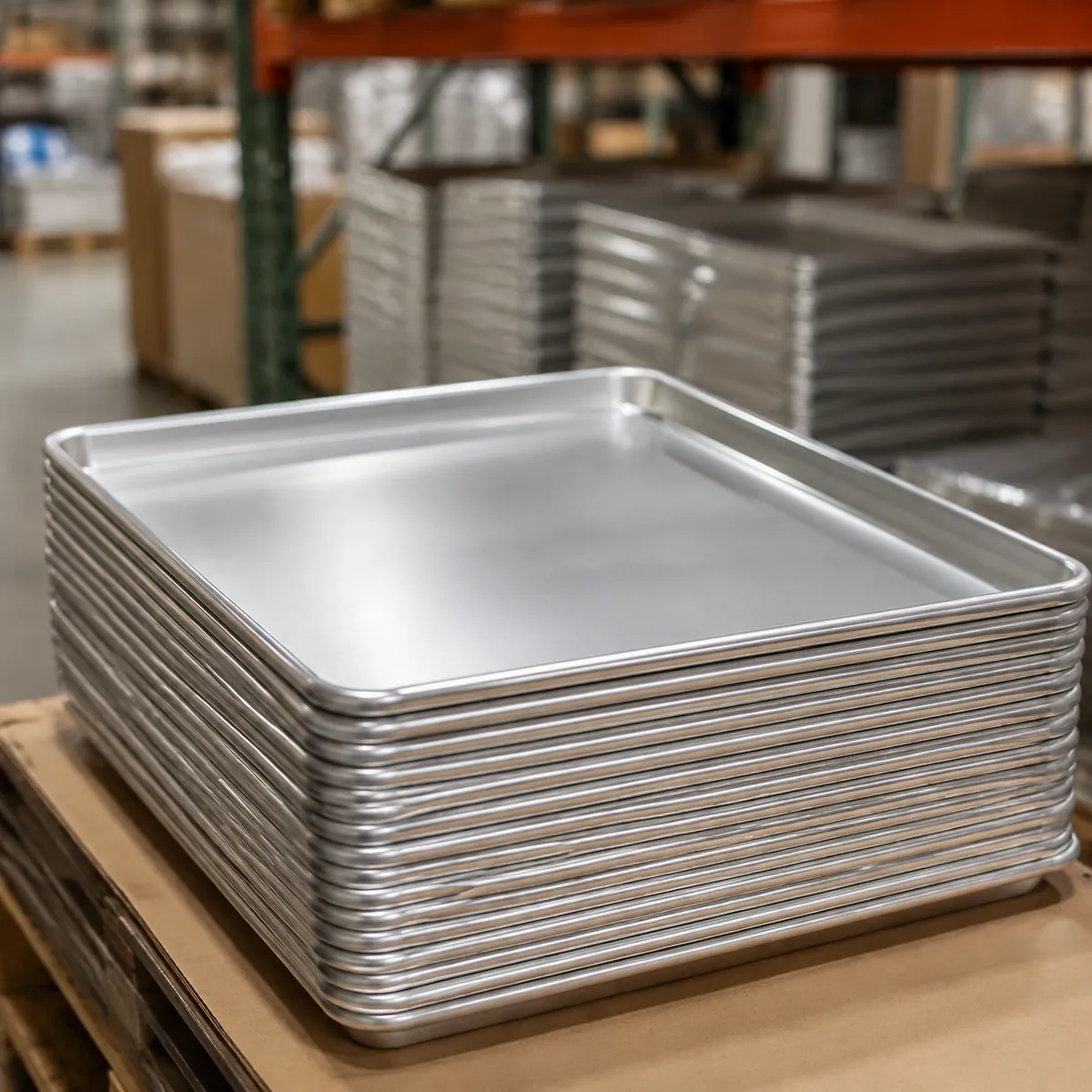
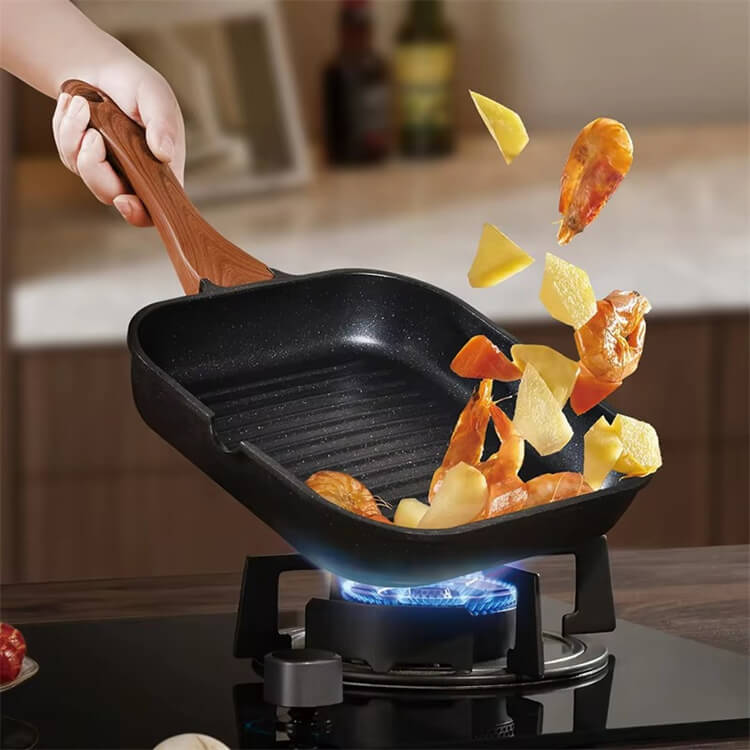
Baking trays are not a single product category — the material, gauge, and coating decide whether a tray works in a commercial bakery, a home kitchen, or a catering kitchen, and they change the wholesale price more than any other factor. If you are sourcing baking trays wholesale, the first decision is material: carbon steel, aluminum, or stainless steel, each with a different balance of heat conduction, weight, durability, and price.
Carbon steel baking trays
Carbon steel is the workhorse of commercial baking. It conducts heat quickly, holds a reasonable temperature, and tolerates the rough handling of a bakery line. Most commercial sheet pans and bun pans are carbon steel with a coating — usually a non-stick or a blue/black oxide finish — because bare steel rusts when washed.
What to check with carbon steel suppliers
- Gauge: thicker steel (lower gauge number) resists warping under heavy loads.
- Coating type: non-stick coatings reduce sticking but have temperature limits; seasoned/oxide finishes behave differently.
- Warping risk: thin trays warp in high oven heat, which is a top complaint from commercial kitchens.
Aluminum baking trays
Aluminum is prized for even heat distribution and light weight. It is common in home baking and catering where trays are handled often. The trade-off is durability: aluminum dents and bends more easily than steel, and bare aluminum reacts with acidic foods. Many suppliers offer aluminum trays with an anodized or non-stick finish to manage those issues.
What to check with aluminum suppliers
- Alloy and thickness: standard 3003 or similar aluminum alloys, thickness measured in mm or gauge.
- Finish: anodized vs non-stick vs bare, and the food-contact suitability of the finish.
- Reinforcement: rolled or reinforced edges reduce warping and add strength.
Stainless steel baking trays
Stainless steel is the premium option. It resists rust, cleans easily, and does not react with food, which is why it appears in high-end bakeware and medical-grade kitchens. The trade-off is heat conductivity: stainless conducts less evenly than aluminum, so many stainless trays use a layered or clad base. Stainless is also the heaviest option per tray.
Quick comparison for wholesale buyers
| Material | Heat distribution | Weight | Durability | Typical price position | Best fit |
|---|---|---|---|---|---|
| Carbon steel | Good | Medium | High (with coating) | Budget to mid | Commercial bakeries, sheet pans |
| Aluminum | Excellent | Light | Medium — dents | Mid | Home baking, catering |
| Stainless steel | Moderate (clad improves) | Heavy | Very high | Premium | High-end retail, specialty kitchens |
Price positions are general guidance only — confirm actual pricing with suppliers because gauge and coating move the number more than the material name.
Gauge and size decisions
Gauge controls strength and heat behavior. A heavier tray costs more to ship and more to buy, but it survives longer in commercial use. For retail bakeware, lighter trays are often fine because the customer bakes at home with gentler loads. Sizes are largely standardized — quarter, half, and full sheet pans are the common wholesale lines — but dimensions vary slightly between suppliers, so confirm the exact outside dimension and depth before ordering.
Gauge selection by use case
Gauge is the number that turns a baking tray from a commodity into a product decision. Thinner trays are cheaper and lighter but warp under heat and heavy loads; thicker trays cost more but hold their shape. For a typical home baking line, trays in the medium range are usually sufficient. For commercial bakery use, buyers usually ask for heavier stock because trays cycle through ovens, racks, and washing lines all day.
| Use case | Typical material | Typical thickness direction | Key concern |
|---|---|---|---|
| Home retail bakeware | Aluminum or coated carbon steel | Lighter, cost-driven | Appearance, non-stick behavior |
| Catering | Aluminum with reinforced edges | Medium | Weight, easy handling |
| Commercial bakery | Carbon steel, coated | Heavier | Warp resistance, durability |
| Premium/retail specialty | Stainless or clad | Varies | Finish, food-contact image |
These are general patterns, not fixed specs — confirm the exact gauge, dimensions, and coating with each supplier for the tray sizes you plan to stock.
Coating options and food-contact checks
The coating on a baking tray is a safety issue, not just a performance feature. Non-stick coatings on bakeware must be suitable for food contact and rated for the oven temperatures the tray will reach. When comparing suppliers, ask for the coating type, the maximum temperature rating, and the food-contact documentation for the coating. Confirm the coating is applied to the full surface you intend to use — some suppliers coat only the inside of a pan.
Bare metal trays also raise questions. Carbon steel trays without a protective finish need seasoning or immediate washing, which is fine for professional users who understand the maintenance but a poor fit for casual retail customers. If your target buyer expects a wash-and-use product, factor a suitable coating into the spec and the budget.
Building a tray assortment for your market
Most wholesale buyers do not stock one tray — they build a range. A practical starting assortment covers three sizes and two materials: a full sheet pan and half sheet pan in coated carbon steel for commercial customers, plus a medium aluminum tray with a non-stick finish for home retail. Add a specialty item such as a perforated or reinforced tray if your channel serves bakeries.
When you brief the supplier, specify each SKU separately with material, gauge, dimension, coating, and packaging. Mixed-model orders are common in bakeware, so confirm that the factory can combine several tray types into one container without inflating the per-SKU minimum.
FAQ
What material is best for commercial baking trays?
Carbon steel with a suitable coating is the most common choice for commercial sheet pans because it balances heat conduction, strength, and cost. Aluminum is preferred when even heat and light weight matter more, and stainless steel suits high-end or high-hygiene applications.
Do aluminum baking trays warp in the oven?
Thin aluminum can warp under high heat or sudden temperature changes. Thicker aluminum, reinforced edges, and gradual temperature changes reduce the risk. Confirm the gauge with the supplier for the tray size you plan to stock.
Can baking trays be customized with a logo?
Many suppliers offer logo stamping, embossing, or printed labels on baking trays, usually with a separate tooling or setup cost and a minimum order quantity. Ask for the customization options and MOQ before comparing quotes.
Final recommendation
Match the material to the end customer: carbon steel for commercial, aluminum for home and catering, stainless for premium lines — and let gauge and coating, not just material, drive the spec. Start with the bakeware product range or request a quote with your target market and tray sizes.