Wooden chopping boards are one of the easiest kitchenware products to private label, and one of the easiest to get wrong. The wood looks the same in a catalog photo, but the grade, the finish and the branding method decide whether your customer gets a clean, long-lasting board or a warped, stained disappointment. OEM suppliers can cut custom shapes and brand them, but you need to specify the details that protect your label.
What an OEM Supplier Can Do
Custom shapes
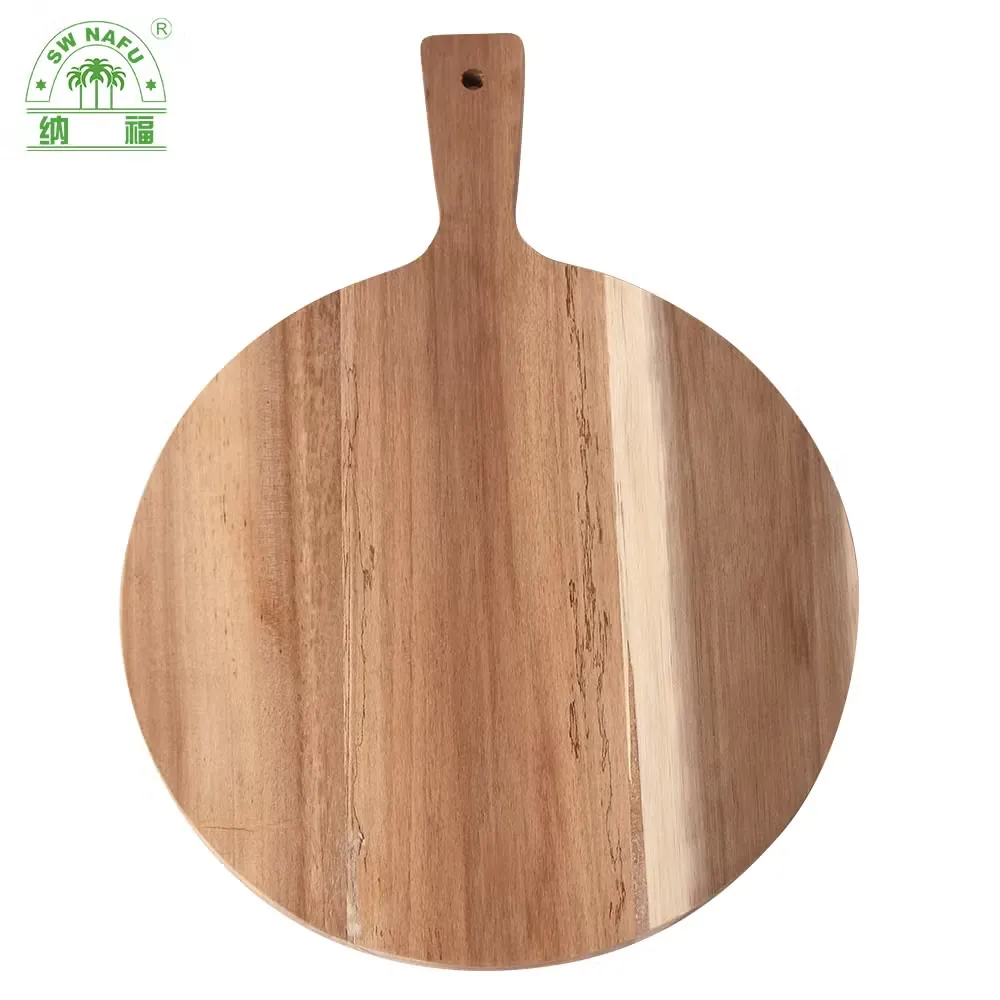
From standard rectangles to round, handle-cut or branded silhouette shapes, most factories work from existing templates or new tooling. Ask whether your custom shape needs a new cutting template and what that costs.
Private label branding
Laser engraving is the most common method for logos on wood. Printed branding is possible on some surfaces, and edge or handle branding works for boards that will not be cut on that area. Choose the method that matches how the board will be used.
Wood Choice and Grade
| Wood type | Typical character | OEM note |
|---|---|---|
| Acacia | Dense, medium color, visible grain | Common for budget-to-mid programs |
| Rubberwood | Light color, consistent grain | Often used for lower-cost boards |
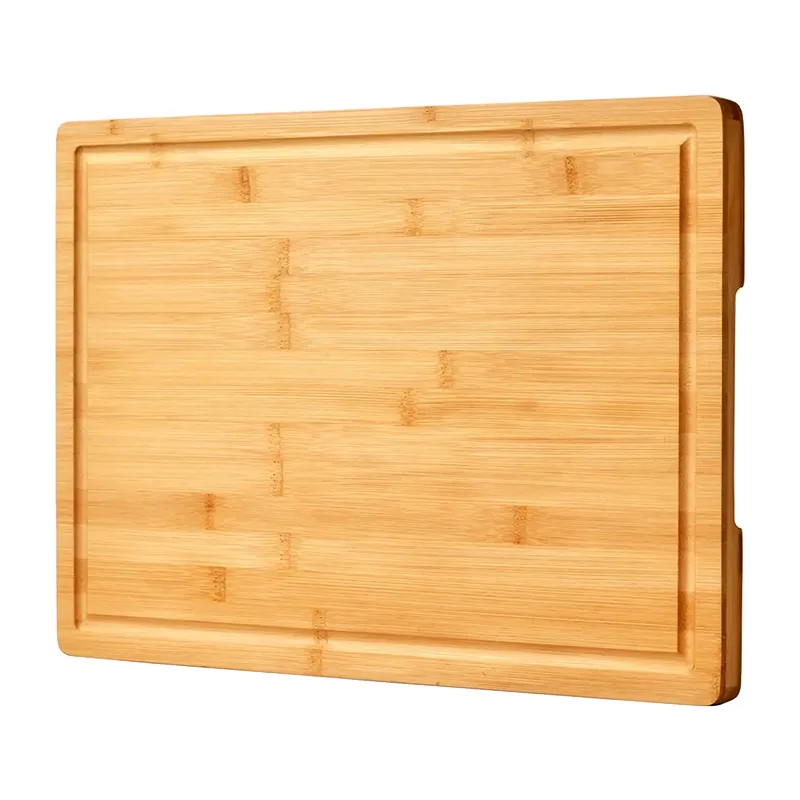
| Bamboo | Hard, light, eco story | Glued strips; check joint quality |
| Walnut / maple | Premium look, higher cost | For higher-price retail lines |
Wood grading matters more than the species name. Ask about knots, mineral streaks and how the factory selects boards for the top grade. The same species can look very different between grades.
Food-Safe Finishes and Certification
The finish is the layer your customer’s food touches. Mineral oil and food-safe oil blends are the standard choices. Some suppliers also offer pre-seasoned boards. Ask for the finish name and, when your market requires it, the food-contact test report for the finished board, not just for the oil.
Branding: What to Specify
Logo placement and size
Send artwork with clear placement: center, corner, edge or handle. Specify the maximum engraving size so the logo stays readable and the cutting area stays usable.
Engraving depth and color
Laser depth changes the look and the surface feel. A shallow logo is smoother but less durable; a deep engraving is more visible but can collect food. Confirm the depth and whether the engraving is sealed with a food-safe finish.
Artwork approval
Factories usually ask for a pre-production sample with the actual branding before bulk production. Budget one extra week for the approval cycle, especially when multiple colors or packaging layers are involved.
QC Checks Before Shipping
Check grain selection and surface sanding, confirm the finish is applied evenly, inspect the branding quality, and test for splinters at edges and handle holes. Moisture content matters for warping, so ask whether the factory dries the wood to a stable range before machining and packing.
FAQ: Can I combine custom shapes with stock boards in one order?
Yes, many suppliers mix standard and custom lines in one order to reach the overall volume. Custom items usually carry their own MOQ, so confirm both numbers separately before combining.
The Paperwork That Protects the Label
For a private label program, keep the artwork files, the approved sample, the finish name and the QC checklist in one file. When the next order comes, the same file becomes your reorder specification, which is faster and safer than renegotiating from memory.
Private Label Board Checklist
Protect your brand with these checks before production:
- Confirm the wood species and the grade selection with the factory
- Approve a pre-production sample with the actual branding applied
- Specify logo placement, size and engraving depth in the artwork file
- Ask for the finish name and the food-contact documentation for the finished board
- Include moisture content and edge sanding checks in the QC list
Wooden boards also need a plan for after-sales. Warping and cracking are the most common complaints, and how the factory dries and stores the wood affects how often those complaints appear. Ask how the boards are stored before packing and whether the factory re-checks moisture content before loading.
For more sourcing context, browse our kitchenware products and tableware products collections.
One more practical point: prices, lead times and material grades should always be confirmed with the supplier in writing before an order is placed. Market conditions change, and a written confirmation protects both sides when the container finally ships.
For buyers comparing several suppliers, keep one specification sheet per factory and update it after every call. A shared document makes it easier to compare quotes and harder for details to get lost between emails.
If this is your first import order, leave extra time in the schedule for samples and approvals. Most delays happen at the sample stage, not on the production line, because both sides are still aligning on what “final” means.
Shipping terms matter as much as the unit price. Confirm whether the quote is FOB, CIF or EXW, and check who handles inland trucking, export documents and inspection before the container is booked.
Finally, keep a record of every approval: artwork, sample photos, packing instructions and payment terms. When the second order comes, that record becomes the fastest way to get an accurate quote.
One more practical point: prices, lead times and material grades should always be confirmed with the supplier in writing before an order is placed. Market conditions change, and a written confirmation protects both sides when the container finally ships.
For buyers comparing several suppliers, keep one specification sheet per factory and update it after every call. A shared document makes it easier to compare quotes and harder for details to get lost between emails.
Frequently Asked Questions
Can I get a custom-shaped wooden chopping board with my logo?
Yes, most OEM suppliers offer custom shapes from standard wood blanks, with laser engraving, printing or branding on the surface. Custom shapes may require a cutting template or mold, so confirm the tooling cost and MOQ before production.
Is laser engraving food-safe on a cutting board?
Laser engraving burns the surface rather than adding ink, which is why it is a common choice for food-contact items. Confirm the process with the supplier and check that the engraved area is clean and sealed with a food-safe finish where required.
What finish should I choose for a private label chopping board?
Mineral oil or food-safe oil finishes are the most common for wooden boards. Avoid finishes that are not rated for food contact. Ask the supplier for the finish name and, if your market requires it, the food-contact test report.
What is the typical MOQ for a custom wooden board?
It varies by supplier and board size, but a few hundred to a few thousand pieces is a common working range for standard wood types. Custom shapes, specialty wood and extra branding steps may raise the minimum.
Planning a kitchenware order? Send us your product list or target specs and get a sourcing quote. We work with importers, retailers and brands on OEM and wholesale programs.