An OEM kitchenware MOQ can feel like a wall on your first order. A factory says 3,000 pieces, and you only need 800. Walk away and you lose the supplier; accept it and you hold stock you cannot sell. The practical middle path is bundling: combining products, sizes or colors so your total order reaches the minimum without betting your whole budget on one line.
First, Understand What the MOQ Actually Covers
MOQ is not one number. It can be per SKU, per product line, per production batch or per order. A factory’s minimum depends on setup cost: stamping dies, coating lines, printing plates and packaging runs all cost money to start. Ask the supplier to explain what drives the minimum for your exact product, because the answer changes how you bundle.
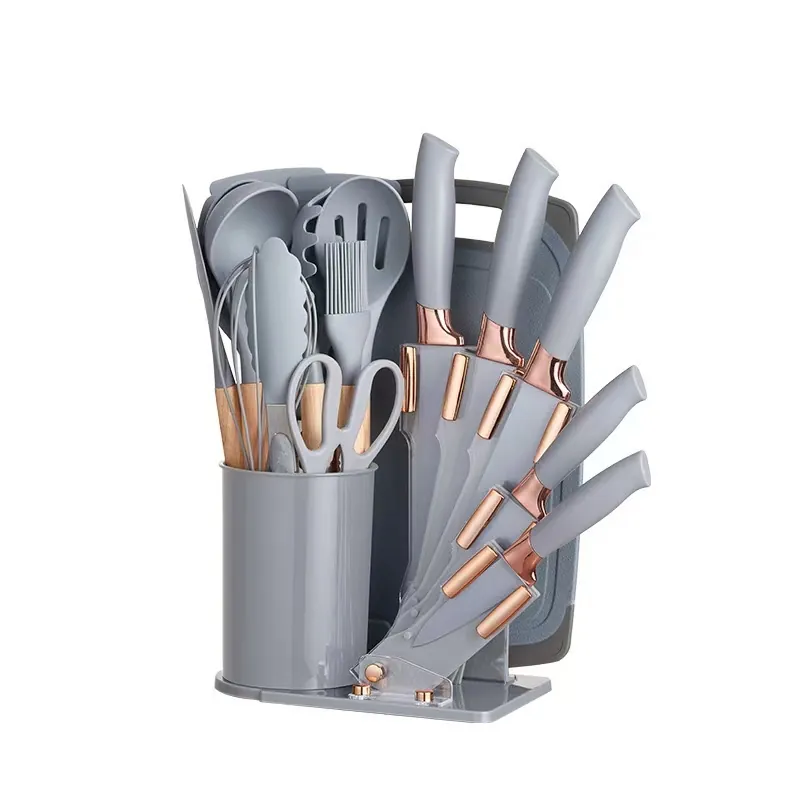
Bundling Strategies That Work
Same category, multiple SKUs
If the MOQ is per production line, several SKUs that share the line can be combined. For example, three sizes of the same silicone mold or two handle variants of one pan model may count as one batch. Confirm this explicitly before you plan.
Size and color sharing
Many factories count sizes of the same model toward one minimum, because the tooling is the same. Colors behave differently: a printed or molded item may need a minimum per color. Use sizes to reach the minimum and keep colors limited in round one.
Add a stock item to the mix
If your custom item is under the minimum, add a standard catalog item from the same factory to the same order. Stock lines usually have low minimums, and the factory sees one consolidated order instead of two small ones.
Negotiating a Mixed Minimum
| Approach | What to say | Risk |
|---|---|---|
| Per-line bundling | “Can these three sizes share the MOQ?” | Factory may say no for coated items |
| Higher unit price on first order | “I will pay +X% to start below MOQ.” | Smaller margin, but lower risk |
| Deposit commitment | “I commit to a second order if this works.” | Only works if you can keep the promise |
| Sample-order program | “Give me a sample order at sample pricing.” | Not all factories have this path |
These are negotiation ideas, not guaranteed outcomes. Every factory has its own policy, and a polite question about the structure of the minimum costs nothing to ask.
Using Stock Programs for Early Orders
If the factory carries a stock range in your category, start there. Stock items let you test the market, build the supplier relationship and reach container volume faster. Once your sales data shows what sells, convert those SKUs into custom-branded versions with a clearer picture of what volume you can commit.
MOQ and Tooling: Know the Difference
Custom shapes usually involve tooling or mold costs separate from the MOQ. Tooling is a one-time investment you can own; the MOQ is the recurring purchase commitment. Ask whether the tooling fee is refundable after a certain order volume, and get the ownership terms in writing.
FAQ: Can I split an MOQ with another buyer?
Group buying happens informally, but it adds complexity: who owns the tooling, who approves the artwork, and what happens if one party cancels. If you go this route, put the agreement in writing before the order. Most buyers find that a stock program plus a small custom line is simpler than sharing with a partner.
Plan the Minimum You Can Sell
The last step is honest math: divide the bundled MOQ by your realistic monthly sales to see how many months of stock you are committing to. If the answer is more than you can carry, cut colors, not SKUs, and keep the line structure that lets you grow later.
MOQ Planning Checklist
Before you accept a minimum order quantity, confirm these details:
- Ask whether the MOQ is per SKU, per product line or per order
- Confirm whether sizes share a minimum while colors may not
- Combine stock items to fill the gap in a custom order
- Separate tooling costs from the MOQ in the quote
- Calculate how many months of stock the minimum represents at your sales rate
Remember that the MOQ conversation is a negotiation, not a fixed wall. Suppliers adjust minimums when the order structure makes sense for their line, such as a longer-term commitment or a repeat program. Buyers who ask clear questions about how the minimum is built usually find more room than those who simply accept the first number.
For more sourcing context, browse our kitchenware products and products collections.
One more practical point: prices, lead times and material grades should always be confirmed with the supplier in writing before an order is placed. Market conditions change, and a written confirmation protects both sides when the container finally ships.
For buyers comparing several suppliers, keep one specification sheet per factory and update it after every call. A shared document makes it easier to compare quotes and harder for details to get lost between emails.
If this is your first import order, leave extra time in the schedule for samples and approvals. Most delays happen at the sample stage, not on the production line, because both sides are still aligning on what “final” means.
Shipping terms matter as much as the unit price. Confirm whether the quote is FOB, CIF or EXW, and check who handles inland trucking, export documents and inspection before the container is booked.
Finally, keep a record of every approval: artwork, sample photos, packing instructions and payment terms. When the second order comes, that record becomes the fastest way to get an accurate quote.
One more practical point: prices, lead times and material grades should always be confirmed with the supplier in writing before an order is placed. Market conditions change, and a written confirmation protects both sides when the container finally ships.
For buyers comparing several suppliers, keep one specification sheet per factory and update it after every call. A shared document makes it easier to compare quotes and harder for details to get lost between emails.
Frequently Asked Questions
Can I bundle different products to reach one MOQ?
Some factories allow mixed orders where several SKUs share a total minimum, especially within the same product category and production line. Others set a minimum per SKU. Ask specifically: is the MOQ per SKU or per order?
What is a realistic way to start below a supplier’s MOQ?
Buy stock items in the supplier’s standard catalog, negotiate a sample order at a slightly higher unit price, or split the minimum with another buyer through the same factory. Stock programs are the most reliable path for a first order.
Do colors and sizes count toward the same MOQ?
Sometimes yes, sometimes no. In many factories, multiple sizes of the same model share the line and can be counted together, while each color of a printed or molded item may need its own minimum. Confirm this per product before planning.
Is a higher MOQ always a better price?
Usually the unit price drops as volume rises, but the curve flattens. The bigger risk is over-ordering: extra stock that sits in your warehouse costs more than the small discount you earned. Compare the marginal price saving against your sell-through plan.
Planning a kitchenware order? Send us your product list or target specs and get a sourcing quote. We work with importers, retailers and brands on OEM and wholesale programs.