If your retail line includes non-stick frying pans, “PFOA-free” is no longer a differentiator you can ignore — it is a specification you have to get right. PFOA is a chemical that was used in the production of some traditional non-stick coatings, and stricter rules in the EU and parts of the US have pushed most frying pan manufacturers to offer coatings made without it. The practical question for a buyer is not “does PFOA-free exist” but “what exactly should I write in the RFQ so the coating I order matches the claim on my packaging.”
This guide covers the coating types a frying pan manufacturer can offer, what to specify in writing, and which documents to request so the “PFOA-free” claim on your box is backed by something real.
What PFOA-free actually means for frying pans
PFOA (perfluorooctanoic acid) was historically used as a processing aid in PTFE-based non-stick coatings. It is not an ingredient you can see or feel in the finished pan; the concern is about its use during coating production and its environmental persistence. Most major coating suppliers now produce PFOA-free formulations, and many frying pan manufacturers running export lines use them as standard.
Do not confuse “PFOA-free” with “non-stick free.” A pan can still be non-stick — usually with a PTFE-based or ceramic-based coating — while being produced without PFOA. When a buyer writes “non-stick, PFOA-free” in an RFQ, the manufacturer normally confirms the coating brand and its PFOA-free status rather than quoting a completely different product.
Coating types to compare
| Coating type | Typical feel | Notes for buyers |
|---|---|---|
| PTFE-based (PFOA-free) | Slick, classic non-stick | Most common for home cookware; confirm the coating brand and temperature limits |
| Ceramic (sol-gel) | Less slick, more matte | Often marketed as free of PTFE and PFOA; may wear faster depending on formulation |
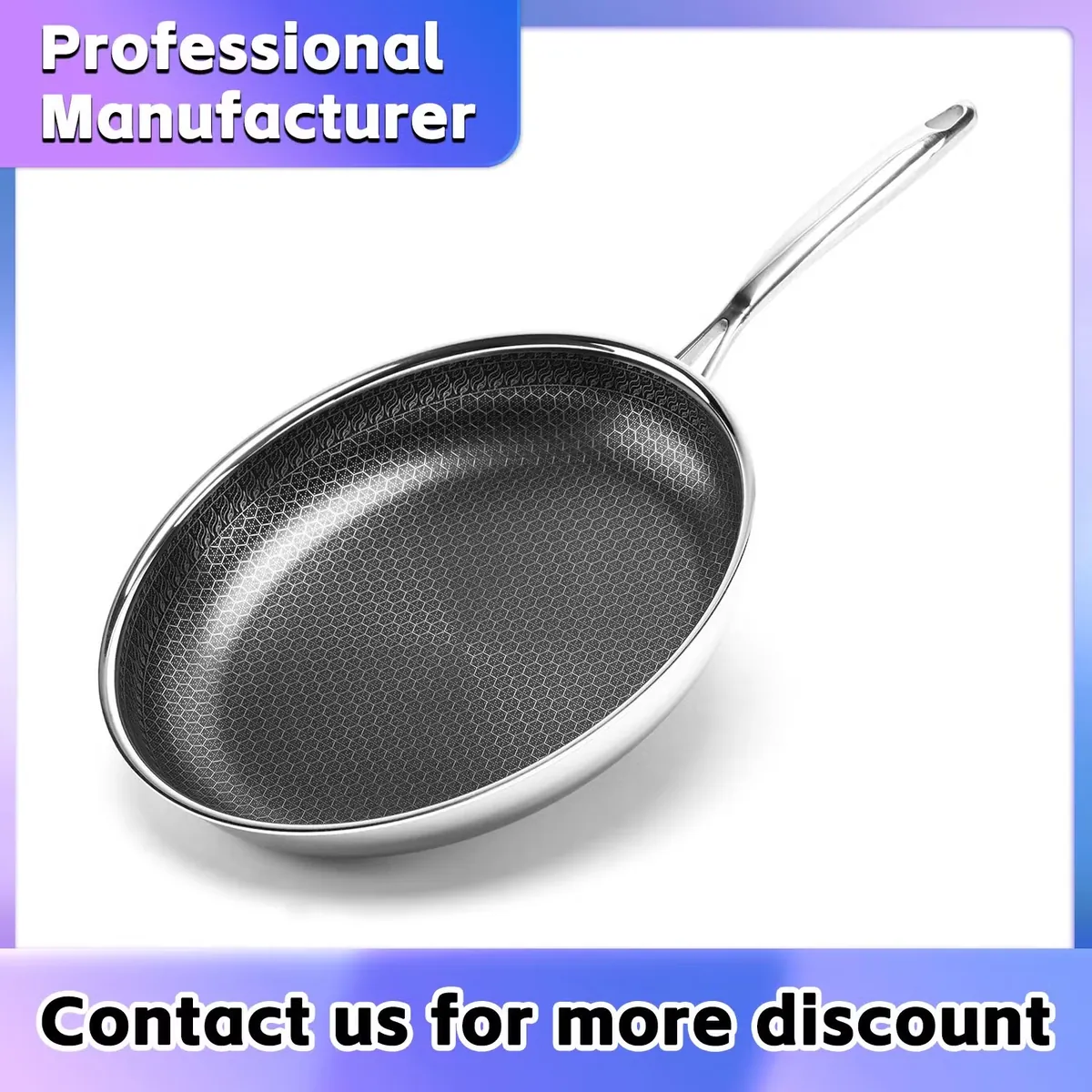
| Honeycomb/textured stainless | Hybrid surface | Metal-utensil friendly lines; still needs coating documentation where applicable |
There is no universal “best” coating — the right choice depends on your price point, brand story and the cooking habits of your customers. What matters for sourcing is that the coating choice is a documented specification, not a vague “non-stick” checkbox.
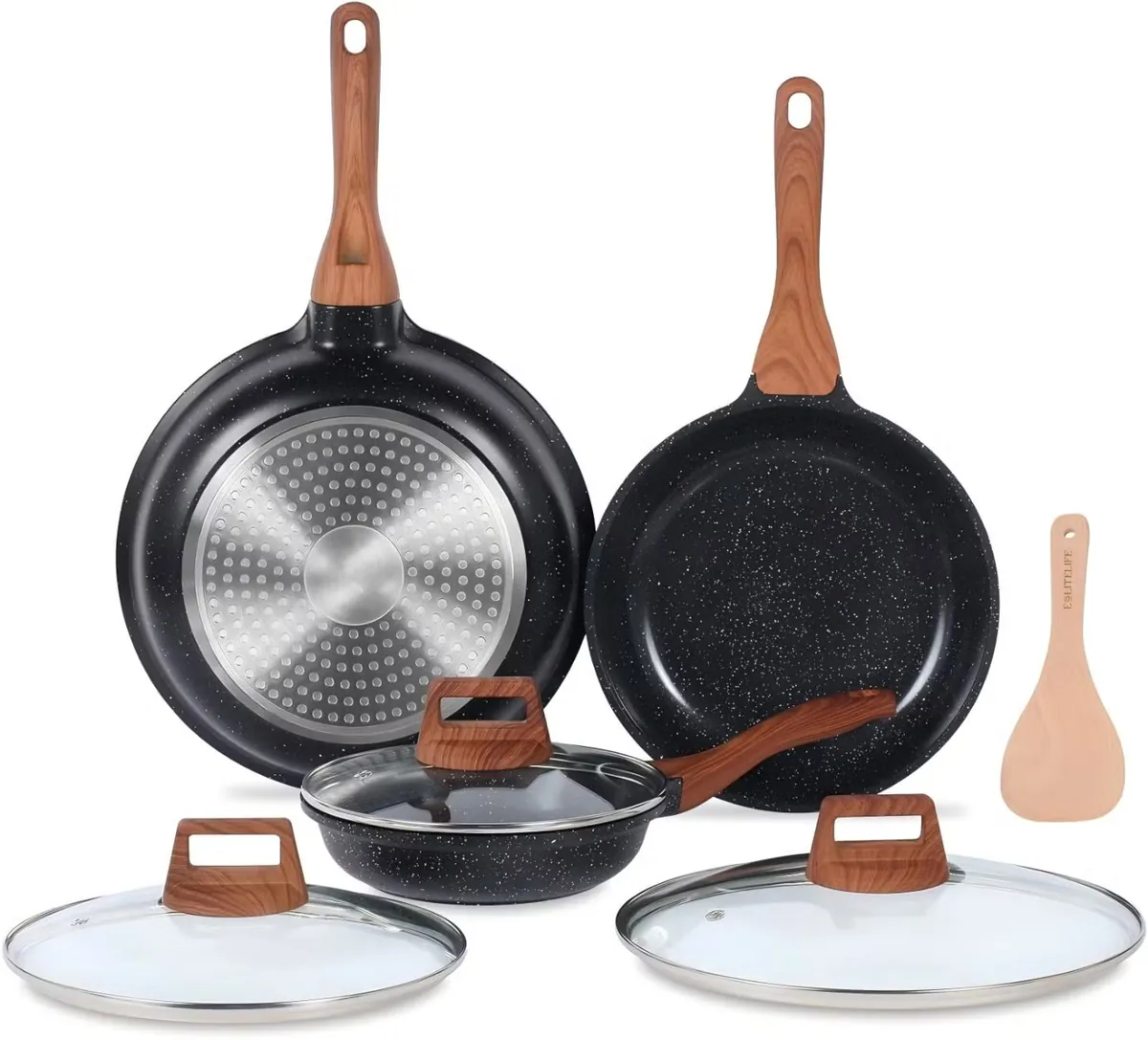
Coating thickness is another line to confirm. Most non-stick coatings are applied in layers, and the total thickness affects durability and price. A thicker coating usually costs more and may last longer, but the difference is only meaningful when the coating supplier’s specification is followed during application. Ask the manufacturer for the coating brand and the number of layers, and compare like for like across suppliers instead of comparing “non-stick” descriptions that hide the detail.
What to write in the RFQ
Send the frying pan manufacturer a specification sheet, not just a product name. Include at least these lines:
- Pan body material and gauge (for example aluminum with a specified thickness, or stainless steel)
- Coating type (PTFE-based PFOA-free, ceramic, or other) and coating brand if you have a preference
- Coating color, including the interior and exterior finish
- Maximum temperature rating for the coating, as stated by the coating supplier
- Pan diameter, depth, handle type and lid requirement
- Packaging: retail box, label language and barcode requirements
- Documents required: coating certificate or test report, food-grade test report
Write the temperature rating carefully. A pan can be rated for oven use up to one temperature and for stovetop cooking at another. If your retail box says “oven safe to 180°C,” make sure the specification sheet and the test report support that number — otherwise the claim is a liability.
Color is where most retail brands get specific. Interior coating colors are usually limited to a few standard options per coating system, while exterior colors and finishes vary more. If your brand needs a custom exterior color, confirm the color-matching process and the color minimum — custom colors may carry a separate setup cost and a higher minimum than the pan MOQ itself. Always approve a physical color sample under normal lighting before the production run.
How do I know the coating is really PFOA-free?
Ask for a written confirmation from the manufacturer naming the coating supplier, and request the coating supplier’s PFOA-free declaration or the relevant test report. A serious frying pan manufacturer will provide this documentation rather than treating “PFOA-free” as a marketing phrase.
Certificates and test reports to request
For retail sales in the EU and US, the practical document set usually includes a food-contact test report for the pan and a coating-related declaration covering PFOA. The exact documents depend on your target market — EU food-contact rules and US state-level requirements are different frameworks, so confirm the list with your importer or retailer before production.
Test reports are product- and batch-specific. A report for one pan model does not automatically cover another model with a different coating color or a different body material. When you order multiple SKUs, ask whether the report covers each SKU or whether separate testing is needed.
Sampling and approval before mass production
For coated cookware, a physical sample matters more than for uncoated products. The coating’s color, gloss, smoothness and edge coverage are visible only in person. Order pre-production samples of each SKU, including the exact coating color and logo position, and approve them in writing before the factory starts the full run.
Packaging also deserves an early decision for coated pans. The coating can be scratched in transit if pans move inside the carton, so confirm the inner-pack plan — separators, foam or paper protection between stacked pans. If your retail box shows the coating color, the photo must match the approved sample, and the care instructions on the box should match the coating’s actual temperature and cleaning limits.
During production, coating quality is where defects usually appear: pinholes, uneven color, thin edges and scratches. If your order size justifies it, a pre-shipment inspection that checks coating surface on a sample of pans is usually money well spent. For a guide to what to check on the pan itself, the cookware products page covers the main body and finish options to compare.
FAQ
Is PFOA-free the same as PFAS-free?
No. PFOA-free means the specific chemical PFOA was not used in production. PFAS is a broader family of chemicals, and “PFAS-free” is a stricter claim that fewer coating systems can meet. Confirm which claim your target market requires.
Does ceramic coating contain PFOA?
Ceramic (sol-gel) coatings are usually produced without PTFE or PFOA, but confirm with the coating supplier — some ceramic formulations still include additives that a strict PFAS claim would not allow.
Do I need a separate certificate for each frying pan model?
Test reports are usually model- and material-specific. If you order several SKUs with different coatings or body materials, ask whether the report covers each one or whether separate testing is required.
The coating specification belongs in the first conversation with the factory, not in the last email before shipment. Send your frying pan RFQ through the contact page with the specification lines above — including coating type, temperature rating and required documents — and the quotation you receive will be much easier to compare across suppliers.