If you sell kitchenware through retail channels, you need retail-ready packaging. If you sell to distributors or repack locally, bulk packaging keeps the landed cost lower. The right choice depends on your channel, your price point, and how much control you want over the shelf look.
Retail-Ready Packaging: What You Are Paying For
Retail-ready packaging means the box or carton itself does part of the selling work. A branded gift box for a cookware set, a printed carton for a baking tray, or a display tray that sits directly on a shelf are all retail-ready formats. The buyer does not have to repack the goods before they reach the customer.
This format usually includes printed branding, a barcode, product copy, and sometimes a window or a hang hole. For a quick view of the product range you might pack this way, browse the kitchenware products collection and the broader product catalog. For kitchenware, common retail-ready options are:
- Printed color cartons with a product image and brand name
- Gift boxes with an inner tray or insert for sets
- Blister or clamshell packs for small tools and gadgets
- Polybag with a printed header card for utensils
The advantage is a consistent shelf look and a better first impression. The trade-off is cost per unit and storage space. Printed cartons are assembled at the factory, which adds labor, and the printed material usually has a minimum order quantity per design.
Bulk Export Packaging: Simple, Dense, Cheaper
Bulk packaging keeps the product protected in the container and lets the importer decide how to present it later. Typical bulk formats are plain export cartons, polybags, or simple brown boxes with a small label. This is the standard choice for importers who repack, sell through distributors, or use e-commerce fulfillment where the box is replaced anyway.
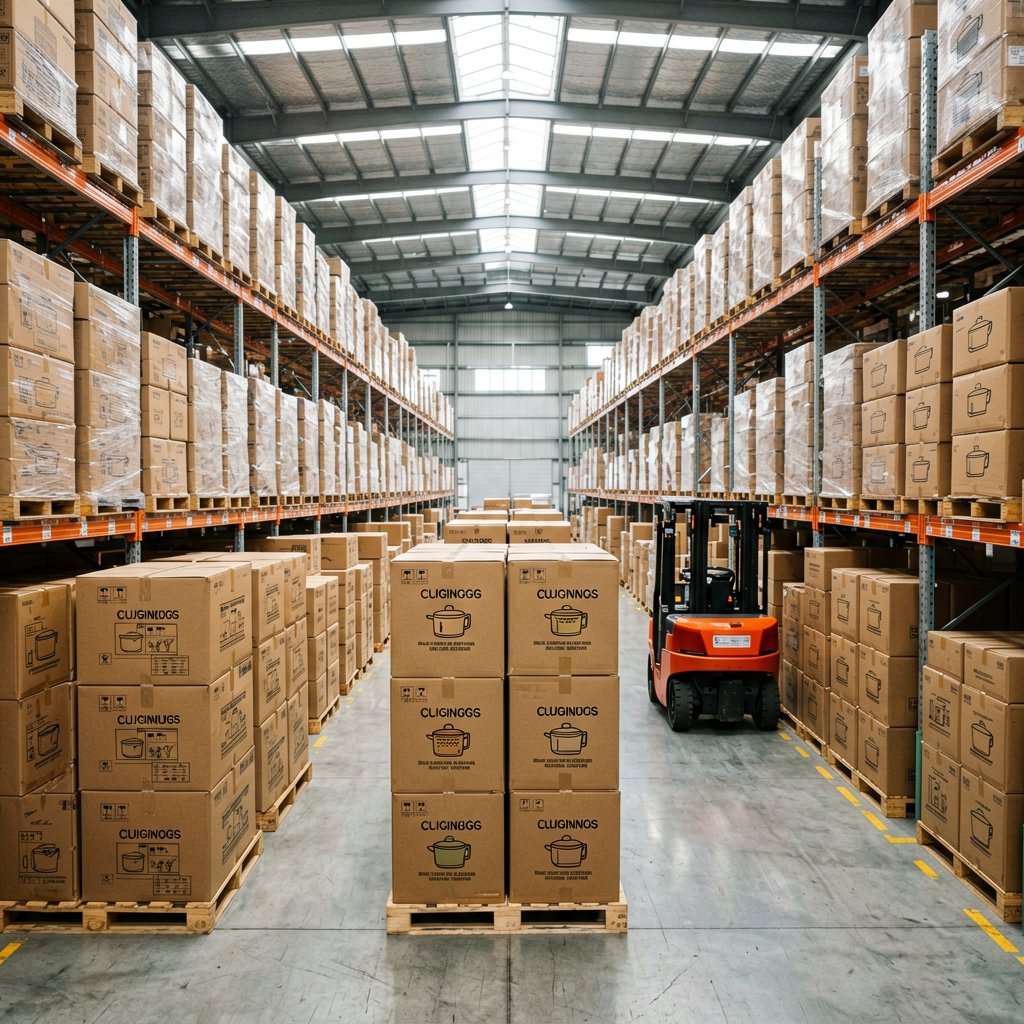
Bulk packing also loads more efficiently. Uniform carton sizes stack better in a 20-foot or 40-foot container, which can reduce freight cost per unit. The downside: you need a repacking step before the goods reach a consumer, and damaged or low-quality cartons can cause complaints even when the product itself is fine.
Carton and Inner Packing Specs to Confirm
Before you place an order, ask the supplier for a clear packing specification. A simple table like the one below is a useful checklist:
| Spec | What to confirm |
|---|---|
| Inner packing | Polybag, foam, paper divider, or tray per unit |
| Master carton size | Length, width, height in cm, and pieces per carton |
| Carton material | Single-wall or double-wall corrugated board; flute type |
| Gross weight | Weight per carton including packing materials |
| Loading quantity | Cartons and units per 20GP / 40GP / 40HQ |
| Marking | Shipping marks, carton numbers, country of origin |
Heavy cookware such as stainless steel pots and cast iron usually needs double-wall cartons and extra corner protection. Fragile items like glass bakeware need foam or corrugated dividers. If a supplier cannot give you these numbers, treat that as a warning sign.
When Retail-Ready Packaging Makes Financial Sense
Retail-ready packaging pays off when you sell through physical retail, run a gift line, or want your brand visible from the shelf. It also helps in categories where presentation drives the purchase, such as cookware sets, bakeware sets, and knife sets.
It makes less sense for heavy, low-margin lines where freight and carton cost eat the margin, or when your buyer repacks everything anyway. Many importers run a mixed strategy: retail-ready for flagship sets, bulk for entry-level SKUs.
Packaging and Your MOQ
Printed material is usually the reason your MOQ jumps. A factory needs a minimum print run per design, and custom inserts or trays also add setup. If the printed MOQ is higher than your product MOQ, you either accept the higher number, simplify the packaging, or share a design across several SKUs.
Ask for a packaging cost breakdown: the print plate or setup fee, the per-unit print cost, and the assembly labor. That way you can compare a printed carton against a plain carton with a stick-on label, which is often the cheapest way to get brand presence without a big print run.
Common Packaging Mistakes in Export Orders
- Ordering retail-ready packaging without checking container utilization
- Ignoring carton strength for heavy cookware, then paying for damage claims
- Assuming the factory will pack to your spec without a written packing clause
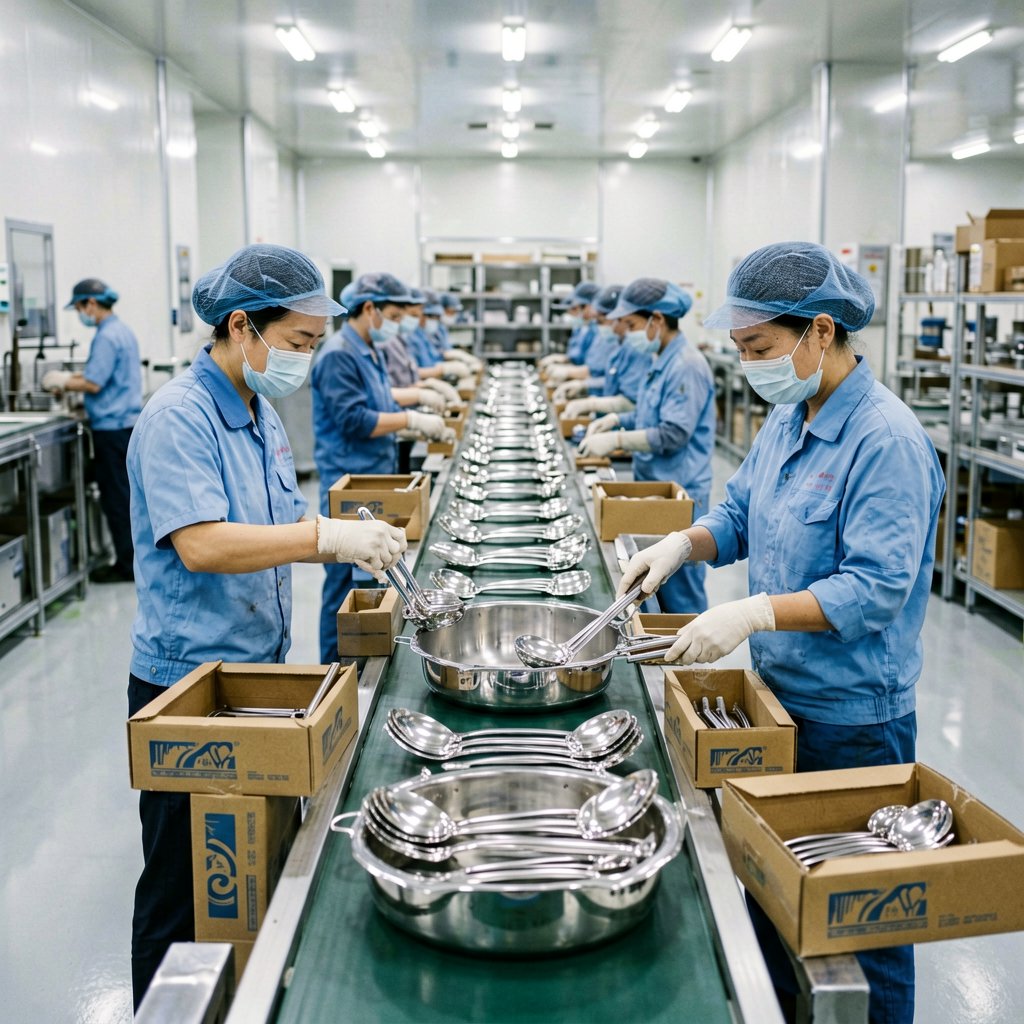
- Skipping a pre-shipment photo check of the actual packing line
There is one more mistake that shows up after the container arrives: forgetting to test the packaging with the actual product. A carton that fits the tray in a drawing can be too tight when the tray has a thicker coating or a different rim. Ask for a packed carton photo or, better, a small pre-production run of packed samples before the full order.
Packaging Materials Compared
Each packaging material solves a different problem. Corrugated cartons protect the product in the container and stack well in a warehouse. Printed folding cartons add a retail message but take more labor to assemble. Polybags are the cheapest protection for utensils and small tools, while foam or paper inserts protect fragile items like glass bakeware.
| Material | Best for | Trade-off |
|---|---|---|
| Corrugated carton | Heavy cookware, multi-piece sets | Strong, but adds weight and freight cost |
| Printed folding carton | Retail-ready single items | Good shelf presence, higher per-unit cost |
| Polybag | Utensils, small tools, bulk lines | Cheap and light, minimal protection |
| Foam / paper insert | Glass, ceramic, fragile items | Protects well, takes labor to pack |
If you are unsure which combination fits your line, ask the supplier to quote two or three packing options for the same product. Comparing the per-unit cost and the container utilization on paper is cheaper than renegotiating after production starts. The same retail-ready versus bulk decision applies to drinkware lines, where glass and cup packing follow similar rules; Frozl covers that side of the assortment for importers.
Packing Cost Checklist
When you compare quotes, the packing line should be a separate cost row, not a lump sum. Ask the supplier to break out the carton cost, the inner packing cost, the print or label cost, and the packing labor. Then compare the same packing spec across suppliers. One factory may quote a thinner carton at a lower price, and the difference only shows up as damage claims later.
Keep the packing spec in the purchase order with the exact materials and sizes. If the factory substitutes a cheaper polybag or a thinner carton at production time, you have the right to reject the change. A photo check of the packing line before loading catches most of these substitutions.
Frequently Asked Questions
What is the difference between retail-ready and bulk kitchenware packaging?
Retail-ready packaging is designed to be placed directly on a store shelf, with printed branding, barcodes, and display features. Bulk packaging is simpler: products are packed in plain cartons or polybags for shipping and are unpacked or repacked by the buyer before retail.
Does retail-ready packaging increase the MOQ?
Usually yes. Printed cartons, custom inserts, and hang tags often require a minimum print run per design, so suppliers may ask for a higher MOQ or a separate print/setup charge. The exact number depends on the material and print method, so confirm with the supplier before quoting.
What carton specifications matter most for export?
The carton size, flute grade (for example single-wall vs double-wall), gross weight, and inner packing arrangement matter most. A stronger carton may be needed for heavy cookware, and the outer carton size usually depends on your container loading plan.
Final Recommendation
Start with the channel, not the box. If you sell to retailers, invest in retail-ready packaging for your hero SKUs and keep bulk for the rest. If you sell to distributors or e-commerce, bulk packaging with a clean label is usually the smarter margin play. Whichever route you choose, write the packing spec into the order and verify a production sample before mass production.
If you are planning an export order and want to compare packaging options with a supplier, send your product list and target market to our contact page for a quote and packing proposal.