A cookware manufacturer order follows a predictable path: inquiry, sample, purchase order, production, quality control, and shipping. Each step has a document and a decision point. If you know the sequence, you can plan your calendar, protect your deposit, and avoid the delays that catch most first-time importers. For the range of pots, pans, and sets covered by this process, see the cookware products and kitchenware products collections.
Step 1: Inquiry and Specification
Start with a clear spec sheet, not a vague request. The manufacturer needs material, size, coating type, handle style, base construction, and packaging before they can quote. For a frying pan, that means the pan diameter, material gauge, coating (for example PTFE or ceramic), handle material, and whether the base must work on induction.
Send the same spec to two or three factories and compare apples to apples. Ask each one to quote the same items so the prices and lead times are comparable. A good inquiry also states the estimated quantity, because unit price usually depends on volume.
Step 2: Quotation and Sample
Once the manufacturer receives a complete spec, they send a quotation with unit price, MOQ, tooling cost if applicable, and lead time. Review the quotation line by line. If something is missing, ask before you accept.
Most cookware factories offer a pre-production sample. The sample fee is usually small and is credited back to your bulk order. Order a sample, test it at home or in your office, and check the coating, handle stability, weight, and induction performance. This is the cheapest mistake you will ever make in sourcing.
Step 3: Purchase Order and Deposit
After the sample is approved, sign a purchase order that includes the product spec, quantity, unit price, packing details, delivery date, and Incoterms. The standard payment is a deposit (often 30%) with the balance before shipment or against the bill of lading copy. The exact terms vary, so confirm them in writing.
Make sure the PO references the approved sample and the agreed packing spec. This document is your protection if the factory delivers something different from what you approved.
Step 4: Production and Milestones
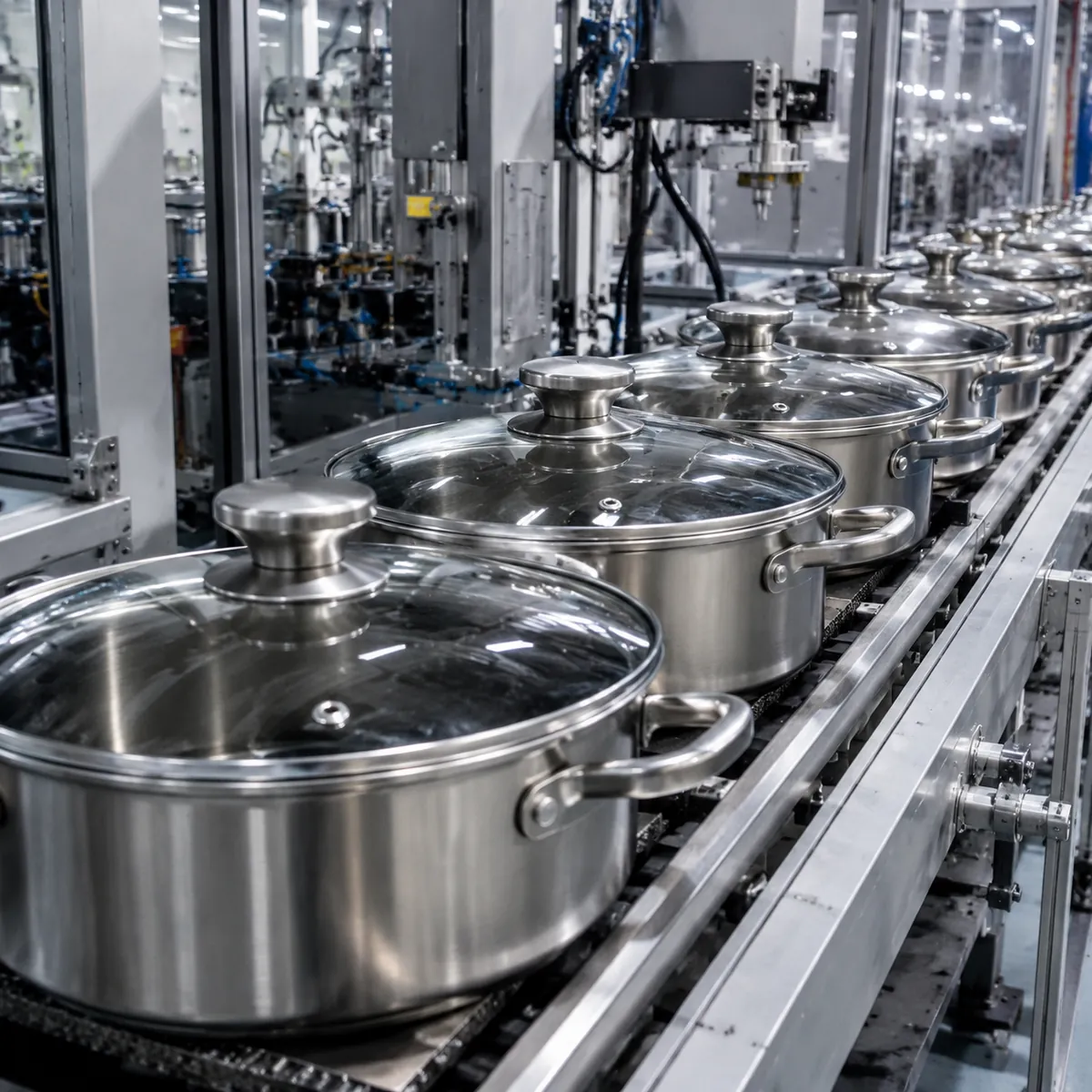
Mass production starts after the deposit. Depending on the product, this phase takes 20 to 45 days. Useful milestones to track are:
| Milestone | What to check |
|---|---|
| Material arrival | Raw material and coating chemicals in stock |
| Stamping / forming | Pan body or pot body formed to spec |
| Coating and finishing | Coating layers, curing, and surface quality |
| Assembly | Handles, rivets, lids, and accessories fitted |
| Packing | Inner packing, cartons, and shipping marks per spec |
Ask for progress photos at each milestone. A factory that shares clear photos is usually running an organized production line.
Step 5: Quality Control Before Loading
The quality check happens before the container is loaded, not after it arrives. Common checks for cookware include coating adhesion, handle strength, base flatness, and packing completeness. You can do this with your own inspector, a third-party inspection company, or a detailed video check with the factory. Confirm the inspection standard and the defect tolerance in the PO.
Step 6: Shipping and Documents
Once QC passes, the goods are loaded and you receive the shipping documents: commercial invoice, packing list, bill of lading, and usually a certificate of origin. Check the documents against the PO before you pay the balance. Mistakes in the packing list or invoice cause customs delays, and they are easier to fix before shipment than after.
Payment and Deposit Terms
Cookware orders are usually paid in installments, and the terms are part of the negotiation. A common structure is a 30% deposit to start production and the balance before shipment or against a copy of the bill of lading. Some manufacturers accept a higher deposit for a better unit price, and others offer a letter of credit for larger orders.
Whatever the terms, put them in the purchase order. The deposit is tied to a production schedule, so confirm that the production start date is in writing. If a factory asks for a very high deposit before you have seen a production sample, treat that as a red flag.
Communication and Lead Time Planning
Lead time is not only a production number; it is also a communication number. A factory that answers spec questions within a day or two usually runs an organized sales and production team. A factory that takes a week to reply to a simple question will probably be just as slow when your container is waiting for documents.
Set a simple communication plan before production starts: who answers your questions, how quickly, and through which channel. Weekly progress photos or a short production update keep the order on track and give you early warning if the schedule slips. The earlier you know about a delay, the more options you have.
Container Loading and Mixed SKUs
Most cookware orders do not fill a container with one SKU. A typical 20-foot container mixes several models, sizes, and colors, and the loading plan determines whether you hit the target quantity. Ask the manufacturer for a loading plan before production: how many cartons of each model, how they are arranged, and whether the total fits the container type you booked.
Mixed loads also change the packing math. Each SKU has its own carton size, and cartons of different sizes waste space. Standardizing the carton dimensions where possible, or grouping SKUs with similar sizes, usually improves the loading efficiency and lowers freight cost per unit.
Order Documents You Should Receive
A complete cookware order produces a paper trail: the quotation, the purchase order, the sample approval, the production schedule, the packing list, and the commercial invoice. Ask for the packing list and invoice draft before loading so you can check the details while there is still time to correct them.
Some buyers also request a certificate of origin and, for food-contact cookware, material or coating test reports. The documents you need depend on your market, so list them in the purchase order. If the manufacturer cannot provide a required document, you want to know before production, not at the port.
Where Delays Usually Happen
The two most common delay points are sample approval and coating-related production. Sample approval takes longer than buyers expect when the spec is unclear, and coating lines have limited capacity during peak seasons. Book your production window early and confirm the lead time in the quotation.
Frequently Asked Questions
How long does a cookware OEM order take?
A typical cookware order takes 30 to 60 days from sample approval to container loading, depending on the product, coating process, and factory schedule. Cast iron and multi-layer stainless steel usually take longer than simple aluminum stamping, so confirm the production window with the manufacturer before you commit.
What documents does a cookware order include?
A standard export order includes the commercial invoice, packing list, bill of lading, and often a certificate of origin. For food-contact cookware, buyers may also request material or coating test reports, so ask which documents the manufacturer can provide.
Can I order a sample before the bulk order?
Yes. Almost all cookware manufacturers offer pre-production samples, usually against a sample fee that is credited to the bulk order. A sample check is the best way to confirm coating, handle, and base construction before mass production.
Final Recommendation
Treat the order process as a written conversation: spec sheet, quotation, sample, PO, production milestones, QC, and shipping documents. Every step leaves a record, and every record protects you. If you are evaluating cookware manufacturers and want to see how a factory handles the process from inquiry to container loading, send your product spec to our contact page and we will walk you through it.