OEM kitchenware MOQs look like fixed numbers, but they are usually the output of a calculation the factory can adjust. The minimum order quantity is set by how the factory covers tooling, setup, material and packaging costs, and each of those cost blocks can be moved with a different lever: color choice, packaging design, tooling decisions, order timing and payment terms. A buyer who treats the MOQ as a negotiation input rather than a take-it-or-leave-it number can often cut the minimum by 30-50% on the first order, or hit the minimum while buying less of the expensive parts. This guide explains how factories calculate MOQs and how to use each lever responsibly, without pushing the factory into a quote that fails later.
How factories actually calculate MOQs
A factory’s MOQ is not arbitrary. It is built from fixed costs that must be recovered from the order: the tooling or mold cost if the product is custom, the production setup time for the line, the material minimums for the batch, the packaging print minimums, and the QC and documentation overhead. The MOQ is the quantity at which those fixed costs, divided across the units, leave the factory with a viable margin at the quoted price.
That is why the MOQ can change when the cost blocks change. If a factory quotes a 3,000-piece MOQ for a custom kitchenware item, part of that number is the tooling amortization, part is the packaging print run, and part is the production setup. Change the color to a stock color, use stock packaging, or take an existing tool, and the fixed costs drop, which lets the factory lower the MOQ without losing money. The buyer’s job is to find which levers move the number for this particular product.
The second insight is that the MOQ is often quoted for the most expensive configuration, then applied to every configuration. A factory that quotes a 3,000-piece MOQ for a custom color may accept 1,500 pieces in stock colors, because the stock color avoids the color changeover and material minimums. Asking “what is the MOQ for the standard version?” is a different question from “what is the MOQ for my custom version?” and it often gets a different answer.
The levers that reduce MOQ
Each cost block in the factory’s calculation has a corresponding lever. The table below maps the levers to the costs they reduce and the trade-offs each one brings. The best negotiation uses several levers together rather than hammering on a single one.
| Lever | What it reduces | Trade-off |
|---|---|---|
| Standard colors instead of custom | Color changeover, material minimums, color-matching work | Less brand differentiation on the product body |
| Stock packaging instead of custom print | Packaging print minimums and setup | Generic look; branding moves to a label or sticker |
| Existing tooling / catalog item | New tooling cost and amortization | Less design control; the shape is not exclusive |
| Simpler configuration | Production complexity and setup | Fewer variants; standard sizes and finishes |
| Off-peak production timing | Capacity pressure; factory can batch with other orders | Longer lead time or fixed window |
| Flexible payment terms | Working capital risk for the factory | You commit to a deposit or shorter credit |
| Longer lead time | Production planning; factory fills slack slots | You wait longer for the goods |
| Combined order across SKUs | Setup per line shared across products | You commit to a broader assortment |
Notice that most levers trade a little customization or convenience for a lower minimum. The skill is deciding which trade-offs matter least to your product. A brand that lives on packaging can cut the custom color and keep the packaging; a brand that lives on the product color can cut the packaging and keep the color. The negotiation is really a prioritization of your brand investment.
Color and finish levers
Color is the largest MOQ lever in most kitchenware categories. Custom colors require the factory to order specific masterbatch or pigment, change the line, and match the color against your reference, and each step has a minimum and a cost. Stock colors, meaning colors the factory already runs for other customers, avoid most of that. If the factory’s stock palette includes a color close to your brand direction, taking it can cut the MOQ dramatically on the first order.
Finish levers work the same way. A standard brushed or satin finish is cheaper and has lower minimums than a custom texture or pattern. If your differentiation can live in the packaging and the label, the finish can stay standard. Ask the factory for its stock color and finish list, then design your first order around it. You can always move to a custom color on the second order, once the product is proven and the volume justifies the minimum.
One caution: do not change the color to hit the MOQ and then expect the custom color anyway. The lever only works if you actually take the stock color. If the brand color is non-negotiable, plan for the higher MOQ or bundle the custom color with a larger order and negotiate the tooling instead.
Packaging levers
Custom packaging has its own print minimums, often 1,000-3,000 pieces depending on the printing method, and those minimums frequently exceed the product MOQ. A buyer who orders 2,000 units of a product with a 3,000-piece packaging print minimum has created a packaging problem: the packaging MOQ is now the real MOQ. The lever is to separate the packaging decision from the product decision.
For a first order, use stock or generic packaging and apply your brand with a printed label, a sticker or a hang tag, which have much lower minimums. This keeps the total order smaller while still giving the customer a branded experience. On the second order, once the product is proven, invest in custom packaging at a volume that justifies the print minimum. The staged approach lets the packaging minimum grow with the order instead of blocking it.
Ask the factory for the packaging print minimum separately from the product MOQ. The answer tells you which of the two is driving your minimum and which lever to pull. If the packaging minimum is the blocker, the fix is packaging, not more product units.
Tooling levers
For custom kitchenware, tooling is the biggest fixed cost and the biggest MOQ driver. New tooling must be amortized across the first order, and the factory sets the MOQ high enough to recover it at the quoted price. Three levers reduce the tooling burden: take an existing tool, share the tooling cost, or amortize it separately.
Existing tools are the hidden inventory of the kitchenware industry. Every factory has catalog products with tools already paid for, and taking a catalog item, even with your branding added, avoids the tooling cost entirely and lowers the MOQ to the production minimum. The trade-off is that the shape is not exclusive to you. If exclusivity matters, the alternative is to pay the tooling cost separately rather than hidden in the MOQ; a factory that charges a one-time tooling fee and quotes a lower MOQ is giving you a clearer deal than one that buries the tooling in the unit price and demands a huge first order.
| Tooling approach | How MOQ changes | Best for |
|---|---|---|
| Stock tool, no new tooling | Lowest MOQ, production minimum only | First orders, testing a market |
| Custom tool, cost paid separately | MOQ drops to production minimum; you pay tooling up front | When exclusivity matters and budget allows |
| Custom tool, amortized in unit price | Higher MOQ to recover tooling | When you cannot pay tooling separately |
| Tooling shared with another program | Split cost, lower MOQ | Multi-product programs with the same factory |
When a factory quotes a custom tool, ask three questions: who owns the tool, what happens if you stop ordering, and whether the tooling cost reduces on reorders. The answers affect not only the first MOQ but the whole life of the product line. A tool that stays yours is an asset; a tool that the factory owns is a switching cost.
Timing and production slot levers
Factories have slack and factories have peaks, and the MOQ often flexes with the production calendar. In an off-peak month, a factory may accept a smaller order to fill the line; in peak season, the same factory may raise minimums because capacity is scarce. Asking for the production calendar and timing your first order into a slack slot can reduce the minimum and sometimes improve the price.
The trade-off is lead time. An off-peak slot may mean waiting until the factory has capacity, which can be weeks longer than the standard quote. For a first test order, the wait is usually acceptable; for a seasonal program, the calendar decides. Combine the timing lever with a longer lead time and you give the factory the flexibility it needs to quote a lower minimum.
Some factories also offer consolidated production: your smaller order runs in the same line setup as another order for the same product family, sharing the setup cost. This is common in factories that serve many buyers, and it is one reason a factory’s MOQ for an existing product is lower than for a new one. Ask whether your product family has regular production runs you can join.
What not to do in MOQ negotiation
The first thing not to do is push the MOQ below the factory’s real cost and celebrate the win. A factory that accepts an unsustainable minimum will recover the cost somewhere: lower quality, slower service, or a price increase on the next order. The goal is to find the efficient minimum, not the smallest number.
The second mistake is splitting a large order into several small orders to dodge a stated MOQ without changing the configuration. Factories notice, and the behavior damages the relationship. If you need a small order, use the levers honestly: stock color, stock packaging, existing tool, off-peak timing. The third mistake is ignoring the packaging minimum while negotiating the product MOQ, only to discover the packaging is the real blocker. Negotiate the full order structure, product plus packaging plus tooling, in one conversation.
The fourth mistake is treating the MOQ as the only number. The landed cost per unit, the lead time, the QC level and the reorder terms matter just as much. A factory with a slightly higher MOQ but a shorter lead time and a faster reorder cycle may be the better partner for your business. The fifth mistake is not writing the agreed terms down; every lever you negotiate should appear in the order confirmation, because the verbal agreement disappears when the staff changes.
FAQ: Can I negotiate a lower MOQ on the first order?
Answer: Often yes, if you use the levers honestly. Take stock colors, stock packaging, an existing tool or an off-peak slot, and the factory can lower the minimum because the fixed costs drop. The efficient minimum is the goal, not the smallest possible number, and the agreed terms should be written into the order confirmation.
Building an MOQ negotiation brief
Before you contact the factory, write the negotiation brief. List the product, the target quantity, the must-have custom elements and the flexible ones. Rank the levers by what you can give up: color, packaging, tooling, timing, payment. Then prepare the questions that reveal the factory’s cost structure: the MOQ for the stock version, the packaging print minimum, the tooling terms, and the production calendar.
| Brief element | What to write | Example |
|---|---|---|
| Product and target quantity | SKU, size, first-order quantity goal | 2,000 silicone spatulas, 2 colors |
| Must-have custom elements | The brand-critical parts | Custom logo on the handle |
| Flexible levers | What you can change | Stock body colors, label packaging, off-peak slot |
| Questions for the factory | MOQ for stock version, packaging minimum, tooling terms | What is the MOQ without custom packaging? |
| Decision criteria | Landed cost, lead time, QC level | Target landed cost under X per unit |
Send the brief with the RFQ. A factory that sees a buyer who understands the cost structure responds differently from one who sees a buyer pushing for a discount. The brief signals that you are negotiating the efficient minimum, not squeezing the price, and it gives the factory the information to quote a realistic lower MOQ.
Combining MOQ levers across a program
The levers work even better across a multi-SKU program. Instead of negotiating each product’s MOQ separately, group the program: take stock colors across SKUs, one packaging system, existing tools where possible, and one production window. The factory sees a consolidated order that fills capacity and shares setup, and the MOQ per SKU can drop below what each product would command alone.
This is the bundling approach, but the honest version: it works because the factory’s fixed costs are genuinely shared across the program. The trap is bundling to hit minimums without the sales plan to support the assortment. The consolidated order should reflect a real product plan, not a way to inflate the order to reach a number. If the assortment plan is solid, the factory’s lower per-SKU MOQ is a fair exchange for the planning certainty.
Keep the program structure simple enough to maintain. A program with ten SKUs in two stock colors, one packaging format and three tools is easier to reorder than one with twenty SKUs in custom colors and custom packaging each. The simpler program also gives you more leverage on the next negotiation, because the factory knows the reorders are coming.
FAQ: Is it better to negotiate MOQ or unit price?
Answer: They are linked, and the right target depends on your business. If you need a smaller first order to test the market, negotiate the MOQ with the levers above. If your volume is fixed and large, negotiate the unit price and the reorder terms instead. In both cases, the conversation should cover the whole structure: MOQ, price, packaging, tooling and lead time.
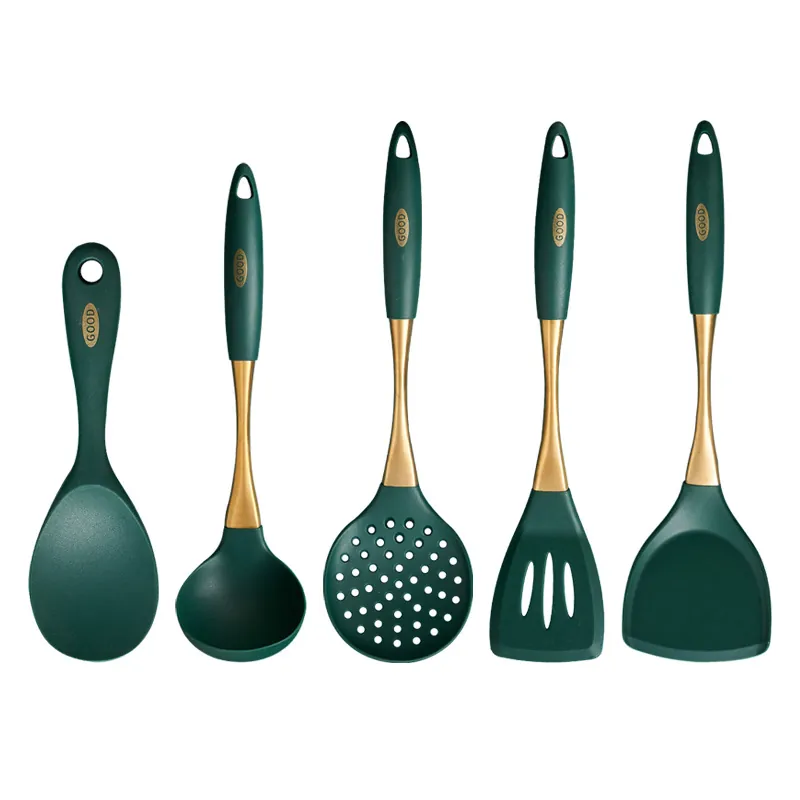
From negotiation to order confirmation
The negotiation ends when the order confirmation is signed, and the confirmation is where the levers become enforceable. A buyer who negotiated a lower MOQ on the phone but does not see it in writing has not negotiated anything. The order confirmation should list the MOQ per SKU, the configuration, the colors, the packaging, the tooling terms, the lead time and the payment schedule, all matching the agreement. Check it line by line before you sign, because the confirmation is the document that survives the salesperson’s departure.
There are two common traps at this stage. The first is the “MOQ for the stock version” trap: the factory quoted a low MOQ for the stock color and stock packaging, but the confirmation lists a higher MOQ because it assumed your custom color and custom packaging. The fix is to read the confirmation against the brief and ask for the price and MOQ that match the configuration you actually approved. The second trap is the hidden tooling line: the confirmation shows a low MOQ but adds a tooling charge that was never discussed, or shows a tooling charge without stating the ownership terms. The fix is to make the tooling terms explicit before signing.
The confirmation also fixes the reorder path. If the order confirmation states the reorder price tiers and the production slot terms, the next order is a quick repeat. If those terms are absent, every reorder becomes a new negotiation, which costs time and leverage. Ask the factory to include the reorder terms in the confirmation, or at least to confirm them in writing before the first order ships.
Finally, keep the negotiation brief and the confirmation together in the order file, alongside the samples and the QC plan. When the second order is placed, the file is the reference: the same configuration, the same MOQ levers, the same terms. The buyers who build this file once run every later order on autopilot; the buyers who renegotiate from scratch pay for their lack of documentation every time.
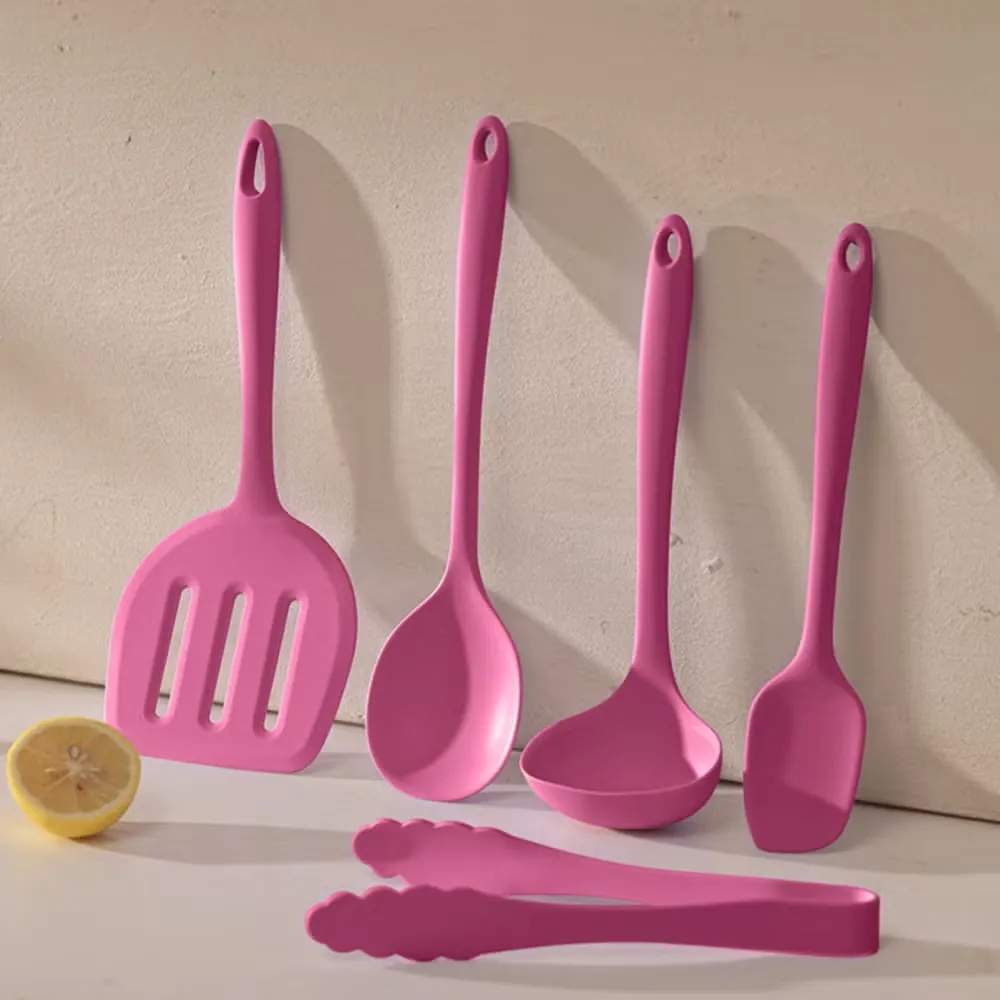
Frequently Asked Questions
How is an OEM kitchenware MOQ calculated?
Factories build the MOQ from fixed costs that must be recovered: tooling, production setup, material minimums, packaging print minimums and QC overhead. The MOQ is the quantity at which those costs leave a viable margin at the quoted price. When the fixed costs drop, the MOQ can drop too, which is why color, packaging, tooling and timing levers work.
What is the fastest way to lower a kitchenware MOQ?
Take stock colors and stock packaging for the first order, and use an existing tool if the factory has one for the product family. These three levers remove most of the fixed cost from the order. Add an off-peak production slot and you give the factory the flexibility to accept a smaller minimum.
Can I get a lower MOQ with custom branding?
Yes, if the branding uses low-minimum methods. A printed label, sticker or hang tag has much lower minimums than custom packaging or a custom product color. Embossing a logo into the product itself usually raises the tooling and the MOQ, so stage the custom branding: low-minimum branding on the first order, deeper customization once the volume supports it.
Should I pay tooling separately to lower the MOQ?
Often yes, when you have the budget. Paying the tooling cost separately removes it from the unit price and the MOQ calculation, so the factory can quote a lower minimum. Confirm who owns the tool and what happens on reorders before you pay.
Does MOQ negotiation affect product quality?
It can, if the MOQ is pushed below the factory’s real cost. The factory will recover the cost somewhere, often in quality or service. Negotiate the efficient minimum using the levers, and verify quality with the same QC process regardless of the order size. The relationship works when both sides make a viable deal.
For buyers building an OEM kitchenware program, the MOQ is a negotiation input, not a fixed wall. Understand the cost blocks behind the number, use the color, packaging, tooling and timing levers honestly, and write the agreed terms into the order confirmation. If you are planning an OEM kitchenware order and want a supplier who explains its MOQ structure clearly, send your product list and target quantities through our contact page and we will confirm what we can support. You can browse our full kitchenware range and kitchenware product range to see which stock items can carry your first order without a custom tooling commitment.