The coating on a baking pan decides more about your bakeware line than the metal underneath, because the buyer’s experience is release, cleaning and durability, not the alloy name on the spec sheet. When you source bakeware from a supplier, the practical questions are: which coating system fits the product, how release performance is tested, and what documentation proves the coating is food-safe. This guide maps the coating and release options for commercial baking lines, so you can specify bakeware that performs in the bakery and survives in the dishwasher.
Why the coating is the first spec to decide
Bare metal bakeware works, but it behaves differently from coated bakeware, and the difference shows up in the bakery’s daily routine. Uncoated carbon steel bakes well and develops a natural seasoning, but it rusts and reacts with acidic batters. Uncoated aluminum is light and conducts heat, but sticky batters cling to it and acidic foods discolor it. Coatings exist to solve these problems, and each coating type changes the product’s cost, performance and customer expectations.
For a wholesale program, the coating decision also determines which suppliers you can work with. Coating application is a process, not a material, and it requires equipment, experience and quality control that not every bakeware factory has. A supplier that applies its own coatings in-house can control quality and price; a supplier that outsources coating adds lead time and a second party to the quality chain. Both models work, but you should know which one you are buying before you compare prices.
The coating options: what each one does
PTFE-based non-stick is the most common coating for consumer and light commercial bakeware. It gives the best release for sticky items like muffins and cakes, is easy to clean, and is available in a range of qualities from basic single-layer to reinforced multi-layer systems. The trade-offs are cost, a lower temperature ceiling than bare metal, and the need to keep the coating intact, because scratched PTFE loses its release and looks bad. For most retail bakeware lines, PTFE is the default choice.
Ceramic or sol-gel coatings are the metal-oxide alternative marketed as the mineral-based option. They release well for many applications, tolerate higher temperatures than standard PTFE, and give a matte, modern appearance that retail customers associate with premium products. The trade-offs are that ceramic coatings can be less durable under metal utensils and heavy commercial use, and the price is usually higher than entry-level PTFE. For brands that want a different story and a higher price point, ceramic is a strong option.
Silicone-coated bakeware is a different system: a food-grade silicone layer over metal, commonly seen on baking mats and some pans. It releases very well and is flexible, which helps with molds. The trade-offs are a lower temperature ceiling in many products, a softer surface that can be cut or damaged, and a different feel that not every customer expects. Silicone-coated items sit between rigid bakeware and flexible silicone molds, and they fit specific SKUs rather than a whole line.
Bare metal and seasoned surfaces round out the market. Carbon steel pans with a factory-applied seasoning, sometimes called blue steel or pre-seasoned, are popular with professional bakers who want maximum heat response and do not mind maintenance. Anodized aluminum offers a hard, non-reactive surface without a polymer coating. These options usually need care instructions and a more educated buyer, but they serve the commercial segment where PTFE is not always the right answer.
| Coating type | Release | Temperature ceiling | Durability | Best fit |
|---|---|---|---|---|
| PTFE non-stick | Excellent | Usually 230-260 degrees C depending on system | Good with care; scratches reduce performance | Retail muffin, loaf and cake lines |
| Ceramic / sol-gel | Very good | Usually higher than standard PTFE | Good; can wear under metal tools | Premium retail and some commercial lines |
| Silicone-coated | Excellent | Lower; check per product | Soft surface; can be cut | Specialty molds and baking mats |
| Bare carbon steel | Depends on seasoning | High | Very durable with care; rust risk | Professional and artisan baking |
| Anodized aluminum | Good with release agents | High | Hard, non-reactive surface | Commercial pans and trays |
Read the table as a positioning map, not a ranking. There is no universally best coating; there is a best coating for each price point, market and usage pattern. The mistake is specifying a coating without deciding what the end customer will do with the pan.
Release performance: how to specify it and test it
Release is the number-one customer expectation for coated bakeware, yet it is rarely written down as a specification. A meaningful release spec should state the test method and the pass criteria. A simple approach is the baked-in test: bake a standard batter in the pan under defined conditions, let it cool, invert the pan, and record whether the item releases cleanly, with minor sticking, or with damage. The same test repeated across samples shows whether the coating is consistent across the batch.
Ask the supplier what release test they run and whether they can share the test parameters. A supplier that cannot describe its release testing is usually applying coating without controlling it. The test should also include a repeated-use cycle, because the first bake always releases better than the fiftieth. For a wholesale line, the coating must still release after the number of uses your customers will realistically reach before the pan is retired.
Release also depends on the metal preparation before coating. Coating applied over an improperly cleaned or etched surface delaminates, no matter how good the coating material is. When you audit a bakeware supplier, ask how the metal is prepared before coating, whether the surface is blasted or etched, and how the factory checks coating thickness and adhesion. Coating thickness is measurable with a coating thickness gauge, and adhesion is testable with a cross-cut test; both should be part of the supplier’s QC records.
Food-safety documentation for coated bakeware
Coated bakeware is a food-contact product, and the coating is the part in direct contact with food, so the coating material’s compliance matters as much as the metal’s. The standard documentation is a food-contact declaration backed by a test report for the coating system: FDA compliance for the US market, LFGB or EU 1935/2004 compliance for European destinations, and the relevant national declarations for other markets. The report should name the coating system and the factory that applied it, not just the raw material.
Temperature limits belong in the documentation too. A coating that is food-safe at room temperature may not be certified at baking temperatures, so the declaration should state the temperature range the coating was tested at. When a customer asks whether the pan is oven-safe to 220 degrees, the answer should trace back to a test report, not to the sales brochure. Keep the reports for each product and confirm with the supplier that the certificate covers the current production batch.
What to check before you order a coated bakeware line
Start with the approved sample and the coating spec in writing: coating type, layers, thickness range, color, temperature limit and release test method. Then verify the supplier’s coating line: whether coating is applied in-house, the equipment age and the QC checks at each stage. Then request samples from the actual production line, not hand-made samples, because hand-made coating is always better than production coating. Finally, agree on the inspection criteria for coating defects, pinholes, bubbles, thin spots and edge wear, so the pre-shipment inspection measures the same things you care about.
Coating defects are the most common reason coated bakeware fails inspection, and they are largely preventable by specification. Pinholes and bubbles come from contamination or incorrect curing; thin spots come from uneven application; edge wear comes from poor handling or sharp edges on the metal. Each has a known cause and a known fix, which is why a supplier with a controlled coating process will have far fewer surprises than one that treats coating as a commodity step.
FAQ: Is PTFE coating safe for food-contact bakeware?
Answer: PTFE coatings that meet food-contact regulations are considered safe for normal cooking and baking use within their stated temperature limits. The key requirements are that the coating system has a valid food-contact test report for your destination market, and that the product is used within the coating’s temperature ceiling. If the pan is overheated or the coating is badly scratched, the release and appearance degrade. Confirm with the supplier which food-contact declaration covers the specific coating system on your order.
Building a coated bakeware assortment
Most retail bakeware programs mix coating types across the assortment. A common pattern is PTFE-coated muffin and loaf pans for the volume SKUs, ceramic-coated cake pans for the premium line, and a few bare or anodized items for the professional segment. Mixing gives the buyer price points and stories without forcing one coating to serve every product.
For commercial baking lines, the pattern shifts toward durability and heat response: reinforced coatings on the high-use SKUs, bare steel or anodized options for the ovens and rack systems, and silicone or coated mats for the specialty items. The mix decision should follow the customer, not the coating. A bakery buying for a retail counter and a gift retailer buying seasonal molds are buying different products even when both are called bakeware.
The same supplier logic applies across the bakeware range. If you are planning a bakeware program and want to compare coating options against your target market and price points, send your product list and target quantities through our contact page, and we will confirm what our bakeware line covers. You can also browse our bakeware product range to see the coated and bare-metal categories a supplier is expected to manage.
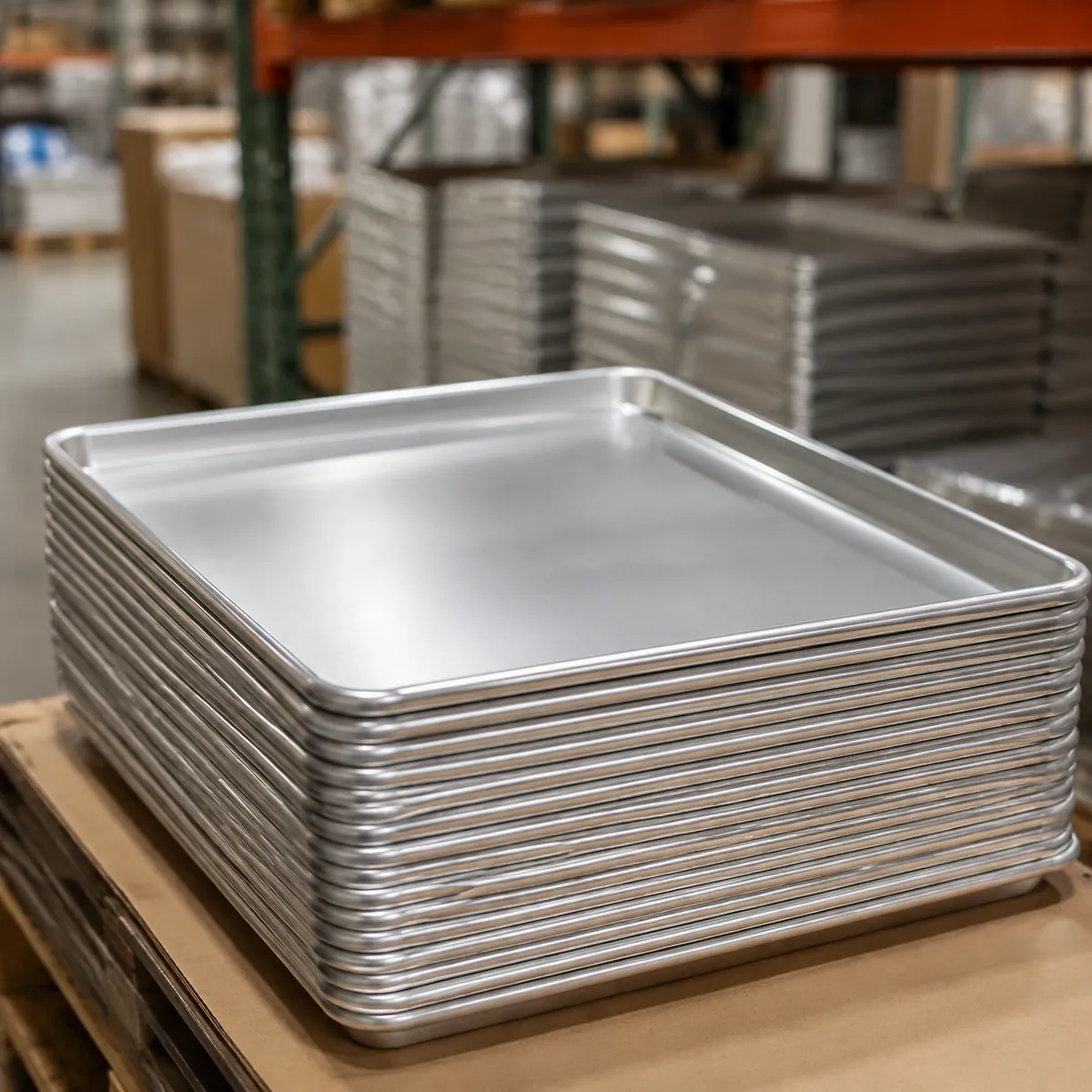
What you actually pay for in a coated pan
Coating is one of the largest cost components of a bakeware pan after the metal itself, and the price difference between a basic and a premium coating is bigger than most buyers expect. The cost drivers are the coating material, the number of layers, the application process and the quality control behind it. A single-layer basic PTFE coat is cheaper and works for low-use retail items; a reinforced multi-layer system with a primer, a mid-coat and a top-coat costs more and survives the dishwasher and repeated use far better.
When you compare quotes, ask what the coating price includes: how many layers, what thickness range, whether the coating is applied in-house or outsourced, and what QC checks are done per batch. A supplier quoting a very low price for a coated pan is usually quoting a thin single-layer coat that will fail the release test after a few uses. The coating is the part of the pan your customer touches every time they bake, and the savings from a cheap coat show up as returns, not as margin.
The price also depends on the pan’s metal preparation. Blasting or etching the metal before coating adds a step and a cost, but it is what makes the coating stick. A factory that skips proper preparation saves money at the coating stage and loses it at the complaint stage. When you audit the price, ask to see the coating line and the preparation step, not just the unit price on the quote.
Common coating defects and their causes
Coating defects have predictable causes, and knowing them turns inspection from guesswork into a checklist. Pinholes are tiny holes in the coating that usually come from contamination on the metal or bubbles in the liquid coating that burst during curing. Bubbles and craters come from incorrect curing temperature or moisture in the coating. Thin spots, where the metal shows through or the release is weak, come from uneven application or worn application equipment. Edge wear and chipping come from sharp edges on the metal, poor handling, or a coating that was applied too thin at the edges.
| Defect | Typical cause | How to check | Prevention |
|---|---|---|---|
| Pinholes | Contamination, bubbles in coating | Visual under bright light; water test | Cleaner metal preparation, filtered coating |
| Bubbles / craters | Incorrect curing, moisture | Visual; magnifying glass | Controlled curing temperature and time |
| Thin spots | Uneven application, worn equipment | Coating thickness gauge | Calibrated application, thickness checks |
| Edge chipping | Sharp metal edges, thin edge coating | Visual on edges and rims | Deburring before coating, edge reinforcement |
Each defect has a process fix, which is why a supplier with a controlled coating line delivers a consistent product and a supplier without one delivers a lottery. Put the defect list into the pre-shipment inspection instruction and set AQL limits for each defect type, so the inspector measures the same things you care about.
Regional expectations for coated bakeware
Market expectations differ in ways that matter for the coating spec. European retail buyers, especially in Germany and the Nordic markets, are used to clear temperature ratings, strong food-contact documentation and a preference for PFOA-free systems; the documentation carries as much weight as the price. US buyers respond to dishwasher-safe claims and brand stories, and the coating needs to survive the dishwasher cycle that American households run more often than European ones. For commercial baking in both regions, the priority shifts to durability and heat response, which favors reinforced coatings or bare metal options.
Match the coating spec to the region before you finalize the assortment. A line built for the US retail market should emphasize dishwasher durability and the PFOA-free story; a line for Europe should carry the temperature rating and the EU food-contact declaration prominently; a commercial line should be specified around the oven cycle and the release test. The same coating can serve all three, but the spec, the documentation and the marketing story need to be aligned with the destination.
Sample testing: the bake test and the dishwasher test
The sample round for coated bakeware should include two tests that most buyers skip: the repeated bake test and the dishwasher test. The bake test is simple: bake a standard batter in the sample pan under defined conditions, cool it, invert it and record the release. Run it at least three times, because the first bake always releases better than the third. The dishwasher test is equally simple for the buyer: run the sample pan through a normal dishwasher cycle and check the coating for blistering, dulling or edge wear. If the packaging claims dishwasher-safe, the sample must survive the cycle it promises.
Ask the supplier what tests it runs internally and whether it can share the parameters. A supplier that bakes and washes its own samples before shipping them has a controlled coating process; one that only looks at the surface is selling the name of the coating, not the performance. The test results, recorded per sample, become part of the approved sample record and the reference for the pre-shipment inspection.
Sourcing checklist for coated bakeware
Before you order coated bakeware, run this short list in order. First, fix the coating spec in writing: type, layers, thickness range, temperature limit, color and the release test method. Second, verify the supplier’s coating capability: in-house or outsourced, the preparation step, the QC checks and the coating thickness records. Third, request production samples and run the bake test, the dishwasher test and the cross-cut adhesion check. Fourth, collect the food-contact documentation for the coating system and confirm it names the product and the factory. Fifth, agree the inspection criteria for coating defects and the AQL limits before production.
The list takes days to complete, not weeks, and it prevents the failures that show up after the container arrives. A coated bakeware line that skips any of these steps is a line that will discover the gap in a customer complaint, a customs hold or a return report. The supplier who can document the coating system and show the test results is the supplier who can hold the quality in production, and that is the supplier worth building the program with.
Frequently Asked Questions
What is the most common coating on commercial baking pans?
PTFE-based non-stick is the most common coating on commercial and retail baking pans because it delivers the best release for sticky batters at a cost that fits volume lines. Ceramic coatings are common on premium items, and bare carbon steel or anodized aluminum serve the professional segment. The right choice depends on the product, the price point and how the end customer uses the pan.
What temperature can coated bakeware withstand?
It depends on the coating system. Standard PTFE coatings are usually rated to about 230-260 degrees C, though the exact ceiling varies by system and should be stated by the supplier. Ceramic and sol-gel coatings often tolerate higher temperatures, and bare metal pans tolerate the highest temperatures. Always confirm the temperature limit with the supplier and check that the food-contact test report covers the rated range.
How do I check coating quality on a sample?
Check the surface for pinholes, bubbles, thin spots and edge wear under good light, and run a cross-cut adhesion test on a sample you are willing to damage. Ask the supplier for the coating thickness reading and the release test parameters. A production sample, not a hand-made one, is the only meaningful check of what the factory will actually ship.
Is ceramic coating more durable than PTFE?
Ceramic coatings generally tolerate higher temperatures and have a different wear pattern, but they are not automatically more durable than PTFE under metal utensils and heavy use. Durability depends on the coating system, the application quality and the care instructions. For high-use commercial pans, ask the supplier for abrasion and repeated-use test data instead of relying on the coating type name.
Do coated baking pans need different care instructions?
Yes. Coated pans should be cooled before washing, cleaned with soft tools and mild detergents, and stored without stacking heavy items on the coating. Metal utensils and abrasive cleaners scratch the surface and shorten release performance. Printed care instructions reduce returns and complaints, especially for retail lines where the end user is not a professional baker.
When you source bakeware, treat the coating as a specification with a test method, not as a selling point. Choose the coating system by customer and price point, agree the release test and temperature limits in writing, verify the food-contact documentation, and inspect coating quality on production samples before loading. If you are planning a coated bakeware line and want a supplier who can document coating performance, send your product list and target quantities through our contact page, and we will confirm what we can support.