Sourcing from a bakeware manufacturer in China works when the buyer controls four things in writing: tooling ownership, surface finish, coating type and the sample approval workflow. Bakeware looks simple — it is pans, trays and molds — but the manufacturing decisions that decide product life happen early: which tool presses the pan, what finish protects the surface, whether the coating is PTFE, ceramic or none, and how many sample rounds the buyer is willing to run before the production line starts. This guide covers the practical way to brief a bakeware manufacturer, protect your tooling investment, and approve samples so the production run matches the promise.
Why bakeware sourcing is a tooling conversation
Unlike many kitchen products where the factory picks a standard item, bakeware is often made to order around tooling: a specific pan shape, a specific rim, a specific depth. The tooling — the die, mold or forming equipment that shapes the product — is where the money goes, and the buyer has to decide who owns it, who pays for it and what happens to it after the order. A bakeware program without a clear tooling agreement is a program where the factory owns your product design.
The tooling conversation has four parts: the tooling cost (often quoted separately as a one-time cost), the tooling ownership (who owns the tool and the drawings), the tooling maintenance and storage (who keeps it, who pays, what happens if the factory closes), and the exclusivity (whether the factory may use the tool for other buyers). Each part belongs in writing before production. Buyers who skip the agreement usually discover the issue when they want to move production to a second factory and the tool is not theirs to move.
Tooling: cost, ownership and the practical agreement
Tooling costs in bakeware vary widely with the product: a simple stamped aluminium pan may need a modest die, while a deep-drawn pan, a silicone mold with a complex cavity, or a cast product needs more expensive tooling. The key is to get a breakdown: tooling cost per item, the production quantity it covers, and whether the tooling cost is amortised into the piece price or paid up front. A supplier who folds the tooling into a high piece price is financing the tool through your margin; a supplier who quotes the tool separately is being transparent about the cost.
Put the ownership in writing: the buyer owns the tool and the drawings after full payment, the tool is stored and maintained at the factory at a named cost, and the factory may not use the tool for other buyers without written permission. Also agree the tool life and the replacement condition: tools wear, and the agreement should say who pays for the re-cut when the tool reaches its life. A tool that was “free” because it was in the piece price will be replaced at your cost either way; the only question is whether the agreement says so.
| Tooling question | Why it matters | What to put in writing |
|---|---|---|
| Who pays for the tool | Determines the real product cost | Tool cost, up-front or amortised |
| Who owns the tool | Determines your freedom to move production | Ownership after full payment, drawings included |
| Storage and maintenance | Prevents tool damage and disputes | Storage cost, maintenance responsibility |
| Exclusivity | Protects your design from competitors | No use for other buyers without permission |
| Tool life and replacement | Sets expectations for re-cut cost | Life estimate, replacement payment split |
Quick FAQ: Should I pay for bakeware tooling separately?
Yes, prefer a separate, itemised tooling cost. It makes the real product cost visible, protects ownership with a written agreement, and avoids the factory financing the tool through a higher piece price that you keep paying on every reorder.
Surface finishes: what protects the bakeware
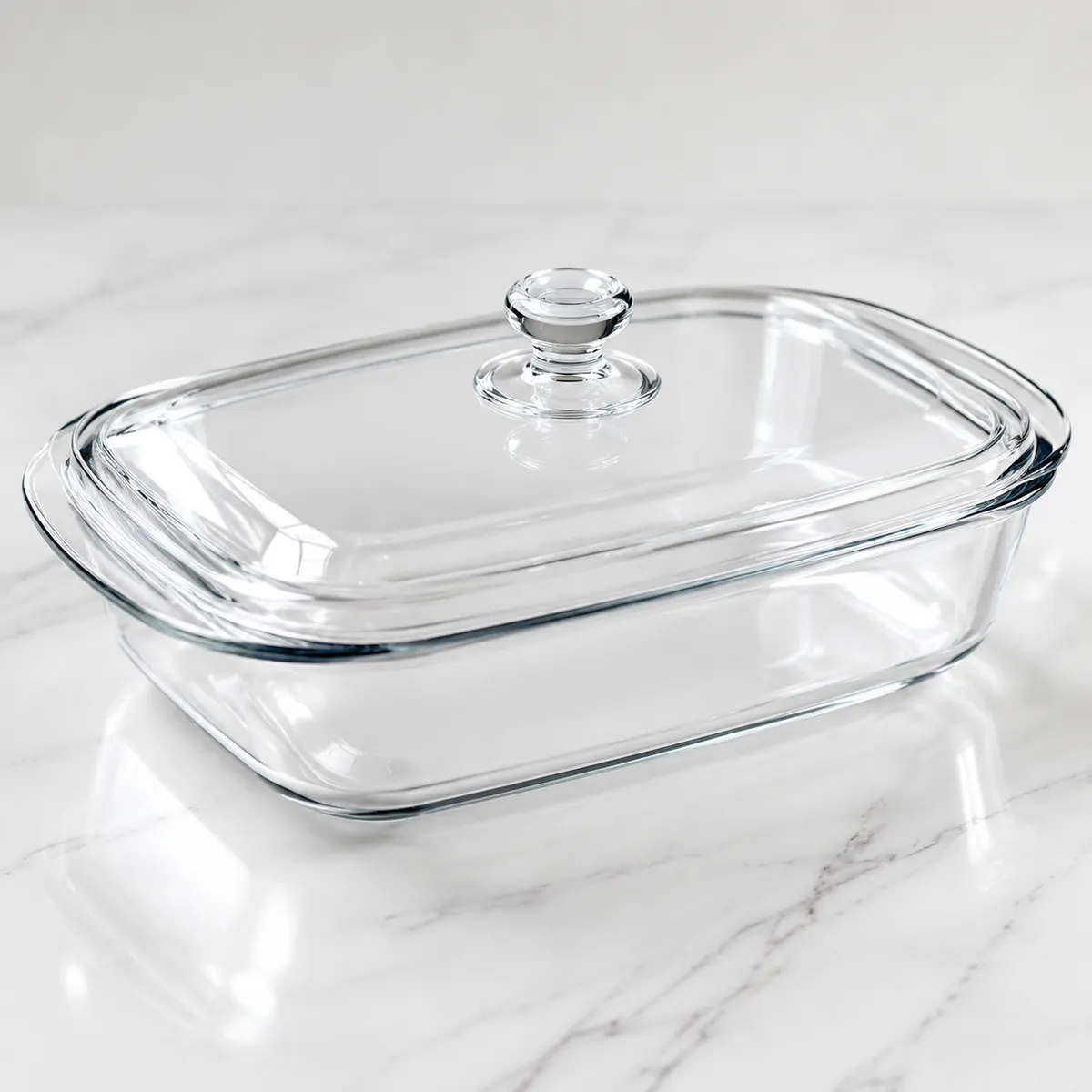
The surface finish is the second decision, and it controls how the product performs and how it looks on the shelf. The main families are bare aluminium (lightweight, conducts heat, but stains and reacts with acidic foods), anodised aluminium (a harder, more corrosion-resistant surface, a common commercial choice), coated steel (tin-plated or aluminised steel, traditional bakeware), silicone (flexible, non-stick, for molds), and glass or ceramic bakeware (for dishes and casseroles). Within metal bakeware, the finish choice often comes down to anodised vs coated vs bare, and each has a different price and performance profile.
When you brief the manufacturer, name the finish and the reason. If the product is a commercial baking tray, anodised aluminium or coated steel is the practical choice for durability and release. If the product is a retail cookie sheet, the finish drives the visual story as much as the performance. Ask the manufacturer what finishes they actually run on their line — a factory that specialises in one finish will quote it better than a factory that treats your finish as a side job.
Coating types for bakeware: release is the feature
Bakeware coatings are about release: the product has to come out of the pan cleanly, and the coating is the feature that makes that happen. The main options are PTFE-based non-stick coatings (the classic release coating, with the same PFAS-compliance questions as cookware), ceramic or sol-gel coatings (marketed as PFAS-free, growing in retail demand), silicone-based release surfaces (common on flexible molds), and uncoated release strategies (good greasing practice, commercial bakers’ preference for bare metal in many cases). The coating choice interacts with the destination market’s chemical rules, so the PFAS position should be confirmed against the market before the coating is locked.
Specify the coating by supplier and product name where possible, the number of layers, the maximum service temperature, and the test evidence (release performance, adhesion, food-contact compliance). Bakeware lives in the oven, so the temperature spec matters: a coating rated for 230 degrees Celsius fails on a product that goes into a hotter oven. Confirm the maximum temperature against the product’s actual use, not against the brochure.
The sample approval workflow: how many rounds and what to check
The sample approval workflow is where bakeware programs either get built or get stuck. The professional sequence is: a first article sample from the actual tool (not a hand-made model), a buyer evaluation round with the product tested as it will be used, a revision round if the first sample misses the spec, and a final approved sample held as the production reference. The number of rounds is less important than the discipline: every sample round must have a written result, a list of what passed and what failed, and a named decision. A buyer who keeps saying “close, but try again” without a written spec is burning the factory’s patience and their own schedule.
What to check on a bakeware sample: dimensions and capacity against the spec (volume matters for baking pans), material and finish identity, coating application and release behaviour (bake a test item in the sample), rim and edge quality, weight consistency, and the packaging fit. Test the sample the way the end customer will use it — if it is a muffin pan, bake muffins in it; if it is a roasting tray, roast in it. A sample that passes a desk inspection and fails the first bake is a sample that told you nothing.
Quick FAQ: How many sample rounds should a bakeware order need?
Plan for two to three rounds: first article, evaluation and revision, final approval. The number matters less than the discipline — each round needs a written spec, a written result and a named decision. Keep testing the sample the way the customer will use the product.
Aluminium, steel, silicone or glass: choosing the base material
Before the finish and the coating, the buyer has to choose the base material, and each material changes the tooling, the MOQ and the retail story. Aluminium is the volume bakeware material: light, excellent heat conduction, easy to form and coat, and the standard for commercial and retail pans and trays. Steel (usually tin-plated or aluminised) is the traditional bakeware material, heavier and stiffer, still preferred by many commercial bakers for its even browning and durability. Silicone is the flexible category: non-stick without coating, easy release, and popular for molds, muffin pans and novelty shapes — with the trade-offs that it is softer, less rigid, and needs a frame or a thicker wall to hold shape. Glass and ceramic are the serving-and-baking category: they go from oven to table, suit casseroles and dishes, and carry a premium retail story, but they are heavier, more fragile and driven by firing batches in production.
The material choice also drives the compliance work. Food-contact documentation is needed for every material, but the evidence differs: aluminium needs alloy and coating documentation, steel needs the plating or coating spec, silicone needs food-grade certification and temperature documentation, and glass and ceramic need the glaze and lead/cadmium considerations that some markets require. Choose the material against the product’s use and the destination market, and confirm the material documentation early — the cheapest material is not cheaper if its compliance evidence is missing.
Export packaging for bakeware
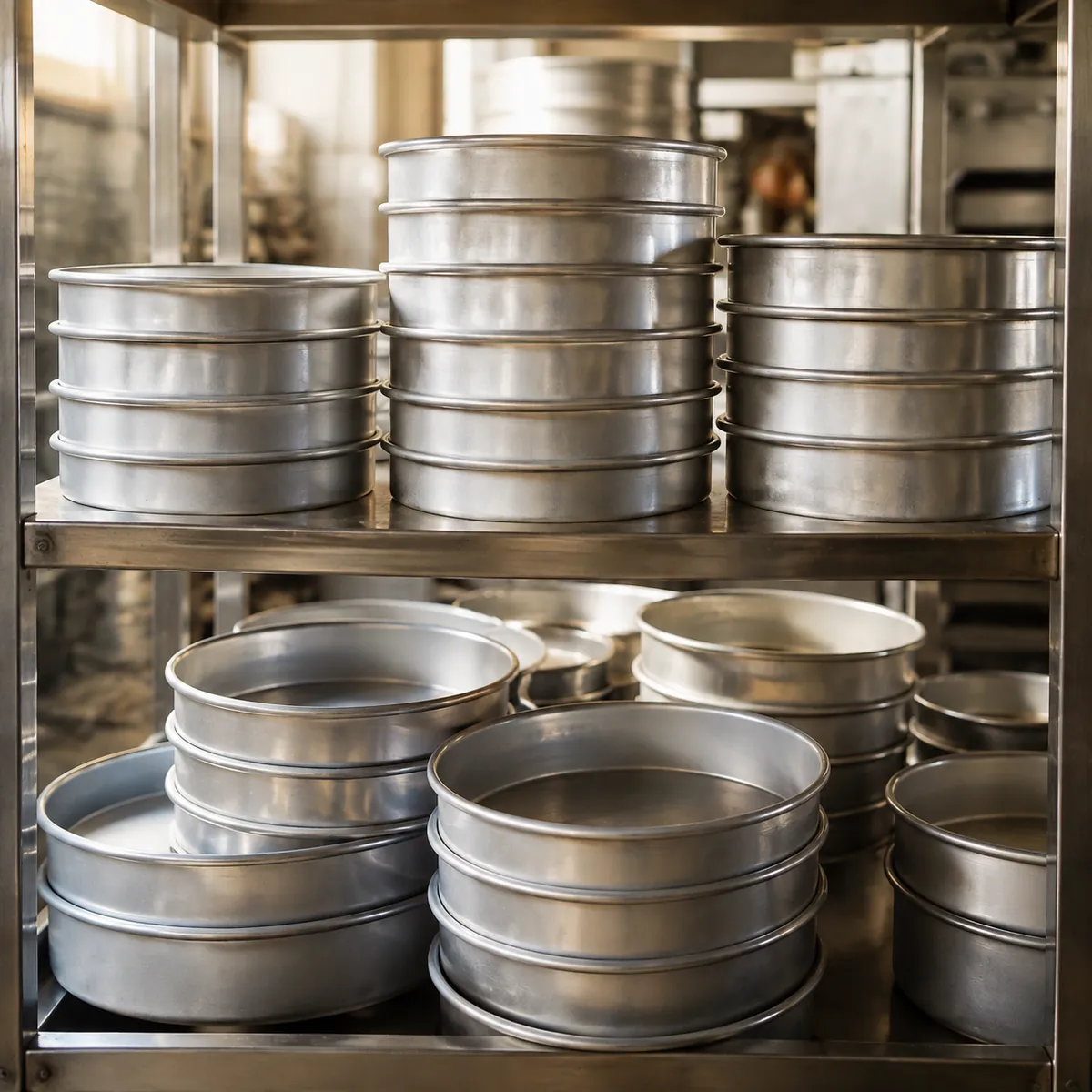
Bakeware packaging has to protect the shape and the surface across an ocean voyage, and the two risks are deformation and surface damage. Metal pans can dent or bend if the carton is undersized or under-protected; coated surfaces can scratch if pans slide against each other; glass and ceramic can break if the inner packing is not engineered for shock. The packaging spec should name the carton strength, the inner protection (corrugated dividers for stacked pans, foam or EPE sheets for coated surfaces, individual sleeves for glass), and the pack quantity per carton with the weight limit.
The retail pack adds the sales layer: the printed carton or sleeve, the label with the material, size, coating and care information, and the barcode. For bakeware sold as sets — a set of cake pans, a set of cookie sheets — the set carton with a die-cut insert is the reliable format, and the set composition should be confirmed at the sample stage. A set that looks generous on paper but arrives with pans sliding and scratching is a set that comes back. Confirm the packaging at approval time with a fully packed sample, and put a drop test on the packed carton in the inspection plan.
QC and inspection for bakeware
The inspection plan for a bakeware order should cover the product-specific risks as well as the standard checks. The standard checks are dimensions and capacity, material and finish identity, coating quality, weight consistency and packaging. The bakeware-specific checks are: volume accuracy (a cake pan or muffin pan has a rated capacity, and the production version has to match the approved sample), rim and edge quality (the edge is where chipping and coating failure start), release behaviour on a coated pan (a spot bake test on the production sample), oven-temperature resistance (confirm the coating and the material handle the product’s rated temperature), and the set composition for multi-piece sets (the set carton must contain exactly the right pieces). Add a drop test on the packed carton and a transit simulation if glass or ceramic is in the mix.
Bakeware inspection should also confirm the documentation layer: the material certificates, the coating or finish statements, and the food-contact documents must match the batch. Keep the approved sample and the approved packaging sample as the physical reference, and make the inspection evidence part of the batch record. For a first order, a pre-production inspection at the start of the run plus a pre-shipment inspection before loading is the low-risk pattern — the first catches process problems while they are cheap, the second catches product problems before they ship.
Cake pans, muffin pans and the range structure
Most bakeware programs start with a family of items rather than a single product, and the range structure decides how the factory quotes and how the retail shelf looks. The classic families are: cake pans (round, square, loaf), muffin and cupcake pans, cookie and baking sheets, roasting and baking trays, and the molds and novelty items that differentiate the range. Within each family, the tooling and the coating setup are often shared, which makes the range the natural unit for the MOQ conversation: a buyer who orders five items from the same family can often get a better combined price than five single-item orders, because the factory runs one setup for the family.
The range structure also sets the retail logic. A coherent range — same finish, same coating story, same packaging style across the family — builds the brand on the shelf, while a grab-bag of unrelated items looks like a closeout. Plan the first range around one family and one finish, prove it, and then extend into the next family. The buyer who starts with a five-item cake and muffin range has a learnable first order; the buyer who starts with fifteen items across four families has a logistics and QC problem in disguise.
The RFQ for bakeware: what to ask in the first email
The first email to a bakeware manufacturer sets the tone of the whole relationship, and the RFQ that gets useful answers is the one that reads like a spec sheet, not a shopping list. The fields that matter for bakeware are: the product family and the target retail story (a muffin pan for a discount channel and a muffin pan for a premium brand are different products), the base material and construction, the finish and coating with the temperature requirement, the dimensions and capacity per piece, the tooling question (existing tool, new tool, who owns it), the packaging format, the destination market and the documents required, the quantity per SKU and the price at two or three quantity levels, and the sample policy. A manufacturer who answers all of it in writing, asks a few questions back and sends a reference list is a real partner; one who replies “we can do, please send your design” without asking anything is quoting for the cheapest interpretation of your words.
Two practical details make the RFQ more effective. First, attach a simple specification table with the fields you want answered, so the supplier’s reply is structured and comparable across three manufacturers. Second, set a deadline for the quotation and a date for the sample decision, so the conversation moves on a schedule. The RFQ is not a one-message ritual; it is the first exchange of a working relationship, and the discipline you bring to it is the discipline the supplier will expect from you through production. A short follow-up after the quotation — confirming the two or three points that matter most and asking for the sample date — turns a paper quote into a working plan.
MOQ, pricing and the first production order
Bakeware MOQs are driven by the same forces as other kitchenware — setup cost, coating minimums, packaging minimums — with the addition of the tooling quantity: if the tool produces 1,000 pieces per day, the economical run is rarely below a few thousand pieces unless the buyer pays for the setup. The practical approach for a first order is to ask the manufacturer for the MOQ per SKU and the price at three quantity levels, so the buyer can see where the price curve flattens. If the MOQ looks too high, ask what the setup cost would be for a smaller run — sometimes the answer is a higher piece price, sometimes the setup is genuinely fixed and the smaller run is uneconomical.
The first production order should be a small, defined SKU set with the tooling, finish, coating and sample all approved before the line starts. Add a pre-production inspection and a pre-shipment inspection to the schedule, and confirm the production slot in writing. Bakeware is a repeat-purchase category: the first order proves the tool and the process, and the reorder is where the margin improves. A buyer who fights the first-order price too hard often loses the relationship that would have delivered the better reorder price.
Frequently Asked Questions
Who owns the tooling in a bakeware OEM order? Whoever the written agreement says. The buyer should own the tool and the drawings after full payment, with storage and maintenance at a named cost and no use for other buyers without permission. Never rely on a verbal tooling agreement.
Should I pay for bakeware tooling separately? Yes, prefer a separate, itemised tooling cost. It makes the real product cost visible and protects ownership. A tool folded into the piece price is financed through your margin on every reorder.
What is the best finish for commercial bakeware? Anodised aluminium and coated steel are the practical commercial choices for durability and release. The best finish depends on the product: commercial trays favour anodised or coated metal, while retail and home products may favour non-stick coatings or silicone for flexible molds.
How many sample rounds should a bakeware order need? Plan for two to three rounds: first article, evaluation and revision, final approval. Each round needs a written spec, a written result and a named decision, and the sample should be tested the way the customer will use the product.
What coating should I specify for non-stick bakeware? PTFE-based coatings give the classic release performance but carry PFAS-compliance questions in some markets; ceramic or sol-gel coatings are marketed as PFAS-free and growing in retail demand. Confirm the coating supplier, layer count, maximum temperature and test evidence before locking the spec.
Building the bakeware line with a China manufacturer
A bakeware program from a China manufacturer works when the buyer owns the four decisions: tooling cost and ownership in writing, a named surface finish, a specified coating with temperature and test evidence, and a disciplined sample workflow with a held reference sample. Our bakeware products range covers the tray, pan and mold lines that suit wholesale programs, and the full product range shows how bakeware sits alongside the cookware and tableware categories in a complete kitchen program. If you want to review a tooling agreement structure or a bakeware specification sheet before you start, send your requirements through our contact page and we will confirm what we can support.