A hospitality frying pan lives a harder life than a retail one: it sits on an induction burner for hours, gets scraped with metal utensils, goes from high heat to the sink in seconds, and gets stacked and dropped by staff who are not thinking about the coating. A frying pan manufacturer who builds retail pans will happily quote a hospitality line, but the pans will not survive unless the base, the handles and the coating are specified for abuse. This guide covers the induction base, handle fixings and durability testing that hospitality buyers should put into the frying pan manufacturer brief.
Why hospitality frying pans are a different product from retail pans
The retail frying pan story is about cooking performance and looks; the hospitality story is about survival. A hotel kitchen pan is used several times a day, on equipment that runs hot, with tools that retail users never touch. The three failure modes that kill a hospitality pan are base warping on high heat, handle failure under repeated lifting and stacking, and coating breakdown from overheating and scraping. Each one is a spec decision, and each one can be tested before the bulk order.
The other difference is the buying pattern. Hospitality buyers — hotels, catering companies, restaurant groups, distributors who supply them — buy by range and by case, they reorder the same SKUs for years, and they judge a pan by how long it lasts, not by how it photographs. That makes hospitality a repeat business for the manufacturer and a relationship business for the buyer. The supplier that survives is the one who answers the durability questions with test data, not with adjectives.
Induction compatibility: the base is the spec
Induction is the default in most new commercial kitchens, and induction compatibility is not a yes-or-no claim — it is a base-construction spec. An induction burner heats through a magnetic layer in the pan base, and the thickness and distribution of that layer decide how the pan heats, whether it warps and how fast it responds. The common constructions are a full induction base (a magnetic stainless steel disc bonded across the whole base), a cladded multi-layer base (aluminium core between stainless layers, the construction behind most tri-ply pans), and a disc bottom welded or bonded to an aluminium body.
For hospitality, the base thickness matters more than the material story. A thicker base stores more heat, resists warping on high power and recovers temperature faster after food is added; a thin base heats unevenly, warps on high heat and creates hot spots that burn food. The practical spec range for a commercial induction frying pan base is usually 3–5 mm of total base material, with the aluminium layer doing the heat-spreading work. Write the base thickness into the RFQ, confirm it on the sample with a calliper, and ask the manufacturer for the warping test result at the power level the kitchen will actually use.
| Base construction | Heat distribution | Warp resistance | Typical hospitality use |
|---|---|---|---|
| Thin disc bottom (1.5–2.5 mm) | Poor on large diameters | Low | Light duty, retail-style lines |
| Standard disc (2.5–3 mm) | Good on up to 26–28 cm | Medium | Mid-duty kitchen lines |
| Full induction base (3–5 mm) | Even across large diameters | High | Commercial induction kitchens |
| Cladded tri-ply | Excellent, fast response | High | Premium kitchen programs |
Also check the pan diameter against the burner size. A pan that is much larger than the induction zone heats only in the middle, which is a cooking problem and a warranty problem. The manufacturer’s spec should state the recommended burner size for each pan diameter, and a serious supplier will refuse a claim they cannot support.
Handle fixings: rivets, welds and the abuse they survive
The handle is the first thing to fail on a hospitality pan, and the fixing method decides how long it survives. The main options are riveted handles (a metal or bakelite handle fixed with stainless rivets), welded handles (a steel or stainless handle welded to the pan body), and screw-fixed handles that can be replaced in the field. Rivets are the standard for non-stick pans because welding damages the coating; welded handles are common on stainless and carbon steel commercial pans; screw-fixed handles are the serviceable option for high-volume kitchens that want to replace a broken handle instead of discarding a pan.
For hospitality, the checks are the rivet material and count, the rivet head quality, the handle-to-pan clearance (a gap that collects grease is a hygiene problem), and the handle material’s heat performance. Bakelite and similar thermoset handles are the standard for non-stick pans because they stay cool enough for a short grip, but they degrade with repeated overheating; stainless handles survive the heat but conduct it, so they need a longer or insulated design. Confirm the handle’s maximum working temperature and the manufacturer’s test result for repeated lifting with a loaded pan.
One hospitality-specific detail: the pan handle should survive the stacking test. Commercial kitchens stack pans by size, and a handle that bends under the weight of the pans above it makes the whole stack unstable. Check the handle strength against the stacking weight on the production sample, not the prototype.
Coating choice for commercial kitchens
The coating on a hospitality frying pan has to survive higher heat and rougher tools than a retail coating. The main options are PTFE non-stick (the classic, with temperature limits that matter), ceramic non-stick (a mineral-based coating with a different heat story), and uncoated stainless or carbon steel surfaces for kitchens that prefer metal tools and high heat.
PTFE coatings are the release champions, but their heat limit is the spec that matters in a commercial kitchen. A PTFE pan overheated past its rating degrades quickly, and the degradation is invisible until the coating starts flaking. For hospitality, confirm the coating’s maximum temperature rating in writing, put the overheat test into the QC protocol, and train the spec around the actual burner power in the kitchen. Ceramic coatings tolerate higher temperatures than standard PTFE and are the easier story for PFAS-conscious buyers, but they are generally less durable against metal utensils and their release performance fades faster — the trade-off has to be explicit in the product brief. Uncoated stainless and carbon steel surfaces are the workhorses for high-heat, metal-tool kitchens, at the cost of release and cleaning effort.
The coating vendor matters almost as much as the coating type. Most frying pan manufacturers buy coatings from a small number of coating suppliers, and the coating brand is a quality signal: a named coating system with documented temperature and abrasion tests is worth more than a generic “non-stick” line. Ask the manufacturer which coating system they use for the hospitality line and what test data they can share.
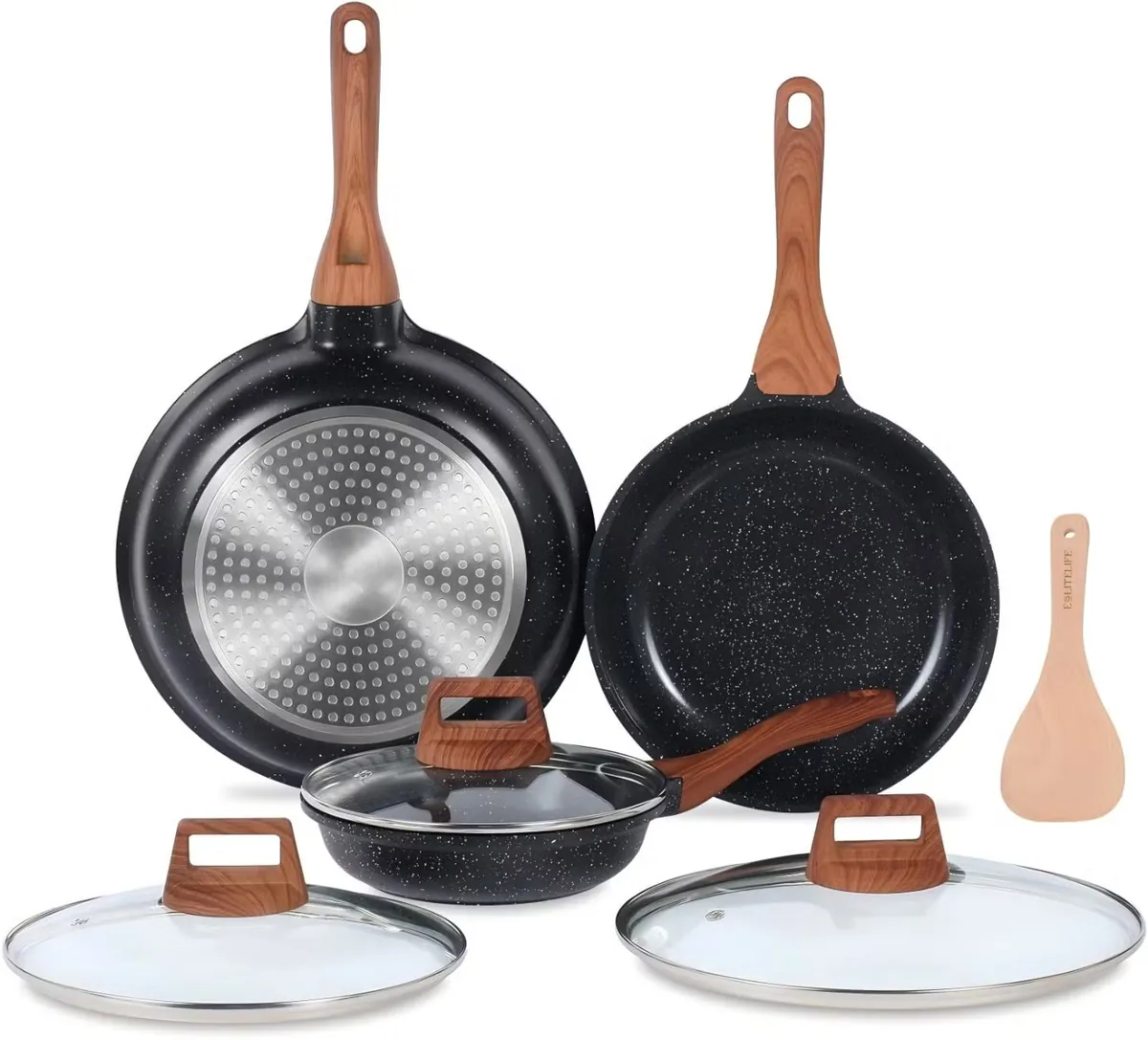
Quick FAQ: Which coating should a hospitality frying pan have?
Match the coating to the kitchen: PTFE with a confirmed temperature rating for standard release work, ceramic for higher-heat or PFAS-conscious buyers, and uncoated stainless or carbon steel for high-heat metal-tool kitchens. Confirm the coating vendor and the test data before approving the sample.
Durability testing: the tests that predict survival
Hospitality durability is measurable, and the manufacturer should be able to run or share four tests: the dry-run test (heating an empty pan to confirm the base and coating survive the highest kitchen power), the thermal shock test (heating then cooling rapidly to simulate the sink routine), the abrasion test (the standard coating abrasion protocol using the same tool the kitchen will use), and the drop and stacking test. Each test has a pass criterion that should be written into the QC agreement.
| Test | What it simulates | Pass criterion to agree |
|---|---|---|
| Dry-run overheat test | Empty pan on high power | No base warping, coating intact after the rated time |
| Thermal shock | Hot pan to cold water / sink | No delamination, no visible damage |
| Abrasion test | Metal utensils on the surface | Coating survives the agreed cycle count |
| Drop and stack | Kitchen handling and storage | No handle failure, no coating damage at the agreed drop height |
Ask for the test reports before the sample, not after the container. A manufacturer who has run these tests can produce the reports in a day; a manufacturer who has not run them will produce excuses in a week. The reports are the cheapest due diligence in the whole order.

Range planning for hospitality frying pans
Hospitality kitchens buy by diameter and by case, and the range plan is usually driven by the menu. The standard frying pan diameters for commercial kitchens are roughly 20, 24, 26, 28 and 32 cm, with 24 and 28 cm carrying most of the volume. A hospitality range also needs the pan height decision: a shallow fry pan for eggs and sauté, a deeper pan for sauces and larger portions. The range should be planned around the case-pack and the stack: same-diameter pans stack efficiently, and the case count should match the kitchen’s consumption pattern so reorders land on the container schedule.
For distributors and hotel groups, the range decision includes the finish and the branding. A consistent handle colour or a logo on the handle differentiates the line without adding tooling cost, and the case label should carry the SKU, the diameter, the coating and the case count in the languages of the destination market. Hospitality distributors in Central Asia and the Middle East often buy in mixed containers across several diameters, so confirm the mixed-SKU container policy before the first order.
Compliance notes for hospitality buyers
Commercial kitchenware sits under the same food-contact rules as retail, but hospitality buyers add their own documentation expectations. The destination market decides the food-contact standard — FDA-related documentation for the US, EU food-contact rules and LFGB documentation for European markets, and local requirements elsewhere — and the buyer should ask for the certificates before production. Hospitality and institutional buyers may also ask for product liability cover and, in some markets, documentation for the coating system’s temperature claims.
Keep the claims conservative. A coating that is not rated for the kitchen’s actual power should not carry the rating on the pack, and a “dishwasher safe” claim needs the test behind it. Confirm the documentation with the importer of record and the end buyer before the artwork is printed.
QC checklist for a hospitality frying pan order
The pre-shipment inspection for a hospitality frying pan order should cover the base thickness (calliper check on a sample from each batch), the induction test (heat response on an induction plate if the claim is made), the coating checks (pinhole check, adhesion, abrasion result), the handle checks (fixing type, rivet quality, heat performance), the warping check (dry-run on a sample), the stacking check, and the packaging check (case label, SKU, protective packing for the coating). Agree the sampling rate and the pass/fail rules in writing, and keep one approved sample as the reference for the inspector.
Quick FAQ: What frying pan failures should hospitality buyers test for?
Base warping on high power, handle failure under load and stacking, and coating breakdown from overheating and abrasion. All three are preventable with the dry-run, thermal shock, abrasion and drop tests agreed before the bulk order.
Warranty, after-sales and the reorder relationship
Hospitality buyers reorder the same pans for years, and the reorder relationship is worth as much as the first order margin. The after-sales questions belong in the first negotiation, not in the post-delivery panic: what is the warranty on the coating and the base, what does the manufacturer replace and under what conditions, and how are spare handles and lids supplied. A hospitality kitchen cannot stop service for a broken handle, so the spare-parts story — screw-fixed handles shipped as spares, lids available by SKU — is a real buying factor, not a nice-to-have.
The reorder mechanics matter too. Confirm the price validity period on the first quote (30 days is the practical norm), the reorder lead time (shorter than the first order because the tooling and the artwork exist), and the mixed-SKU reorder policy for the range. The supplier who can quote a stable reorder price and hold a production slot for your quarterly program is a supplier who has built the relationship; the supplier who reprices every order and schedules only on the day is a supplier who will fail a hospitality program eventually.
Common hospitality frying pan buying mistakes
The mistakes that kill hospitality frying pan programs are consistent. The first is buying retail pans for a commercial kitchen: the base warps, the handle fails and the coating degrades, and the kitchen blames the brand, not the spec. The second is trusting the induction claim without the base spec — “induction compatible” without a base thickness and a burner-size recommendation is a marketing label, not a specification. The third is skipping the overheat test, which is the single test that predicts the most common commercial failure mode. The fourth is ignoring the handle stacking load, which fails in the first week of a busy kitchen. The fifth is treating the first order as a one-off instead of building the reorder and spare-parts relationship. Each mistake has a cheap fix in the RFQ and an expensive fix in the kitchen.
Working with distributors versus direct kitchen buyers
Hospitality frying pans sell through two channels, and the buying behaviour is different enough to change the range plan. Direct kitchen buyers — hotels, restaurant groups, catering companies — buy by specification and by reorder. They know the base thickness and the coating rating they need, they buy the same SKUs for years, and the relationship is the product: the supplier who answers the durability questions with data and keeps the reorder price stable wins the account. The buying decision is slow (spec, trial, approval) and the reorder is automatic once the kitchen adopts the pan.
Distributors buy differently: they buy by range and by margin, they stock the SKUs that move across many kitchens, and they push the manufacturer for case-pack terms, mixed containers and marketing support. The distributor range needs the breadth story — the diameters, the case counts and the stable reorder price — while the direct kitchen range needs the spec story. A manufacturer who wants both should separate the stories: a spec-led line for direct kitchen buyers and a range-led line for distributors, sharing the same base and coating but differing in the packaging, the case counts and the branding.
The channel choice also changes the QC and the warranty conversation. Direct kitchen buyers test hard and reorder quietly; distributors buy in volume and push the warranty claims back. Put the warranty terms in writing per channel, and confirm the spare-parts and after-sales story before the first distributor order, because the distributor will be the one holding the warranty risk at the end of the chain.
Eco and energy claims in hospitality frying pans
Hospitality buyers are increasingly asked about the environmental story of the cookware they specify, and the frying pan line is where the claims get tested. The relevant claims are the coating chemistry (the PFAS question on non-stick coatings, which is already changing what buyers will accept), the material story (recycled aluminium bodies, stainless that is fully recyclable), and the energy story (a pan with a thicker base heats more efficiently and uses less energy over its life). Each claim needs documentation, and the documentation has to match the product: a “PFAS-free” claim needs the coating vendor’s documentation, an energy-efficiency claim needs the test or the engineering logic behind it, not a sticker.
For hospitality buyers, the honest framing is the durability story: the most sustainable frying pan is the one that lasts longest in the kitchen, because it replaces the manufacturing and freight of its own successors. That framing turns the durability tests in this guide into the environmental story, which is both true and useful. Keep the claims conservative, confirm the documentation with the importer of record, and let the pan’s survival record carry the message.
Frequently Asked Questions
What base thickness should a hospitality frying pan have? For commercial induction kitchens, 3–5 mm of total base material is the practical range, with the aluminium layer doing the heat-spreading work. Write the base thickness into the RFQ and confirm it on the sample with a calliper.
What is the best handle fixing for a commercial frying pan? Riveted handles are the standard for non-stick pans, welded handles suit stainless and carbon steel pans, and screw-fixed handles are the serviceable option for high-volume kitchens. Confirm the rivet material and the handle’s heat performance.
Which coating should a hospitality frying pan use? PTFE with a confirmed temperature rating for standard release work, ceramic for higher-heat or PFAS-conscious buyers, and uncoated stainless or carbon steel for high-heat metal-tool kitchens. Confirm the coating vendor and test data.
What tests should a frying pan manufacturer run for hospitality lines? The dry-run overheat test, the thermal shock test, the abrasion test and the drop and stacking test. Ask for the reports before the sample and write the pass criteria into the QC agreement.
What documents do hospitality frying pan buyers need? The food-contact certificates for the destination market, coating temperature documentation if claimed, and any retailer or institutional documentation the end buyer requires. Confirm with the importer of record before production.
Building the hospitality frying pan line with your supplier
A hospitality frying pan program works when the buyer specs the line for abuse instead of for photography. Choose the base construction and thickness for the kitchen’s induction power, fix the handles with the right method for the coating, match the coating to the heat and tool reality, and put the four durability tests into the QC agreement before the first run. The pans that survive the kitchen are the pans that get reordered. Our cookware products range includes the frying pans, sets and commercial-style lines that fit a hospitality program, and the full product range covers the bakeware and tableware that complete a foodservice order. If you are planning a hospitality range and want to review base specs, handle fixings and test protocols before you commit, send your brief through our contact page. For operators fitting out a new kitchen or dining area, the restaurant furniture buying guide at FurnitureOrigin covers the tables and chairs side of the same project.