When a buyer sources bakeware from a manufacturer in China, the price is easy to compare and the oven-proof rating is easy to ignore — until a baking sheet warps in the first production batch and the whole order is a write-off. The three things that actually separate bakeware manufacturers are the oven-proof ratings behind their claims, the coating vendors they use, and the compliance file they can produce for the destination market. This guide walks through those three areas and the checks a buyer should run before approving a bakeware manufacturer for a wholesale program.
Oven-proof ratings: the claim and the test behind it
“Oven safe to 230°C” is a claim, not a spec. The rating only means something if the manufacturer can show the test behind it, and the test has to cover the real use: an empty tray, a loaded tray, a tray on the top rack near the heating element, and a tray going from the oven to the counter. The failure modes are warping (the aluminium sheet deforms at temperature), coating breakdown (the non-stick surface degrades past its rating), and handle or rim failure on bakeware with extra parts.
The practical checks are three. First, ask for the manufacturer’s oven-test protocol and the temperature at which it was run — a rating tested at 180°C does not support a 230°C claim. Second, test the production-style sample at the temperature you will actually print on the pack, with the pan empty and loaded. Third, confirm the material gauge for the largest size in the range, because the same aluminium sheet that is stable at 30×20 cm can warp at 40×30 cm. The gauge is the quiet spec that decides the warp story, and it is the first thing a cost-down program reduces.
| Bakeware material | Typical oven-proof range | Main risk at high heat | What to confirm |
|---|---|---|---|
| Aluminium sheet | 220–260°C depending on gauge and coating | Warping on large sizes | Gauge per size, oven test report |
| Carbon steel | Up to 260°C+ | Rust without seasoning or coating | Finish and care instructions |
| Stainless steel | 260°C+ | Food sticking, discolouration | Finish, release treatment if any |
| Borosilicate glass | Typically 250°C+ | Thermal shock if the rating is wrong | Glass type, thermal-shock test |
| Silicone | Depends on grade, usually 220–260°C | Filler degradation at high heat | Food-grade cert, filler content |
Confirm the rating per product, not per material family. A manufacturer may quote the same aluminium sheet with a coated version rated higher than the uncoated version, and the coating changes the number. Write the oven-proof rating and the test protocol into the RFQ, and put a sample oven test into the QC agreement.
Coating vendors: the supply chain behind the non-stick claim
Most bakeware manufacturers do not make their own coatings; they buy from coating suppliers, and the coating supplier’s reputation is part of the product’s quality story. The main coating families for bakeware are PTFE-based non-stick systems (the standard for release performance), silicone-based release coatings, ceramic coatings (the PFAS-conscious option, though the exact chemistry and the claim need verification with the vendor), and uncoated surfaces with a mechanical release story (stainless or carbon steel with proper use).
The buyer-side questions are simple. Which coating system does the manufacturer use, and can they name the vendor? What temperature and abrasion data does the vendor provide, and can the manufacturer share it? Does the coating have the food-contact documentation for the destination market? A manufacturer who cannot name the coating vendor is usually buying spot-market coating powder of unknown origin — and that is a compliance risk that no price discount justifies.
The coating application process also matters. The application line (spray, roller or curtain coating), the curing temperature and the operator discipline decide the coating’s adhesion and consistency. Ask for the coating application spec and the QC checkpoints on the line, and look for the adhesion test (cross-hatch or tape test) in the manufacturer’s inspection routine. A coating that looks perfect on day one and peels after three uses is an application problem, not a material problem.
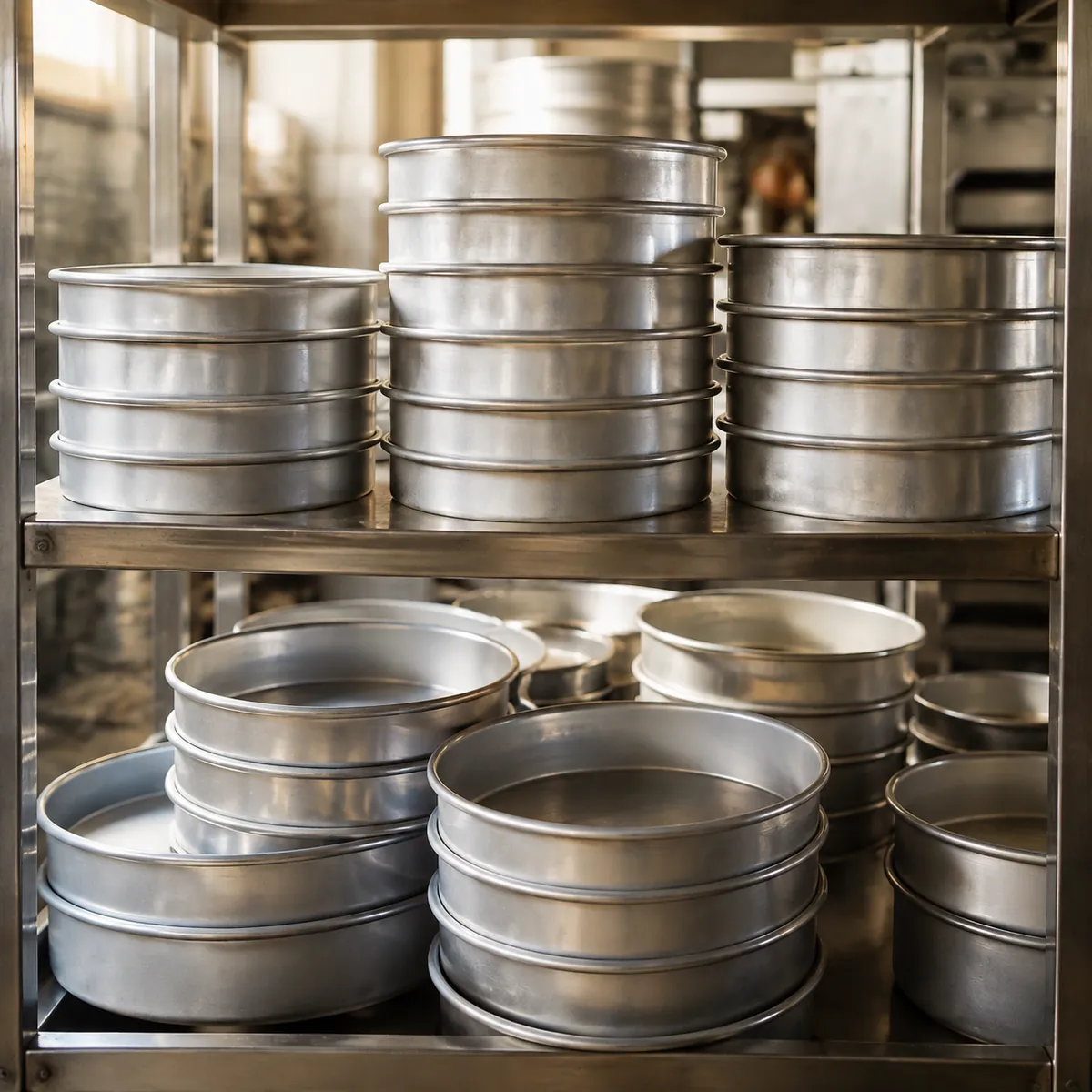
Quick FAQ: How do I verify a bakeware manufacturer’s coating claim?
Ask for the coating vendor’s name and the technical data sheet, the application spec, the adhesion test result and the food-contact documentation for the destination market. A manufacturer who cannot name the coating vendor is a compliance risk.
The compliance file: what to collect before production
The compliance file is the paperwork that makes the order sellable, and it should be collected before production, not after. For bakeware going to Europe, the file usually includes the EU food-contact declaration and, where the buyer or retailer requires it, LFGB test documentation; for the US, the relevant FDA considerations for food-contact materials and the retailer’s own requirements; for other markets, the local food-contact rules and the importer of record’s documentation. The file also includes the material certificates (aluminium alloy, steel grade, silicone grade), the coating documentation and, for some retailers, the product liability cover.
Ask the manufacturer for the full document list in the first RFQ round and verify the documents on the sample, not after the container. A certificate that names a different material grade than the production is worse than no certificate, so check the document against the product. If the manufacturer offers a document that does not exactly match, ask which alternative documentation they can provide and confirm it with the importer of record before the order.
The verification method matters as much as the document. A certificate is a piece of paper until someone checks the three things that make it real: the issuing body (a recognised test laboratory or authority, not a generic “certificate” with no issuer), the product scope (the document names the exact product family and material, not just “kitchenware”), and the date (the test is recent enough to cover the production batch, because materials and coating formulations change). When the certificate arrives, run those three checks before production, and keep the document with the order file so the same file travels with the shipment. The compliance file is not a favour the manufacturer does for you; it is part of the product, and it should be verified like one.
Tooling and custom bakeware shapes
Custom bakeware — branded shapes, logo embossing, custom dimensions — runs through tooling, and the tooling decision is where the manufacturer relationship is really tested. The tooling questions are the same as for any OEM program: is the tooling cost separate, who owns the tooling, and what is the amortisation structure. For bakeware, the tooling includes the forming dies for the metal shapes, the embossing tools for logos and the moulds for silicone pieces.
For a first custom program, keep the tooling scope small: one or two custom shapes, standard material and coating, and a clear tooling cost line. Confirm the tooling ownership in writing and keep the CAD files. A manufacturer who treats tooling as a negotiation weapon is a manufacturer who will complicate every future order.
Sample approval workflow for bakeware
The sample stage for bakeware has two rounds that matter. The first is the product sample: the shape, the gauge, the coating, the oven test and the dimensions against the spec. The second is the production-style sample: the same product with the actual retail packaging, the label and the certificate pack, tested the way the buyer will test the bulk order. Approving a hand-finished prototype and skipping the production-style sample is how bakeware programs discover the coating batch difference at container stage.
The sample approval should also settle the reference standard: one approved sample held by the buyer, one by the manufacturer, and the QC checklist that the inspector will use against both. Agree the sampling rate and the pass/fail rules at the same time, because a QC disagreement at inspection time is a delay at best and a rejected container at worst.
QC checks for a bakeware order
The pre-shipment inspection for bakeware should cover the material check (alloy or grade certificate against the product), the gauge check (calliper per size, especially the largest size), the coating checks (adhesion, pinholes, coverage, colour consistency), the oven-proof check (sample oven test at the rated temperature), the dimensional check (shape, rim and handle fit), the surface finish check (scratches, marks on the food-contact surface) and the packaging check (carton strength, inner protection, label and barcode).
| QC check | Method | Pass criterion |
|---|---|---|
| Material | Certificate vs product | Grade matches the RFQ |
| Gauge | Calliper per size | Within tolerance, no downgrade on large sizes |
| Coating adhesion | Cross-hatch / tape test | No peeling at the agreed level |
| Oven-proof | Sample oven test | No warping, coating intact at rated temperature |
| Dimensions | Template or calliper | Within agreed tolerance |
| Surface finish | Visual | No scratches on food-contact surface |
| Packaging | Open random cartons | Carton strength, protection, label correct |
Add the thermal-shock check for glass and ceramic bakeware: the rating claim needs the test behind it, and the test should be run on a production piece, not a lab sample.
The manufacturer audit: what to check in person or remotely
Before committing to a bakeware manufacturer, run a structured audit — in person when the order size justifies it, or remotely through documents, video checks and third-party services. The audit covers five areas: the production lines (forming, coating, oven-test capability), the QC process (inspection points on the line, sampling rate, test equipment), the coating supply chain (vendor name, application records), the compliance file (certificates, test reports, document formats), and the shipping history (which markets the factory has exported to, which retailers it has supplied).
For a remote audit, ask for the same evidence in a different form: a video walkthrough of the coating line and the oven-test area, the QC checklist used on a recent production batch, the coating vendor’s certificate, and the export documents from a recent shipment to a comparable market. The evidence is hard to fake and easy to check, and a manufacturer who cannot produce any of it is a manufacturer to avoid. A third-party inspection service can verify the physical facts (line, equipment, stock) if the order size justifies the cost.
The audit result belongs in the decision file, not just the conversation. Write down what was verified and what remains unverified, and close the gaps before the sample approval. The manufacturer who passes the audit and the sample stage is the manufacturer you can plan a season with.
Lead times and production planning for bakeware orders
Bakeware production runs on a calendar that buyers often forget. The lead time has five stages: sample and approval (two to four weeks for standard lines, longer for custom shapes), material and coating ordering (one to two weeks), production (two to four weeks depending on the quantity), packaging (one to two weeks, longer for printed retail packs), and sea transit (four to seven weeks to most Western destinations, with the actual port and season deciding the number). A first custom bakeware order from RFQ to the warehouse commonly takes ten to sixteen weeks, and the plan should be built backwards from the retail date, not forwards from the order date.
The two scheduling traps are the coating and the packaging. Coating powder is ordered by the coating vendor, and the factory’s coating line runs on a schedule — a late order competes with bigger buyers for line time. Printed retail packaging has a plate and a print run, and the packaging lead time is the one buyers most often underestimate. Confirm both schedules in writing when the order is placed, and add a buffer week before the retail date. A bakeware program that clears customs two weeks before the retail window is a program running on luck, not on plan.
Regional differences buyers should know
Bakeware buyers in different markets weight the same facts differently. European buyers tend to lead with the food-contact documentation and the coating chemistry, because the retailer requirements are strict and the enforcement is real. US buyers tend to lead with the PFAS question on non-stick coatings and the retailer’s supplier documentation, and they expect the manufacturer to have answered the question before it is asked. Central Asian and Middle East buyers tend to lead with the price and the range breadth, but the food-contact documentation still matters at the border and with the end buyer, so the file should travel with every order.
None of this changes the product spec; it changes the order in which the compliance file is built and the conversation is held. A manufacturer who has shipped to the destination market before usually knows the document set, and the shipping history is worth asking about in the first RFQ round. The same principle applies to the range: a manufacturer who has supplied bakeware ranges to retailers in the destination market understands the pack, the label language and the retailer’s supplier requirements without being taught, which shortens the sample and approval cycle and reduces the risk of a documentation surprise at the border.
Bakeware range planning: from single SKU to a full program
A bakeware program grows the same way as any cookware range: start narrow, prove the SKUs, then expand. The first order should cover one material family and the three or four SKUs that carry the volume — typically the sheet pan or baking tray in two sizes, a loaf pan, and a cake pan family. The range logic is the same as for storage and cookware: the hero SKU carries the display story, the rest of the range carries the margin, and the reorder pattern is predicted from the first sell-through data.
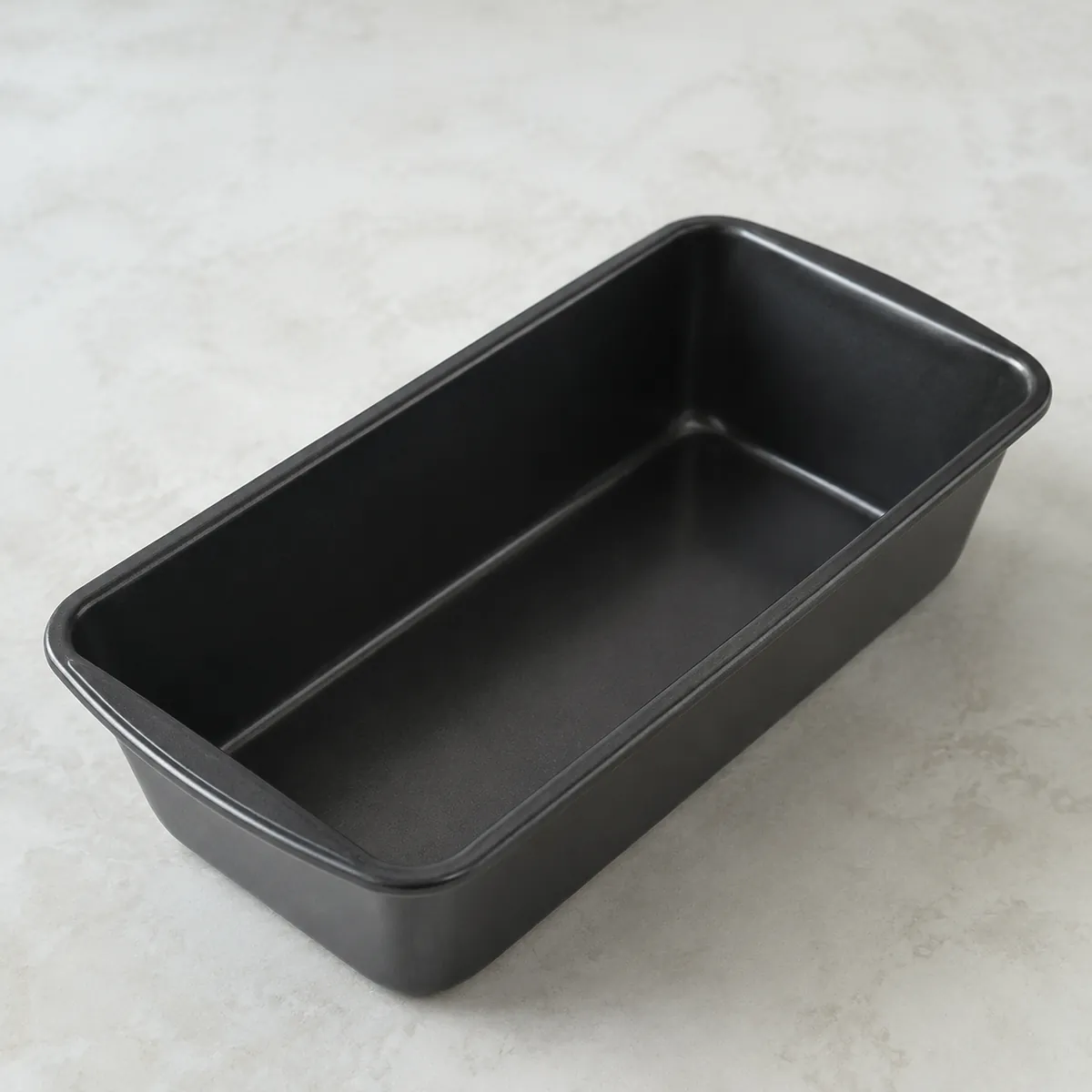
The range expansion has two directions. The first is the size ladder: the same pan in more sizes, which uses the same tooling where possible and keeps the QC simple. The second is the material ladder: adding glass or silicone lines beside the aluminium line, which widens the retail story but adds QC families and compliance files. For a first program, expand the size ladder first; the material ladder comes after the QC routine for the first family is proven.
Bakeware range planning also has a seasonal component. Baking peaks in the fourth quarter in most markets, and the production plan has to work backwards from the holiday shelf date, with the coating and packaging lead times included. A bakeware program that plans the Q4 volume in July is a program that clears customs in time; a program that starts the Q4 discussion in October is a program that sells air.
Silicone and glass bakeware: when to add them to the program
Most bakeware programs start with aluminium and carbon steel, and the question of when to add silicone and glass is a program decision, not a product decision. Silicone adds the flexible mold category — muffin molds, cake molds, loaf molds — that aluminium cannot serve, and it is the natural second family for a bakeware program because the food-grade question is the same as for the metal lines and the QC checklist is already in place. Glass bakeware adds the premium oven-to-table story, and the borosilicate rating and the thermal-shock test are the additional specs the program has to absorb.
The trigger for adding a second material family is the reorder pattern, not the catalog. When the aluminium line is reordering on schedule and the QC routine is proven, a second family is a manageable expansion; before that, every new family divides the buyer’s attention and the inspection budget. The range logic stays the same: one hero SKU per family, a tight size ladder, and the compliance file built before the sample. Silicone and glass also change the packaging story — silicone is light and flexible but needs care in the carton to avoid creases and heat damage, and glass needs the breakage protection that aluminium never required — so the packing spec belongs in the expansion plan from the start.
Frequently Asked Questions
How do I verify a bakeware manufacturer’s oven-proof rating? Ask for the oven-test protocol and the temperature at which it was run, test a production-style sample at the temperature you will print on the pack, and confirm the material gauge for the largest size in the range. Write the rating and the test into the RFQ.
Why does the coating vendor matter in bakeware sourcing? The coating vendor’s technical data, temperature and abrasion tests and food-contact documentation are part of the product’s compliance story. A manufacturer who cannot name the coating vendor is buying spot-market coating of unknown origin.
What documents should I collect before a bakeware order? The food-contact documentation for the destination market, the material certificates, the coating documentation and any retailer or importer requirements. Verify the documents against the product before production, not after.
What is the most common bakeware QC failure? Warping on the largest sizes from a reduced gauge, coating adhesion failures from poor application, and packaging damage to the food-contact surface. All three are preventable with the QC checklist above.
Should I approve a hand-finished prototype or a production sample? Approve a production-style sample with the actual packaging, label and certificate pack. The hand-finished prototype tells you the design works; the production sample tells you the factory can deliver it.
Building the bakeware program with your supplier
Sourcing bakeware from a manufacturer in China works when the buyer checks the claims instead of accepting them: confirm the oven-proof rating with the test, verify the coating vendor and the application process, collect the compliance file before production, and put the oven test, the gauge check and the coating adhesion check into the inspection contract. The manufacturer that can produce the test reports and the documents in a day is the manufacturer worth the order. Our bakeware products range covers baking trays, pans, loaf pans and glass bakeware, and the full product range includes the cookware and tableware lines that round out a wholesale program. If you are at the manufacturer evaluation stage and want to review oven-test protocols, coating documentation and compliance files, send your product list through our contact page and we will respond with what can be supported.