Why sample approval needs measurements, not impressions
(‘A sample can look right and still be wrong: the pan diameter is off by a few millimeters, the wall thickness is thinner than the spec, or the coating does not match the approved color. Impressions do not catch these; measurements do. The approval step exists to record the sample against the specification before the factory scales it up.’, ‘Keep the measurement sheet with the sample photos. The same sheet is used at pre-shipment inspection to check that bulk production matches the approved sample.’)
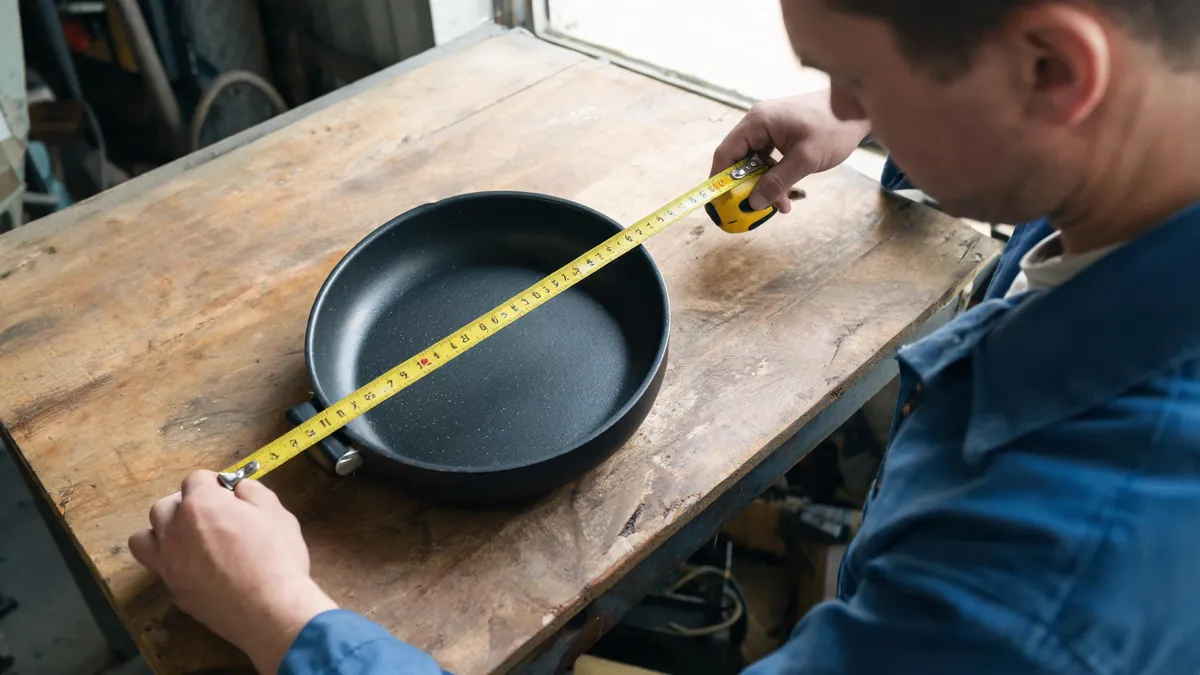
Check 1: dimensions, weight and capacity
(‘Measure the key dimensions against the spec: diameter, depth, height, handle length, and for sets, the nesting or stacking fit. Weigh the sample and compare with the specified weight range. For products with capacity claims, such as pots or mixing bowls, check the capacity against the stated volume.’, ‘Write the measurements on the approval sheet. A sample that passes on sight but fails on the tape measure will fail the same way in every production batch.’)
Check 2: finish and material behavior
(‘Check the finish for coating defects, scratches, uneven color and rough edges. Check the material behavior for the product type: a pan lid fits, a handle is firmly attached, a non-stick coating is even, a knife blade has the specified edge. For products that will be heated, ask about the heat behavior and confirm the material grade from the certificate.’, ‘Test the moving parts: lids, handles, hinges and stacking features. A sample that works in the office will work in production only if the factory controls the same details.’)
Check 3: packaging and protection
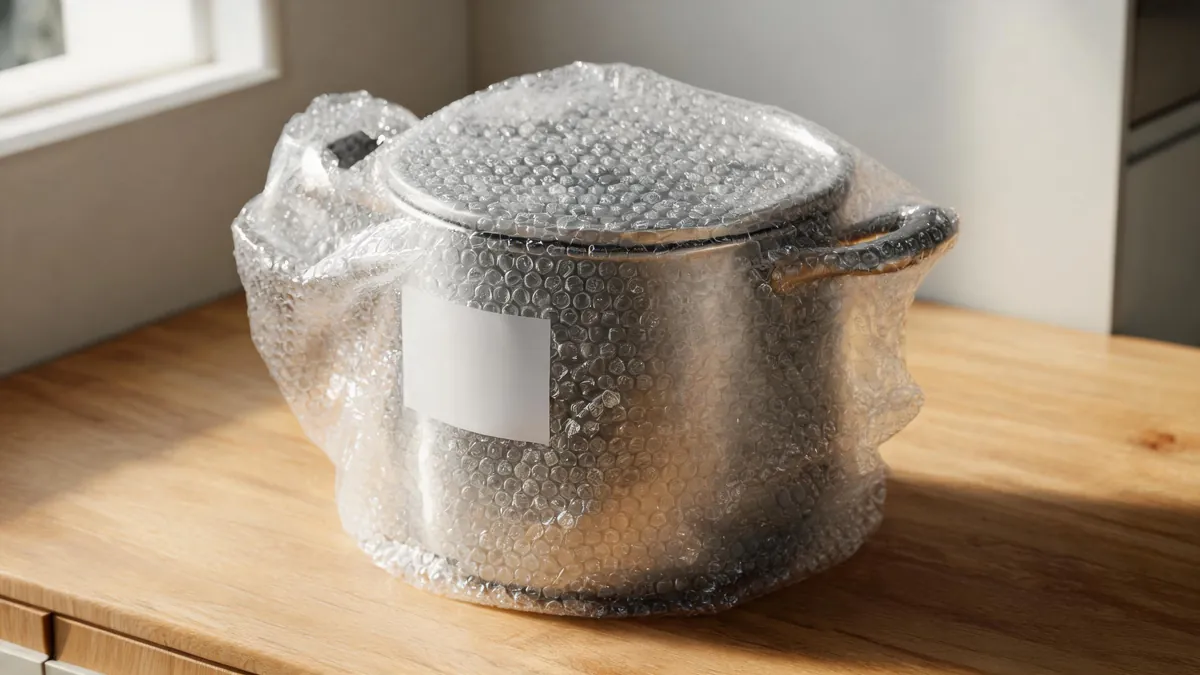
(“The packaging protects the product through shipping and presents it to the end buyer. Check the carton size, the interior protection, the label and the product marking. For wholesale orders, confirm that the packaging meets the buyer’s requirement for barcodes, retail-ready presentation or export strength.”, ‘Confirm the packaging in the sample approval. Changing packaging after production is expensive, and packaging problems cause most in-transit damage claims.’)
A sample approval checklist
- Key dimensions measured and recorded
- Weight within the specified range
- Finish free of defects and matching the approved color
- Moving parts and handles tested
- Material certificate matches the order
- Packaging, labels and marking approved
- Photos of the sample and its measurements filed
Send the checklist with the sample request so the factory knows what will be checked. A factory that can answer each line is a factory you can work with.
What happens after approval
(‘The approved sample becomes the reference. Bulk production should match it, and the pre-shipment inspection uses the same measurements and checks. If the factory needs to change anything after approval, it should ask in writing before the change, not after.’, ‘Keep the approved sample or its photos accessible for the whole order. The reference is what makes the inspection report meaningful.’)
Related reading: kitchenware sample approval · kitchenware products.
FAQ
How many samples should I request?
At least one production sample for each SKU, and two when the product will be tested or when color matching is critical. Keep one as the reference and use the other for testing.
What if the sample differs from the specification?
Ask the factory to explain the difference in writing and re-approve the sample if the change is acceptable. If the change is not acceptable, do not approve it; the difference will be repeated in bulk.
Can I approve the sample by photos only?
Photos help, but measurements and weight need a physical sample or a recorded measurement sheet from the factory. For color and finish, physical samples are much more reliable.
Talk to Kitchenware Sourcing about building a measurement-based sample approval checklist into your order.