Kitchenware packing decisions are made before production, not at the loading dock. The carton strength, inner packing for glass lids and ceramic items, pallet pattern and moisture protection all have to be specified in the order – otherwise the factory packs to its own habit and you discover the problem when cartons arrive crushed or lids arrive broken.

A container of kitchenware can carry thousands of fragile pieces, and the factory usually packs as it produces. If the carton spec is agreed at order confirmation, every carton follows it. If it is improvised at loading, the packing crew is guessing about weight limits, inner protection and carton marks while the container waits.
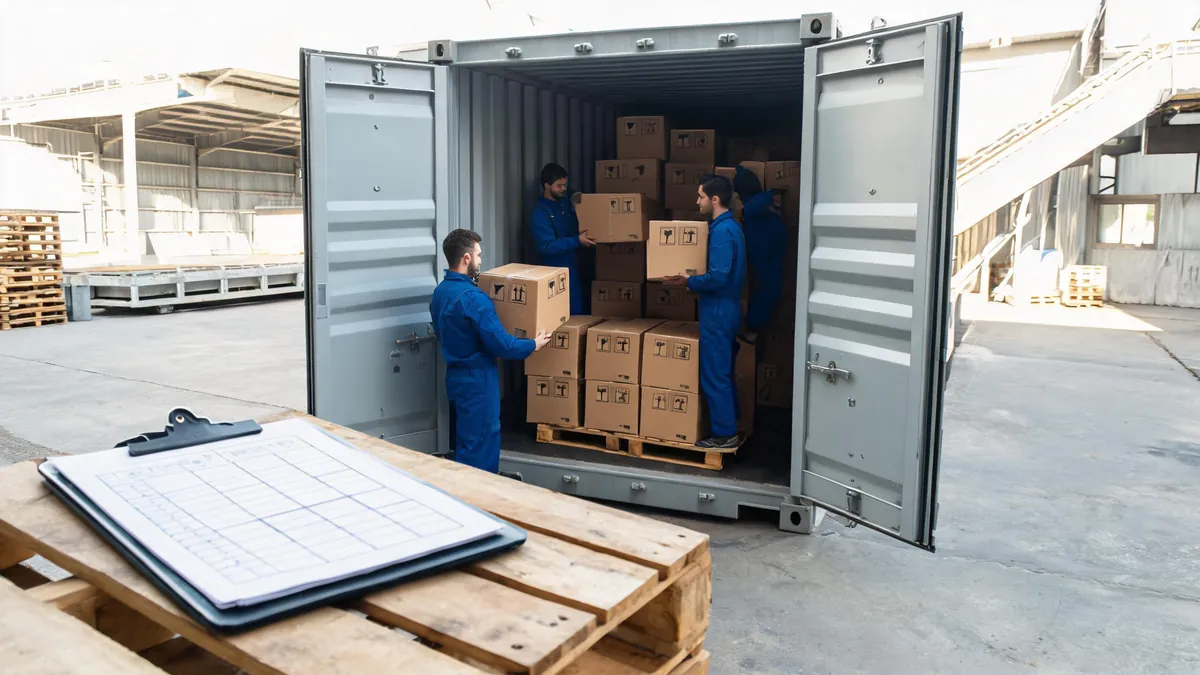
- Carton strength: specify the board type and maximum carton weight; heavy cookware needs stronger cartons and a lower carton count per pallet.
- Glass lids: never ship loose – each lid needs its own protective insert, and the carton should state “fragile”.
- Ceramic and porcelain: separate pieces with dividers or wrap; stacking strength must survive the layers above.
- Retail-ready vs bulk: confirm whether cartons are retail display units or plain shipping cartons – the print and structure differ.
- Carton marks: supplier, carton number, product code, quantity and gross weight printed or labeled correctly.
Palletizing and carton counts
| Factor | What to confirm | Risk if wrong |
|---|---|---|
| Cartons per pallet | Count and stacking pattern | Overweight pallets or crushed bottom cartons |
| Pallet type | Size, ISPM-15 treatment for export | Customs delay at destination |
| Stretch wrap | Full wrap and corner protection | Load shifts in transit |
| Carton count per container | Matches the packing list exactly | Discrepancy at receiving and customs |
Moisture protection and container loading
- Add desiccant packs for cartons going through humid ports, especially for items that corrode or absorb moisture.
- Load the container with the heaviest cartons at the base and against the walls, and lighter items on top.
- Block and brace the load so cartons cannot shift during sea movement.
- Take photos of the loaded container before the doors close; they are the evidence if a claim is needed.
What to confirm before the container arrives
Confirm four items in writing before loading day: the final carton count per the packing list, the ISPM-15 status of all pallets, the loading order for heavy and fragile items, and the photo evidence the factory will send at closing. A single confirmation email prevents most arrival surprises.
FAQ
Should kitchenware cartons be retail-ready or plain shipping cartons?
It depends on your channel. Retail-ready cartons go straight to the shelf and need print quality and display structure; plain shipping cartons are cheaper and suit distributors who repack. Confirm the choice in the order because the carton cost and specification differ.
Do all pallets need ISPM-15 treatment?
Solid wood pallets used in international shipping generally need ISPM-15 treatment with the mark on the wood. Plywood and processed panels are usually exempt. Confirm with your forwarder so the container is not held at destination.
How do I avoid broken glass lids in a kitchenware container?
Specify inner packing for each glass lid, use dividers or wrap so pieces cannot touch, and keep the carton weight within the stacking strength. A sample carton drop or vibration test before bulk can confirm the packing works.
Who is responsible for damage that happens during loading?
If the packing and loading follow the agreed spec and the loading photos show correct blocking, responsibility usually sits with the carrier for transit damage. The photos and the container seal number are your evidence, so always request both.
Need a packing spec and loading plan for your container?
Request a kitchenware quoteRelated reading: kitchenware QC checklist before container loading · baking tray export carton and pack counts