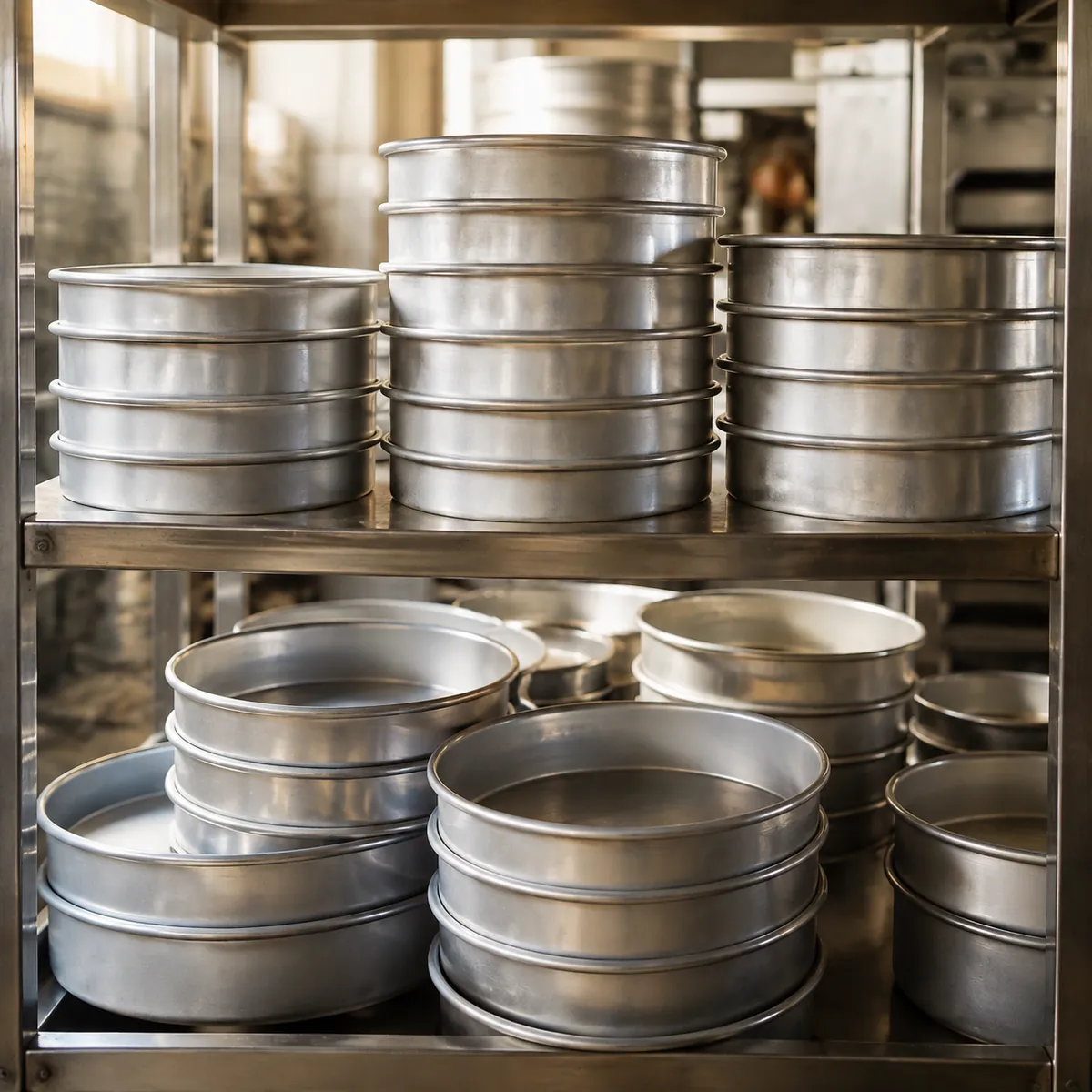
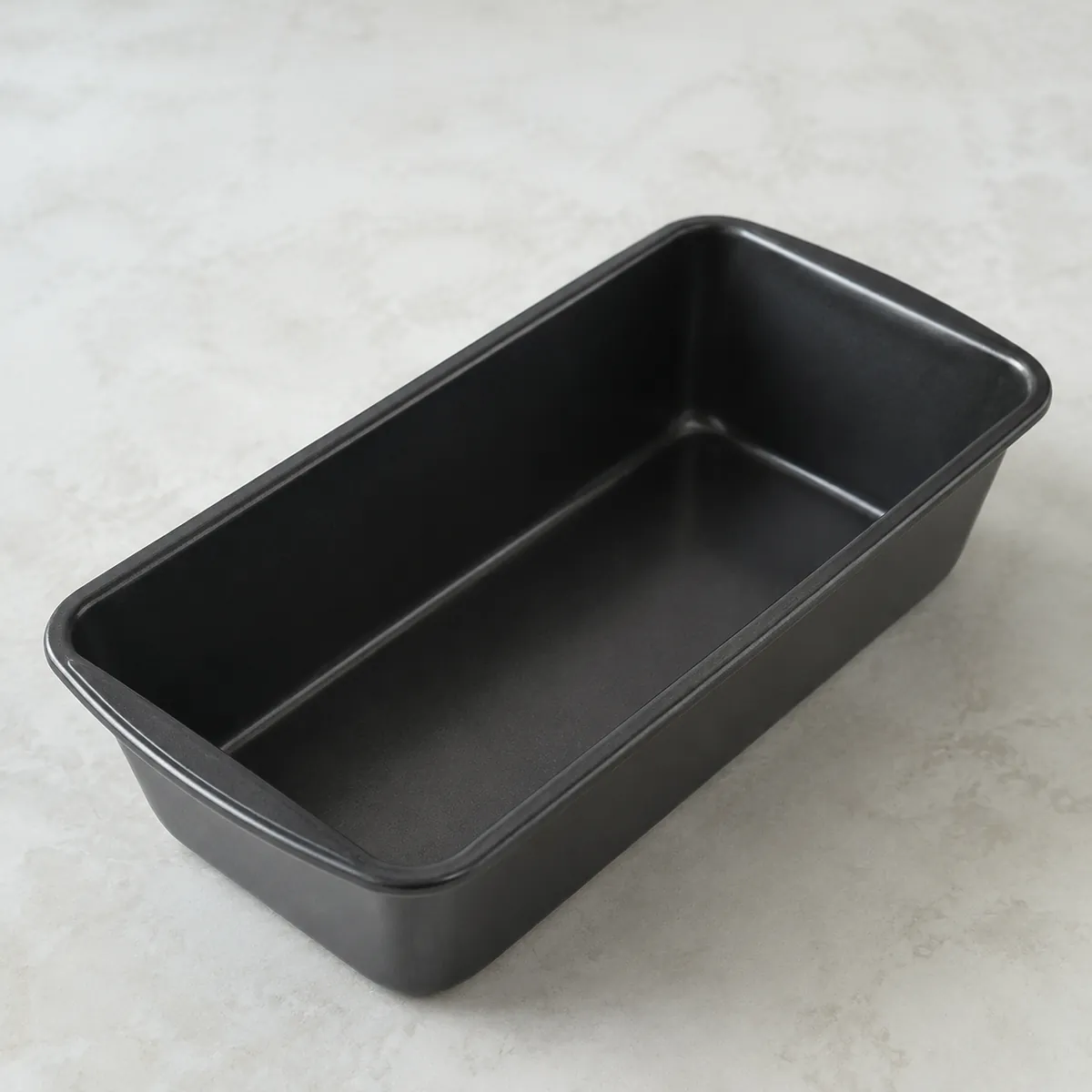
A good bakeware manufacturer in China can usually produce aluminum, carbon steel, glass and silicone lines, but the oven-safe spec, coating and gauge change completely with each material — so the first job is to match your product range to the factory’s real strengths. This guide explains the material options, how coatings change the performance, what oven-safe claims actually require, and the specification sheet to send before your first RFQ.
Material Options and What They Change
Bakeware materials each bring different heat behavior, weight, price and maintenance needs. Wholesale buyers rarely need all of them from day one, so understand what your retail customers expect before you ask for a wide range.
| Material | Heat behavior | Typical products |
|---|---|---|
| Aluminum | Heats fast and evenly; lightweight | Baking trays, cake pans, loaf pans |
| Carbon steel | Durable, heavy, good heat retention | Professional trays, sheet pans, bread pans |
| Borosilicate glass | Even heat, see-through, oven-safe | Baking dishes, pie plates |
| Silicone | Flexible, non-stick, wide temperature range | Molds, muffin cups, cake molds |
| Ceramic/stoneware | Slow, even heat; heavy | Baking dishes, casserole dishes |
Ask the bakeware manufacturer which materials it processes in-house and which it sources. A factory that stamps and coats aluminum in-house has different quality control than one that buys finished trays and resells them. Match your range to the factory’s core line for your first orders.
Coatings: Non-Stick and Release Layers
Non-stick coatings make bakeware easier to sell, but they also create the most specification risk. Ask for the coating system name, the coating thickness target, and whether the coating is applied to the inside, outside or both. For bakeware, the coating must survive repeated oven heat, so confirm the continuous-use temperature rating and how the coating performs on dark vs light products.
Some bakeware uses a textured or sprayed release layer instead of a full non-stick coating. That changes the price and the care instructions. Confirm which type your sample has, because the retail care label depends on it. Also confirm whether the coating is PFOA-free if your market requires that claim, and ask for the supporting document so your packaging claims stay truthful.
Can one factory produce my whole bakeware range?
Sometimes, but quality varies by material. A factory strong in aluminum trays may source its glass dishes or silicone molds from elsewhere. For your first order, focus on the material that matters most to your line and verify each sourced item separately.
Oven-Safe Claims: What to Verify
“Oven-safe” is a claim that needs a number and a limit. Confirm the maximum temperature, the maximum duration at that temperature, and whether the whole product — including handles, knobs, lids and any decorative elements — carries the same rating. A glass dish with a plastic knob may be oven-safe only to a lower temperature than the glass itself.
Ask for the test basis behind the claim. Some ratings come from material data; others from product testing. For retail, your label should state the safe range and any exclusions, such as “not for broiler use.” Confirm with the factory what documents support the claim for your market, and keep them on file. It is safer to state a range you can support with documents than to print a maximum number from a datasheet and face complaints when a customer’s oven behaves differently.
The Spec Sheet to Send Before Your First RFQ
A clear specification sheet saves weeks of back-and-forth. Include for each product:
- Material and grade, with thickness or gauge where relevant.
- Coating type, color and any print or logo placement.
- Dimensions, capacity, weight and target retail packaging.
- Oven-safe temperature and duration you intend to claim.
- Quantity, target unit price and destination market.
- Documents required — food-contact reports, test certificates — and the standard or framework that applies.
Factories respond much better to a written spec than to “send me your catalog.” A spec also gives you a baseline to check the quotation and the pre-production sample against. Ask the bakeware manufacturer to confirm each line item on the quotation, not just send a price. A simple one-page spec sheet is usually enough; avoid an ambiguous multi-page document that mixes firm requirements with nice-to-haves.
Buyer Quick Checklist
Before your first RFQ to a bakeware manufacturer, write down your material priority, the coating type you intend to claim, the oven-safe temperature and duration, and the documents your market requires. Send that spec sheet with the inquiry and ask the factory to confirm each line item on the quotation. The factories that respond with line-by-line confirmations are usually the ones with real process control; the ones that quote a price and move on are harder to manage later.
- Material and gauge stated per SKU.
- Coating system name, thickness target and PFOA-free confirmation if claimed.
- Oven-safe temperature, duration and part exclusions.
- Food-contact test reports for the material and coating combination.
FAQ: Bakeware Manufacturer in China
Which bakeware material is best for wholesale?
It depends on your market and price point. Aluminum is the most common for trays and pans because it is lightweight and heats evenly; carbon steel suits professional lines; silicone fits novelty and mold products. Start with the material your retail customers already buy.
What does “oven-safe” really mean for bakeware?
It means the product withstands a stated temperature for a stated duration. Confirm the max temperature, duration, and whether every part — handles, knobs, lids — carries the same rating. Ask for the test basis behind the claim.
Do I need a non-stick coating on bakeware?
Not always. Plain aluminum and carbon steel trays sell well in commercial and value segments, and some buyers prefer uncoated surfaces. Non-stick helps retail sales and cleaning, but adds cost and specification risk. Match the coating to your price point.
What documents should I request for food-contact bakeware?
Ask for food-contact test reports for the material and coating combination, and confirm which market rules apply to your destination. Also request the oven-safe test basis if you plan to print temperature claims on packaging.
Final Recommendation
Start with the material your line depends on, verify the coating and oven-safe claims on a pre-production sample, and send a written specification sheet with every RFQ. A bakeware manufacturer that confirms your spec line by line is worth more than one that just quotes a price. Browse the bakeware product range and the full product list to anchor your spec expectations before you send the RFQ.
If you are planning a bakeware import program from China and want help with specifications and supplier shortlisting, send us your target products, quantities and market. We reply with sourcing notes, sample options and lead-time estimates. Request a quote or contact us directly via WhatsApp — a real sourcing specialist will respond.