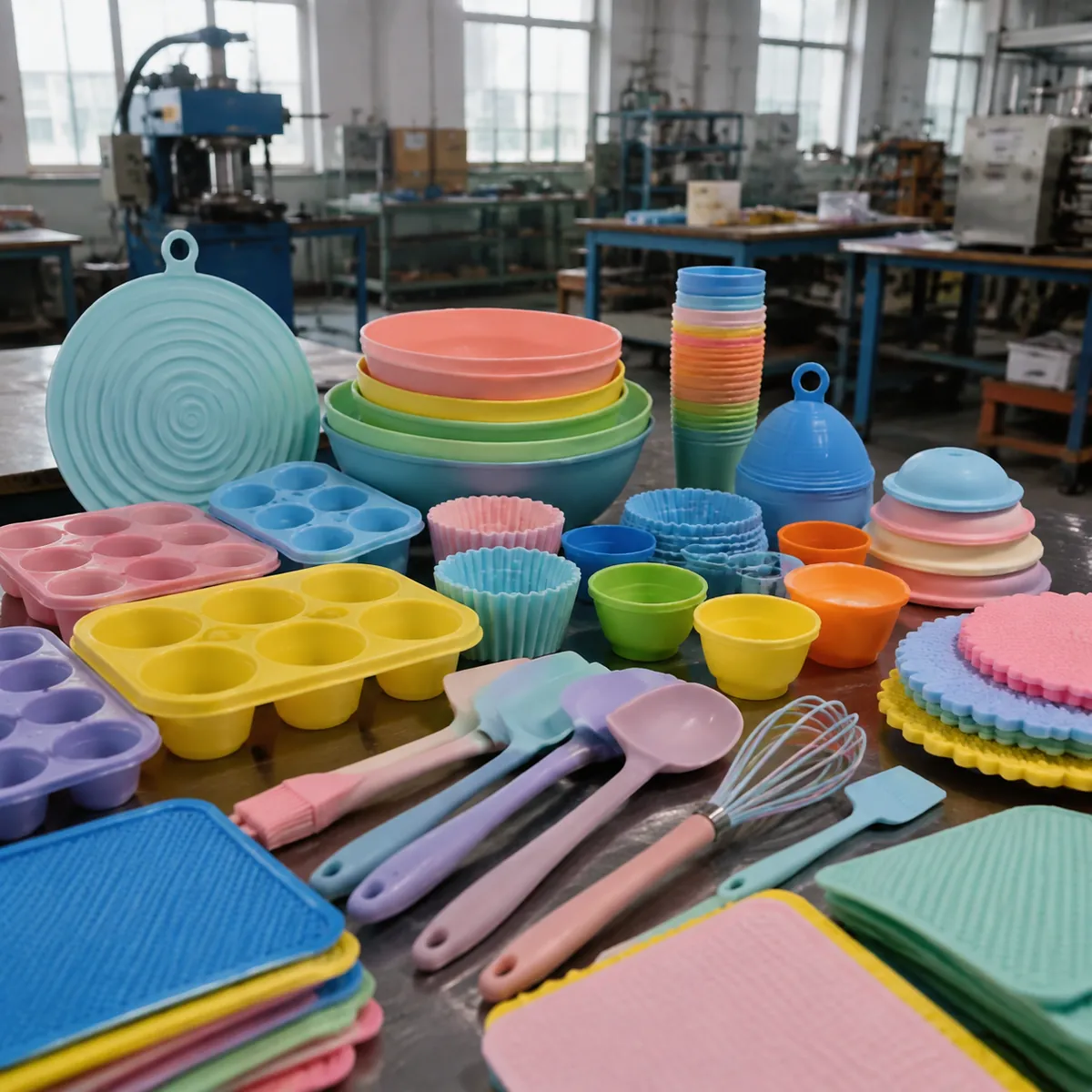
Tooling is the part of a bakeware order that buyers forget until it becomes a problem. A custom silicone mold or a branded baking pan starts with a mold, and the mold costs money, takes weeks, and belongs to somebody. Before you place a custom bakeware order with a manufacturer in China, settle three questions in writing: how much the tooling costs, who owns it after production, and what happens to it when you reorder — or when you stop ordering.
Why tooling matters in bakeware manufacturing
Bakeware products are mold-driven. Silicone molds are cast or injection-molded from a master mold; metal bakeware is stamped with dies; cake pans and loaf pans use tooling for their exact dimensions. When you request a custom shape, a custom logo, or a private-label size, the manufacturer creates tooling specific to your product. That tooling is a real cost — often several thousand dollars depending on the design — and it sits at the factory, not at your office.
The tooling cost question
What is included in a tooling quote
A clear tooling quote itemizes design and 3D modeling, master mold or die making, trial runs, and any revisions. Suppliers may quote tooling as a separate line or absorb it into the unit price over the first production run. Both are legitimate, but you need to know which one you agreed to.
Typical ranges
Tooling costs usually range from a few hundred to several thousand US dollars depending on product complexity — a simple silicone cavity mold sits at the lower end, while a multi-cavity or metal-stamping die runs higher. These are general ranges, not quotes; confirm actual figures with the supplier for your specific design.
Mold ownership: the clause that protects you
Mold ownership decides whether you can move production to another factory later. A common arrangement is that the buyer pays the tooling cost and owns the mold, with the ownership recorded in the contract. In practice, buyers rarely physically remove a heavy mold, so ownership matters in two situations: when you want a second supplier to produce the same product, and when the factory goes out of business or changes ownership.
- Get the ownership clause in writing — “mold owned by buyer” is not enough; state what happens on termination.
- Ask for a mold list or mold number in the order documents.
- Consider the option of storing a mold file (CAD) so a new supplier can replicate it.
- Clarify whether the factory may use the mold for other customers — usually prohibited, but only if written.
Reorder pricing and tooling amortization
If tooling cost is amortized into the unit price, reorders at the same price mean you are paying for the tool again. Many suppliers quote an initial price with tooling recovery and a lower reorder price once the tool is paid off. Ask explicitly: “What is the unit price for the first order including tooling, and what is the reorder price after tooling recovery?”
Tooling payment and approval milestones
Tooling payments usually follow a recognizable sequence, and knowing it helps you budget. A common pattern is a deposit when the tooling order is confirmed, a milestone payment when the trial sample is approved, and the balance tied to the first production run. Some suppliers bundle the tooling cost into the first order’s unit price, which spreads the cash out but makes it harder to see what you actually paid for the mold.
| Milestone | What typically happens | What to confirm |
|---|---|---|
| Tooling deposit | Design and mold making start | Deposit %, design revision limits |
| Trial sample | Factory sends a trial piece | Who pays sample shipping; revision rounds |
| Sample approval | You approve the trial sample | Approval in writing; timeline to mass production |
| First production | Tooling balance or amortization | Unit price with vs without tooling recovery |
Document the agreed revision count. Most suppliers include a small number of design revisions in the tooling quote; extra rounds cost money and time. Knowing the limit up front prevents a surprise invoice later.
What happens if you switch suppliers
Buyers rarely think about mold portability until they need it. If your bakeware line is selling well and you want a second source for capacity or price, the mold ownership clause decides whether that is easy or painful. With a written buyer-owned mold clause, you can ask the original factory to cooperate with a transfer or replication; without it, the factory can reasonably refuse to let a competitor produce “their” mold.
Plan for portability before you need it: keep the CAD files, mold drawings, and material specs in your own records, and ask the supplier to confirm the mold number in the order. A simple email after tooling completion — “please confirm the mold serial number and that it is stored for our account” — creates the paper trail that makes future negotiations concrete.
Building the tooling agreement checklist
Before you approve a tooling quote, run through a short checklist so nothing is left verbal. Confirm the tooling price and payment schedule, the number of design revisions included, the trial sample timeline, mold ownership, mold storage and serial number, and the reorder price after tooling recovery. Also confirm who holds the CAD files and whether the factory may use the mold for other customers.
Keep the checklist with your PO documents. A completed checklist makes the tooling discussion concrete and prevents the most common disputes — surprise revision charges, ownership arguments, and reorder pricing that assumes you already paid off the tool.
If the supplier refuses to discuss mold ownership at all, treat that as a strong warning. Most legitimate manufacturers will put a buyer-owned mold clause in writing; the ones who resist usually plan to use the mold for other orders or to hold you hostage on reorders. A factory that is confident in the relationship will not hesitate to document who owns the tool and what happens when the program ends. The same mold-ownership questions apply to drinkware lines — drinkware OEM programs at frozl.com face the same tooling decisions.
FAQ
How much does custom bakeware tooling cost in China?
Tooling costs usually range from a few hundred to several thousand US dollars depending on product complexity — simple silicone molds at the lower end, multi-cavity molds and metal-stamping dies higher. Confirm the exact quote with the supplier for your design.
Who owns the mold after I pay for it?
Whoever owns the mold is determined by the contract. If you pay the tooling cost, the common arrangement is buyer ownership, but that is only enforceable if it is written into the order documents. Confirm the clause before production starts.
Can I use the same mold at a different factory?
If the contract states you own the mold, you can arrange for it to be used at another factory — but physically moving molds is expensive, so many buyers instead keep the CAD files and have a new mold made. Confirm both options with your supplier.
Final recommendation
Treat tooling as a contract item, not a line on the quote: itemize the cost, record ownership, and confirm reorder pricing before you pay the deposit. When you are ready to compare custom bakeware suppliers, send your design and target quantities or start from the bakeware product range.