If you are building a baking tray wholesale program for the current home-cooking market, the fastest-growing shelf space is not in the oven aisle — it is next to the air fryer. Consumers who bought air fryers expect accessories that fit them: smaller trays, perforated rounds, and coated pans sized for a basket rather than a full oven. The wholesale opportunity is real, but it is also a trap for importers who treat air-fryer bakeware as regular baking trays in smaller sizes. Fit, coating and heat behavior all differ, and the buyers who succeed specify those differences before they order.
What “Air-Fryer-Compatible Bakeware” Actually Means
An air fryer is a small, high-velocity convection oven. That description explains every specification difference you need to know. The cooking chamber is small, the air moves fast, and the temperature at the food surface can be intense even when the set temperature is moderate. Bakeware made for a standard oven is often too large, too tall, or too light to perform well inside it.
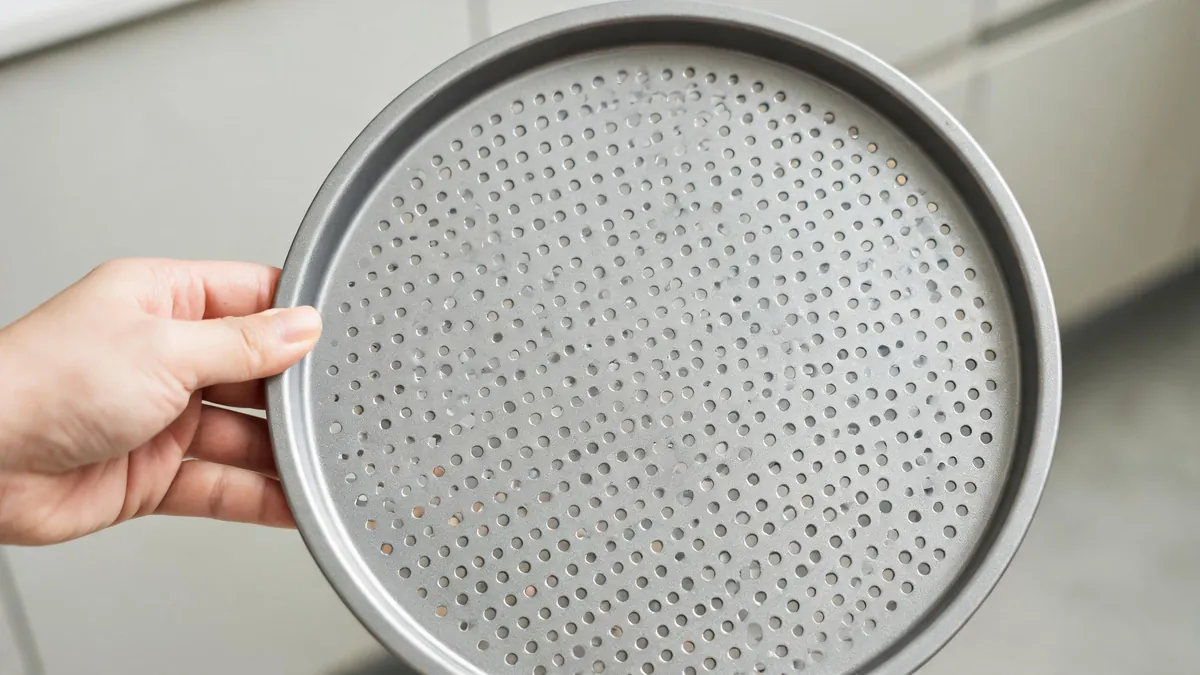
Products in this family fall into a few practical groups. Round and square trays that sit inside a basket, sized to common air fryer capacities; perforated trays and rounds that let hot air reach the underside of food — the accessory most buyers discover after their first soggy batch of fries; racks and inserts that lift food off the base; and small baking pans for cakes, brownies and egg bites that convert the air fryer into a mini oven. Many suppliers also bundle a tray with silicone mats, parchment rounds or a small trivet. When you build a wholesale line, you are usually choosing which of these groups to lead with rather than trying to cover all of them at once.
The honest market note: air fryer chamber sizes vary widely by brand and model, and they change with every product generation. There is no single universal size that fits every basket. The practical approach for a wholesale program is to focus on the best-selling capacity class in your target market, confirm dimensions against the leading models your retail customers actually sell, and state the compatible size range clearly on the package. Suppliers who claim “fits all air fryers” are usually selling a generic item that fits none of them well.
Sizes and Fit: The Specification That Wins or Loses the Order
Fit is the first question a buyer asks about air-fryer bakeware, and it is the specification where wholesale programs most often go wrong. A baking tray that is 5 millimeters too wide for the basket is a defective product to the end customer, no matter how well it is made.
Before you specify sizes, decide which capacity class you serve. Compact air fryers around 3 to 4 liters are the most common in many household markets; larger models from 5 liters up have bigger baskets and can usually accept slightly larger trays and even small pans. Round trays in the 18 to 22 centimeter range and square trays around 20 centimeters are typical starting points, but you should confirm dimensions with the specific models your channel sells rather than assuming a size standard exists. Basket shapes also differ — some are round, some square, some rectangular with rounded corners — and a tray that fits a round basket may not fit a square one at the same nominal capacity.
Build the fit decision into your packaging story. A package that states “fits air fryers with a 4–5 liter round basket” is more honest and more useful to the end buyer than one that promises universal fit, and it reduces returns — which matters more to your retail customer than any packaging flourish. If you are unsure which capacity class to lead with, ask your channel buyer which models they sell most; in the absence of that data, starting with the compact class and offering one larger size as a secondary SKU is a reasonable first assortment.
Quick answer: should I offer perforated or solid trays first?
Perforated trays and rounds are the accessory that solves the most common air-fryer complaint — food that steams instead of crisps — so they are usually the right lead SKU. Solid trays still sell for baking and for catching drips, but they compete more directly with the basket the customer already owns.
Materials and Coatings: What to Specify
Air-fryer bakeware is made from the same material families as regular bakeware, but the performance requirements shift. Carbon steel with a non-stick coating is the most common choice for trays because it heats quickly and releases food easily; aluminum is lighter and heats evenly but may need a coating for easy release; stainless steel is the most durable and dishwasher-friendly but tends to stick more without a coating or a mat.
The coating decision deserves the most attention. Air-fryer cooking concentrates heat at the food surface, and coatings are the first thing to fail under repeated high-heat use. Specify a coating system designed for the temperatures your products will actually see, confirm the coating is PFOA-free with the supplier, and ask what temperature range the coating is validated for — a coating rated for standard oven use may or may not suit the concentrated heat of an air fryer, so confirm rather than assume. Ceramic and ceramic-reinforced coatings are an alternative worth comparing, but the same rule applies: ask for the temperature basis and the test report rather than accepting a marketing description.
Material thickness is the other lever. Thin trays warp faster under high heat, and warping is the top quality complaint in this category. For carbon steel trays, a gauge that feels rigid in hand and does not flex when you hold it by one edge is the minimum bar; the supplier can tell you the exact gauge and you can compare it against samples from two or three factories. Our guide to baking tray gauge, flatness and warp resistance explains the checks in detail — the same checks apply at air-fryer scale, with even less tolerance for warping because the tray sits inside a basket where a slight bend changes the fit.
Perforation, Edges and the Details That Separate Good from Cheap
Perforated air-fryer trays look simple, but the details determine performance and complaint rates. Hole size and pattern control airflow: too few or too small holes and the underside still steams; too many or too large and small food items fall through or the tray loses rigidity. Most suppliers have standard patterns — confirm the hole diameter and spacing with the factory and test the tray with the foods your channel’s customers actually cook, from fries to fish fillets.
Edges and rims matter more than they appear to. A tray with sharp or burred perforation edges is a safety complaint waiting to happen, and a rim that is too low lets oil and juices spill into the basket. Specify deburred edges and a rim height appropriate to the tray’s use — higher rims for solid baking trays that may hold batter or drips, lower profiles for perforated crisping trays that need maximum airflow. The sample check should include running a finger around every perforation edge and testing how the tray sits in the actual basket.
Non-stick trays also need a release story that matches the product. A coated tray that still requires oil or a mat for easy release is a disappointment to a customer who bought it expecting convenience; the coating’s actual release performance should be part of your sample evaluation, not a claim you pass through from the factory.
Building the Line: Bundles, Sets and the Retail Story
The air-fryer accessory purchase is usually an afterthought — the customer bought the appliance, discovered its limits, and is now looking for the fix. That purchase pattern favors bundles and sets over single generic trays, because the customer does not yet know which accessory they need. Common wholesale structures:
- A starter set: one perforated round or tray plus one solid tray in the same basket class.
- A tray-plus-mat combo: a perforated tray with a silicone liner or parchment rounds sized to fit.
- A baking kit: a small round cake or brownie pan plus the crisping tray, for customers who want to bake in the air fryer.
- A multi-size option: one tray each for the compact and the larger capacity class, sold as a pair so the household is covered whichever model they own.
Packaging should carry the fit message on the front — the capacity class and basket shape the product fits — because that is the information the shelf browser needs most. Display hooks, blister cards and window boxes all work; the common failure is a package that shows a beautiful tray and hides the fit specification in fine print. For export, confirm the carton counts and retail pack structure with the factory early, because blister cards and window boxes have different carton economics than plain bulk packing.
If your retail customers include online sellers rather than physical stores, the bundle logic changes slightly: marketplace sellers usually want listing-ready specs, clear compatibility language, and packaging that survives individual shipment. The same product can serve both channels; the difference is in how you present fit and in the packaging tier you choose.
Quality Checks Before You Commit to a Container
Air-fryer bakeware looks like a simple metal product, but the quality failures are specific enough that a standard bakeware QC checklist will miss some of them. Add these checks to your routine before you approve a production run:
| Check | What to look for | Why it matters in air-fryer use |
|---|---|---|
| Basket fit | Tray sits flat in the basket with clearance on all sides; no rocking | Fit is the core buying reason; a near-miss tray is a return |
| Flatness and warp resistance | Tray is flat at room temperature and after a high-heat test cycle | High-velocity heat accelerates warping; warped trays also change fit |
| Perforation quality | Clean holes, no burrs, consistent pattern, no partially blocked holes | Burrs are a safety issue; blocked holes hurt airflow performance |
| Coating adhesion | No flaking or blistering after a heat-cycle test and a scratch test | Coating failure is the top durability complaint in this category |
| Food-contact documentation | Material spec and test reports for the coating and the base metal | Retail and marketplace buyers ask for compliance files; have them ready |
| Packaging fit claim | Package capacity/shape claim matches the tray and the stated basket class | Overstated fit claims drive returns and channel complaints |
Run the high-heat test yourself on the pre-production sample before you approve bulk: place the tray in the actual air-fryer model your channel sells, run a full cycle at the maximum temperature the package claims, and check flatness, coating condition and fit afterward. That one test tells you more than any certificate, and it is the test most importers skip because it requires owning the appliance.
The sample stage is also when you confirm the coating temperature claim with the factory in writing. If the supplier cannot state the validated temperature range for the coating system, ask for the coating vendor’s specification sheet — coating vendors publish temperature ratings, and a factory that cannot produce one is usually using a coating it does not fully control. The compliance file for coated bakeware is covered in our guide to bakeware compliance and coating vendors.
Planning the Order: MOQ, Pilot and Reorder
Air-fryer bakeware is a seasonal-adjacent category with a year-round base: purchase spikes around appliance-promotion periods and holidays, but replacement and gifting demand continues through the year. For a wholesale program, plan an initial pilot order that covers your lead SKUs at MOQ — typically the perforated tray and one bundle — then expand with sell-through data rather than guessing the full line on the first container.
Category MOQs matter here because you will want several SKUs in the same material and coating family. Factories that make baking trays will usually let you mix sizes and shapes within the same category to reach a combined MOQ, which is how you launch a five-SKU air-fryer line without committing to five separate minimums. Confirm the MOQ structure, tooling costs (if any of your trays are custom-sized) and production lead times before you approve the samples; our guide to bakeware MOQ, pricing and timelines walks through the numbers you need.
Watch your own inventory risk on bundles. Bundles sell well but tie up more SKUs per unit of revenue, and a slow-moving bundle occupies warehouse space across every component. Start with the single best-seller plus one bundle, measure the sell-through for a full reorder cycle, and only then expand the bundle range. The same discipline applies to companion items such as silicone mats and parchment rounds: they are attractive margin add-ons, but they multiply the SKU count you must manage.
Before you brief the factory on sizes and finishes, compare the standard tray dimensions, gauges and coating options on our bakeware products page — most suppliers run the same tooling families across standard oven trays and air-fryer sizes, so a review of the catalog range helps you phrase the specification in terms the factory quotes every day.
Parchment Rounds and Silicone Liners: The Companion Economy
Almost every air-fryer owner discovers the same two accessories after their first few weeks of use: parchment rounds or liners that keep the basket clean, and a silicone liner that protects the coating and makes release easier. These companions are small, low-cost and high-frequency — exactly the profile of products that anchor a reorder program, even though no single unit carries much margin.
The wholesale logic of companions is that they attach to the hero product. A customer who buys your perforated tray needs rounds or liners sized to that tray, and if your packaging or your bundle makes the size match obvious, the companion sale follows the tray sale naturally. Marketplace sellers particularly value this structure, because a tray listing with a compatible liner option raises average order value without requiring a second listing. For physical retail, a small display of companion liners beside the tray program serves the same purpose.
When you add companions, keep the size logic disciplined. Parchment rounds and silicone liners must match the tray and basket sizes you already offer; offering liners in sizes that match no product you sell creates confusion and returns. Confirm the material story for each companion — silicone liners need the same food-grade documentation as your silicone bakeware, and parchment rounds have their own food-contact characteristics — and keep the companion SKU count small until the tray program proves itself. A tray program with three well-matched companions outsells a tray program with ten loosely related ones.
Pricing and Margin Structure for an Accessory Line
Accessory lines price differently from core bakeware, and importers who apply standard cookware margin logic to accessories usually leave money on the table or kill the program with overpricing. The accessory purchase is impulse-driven and solution-driven: the customer already owns the appliance, has identified a problem — soggy food, a dirty basket, a scratched coating — and is comparing solutions at the point of need. That context supports a different price position than a considered cookware purchase.
Structure the line in three tiers rather than pricing every SKU the same. The hero tray, which carries the fit story and the performance claim, earns the promotional attention and the competitive price. The bundles, which add companions to the hero, carry the margin — customers compare bundles against buying the pieces separately and rarely itemize the convenience premium. The companions, sold alone, are the volume tier with the thinnest margin but the highest reorder frequency. When you review factory quotes, check the price ladder across these tiers rather than negotiating each SKU in isolation; a factory quote that is sharp on the hero but heavy on the companions needs a different negotiation than one that is balanced across the line.
Be equally disciplined about packaging cost. Blister cards, window boxes and display hooks add cost per unit that can erase the accessory margin entirely. Compare the retail-ready packaging cost against the price position of each tier — the hero tray may justify a window box, while the companions may sell better and more profitably in a simple polybag with a clear label. The packaging decision is a margin decision, and it belongs in the quote review, not after you have committed to a display format.
When to Order: Tying Inventory to Appliance Promotion Cycles
Air-fryer accessory demand does not follow a steady monthly curve; it follows the appliance. When retailers and marketplaces promote air fryers — around seasonal sales events and holiday gifting periods — the new appliance owners discover within weeks that they need trays, rounds and liners. Your reorder planning should track that pattern even though the exact timing varies by market and by year.
In practice this means placing your main accessory orders so they arrive shortly after the appliance promotion waves, and keeping a core stock of the best-selling SKU through the whole year for replacement demand. The exact calendar depends on your channel — appliance retailers, marketplace sellers and general merchandise chains each promote on different schedules — so ask your buyers when their air-fryer promotions are planned rather than guessing from a general retail calendar. Suppliers who know your order pattern can reserve production slots around it, which matters more in peak periods than the unit price you negotiate.
Holiday gifting adds a second layer. Air-fryer accessories sell as gifts and as stocking-stuffer-adjacent items, which means giftable packaging — a window box, a bundle presentation, a set with a recipe card — can earn a premium price in the fourth quarter. If you plan to serve that demand, the packaging decision needs to be made at the sample stage, not in October; production slots and packaging materials both tighten as the season approaches. Our guide to seasonal order planning for kitchenware explains how the import calendar works across categories; the same logic applies to air-fryer accessories, with the appliance promotion cycle as your demand driver.
The Documentation File for Coated Bakeware
Coated bakeware attracts more documentation questions than uncoated metal, because the coating is a food-contact material with its own compliance profile. Before you commit to a coated air-fryer tray program, build the documentation file that your retail and marketplace buyers will ask for: the coating supplier’s name and specification, the coating’s food-contact compliance documentation for your destination markets, the temperature range the coating is validated for, and the test reports behind those claims.
The critical habit is asking for the coating vendor’s own documentation rather than accepting the factory’s summary. Coating vendors publish material specifications and compliance data for the markets they serve; a factory that cannot produce the vendor’s specification sheet for the coating it applies is either using a coating it does not fully control or relying on a middleman’s word. Confirm that the coating used in bulk production matches the coating named in the sample documentation — coating substitutions are a common corner-cutting method in this category, and they are invisible until the coating fails in a customer’s air fryer.
Keep the file per SKU and per destination market, because the documents that satisfy one market may not satisfy another. The verification steps in our guide to bakeware compliance and coating vendors apply directly to coated air-fryer trays; the extra step for this category is confirming the coating’s temperature rating against the concentrated heat of air-fryer cooking, not just standard oven conditions.
Frequently Asked Questions
Do air-fryer trays fit all air fryer models?
No. Chamber sizes and basket shapes vary by brand, model and generation. Specify the capacity class and basket shape your product fits, state it clearly on the package, and confirm dimensions against the models your channel actually sells.
Are perforated or solid trays better for air fryers?
Perforated trays and rounds are usually the better lead product because they let hot air reach the underside of food, which is the most common air-fryer complaint. Solid trays still sell for baking and drip-catching uses.
What coating should I specify for air-fryer bakeware?
Choose a non-stick coating system validated for the temperatures the product will see, confirm it is PFOA-free with the supplier, and request the coating vendor’s temperature specification. Ceramic coatings are an alternative worth comparing on the same basis.
Why do air-fryer trays warp?
Thin metal and concentrated high-velocity heat cause warping. Specify a rigid gauge, test the tray through a full high-heat cycle in the actual appliance before approving bulk, and check flatness after the test.
Can I mix sizes to reach a bakeware MOQ?
Usually yes. Factories that make baking trays typically allow you to mix sizes and shapes within the same material and coating family to reach a combined category MOQ — confirm the structure with the supplier before approving samples.
If you are planning an air-fryer bakeware line and want to compare tray sizes, coating options and MOQ structures before you commit, send us your target market and the appliance models your channel sells. Our bakeware suppliers can quote mixed programs that reach MOQ without overstocking your warehouse. Request a bakeware quote or a sample plan.