If you are choosing between cast iron and carbon steel for a wholesale cookware line, the short answer is: stock both, but position them differently. Cast iron sells on heat retention, a classic look and a heavier, more premium feel. Carbon steel sells on faster heating, lighter weight and lower shipping cost per unit. Most importers who test both find they cover different price points and different customer profiles, so the decision is rarely “either/or” — it is usually “which size and finish for which market.”
This guide compares the two materials for buyers who plan to source cookware from wholesale suppliers. It covers how each material is made, how they behave in the kitchen, what they cost to ship, and the questions to ask a factory before you commit to a container.
What cast iron and carbon steel actually are
Both materials are iron-based and both build a seasoning layer that gives them a natural non-stick surface. The difference starts in production. Cast iron is poured into a mould, which makes it thicker, heavier and slightly porous on the surface. Carbon steel is rolled from sheet steel, so it is thinner, lighter and smoother. A typical cast iron skillet weighs roughly double a carbon steel pan of the same size, and that single fact explains most of the other differences.
| Factor | Cast iron | Carbon steel |
|---|---|---|
| Production | Poured into a mould | Rolled from sheet steel |
| Weight (same size) | Heavy, usually 2–3 kg for a 26 cm skillet | Lighter, usually 1–1.5 kg |
| Heat retention | Excellent — stays hot after the heat source drops | Moderate — responds faster to heat changes |
| Heating speed | Slow to heat up | Faster to heat up |
| Seasoning | Needed and re-built over time | Needed, builds faster on smoother surface |
| Induction compatibility | Yes (magnetic) | Yes (magnetic) |
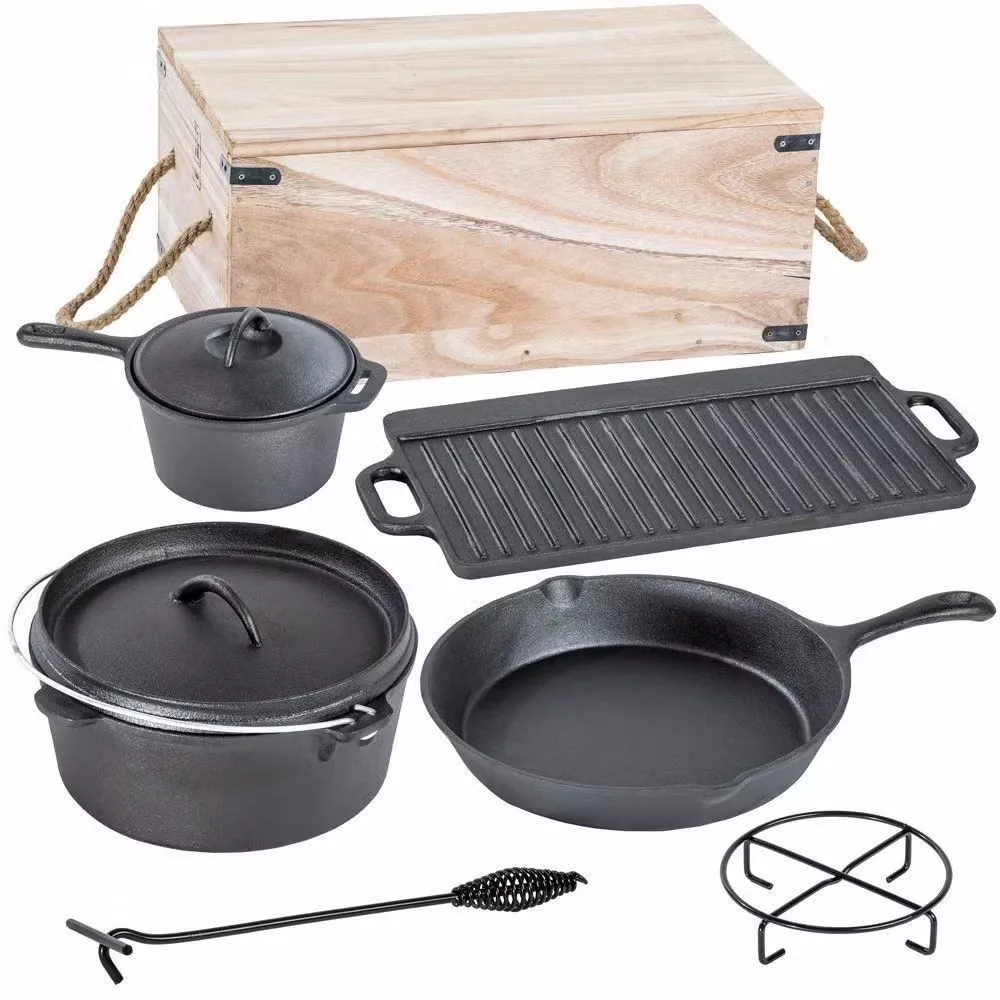
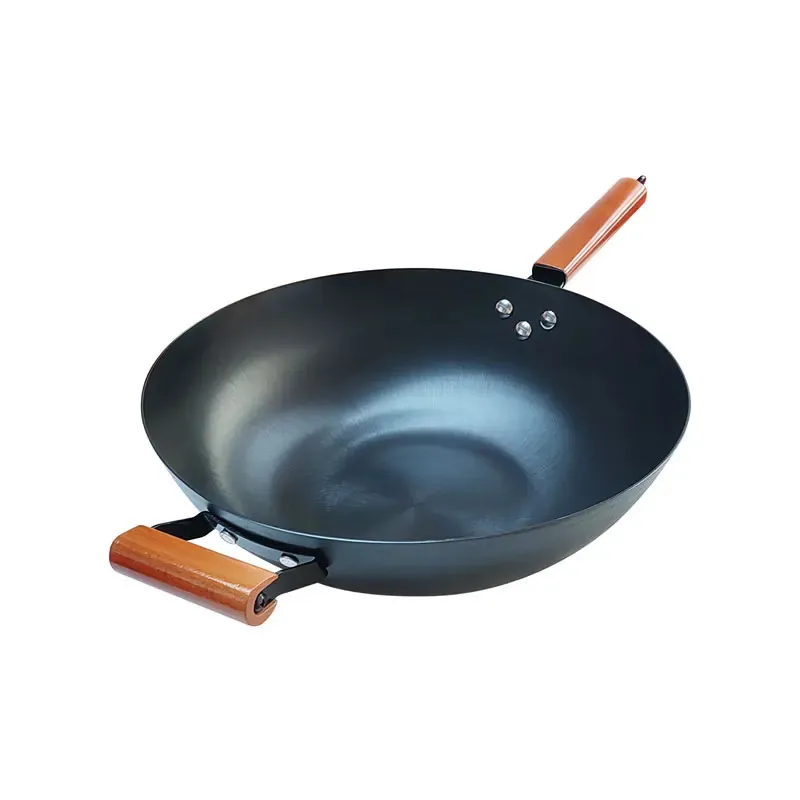
| Typical products | Skillets, Dutch ovens, griddles, camp sets | Frying pans, woks, crepe pans, paella pans |
| Typical retail price level | Mid to premium | Budget to mid |
Those differences are not good or bad by themselves. A heavy skillet is a selling point for one shopper and a deal-breaker for another. Your job as a wholesaler is to know which customer you are serving before you pick the material.
How the two materials behave in the kitchen
Cast iron’s strength is heat retention. Once it is hot, it stays hot, which makes it excellent for searing steaks, baking cornbread or slow cooking on a low burner. The trade-off is that it takes longer to reach temperature and it is slow to respond when you turn the heat down. For a home cook who likes to leave the pan on the stove and let it work, that is exactly what they want.
Carbon steel is the opposite. It heats quickly and cools quickly, so the cook controls the temperature directly. That is why wok cooking suits carbon steel — you need fast heat changes as ingredients move through the wok. Chefs also prefer carbon steel for pans they toss often, because the lighter weight is easier on the wrist during a busy service.
Both materials need to be seasoned. If the surface is allowed to rust or the seasoning is stripped, the pan must be re-seasoned before use. That maintenance is the main reason some retailers avoid iron-based cookware entirely, and it is worth a clear line in your product listing: “requires seasoning, dishwasher not recommended.”
What the weight means for shipping and warehousing
Weight affects your freight cost before it affects your customers. A 26 cm cast iron skillet at roughly 2.5 kg adds up fast in a 40-foot container, while the same size in carbon steel may save you 40–50% in per-unit weight. If you sell online, the difference also changes your per-order shipping cost and the box size you need.
There are two other logistics points to confirm with the factory. First, whether the pans leave the factory pre-seasoned — unseasoned items are cheaper but arrive looking grey and can rust in transit. Second, what rust protection is applied and how the pans are packed. Many suppliers wrap iron cookware in oiled paper or a plastic sleeve and use edge protectors on the rims. Ask for photos of the export packing before you approve the order.
Which range fits which market
Buyer preferences are not universal, so treat the following as a starting point rather than a rule. In markets where home baking and slow cooking are popular, cast iron Dutch ovens and skillets tend to move well because they suit roasting and braising. In markets with smaller kitchens and frequent stir-frying, carbon steel pans and woks usually fit better because they are lighter and heat quickly. You can validate this with your own sales data after the first small order — the fastest way to mis-stock is to assume one material fits every region.
For a first order, a balanced mix looks like: one cast iron skillet size (24 or 26 cm), one cast iron Dutch oven, one carbon steel frying pan (28 cm) and one carbon steel wok (32 cm). That gives you four test positions with a relatively small total quantity, and reorders can be weighted toward whichever sells first.
What to ask a supplier before ordering
The factory’s answers to these five questions tell you more than any catalogue photo:
1. What is the actual weight per size? Request the export weight, not the marketing weight. The difference can be 300 g on a single skillet.
2. What finish does the pan leave the factory with? Pre-seasoned, oiled only, or raw? This decides whether your first batch of customers sees a ready-to-use pan or a grey surface that needs explanation.
3. What seasoning oil is used? Usually vegetable oil or a food-safe coating. Confirm it is food-grade and note it on the packaging if your market requires ingredient disclosure.
4. Are handles oven-safe? Many cast iron skillets ship with a stainless or iron handle that can go in the oven. If a handle has a coating, confirm the temperature limit.
5. What is the MOQ and lead time? Typical first orders start around 500–1,000 pieces per model for stock designs, but this varies by factory — confirm the number for the specific model and size you want.
If you need a wider selection to compare, a sourcing partner that works with multiple production lines can shortlist suitable factories faster than visiting each one yourself. You can browse the full kitchenware product range and send your target sizes to our team for a first quote.
FAQ
Is cast iron or carbon steel better for induction cooktops?
Both work on induction because both are magnetic. The practical difference is weight and heat behaviour: cast iron holds temperature longer, carbon steel responds faster. Either is fine as long as the base is flat and the size matches the burner.
Do carbon steel pans rust?
Yes, if they are left wet or washed with detergent and dried without oil. Like cast iron, carbon steel relies on a seasoning layer. Suppliers usually ship them with oil or a light coating, and the product listing should tell the customer to season before first use.
What is the minimum order for cast iron and carbon steel cookware?
For stock designs, first orders usually start around 500–1,000 pieces per model, with lower numbers possible on smaller skillets. Custom sizes or packaging raise the minimum. Confirm the exact MOQ with the supplier for each model.
Should I stock pre-seasoned or unseasoned pans?
For most retail channels, pre-seasoned is the safer choice because it reduces customer confusion and rust complaints. Unseasoned pans are cheaper but require clear instructions and are usually aimed at experienced buyers or commercial kitchens.
Final recommendation
Start with a small mixed order — one cast iron skillet and Dutch oven, one carbon steel pan and wok — and let sales decide the reorder mix. Confirm weight, finish, seasoning oil and export packing in writing before you pay, and price in the freight difference between the two materials from the start.
If you are planning a cast iron or carbon steel line and want realistic sizes, finishes and MOQs for your market, send our sourcing team your target products or request a quote through the contact page. We can match your spec to suitable production lines and provide samples before you commit.