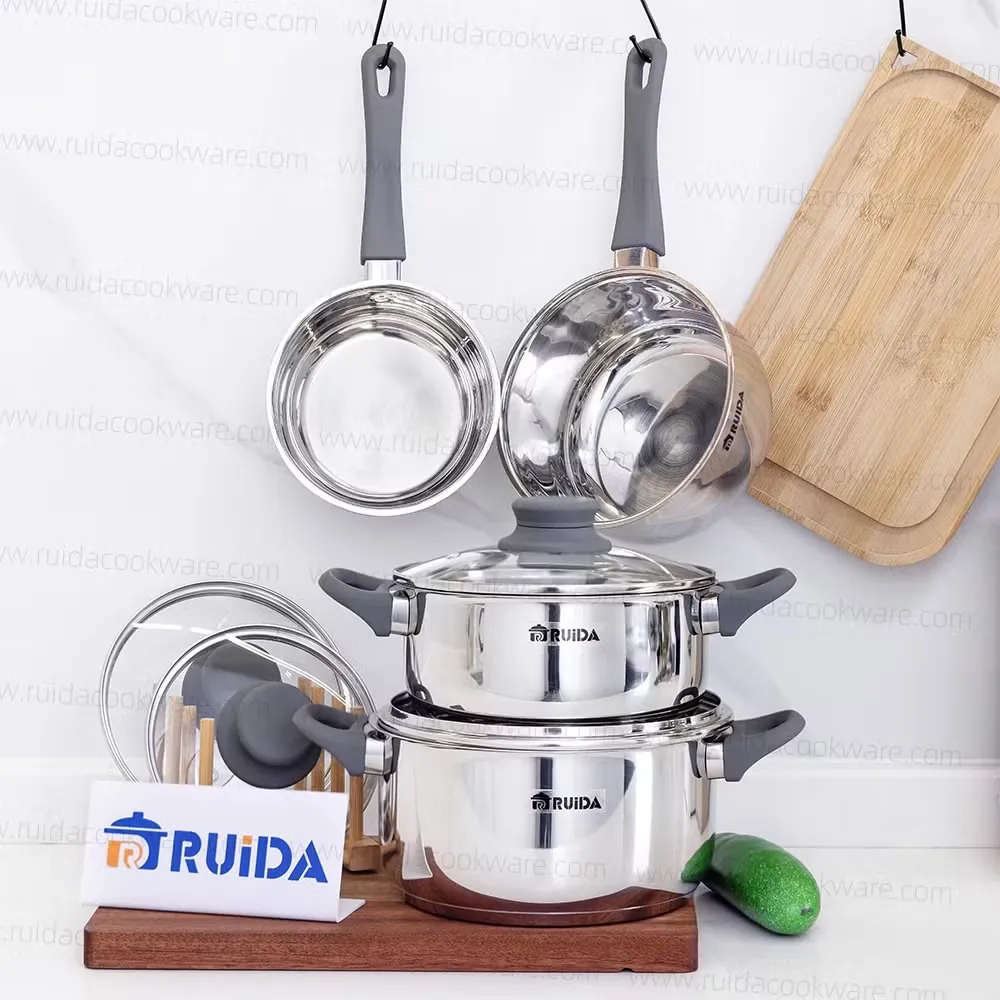
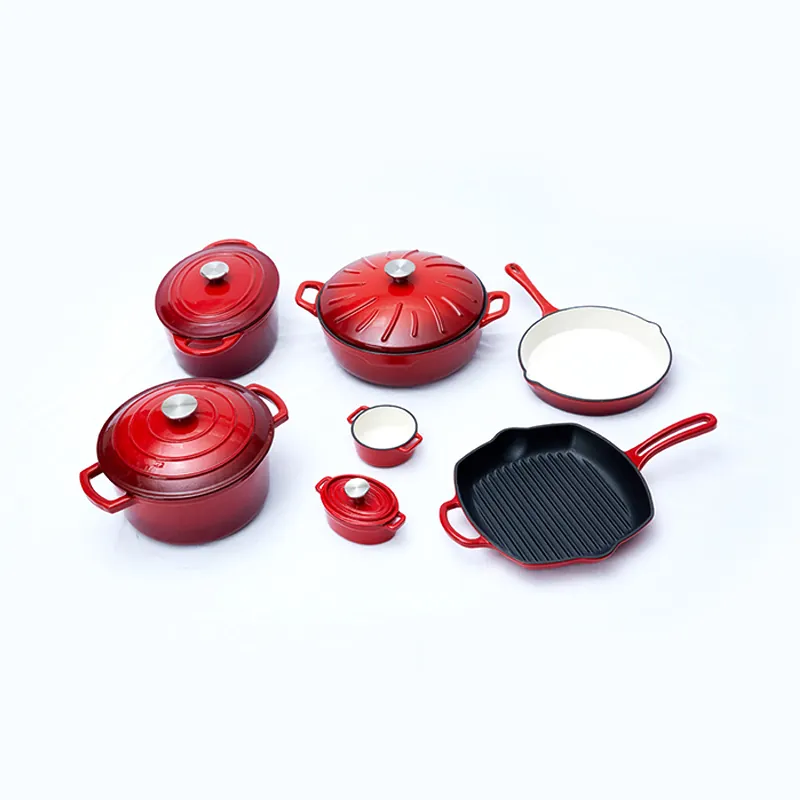
The short answer for buyers selling into the Middle East: cookware made from stainless steel, aluminum, cast iron, carbon steel, glass or ceramic is generally accepted, but the practical work is in the details — coatings, release agents, handle adhesives and even packaging inks can raise halal-conscious questions. The safe approach is to ask every supplier for a material declaration and a written statement on production aids before you commit to an order. This guide walks through which materials are low-risk, what to confirm about coatings and finishes, and which documents Middle East importers usually expect.
Why Halal-Conscious Sourcing Starts With Materials, Not Labels
Cookware itself is metal, glass or ceramic — none of these contain animal-derived components. The halal-related questions come from what happens during production. Release agents sprayed into molds, lubricants on stamping presses, glue used to fix handles, and some coating formulations can in theory contain animal fats, alcohol or other substances that a halal-conscious buyer or retailer wants excluded. Most suppliers in China do not use animal-derived production aids, but “most” is not a spec. Put the question in writing and keep the answer on file.
It is also worth knowing that halal certification in the usual sense applies to food products, not to cookware. What importers actually request from cookware suppliers is normally a material declaration, a statement that no animal-derived substances are used in production aids, and relevant food-contact test reports. Confirm with your buyer or the local authority what format they accept.
| Material | Typical halal-conscious note | What to confirm with the supplier |
|---|---|---|
| Stainless steel | Inert base material; low risk | Grade (usually 304 or 201 for cookware), polishing compounds used |
| Aluminum | Inert base; coating is the point to check | Coating type, release agents in casting, anodizing chemicals |
| Cast iron / carbon steel | Seasoning oil may be applied at factory | Type of oil used for pre-seasoning and its source |
| Ceramic / stoneware | Glaze composition matters most | Glaze ingredients, whether lead/cadmium tested per food-contact rules |
| Glass (borosilicate) | Very low risk | Decoration inks on the outside, if any |
| Non-stick (PTFE) | Coating slurry is the key question | PFOA-free status, coating formulation, curing process |
| Silicone | Food-grade grade and additives | Food-grade silicone grade, any fillers or additives |
The table is a starting checklist, not a guarantee. Every factory line differs, so confirm each point in writing for the specific SKU you plan to order.
Non-Stick Coatings: The Highest-Value Question
Non-stick cookware is one of the most popular categories in Middle East retail, and it is also where most of the sourcing questions concentrate. Two checks matter. First, ask for the coating system and its PFOA-free status in writing — this is standard practice now, but it should still be on the datasheet. Second, ask whether the coating slurry or any additive in the process uses animal-derived or alcohol-based substances. Many factories will answer “no” quickly; the useful ones provide a statement you can pass to your buyer.
Ceramic-coated pans are a common alternative and are easy to explain to end customers, but the coating durability varies more between factories, so sample testing matters even more. For both PTFE and ceramic lines, request a coating thickness reading and a scratch test on the pre-production sample.
Handles, Adhesives and Packaging: The Parts Buyers Forget
Stainless steel and bakelite handles are low-risk, but wooden handles may carry a finish that contains alcohol or shellac, and some handle assemblies use adhesives. Ask whether the handle finish is food-safe and what it contains. On the packaging side, some Middle East retailers require bilingual Arabic and English labeling, and all importers want a packing list that matches the goods. Confirm labeling artwork before mass production — re-printing cartons for one market is an avoidable cost.
Documents to Request for Middle East Orders
- Material declaration for each SKU (base material and grade).
- Statement on production aids: no animal-derived or alcohol-based substances used.
- Food-contact test report for the target market (for example EU 1935/2004, LFGB or FDA frameworks — confirm which one your buyer accepts).
- Coating datasheet with PFOA-free confirmation for non-stick lines.
- Sample approval record with photos of the approved sample.
Document requirements differ by country and by importer. The list above is what we usually see requested; confirm the exact set with your buyer before the order is confirmed.
Quick check: Does cookware need a halal certificate?
Usually not in the same way food does. Cookware is a food-contact material, so buyers normally ask for a material declaration and production-aid statement instead. If your retail customer requests a formal certificate, ask your importer of record which certification body and scheme they accept, then confirm with the factory whether they can support it.
Regional Fit: GCC Retail and Hospitality Demand
The Gulf market splits into two clear buying patterns. Retail chains order branded or private-label cookware sets for home use, with heavy emphasis on non-stick and stainless lines, gift-ready packaging and Ramadan and Eid seasonal programs. Hotels, restaurants and catering buyers order commercial-grade cookware with higher durability requirements and simpler packaging. If you are also sourcing restaurant furniture and table settings for the same hospitality projects, plan those orders together — a specialist such as FurnitureOrigin can cover dining furniture for the same fit-out cycle, which simplifies logistics.
Seasonal timing matters. Ramadan and Eid drive a large share of cookware gifting, so production slots fill up earlier than in other regions. Confirm your order lead time against the festival calendar, not just against a general factory schedule.
When you plan the assortment, start from the categories you already trust. Our cookware product range covers non-stick, stainless and cast iron lines, and the wider kitchenware product range adds bakeware, tableware and utensils for the same shipment.
FAQ: Cookware Sourcing for Middle East Buyers
Is stainless steel cookware halal-conscious by default?
Stainless steel itself is an inert metal and is generally considered low risk. The points to confirm are the polishing and cleaning compounds used in production and, for some lines, the materials in the handle assembly. A written material declaration covers these questions.
What should I ask about non-stick coatings?
Ask for the coating system name, PFOA-free confirmation, the coating thickness target and whether the slurry uses animal-derived or alcohol-based additives. Then test the pre-production sample for scratch resistance and adhesion before mass production.
Do Middle East retailers require Arabic labeling?
Many do, especially in Saudi Arabia and the UAE. Confirm the labeling requirement, including bilingual text and any specific warning or care instructions, before carton artwork is printed. Reworking packaging for one market is expensive.
Can a factory provide a halal statement for cookware?
Most can provide a statement that no animal-derived substances are used in production aids, and some can support third-party documentation. Confirm the exact wording and format your buyer requires before the order.
Final Recommendation
Treat halal-conscious sourcing as a documentation exercise, not a mystery. Choose base materials that are inherently low-risk, put the coating and production-aid questions in writing, and collect the material declaration and food-contact test reports before mass production. That paper trail is what your retail or hospitality buyer will ask for anyway.
If you are planning a cookware program for the Middle East and want a factory-side review of your specification, send us your target materials, quantities and documentation requirements. We reply with sourcing notes, sample options and lead-time estimates. Request a quote or contact us directly via WhatsApp — a real sourcing specialist will respond.