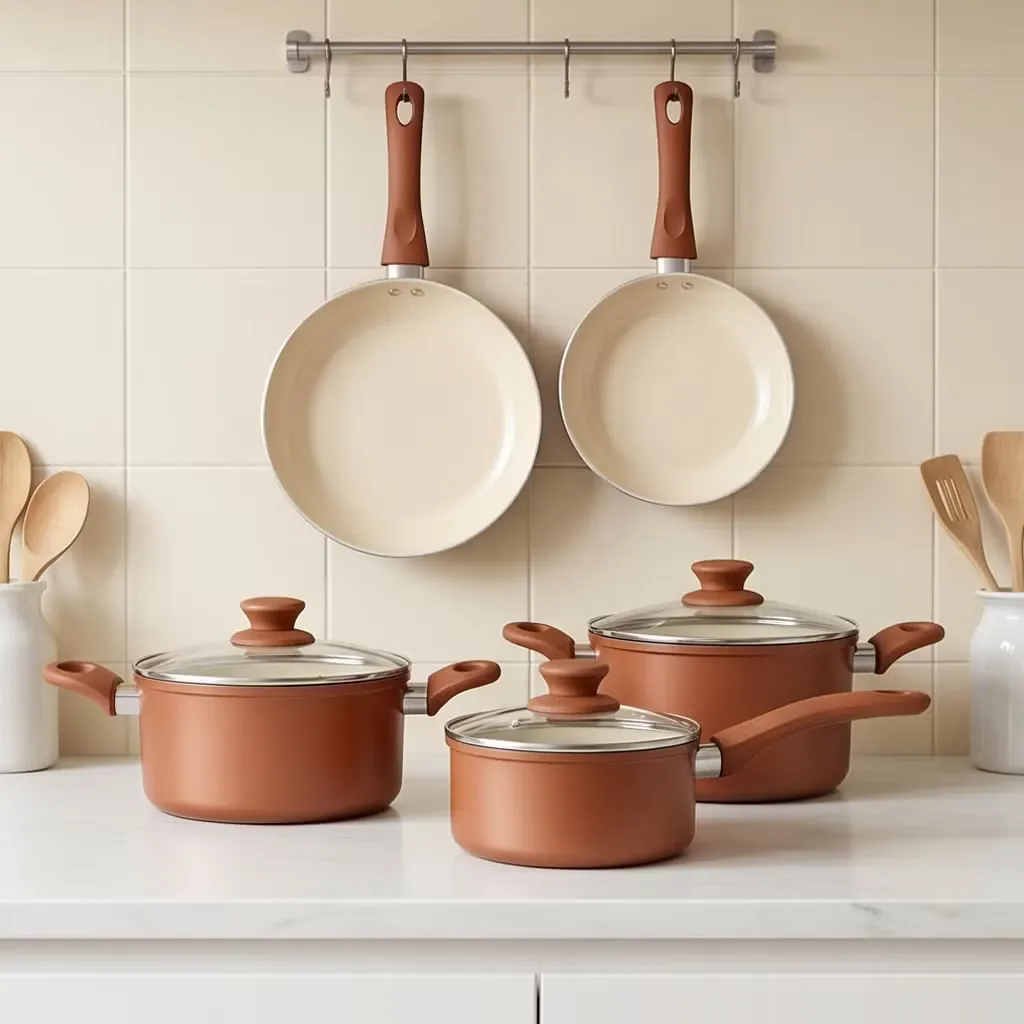
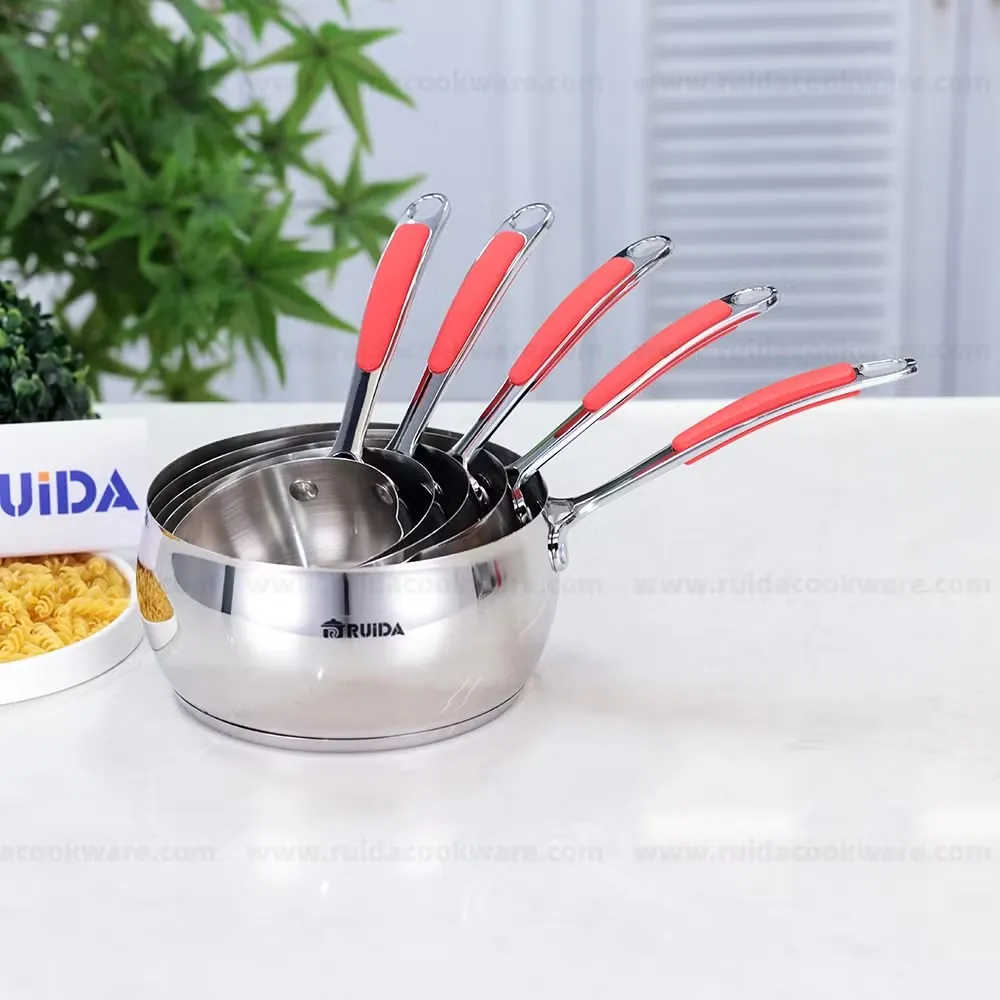
Oven-safe, dishwasher-safe, and induction-ready are the three claims that decide whether a cookware line sells in Western markets — and they are also the three most loosely used words in a cookware manufacturer’s brochure. A buyer who takes those claims at face value often discovers the discrepancy at the customer’s kitchen counter. The reliable approach is to ask how each claim was tested, request the test report or a written spec, and confirm the exact conditions the claim applies to.
What each claim actually means
These words are not interchangeable, and each one has conditions attached.
| Claim | What it usually covers | Conditions to confirm |
|---|---|---|
| Oven-safe | Body and handles tolerate oven temperatures | Max temperature in °C/°F, lid included or not, duration |
| Dishwasher-safe | Survives dishwasher cycles without visible damage | Number of cycles, top rack only, coating effects |
| Induction-ready | Works on induction cooktops | Magnetic base type, minimum pan size, base thickness |
Ask the supplier to state the numbers, not just the words. “Oven safe to 180°C including the glass lid” is useful; “oven safe” alone is marketing.
How to verify cookware manufacturer claims
Request the test report or test method
Legitimate manufacturers keep test records for the claims they advertise. Ask which laboratory or internal method produced the result, what standard it follows (for example EN, ASTM, or a supplier test protocol), and whether the report is available for the exact model you are ordering. A supplier who cannot produce any record for a headline claim is a risk flag.
Test the sample yourself
Your own sample test does not need a laboratory. Put the sample in the oven at the claimed temperature with the lid, run it through a dishwasher cycle, and check it on an induction hob with a magnet test. Sample behavior does not always match production batches, but it catches the biggest gaps before you commit to a container.
Separate coating claims from base metal claims
An induction-ready base and a non-stick coating are two different layers. Confirm the base material and gauge that create the magnetic response, and separately confirm the coating type and its temperature limit. A single “premium” word does not cover both.
Common gaps between brochure and reality
- The body is oven-safe but the handle melts — the claim quoted the pan, not the assembly.
- The pan is dishwasher-safe but the coating discolors after a few cycles.
- Induction works only on large pans; small saucepans on the same base fail the magnet test.
- The lid is not included in the oven-safe claim even though it is sold with the set.
Each gap is easy to miss in a quote review and easy to catch with a written spec and one round of sample testing.
Putting the claims into your purchase order
When you finalize an order, write the verified conditions into the product spec: maximum oven temperature, dishwasher cycle count, induction base type and gauge, and coating temperature limit. That turns a marketing claim into a contract item. If the goods do not match the spec, the PO gives you a concrete basis for a claim — which is exactly why some suppliers are reluctant to put numbers in writing.
How to build the claim verification into your RFQ
The best time to verify claims is before you shortlist, not after you have chosen a manufacturer. Add a small “claim verification” section to your RFQ with three lines: requested oven temperature, requested dishwasher cycles, and required induction base type. Ask every manufacturer to state their standard for each line. Then compare the answers with the sample test results. This is also where the difference between a factory and a trading company shows up — a factory can usually walk you through the test method, while a trader forwards a vague certificate with a logo.
What a certificate does and does not prove
A test report proves the product passed a specific test on a specific date. It does not prove that every production batch meets the same standard, and it does not cover claims that were not tested. Read the report for the model number, the tested conditions, and the issuing lab. If the certificate does not name your model or your claimed condition, ask for the matching report before production rather than after.
Example: verifying an oven-safe claim step by step
To show how the checks work together, walk through a typical oven-safe claim. The supplier’s brochure says the pan is oven safe. You ask for the maximum temperature, and they reply 220°C including the lid. Next, request the test report that backs that number — check that the report names the model you are buying and the 220°C condition. Then test the production sample: place it in a preheated oven at 220°C for the stated time, remove it with oven mitts, and check the handle, lid knob, and coating for deformation or discoloration. If the sample passes and the report matches, write “oven safe to 220°C including lid” into the PO. If the sample fails, you have caught it before the container, not after.
This same sequence applies to dishwasher cycles and induction compatibility. The cost is one sample and one hour in the kitchen — far cheaper than a return wave from customers.
Building a claims matrix across your product line
If you source a full cookware line — frying pans, saucepans, stockpots, and sets — keep a claims matrix per SKU so the marketing claims match the tested specs. The matrix lists, for each model, the oven temperature, dishwasher cycle count, induction base type, and coating limit. This prevents the classic error of advertising the whole line as oven-safe when only one model passed the test.
A simple spreadsheet is enough. Share the matrix with the supplier before production and ask them to confirm each line against their test records. After shipment, the matrix becomes the input for your product pages, packaging copy, and retailer sell sheets — all from verified data instead of brochure language.
The matrix also protects you in a dispute. If a customer or retailer challenges a claim, you can point to the tested spec, the matching report, and the PO that recorded it. That evidence chain is what separates a professional import program from one that relies on trust.
FAQ
What temperature is considered oven safe for stainless steel cookware?
Many stainless steel pans with metal or oven-safe handles tolerate temperatures around 180–230°C, but the limit depends on the handle material, lid, and construction. Confirm the exact temperature with the manufacturer for the specific model.
How can I test if a frying pan is induction ready?
A quick magnet test is the first check — a magnet should stick firmly to the base. For a full check, confirm the base is a magnetic stainless steel layer or a bonded induction base, and test the smallest pan size you plan to sell on an actual induction cooktop.
Does dishwasher safe mean the non-stick coating is safe?
Not always. The claim can apply to the body while the coating wears faster in the dishwasher. Ask the supplier for the number of cycles the claim was tested to, and check the coating warranty separately.
Final recommendation
Turn oven-safe, dishwasher-safe, and induction-ready from adjectives into specifications, and verify them with a report plus your own sample test. Browse the cookware product range or request a quote when you are ready to compare manufacturers who can document their claims.