A cookware factory’s calendar is not the same as yours. Factories run on production slots: the week your order enters the line depends on when you confirm, how full the schedule is and whether your product needs custom materials. Buyers who treat lead time as a fixed catalog number get burned at exactly the wrong moment, usually before a peak retail season. The fix is to plan against the factory’s slot calendar.
How a Factory Schedules Production
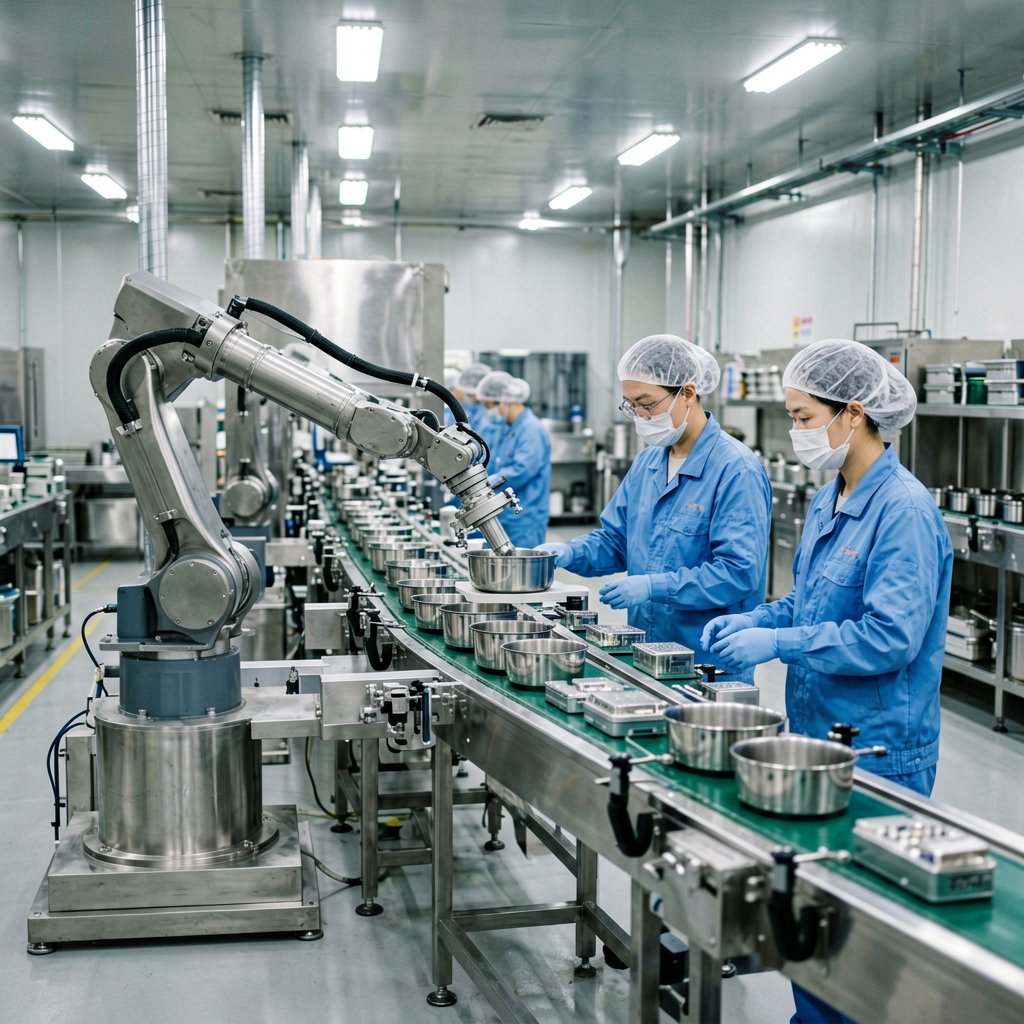
Most cookware plants work in weekly or bi-weekly production batches. Standard items that are in continuous production are easier to slot into gaps. Custom items with special coating colors, printed logos or new tooling need material preparation first, so they are planned as separate batches. When you request a quote, also ask: what is the next available production slot for this exact specification?
Lead Time Components to Track
| Stage | What happens | Typical range |
|---|---|---|
| Order confirmation | Specification, price and deposit agreed | 3-7 days |
| Material procurement | Aluminum, stainless or coating materials sourced | 1-3 weeks |
| Production | Stamping, coating, assembly | 2-5 weeks depending on volume |
| Packaging | Cartons, labels, retail boxes | 1-2 weeks (often parallel) |
| QC and consolidation | Inspection, loading | 3-7 days |
| Freight | Ocean or rail to destination | 3-6 weeks |
These are planning ranges, not promises. Every factory has a current schedule, so treat the table as the checklist of what to ask, not as the answer.
Seasonal Peaks That Change Everything
The Q3 cookware rush
Retail cookware programs typically peak in the third quarter, when buyers prepare for autumn and holiday promotions. Factories that look relaxed in Q1 can be fully booked by August. If your target is a holiday retail window, the planning conversation starts months earlier, not weeks.
Coating and color capacity
Non-stick coating lines are often the bottleneck. Special coating colors and finishes share the same line, so a custom color can add weeks. Ask how many coating lines the factory runs and whether your color can be produced in the same slot as a standard order.
How to Lock Capacity for Your Order
First, send a clear spec sheet early, even if the order is not final. Second, ask for a provisional slot based on that spec. Third, confirm the deposit and final details before the slot’s cutoff date. Finally, build a margin of 2-3 weeks into your internal deadline so a delayed batch does not sink the whole retail plan.
FAQ: What happens if my order is late for the slot?
If you miss the factory’s cutoff, the order usually moves to the next available slot rather than being inserted early. Custom packaging and coating colors often have their own lead times, so a late artwork approval can delay the whole batch. Confirm the latest date for each input, not just the production date.
Match Your Calendar to the Factory’s
The practical takeaway: plan cookware orders around the factory’s production calendar, not your sales forecast alone. Confirm current slot dates, separate production from total lead time, and front-load custom items. A realistic sourcing calendar keeps your shelves full without paying for air freight at the last minute.
Order Planning Checklist
Keep these points in your sourcing calendar:
- Ask for the next available production slot, not just the catalog lead time
- Separate material, production, packaging and freight stages in your plan
- Confirm the cutoff date for artwork, colors and packaging approvals
- Add two to three weeks of buffer to your internal deadline
- Re-confirm the slot after the deposit and after any specification change
One detail buyers often miss is factory holidays. Chinese factories typically pause for longer breaks around the Lunar New Year and national holidays, and production slots before those breaks fill quickly. Ask the factory for its holiday calendar when you plan the order, so your delivery window does not collide with a plant-wide shutdown.
For more sourcing context, browse our cookware products and kitchenware products collections.
One more practical point: prices, lead times and material grades should always be confirmed with the supplier in writing before an order is placed. Market conditions change, and a written confirmation protects both sides when the container finally ships.
For buyers comparing several suppliers, keep one specification sheet per factory and update it after every call. A shared document makes it easier to compare quotes and harder for details to get lost between emails.
If this is your first import order, leave extra time in the schedule for samples and approvals. Most delays happen at the sample stage, not on the production line, because both sides are still aligning on what “final” means.
Shipping terms matter as much as the unit price. Confirm whether the quote is FOB, CIF or EXW, and check who handles inland trucking, export documents and inspection before the container is booked.
Finally, keep a record of every approval: artwork, sample photos, packing instructions and payment terms. When the second order comes, that record becomes the fastest way to get an accurate quote.
One more practical point: prices, lead times and material grades should always be confirmed with the supplier in writing before an order is placed. Market conditions change, and a written confirmation protects both sides when the container finally ships.
For buyers comparing several suppliers, keep one specification sheet per factory and update it after every call. A shared document makes it easier to compare quotes and harder for details to get lost between emails.
Frequently Asked Questions
How far ahead should I place a cookware order?
For standard catalog items, 30-60 days from order confirmation is a common working range; for custom or OEM items with tooling, 60-120 days is more realistic. Confirm the current factory schedule before you commit, because the number changes with the season.
Why do cookware lead times stretch before peak seasons?
Factories book production slots in advance for peak retail windows such as Q3 cookware programs. When slots fill, new orders move to later weeks even if the factory’s nominal lead time is unchanged. Ask for the current slot date, not the catalog lead time.
What is the difference between production lead time and total lead time?
Production lead time is the time the factory needs to manufacture after materials arrive. Total lead time adds material procurement, packaging production, QC, consolidation and freight. Buyers often underestimate the extra weeks for custom packaging.
Can I reserve a production slot before the order is final?
Some factories allow provisional slot bookings based on an order intent or deposit. If your season depends on a fixed delivery window, ask whether the factory will hold capacity against a provisional booking and what happens if the final order changes.
Planning a kitchenware order? Send us your product list or target specs and get a sourcing quote. We work with importers, retailers and brands on OEM and wholesale programs.