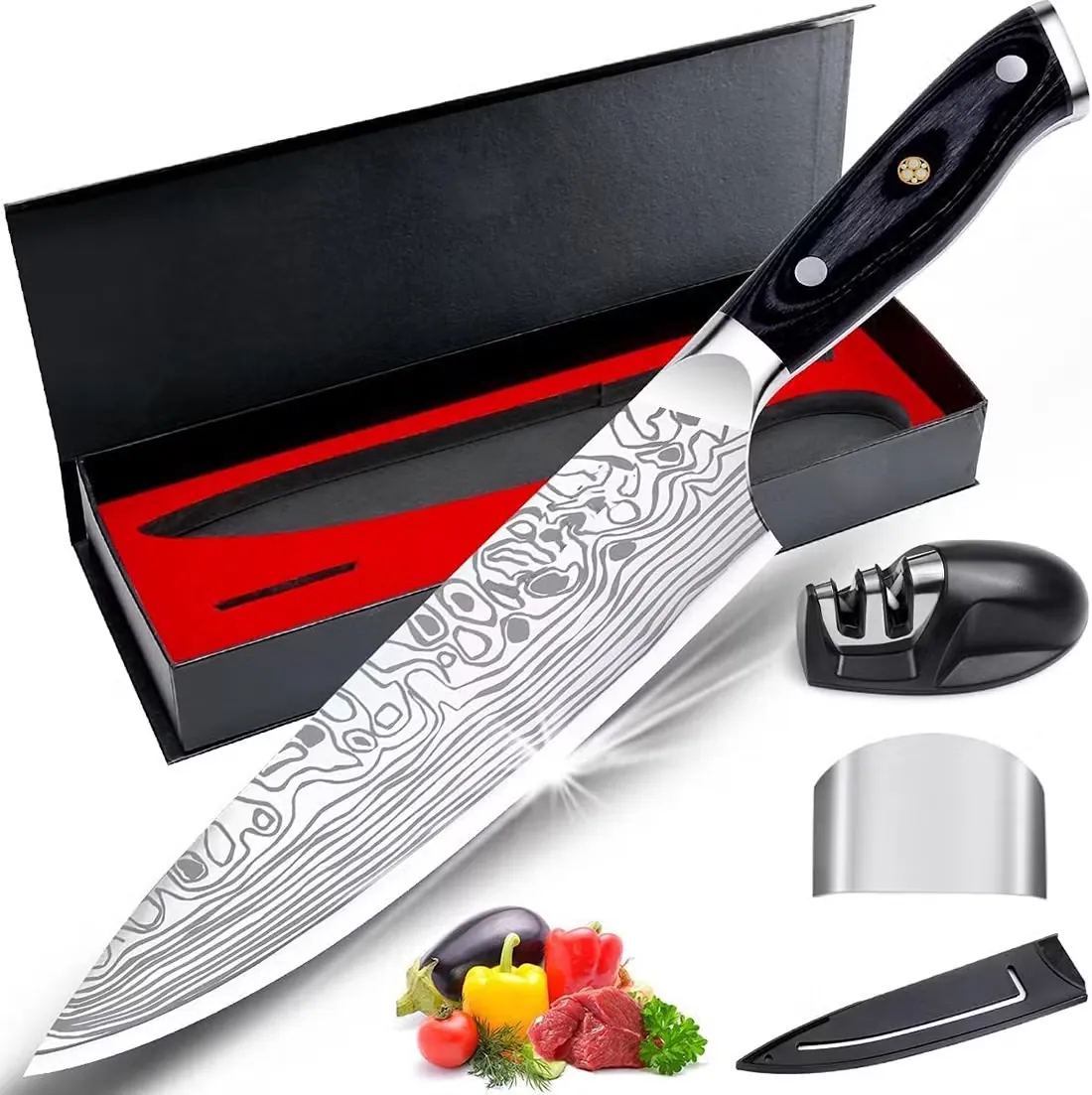
Cutlery manufacturing is a metal-forming process with six clear stages, and most quality problems are decided in the first three of them. If you are sourcing knife, fork and spoon sets for retail, knowing what happens between a sheet of steel and a finished box tells you exactly which factory checks matter and which questions to ask before you place an order.
The Six Stages of Cutlery Set Manufacturing
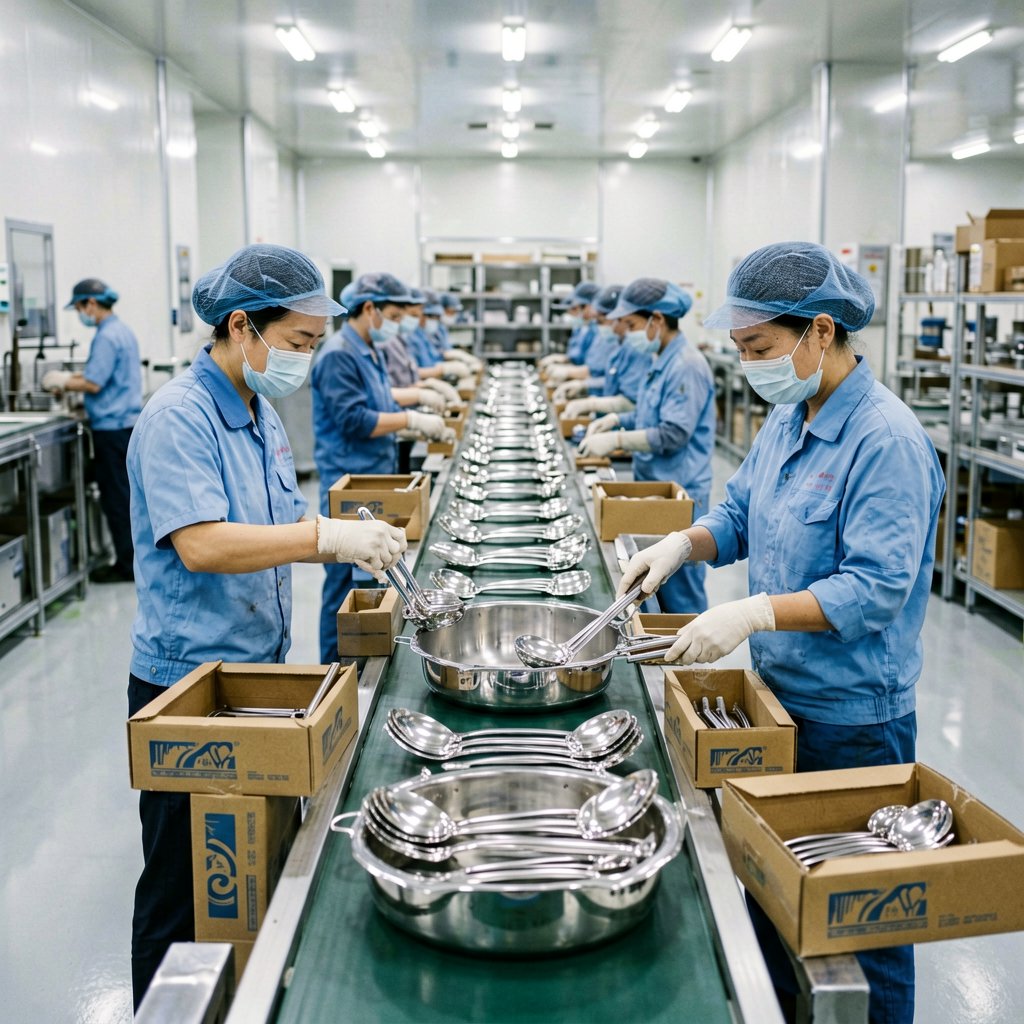
A cutlery factory typically runs the same sequence for every piece in a set, from the largest chef knife to the smallest dessert spoon. The process below is the standard flow used by most Chinese stainless steel cutlery plants:
| Stage | What happens | Typical quality check |
|---|---|---|
| 1. Blanking | Stainless steel sheet is stamped or pressed into the rough outline of each piece. | Edge burr removal, blank thickness consistency |
| 2. Heat treatment | Blades are hardened and tempered to reach the target hardness range. | Hardness testing on every batch |
| 3. Grinding and sharpening | The cutting edge is ground to the specified angle, then polished. | Edge angle, edge straightness |
| 4. Polishing | Surfaces are buffed to a mirror, satin or brushed finish. | Surface defects, pitting, finish consistency |
| 5. Assembly | Handles are riveted, welded or molded onto knife blades; forks and spoons are formed and bent. | Rivet tightness, alignment, balance |
| 6. Packaging | Sets are assembled into sleeves, boxes or blocks and packed into export cartons. | Set completeness, carton packing count |
For a full catalog of pieces you can spec in these stages, see the kitchenware products catalog.
Materials: The Steel Grade Decides the Price Point
The steel grade is the single biggest cost driver in a cutlery set. Most wholesale lines use martensitic stainless grades that can be hardened: 3Cr13 for budget sets, 5Cr15MoV for mid-range lines, and higher-alloy grades for premium programs. You do not need to become a metallurgist, but you do need to write the grade into the specification sheet. If a quote does not name the steel grade, that is a red flag worth questioning.
What the grade changes in practice
A higher carbon content usually means better edge retention but more careful heat treatment. That is why the same steel can perform very differently from one factory to another. Ask for the hardness target (commonly 52-58 HRC for kitchen knives) and the test method, then confirm it matches what you plan to sell.
Where Quality Is Really Decided
Two steps deserve extra attention when you evaluate a cutlery supplier. The first is heat treatment, because it determines whether the blade keeps an edge or chips. The second is grinding, because it determines the edge angle and how the knife feels in use. A factory that cannot show you its heat-treatment line and edge-grinding process will struggle to deliver consistent quality across a container load.
When you evaluate a new partner, also look at the tableware product range to see how cutlery sets are bundled with other items for retail display.
Hardness and edge retention
Hardness is measured on the Rockwell C scale. Kitchen knives usually sit around 52-58 HRC, while forks and spoons do not need the same hardness because they do not cut. Do not chase the highest number: a very hard blade can be brittle. The right range for the product type matters more.
OEM Notes for Cutlery Sets
Most buyers order cutlery as OEM sets rather than single pieces. That means set configuration, logo placement and packaging are part of the manufacturing brief, not afterthoughts:
- Set configuration: decide piece counts (for example 6-piece, 12-piece or 24-piece services) before quoting.
- Logo options: laser engraving, stamping or printed sleeves, each with different minimums.
- Packaging: paper sleeves, gift boxes, wooden blocks and display trays all change cost and carton size.
- Carton planning: mixed sets inside one carton need clear packing counts to avoid short shipments.
Ask for a pre-production sample of the exact set configuration, including the logo and packaging, before committing to the full quantity. This is also the moment to check how the factory handles damage during transit, since cutlery edges can scratch in loose packing.
Sample approval workflow
A disciplined sample round has four steps: approve the blank and finish, approve the assembled piece with handle and logo, approve the packaged set, and then keep one approved sample as the reference for inspection. Photograph the approved sample against a ruler and keep the photos in the order file. When the container arrives, the inspection report is compared with that reference, not with a memory of what the sample looked like. This workflow prevents the common drift where the factory improves the sample and quietly changes the production run.
Quality Defects to Reject on Samples and in Production
Because cutlery is produced in long runs, defects repeat. Build a short reject list and apply it to the pre-production sample, the inline photos and the pre-shipment inspection:
- Blade pitting or rust spots on the surface, which usually means poor material or bad polishing.
- Uneven edge line or wavy grind, which shows up on every piece from the same line.
- Loose rivets or misaligned handles, common when assembly is rushed.
- Bent tines on forks or uneven spoon bowls from careless forming.
- Scratched mirror finishes caused by loose packing or rough handling.
Set the AQL level with the factory before production and ask for inline photos at the grinding and packaging stages. The pieces you reject at the sample stage cost nothing compared with the same defect across a container.
Common Questions from Importers
How long does a cutlery set order usually take?
Lead times vary by configuration and factory load. A simple catalog set with existing tooling may take 25-40 days, while custom logo, packaging and higher volumes can take longer. Confirm the schedule in writing and build in buffer time for sea freight.
Do I need to pay for tooling on a cutlery set?
For standard catalog shapes, usually no. For custom shapes or molds, tooling costs may apply and are often amortized across the first orders. Ask for a clear tooling quote and who owns the mold afterward.
Can cutlery sets be made for the restaurant market?
Yes, and restaurant buyers usually order heavier, simpler designs that withstand commercial dishwashing. If you supply cafés or restaurants, compare your restaurant cutlery programs requirements with a commercial-grade specification.
Final Recommendation
Buy cutlery sets from a factory that can document its process stage by stage. Send a specification that names the steel grade, hardness range, edge angle, finish, set configuration and packaging, then validate with a pre-production sample. A disciplined process at the factory is worth more than a low unit price that fails on the first container.
Confirm every stage in writing before production starts.Request a quote for cutlery sets or send your set configuration to our team for a sourcing proposal.