Foodservice frying pans are ordered for volume and built for abuse. A restaurant pan flips eggs at breakfast, sits on a high-heat burner at lunch, and goes through the dishwasher at night. When you buy from a frying pan manufacturer for foodservice, the spec sheet matters more than the brand name: gauge, coating, and handle design decide how many months the pan survives. The frying pan models in the cookware products collection are a good starting point, alongside the wider kitchenware products range.
Why Foodservice Specs Differ from Retail
Retail pans are designed to look good on a shelf and survive home use. Foodservice pans are designed to cook all day and be handled by staff who are not thinking about the pan. That changes three things: the material thickness, the handle construction, and the coating choice.
A thin retail pan heats fast but warps under commercial heat. A foodservice pan uses a heavier gauge to hold its shape and spread heat evenly across a large burner. The handle must also tolerate high heat and frequent grabbing.
Gauge and Material: The Durability Baseline
For aluminum pans, a heavier gauge means less warping and better heat distribution. Many commercial kitchens prefer 2.5 mm to 3.0 mm aluminum bodies. For stainless steel, the pan is often built with an aluminum or copper core for even heating, and the outer steel layer provides strength.
Carbon steel pans are another foodservice staple. They are light, cheap, and heat quickly, and they develop a natural seasoning with use. The trade-off is maintenance: they must be dried properly and can rust if left wet.
Handle Design for a Busy Kitchen
The handle is a common failure point. A cast or riveted handle is usually more reliable than a thin stamped handle. Heat-resistant handles, such as phenolic or silicone-wrapped designs, are important when the pan goes from stovetop to oven or sits near a heat source.
Ask the manufacturer about the handle attachment method and the temperature rating. If the handle can be used in the oven, that should be stated in the spec. If the kitchen uses a lot of metal utensils and heavy cleaning, choose a handle that can survive that treatment.
Coating Choice: When to Use Non-Stick
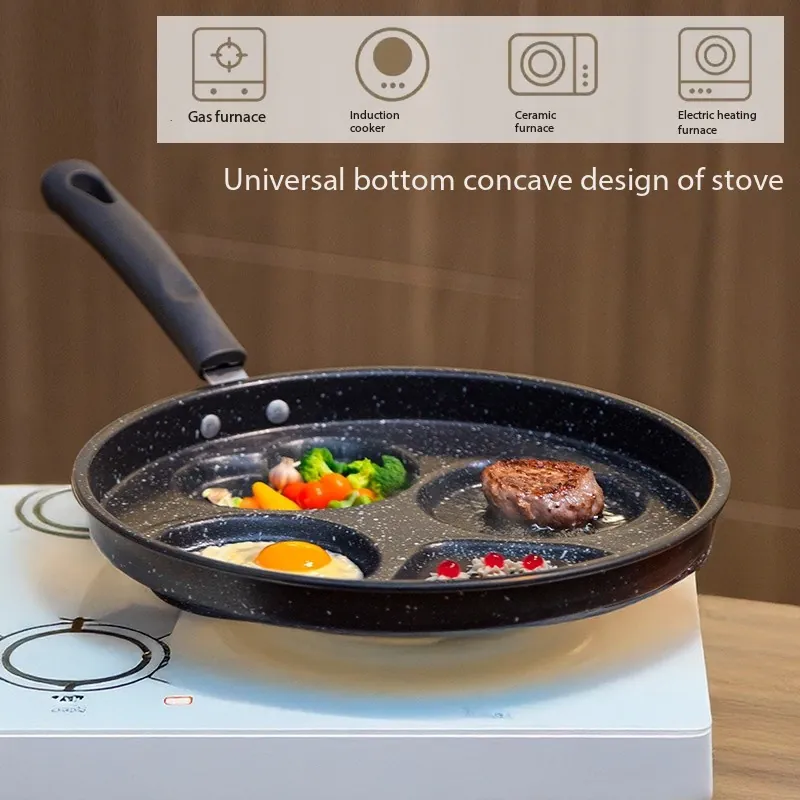
Non-stick coatings are not a default in foodservice. They are valuable for eggs, pancakes, and delicate fish, but they need lower heat and gentler utensils. Uncoated stainless or carbon steel is often the better choice for high-heat cooking with metal tools.
If you choose non-stick, confirm the coating type and the recommended heat limit with the manufacturer. A coating that is fine for a home stove may not last on a commercial burner set to high.
Volume Ordering and MOQ
| Item | What to confirm with the manufacturer |
|---|---|
| MOQ per model | Minimum order for each size and finish |
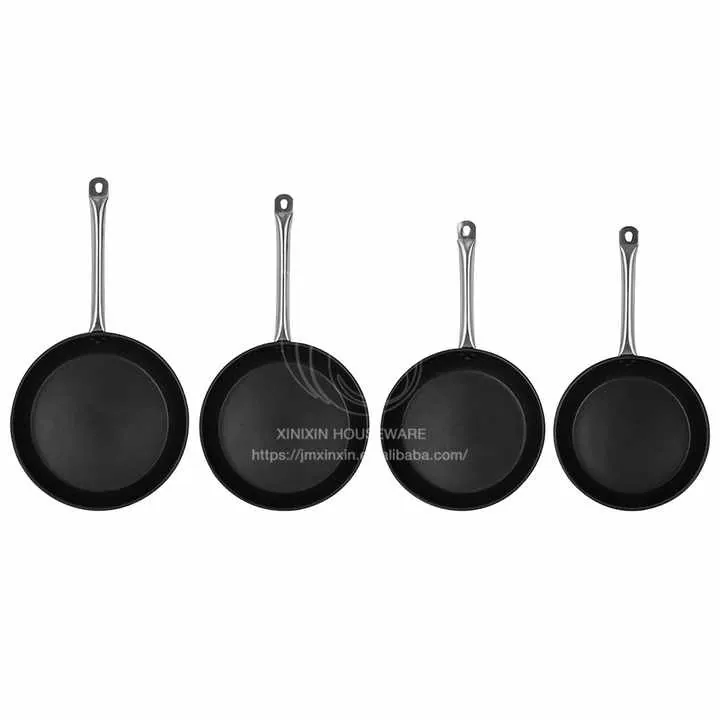
| Common sizes | 24 cm, 28 cm, 32 cm and other foodservice standards |
| Coating line | Non-stick or uncoated; coating color and layers |
| Handle options | Riveted, cast, or welded; heat-resistant material |
| Lead time | Production window from sample approval to loading |
| Packaging | Bulk export cartons or retail-ready printed boxes |
Standard sizes and finishes usually get the best pricing and the fastest lead time. Custom sizes, custom handles, and special coatings increase the MOQ and the production window, so plan those carefully.
Pan Sizes for a Foodservice Menu
The size mix should follow the menu, not the catalog. A breakfast-focused kitchen orders more 24 cm and 28 cm pans for eggs and crepes, while a steakhouse needs large pans that fit a full cut. Common foodservice sizes are 24 cm, 28 cm, 32 cm, and larger oval or rectangular shapes for special dishes.
Because commercial kitchens often use the same pan across multiple stations, standard sizes with interchangeable lids and handles are easier to stock. Ask the manufacturer which sizes are standard for their foodservice line, because standard sizes usually mean better pricing and faster lead times than custom dimensions.
Order Volume Planning
Volume ordering for foodservice is about steady supply, not one big shipment. A kitchen that burns through frying pans needs a reorder cycle that matches its usage, or it will run out between containers. Plan a 12-month volume estimate, split it into quarterly orders, and tell the manufacturer the annual number even if you order in smaller batches. That usually improves pricing without forcing you to warehouse a year of stock. For operators outfitting a new dining room at the same time, FurnitureOrigin supplies the restaurant furniture side of the project.
Ask about safety stock at the factory for the models you reorder. If the manufacturer keeps your standard model in production regularly, the reorder lead time can be much shorter than a custom order.
Cost per Pan and Replacement Cycle
For foodservice buyers, the real price of a frying pan is not the unit cost; it is the cost divided by how long the pan lasts. A cheap pan that warps in three months can cost more than a heavier pan that survives a year. When you compare quotes, compare the expected service life, not just the price per piece.
Ask the manufacturer how their pan performs under commercial heat and what the common failure modes are. Warping, coating wear, and handle failure are the usual suspects. A short conversation about failure modes tells you more about the product than any spec sheet.
Warranty and Spare Parts
Commercial kitchens break things, and the buyer wants to know how you handle it. Ask the manufacturer about their defect policy, spare part availability, and replacement terms. Some factories keep handle or coating parts for their standard models, which makes a warranty claim practical instead of theoretical.
Put the warranty terms in the purchase order. A simple clause about defects, inspection window, and replacement policy protects both sides. If the manufacturer cannot commit to spare parts for a model you plan to reorder for years, that is a reason to reconsider the model.
Choosing the Pan Material for Your Menu
Aluminum pans heat quickly and evenly and are the most common foodservice choice, but they dent and react with acidic foods unless coated. Stainless steel pans are durable and safe with metal utensils, but they need a heavier construction or a core for even heating. Carbon steel is light, cheap, and responsive, but it needs seasoning and careful drying.
Match the material to the station. Eggs and delicate items work on coated aluminum; searing and high-heat cooking work better on stainless or carbon steel. A menu-based material plan is easier to defend than a single-material policy.
Testing Before You Commit
Ask for a production sample and run it through a realistic kitchen test: repeated heating, metal utensils, and dishwasher cycles if that is how the kitchen cleans. A 10-minute stovetop test tells you little; a week of real service tells you whether the pan is worth reordering.
Frequently Asked Questions
What gauge frying pan should a restaurant buy?
Foodservice kitchens usually need thicker pans than home kitchens. A common choice is 2.3 mm to 3.0 mm aluminum or heavy-gauge stainless for durability, but the right gauge depends on the heat source and the dish. Confirm the recommended gauge with the manufacturer for your kitchen setup.
Do foodservice frying pans need a special coating?
Not always. Many commercial kitchens use uncoated stainless or carbon steel pans that tolerate high heat and metal utensils. Non-stick coated pans are popular for eggs and delicate fish, but the coating must match the heat level and cleaning method of the kitchen.
What is the MOQ for foodservice frying pans?
MOQs vary by material and coating line. Standard commercial frying pans in common sizes usually have a moderate MOQ, while custom sizes, custom handles, or special coatings raise it. Ask the manufacturer for the MOQ per model before planning your order.
Final Recommendation
For foodservice frying pans, specify for the workload, not the shelf. Heavier gauge, a reliable handle, and the right coating for your menu will reduce replacement frequency and kitchen complaints. If you are ordering volume frying pans for a foodservice operation and want to compare specs with a manufacturer, send your requirement to our contact page.