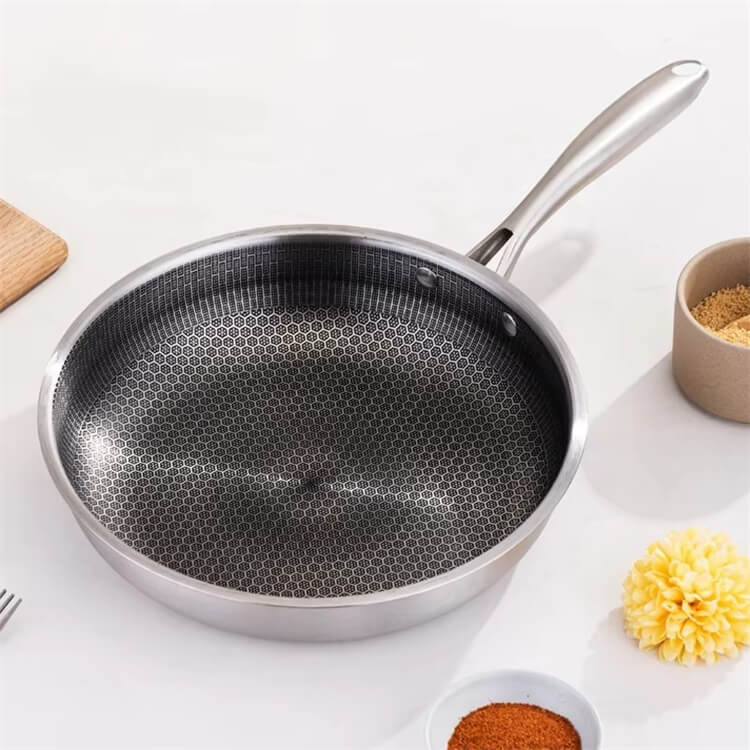
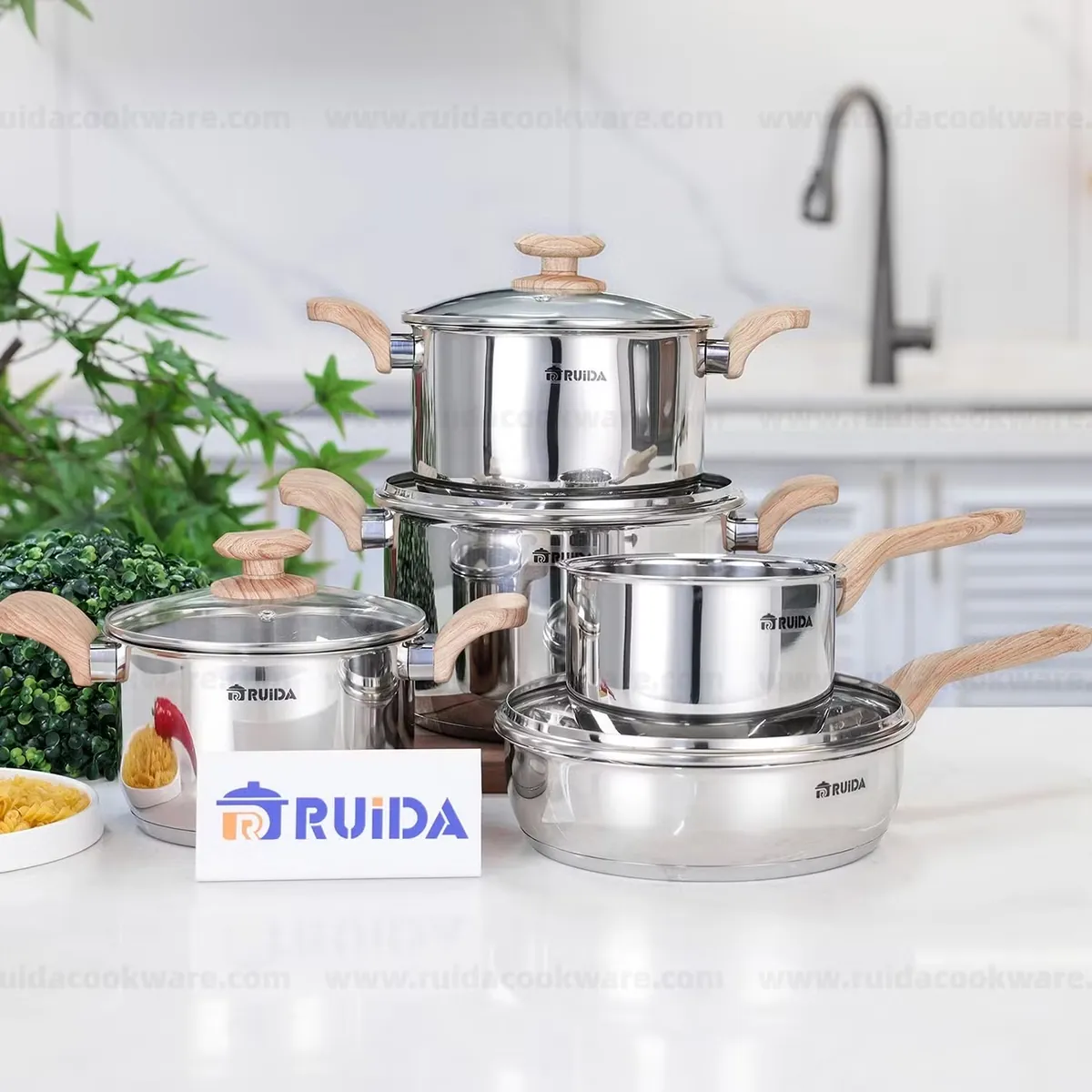
Induction compatibility is decided by the frying pan’s base construction, not by the pan body alone. An aluminum body will not work on an induction hob by itself, so the factory builds a magnetic stainless steel disc or a capsule bottom into the base. For wholesale buyers, the checks that matter are base type, base thickness, body gauge and how the handle and rivets survive the cooking surface. This guide explains each check and what to confirm on samples before you order.
How Induction Compatibility Is Built
Induction hobs heat through a magnetic field, so the pan needs a ferromagnetic layer in contact with the surface. Manufacturers achieve this in a few ways, and the construction affects both cost and performance:
| Base construction | How it works | Typical use |
|---|---|---|
| Aluminum body + stainless steel disc | Magnetic disc bonded to the bottom of an aluminum pan | Most common for non-stick frying pans; cost-efficient |
| Tri-ply (steel-aluminum-steel) | Full sandwich construction across the body | Premium stainless pans; even heating up the sides |
| Capsule bottom | Thick multi-layer base attached to a thinner body | Lightweight pans with a heavy base; balances heat |
| Cast iron or carbon steel | Naturally magnetic material | Induction compatible without extra base work |
Ask the frying pan manufacturer which construction it uses for each model you quote. The answer tells you the cost structure and the performance you can honestly claim to your customers.
Gauge and Base Thickness: What Changes on the Stove
Body gauge — the thickness of the aluminum or steel sheet — controls heat spread and durability. Thin bodies heat fast but develop hot spots and warp more easily; thicker bodies spread heat more evenly and feel more solid. For non-stick frying pans, base thickness matters just as much: a thicker base holds heat better and keeps the pan flat on induction, where the magnetic field heats the bottom directly.
When you receive a sample, check the base diameter relative to the pan diameter. A pan rated for induction should have a base that covers the hob ring size your customers use, usually 18 to 28 cm for home cookware. Confirm the flat-bottom spec and ask how the factory controls flatness, because a slightly domed base rocks on induction and becomes a return reason.
Will a non-stick frying pan work on induction?
Only if the base includes a magnetic layer. A standard aluminum non-stick pan with no disc will not heat on induction. Confirm the induction-compatible marking or the base construction in the product spec, and test the sample on an induction hob before mass production.
Handle, Rivets and Lid Checks
The handle is where frying pans fail in the field. Confirm the handle material — bakelite, silicone-coated, stainless or wood — and its heat-resistance rating, because a handle that gets hot at the rivet area is a safety complaint. Check how the handle is attached: rivets are the most common, and the rivet head should be smooth and flush on the inside so it does not snag or trap food.
If the pan comes with a lid, check the lid fit and whether the lid material matches the pan’s oven-safe claim. Confirm whether the lid has a steam vent and whether the knob is heat-resistant to the same temperature as the lid. These details are small, but they decide whether the set reads as a quality product at retail.
What to Confirm in Samples
Run these checks on the pre-production sample before you approve mass production:
- Base construction and induction test on a real hob, not just the spec sheet.
- Flatness on a flat surface — no rocking.
- Body gauge and base thickness measured, matching the quotation.
- Handle attachment, rivet smoothness and heat behavior after a test cook.
- Non-stick surface performance: first egg test, scratch check with a wooden or silicone utensil.
- Weight and dimensions for your packaging and shipping cost.
Record the approved sample number and date in your order file, and reference it in the mass production instruction. That small step makes the QC stage concrete instead of verbal.
Ask the factory which tests it runs in QC and whether you can receive photos or video of the test results for your batch. A frying pan manufacturer that controls base flatness and coating thickness in QC is a different level of supplier from one that only counts pieces. Also ask how it documents sample approval: a written approval record, signed by both sides with photos of the tested sample, prevents disputes later when the mass production batch differs from what you approved.
Buyer Quick Checklist
When you compare frying pan manufacturers, keep this checklist beside the quotation: base construction and induction marking, base thickness and flatness control, body gauge, handle heat rating and attachment, lid fit and oven-safe claim, and the QC tests the factory runs on each batch. The sample should be tested on an induction hob before approval, because a pan that looks right in photos can fail on the actual cooking surface.
- Induction base type and marked compatibility.
- Base thickness and flat-bottom spec measured on the sample.
- Handle material, heat rating and rivet finish.
- QC tests: flatness, coating thickness, scratch check.
FAQ: Frying Pan Manufacturer and Induction Compatibility
What is the difference between a stainless steel disc and a tri-ply base?
A stainless disc is a magnetic layer bonded only to the bottom of an aluminum pan; tri-ply runs steel-aluminum-steel through the whole body. Tri-ply gives more even heating and durability, but costs more. Both can be induction compatible if built correctly.
How thick should a frying pan base be?
There is no universal number, but a thicker base generally spreads heat better and keeps the pan flat on induction. Ask the factory for the base thickness spec and compare it across the models you quote, then verify it on the sample.
Can a frying pan warp on induction?
Yes, especially thin pans or pans heated empty on high power. A thicker base and good QC on flatness reduce the risk. Confirm the warranty and return policy with your supplier for warp-related complaints.
What handle materials are best for induction pans?
Bakelite and silicone-coated handles stay cool and are common on non-stick pans; stainless handles are durable but conduct heat. Confirm the handle heat-resistance rating matches your market’s expectations and safety rules.
Final Recommendation
Buy induction-compatible frying pans by the base construction, not by the marketing label. Confirm base type, thickness and flatness in the spec, test the sample on a real induction hob, and check the handle and rivets before mass production. Those checks turn a “looks fine in photos” order into a line your retail customers keep. Compare models in the cookware product range, including the stainless steel product range for induction-friendly options.
If you are sourcing induction-compatible frying pans for your cookware program, send us your target sizes, quantities and price points. We reply with sourcing notes, sample options and lead-time estimates. Request a quote or contact us directly via WhatsApp — a real sourcing specialist will respond.