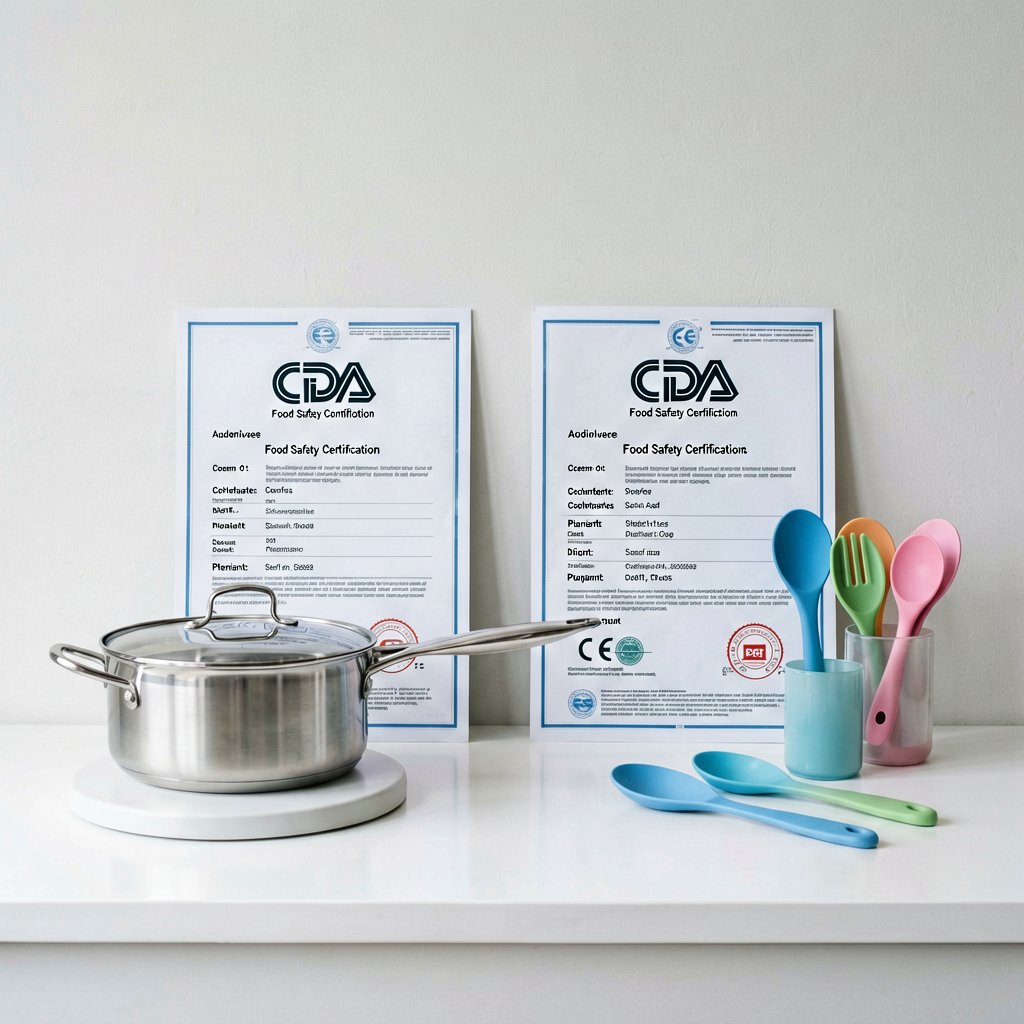
A supplier quote tells you more than the price. In the first two or three rounds of email, most kitchenware suppliers reveal exactly how they will behave during production — if you read the signals. Red flags in quotes, payment requests, and contract language predict late shipments, quality surprises, and money disputes better than any brochure. Learning to spot them early is the most practical part of learning how to choose a kitchenware supplier.
Red flags in the quote itself
- Vague specs. A quote without material grade, gauge, size, coating, or packaging details is not a quote — it is a placeholder. Suppliers who cannot state their own specs now will not hold specs later.
- No MOQ or an unrealistic MOQ. A “no minimum” kitchenware supplier may be a trading company reselling mixed stock. A suspiciously low MOQ on custom items usually means the number will change after you commit.
- Price that is dramatically lower than others. Extreme low quotes in cookware usually hide a downgrade in steel grade, coating, or thickness. Ask what changed, not just why it is cheap.
- FOB/CIF confusion. A quote that mixes Incoterms or leaves the Incoterm unstated often leads to freight disputes later.
Red flags in payment and process
- Deposit percentage that increases without a new reason — tooling is a reason, “our policy changed” is not.
- Requests to pay a different company or a personal account than the one on the contract.
- Pressure to pay the balance before any inspection or loading evidence.
- Refusal to put the delivery date, penalty, or spec into the purchase order.
- Long silence between deposit and production updates — good suppliers send progress photos without being asked.
Red flags in communication and documents
Communication quality is a preview of production quality. A supplier who answers technical questions vaguely, avoids direct answers about certifications, or forwards the same template text to every buyer is showing you how the project will feel. Request documents early and watch the response: a real manufacturer can produce a business license, factory address, product test reports, and export history. A supplier who deflects on all of them is worth replacing before you spend a deposit.
How to filter suppliers in three rounds
| Round | What to send | What to watch |
|---|---|---|
| 1. RFQ | Same spec sheet to 5-8 suppliers | Who asks clarifying questions; who quotes vague specs |
| 2. Documents | Request license, test reports, factory photos | Speed and completeness of the response |
| 3. Sample | Order the exact product you plan to stock | Sample quality vs quote spec; sample lead time |
Using the same spec for every supplier makes comparison honest. The suppliers who survive all three rounds with clear answers are the ones worth negotiating with.
What a strong supplier response looks like
To recognize red flags, it helps to know what a healthy response looks like. A strong supplier replies to an RFQ within a reasonable window, asks two or three clarifying questions about your market and packaging, and sends a quote with model numbers, material grades, dimensions, MOQ, and lead time on one page. When you ask for documents, they send them without a long delay or a lecture about how many years they have been in business.
A healthy supplier also pushes back when your spec is impractical — for example, when your requested gauge is not available or your MOQ is below their tooling economics. That pushback is a sign of competence, not rudeness. Suppliers who agree to everything and change nothing are usually quoting a different product than you will receive.
| Signal | Healthy response | Red flag |
|---|---|---|
| Quote detail | Model, material, dimensions, MOQ, lead time | Vague specs, no MOQ, “best price” only |
| Questions | Asks about market, packaging, target price | No questions, instant yes to everything |
| Documents | Sends license, reports, export history | Deflects, sends logos without reports |
| Payment | Standard structure, written policy | Changing accounts, rising deposits |
| Lead time | States production and shipping windows | Vague “as soon as possible” |
Keep this table next to your inbox during the first round. The suppliers who tick the healthy column consistently are the ones worth a factory visit or a larger sample order.
When to walk away from a supplier
Some red flags are worth a clarifying question; a few are worth walking away immediately. Walk away when the supplier asks for a large deposit to a personal account, refuses to issue a proper PI or contract, cannot produce a business license or factory address, or promises a delivery date they cannot support with a production schedule. Also walk away when a supplier substitutes materials without asking — one unauthorized substitution means the next one will be silent too.
Walking away is not wasted time. Every round of screening makes your shortlist stronger, and a rejected supplier costs you nothing compared with a rejected container. Keep the filtering table in your sourcing playbook and apply it consistently to every candidate.
Building the filtering habit into your process
The biggest mistake in supplier selection is treating it as a one-time event. The best importers run the same filter on every new product category: same RFQ template, same document request, same sample round, same red-flag table. Over time, the process becomes faster because you recognize patterns immediately — a vague quote, a shifting deposit, a missing license — without re-learning the lesson.
Keep a simple supplier scorecard in your sourcing records: quote completeness, document response, sample quality, communication, and payment terms. Score every candidate in the first two rounds. The scorecard does not replace judgment, but it makes the comparison objective and gives you a defensible reason to walk away when a supplier looks charming but scores low. The same filtering method works for drinkware sourcing — suppliers such as frozl.com are evaluated with the same document and sample checks.
FAQ
What is the biggest red flag when choosing a kitchenware supplier?
The strongest early warning is a vague quote: no material grade, no gauge, no coating, no MOQ. If a supplier cannot specify its own product, it will not hold specifications during production. Payment and document requests that keep changing are close behind.
How do I verify a kitchenware supplier before ordering?
Request the business license, factory address, product test reports, and export history, then compare them against what the supplier said. Order a production-equivalent sample and check it against the quote spec. A factory visit or video call is a useful final check for larger orders.
Is a much lower quote a good sign in kitchenware sourcing?
Not usually. A dramatically lower quote often means a downgrade in steel grade, coating, thickness, or packaging. Ask what changed versus the higher quotes before treating a low price as an advantage.
Final recommendation
Use the same spec sheet across suppliers, read the quote for vagueness, and test with a real sample before any deposit. If you want to shorten the process, start with suppliers who document their specs — review the kitchenware range or request a quote with your spec sheet.