Kitchen knife OEM success is decided by two decisions: the set configuration and the retail packaging. The configuration sets your shelf price and the packaging decides whether the set sells itself in a store or a listing. This guide walks through the piece counts, blade types, handle options and the OEM steps that turn a catalog knife into your branded product.
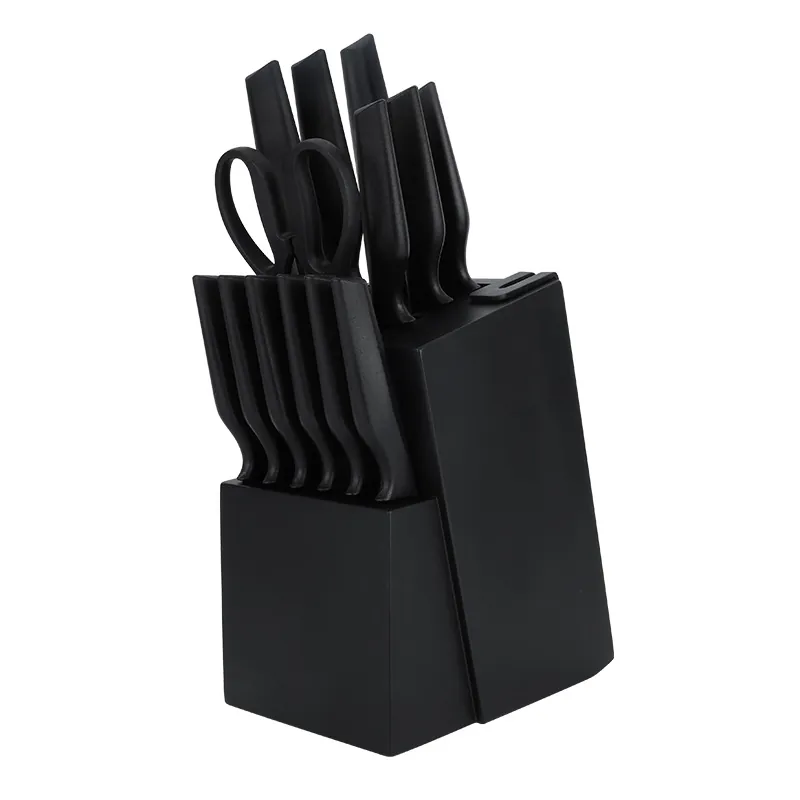
Popular Set Configurations
Most knife sets are built around a few repeating configurations. Start with the configuration that matches your target price, then adjust the steel and packaging to hit the margin.
| Configuration | Typical contents | Best for |
|---|---|---|
| 3-piece starter | Chef, utility, paring | Budget retail, first-time buyers |
| 5-piece set | Chef, santoku, utility, paring, shears or bread knife | Mid-range gift and kitchen programs |
| 7-piece set | 5 knives + shears + block or magnetic strip | Mainstream retail, holiday gift season |
| 12-24 piece set | Full kitchen + steak knives + block | Premium gifting, bridal and houseware |
Browse the kitchenware products range to see the knife families and set options available for OEM.
Choosing Blade Types and Steel per Position
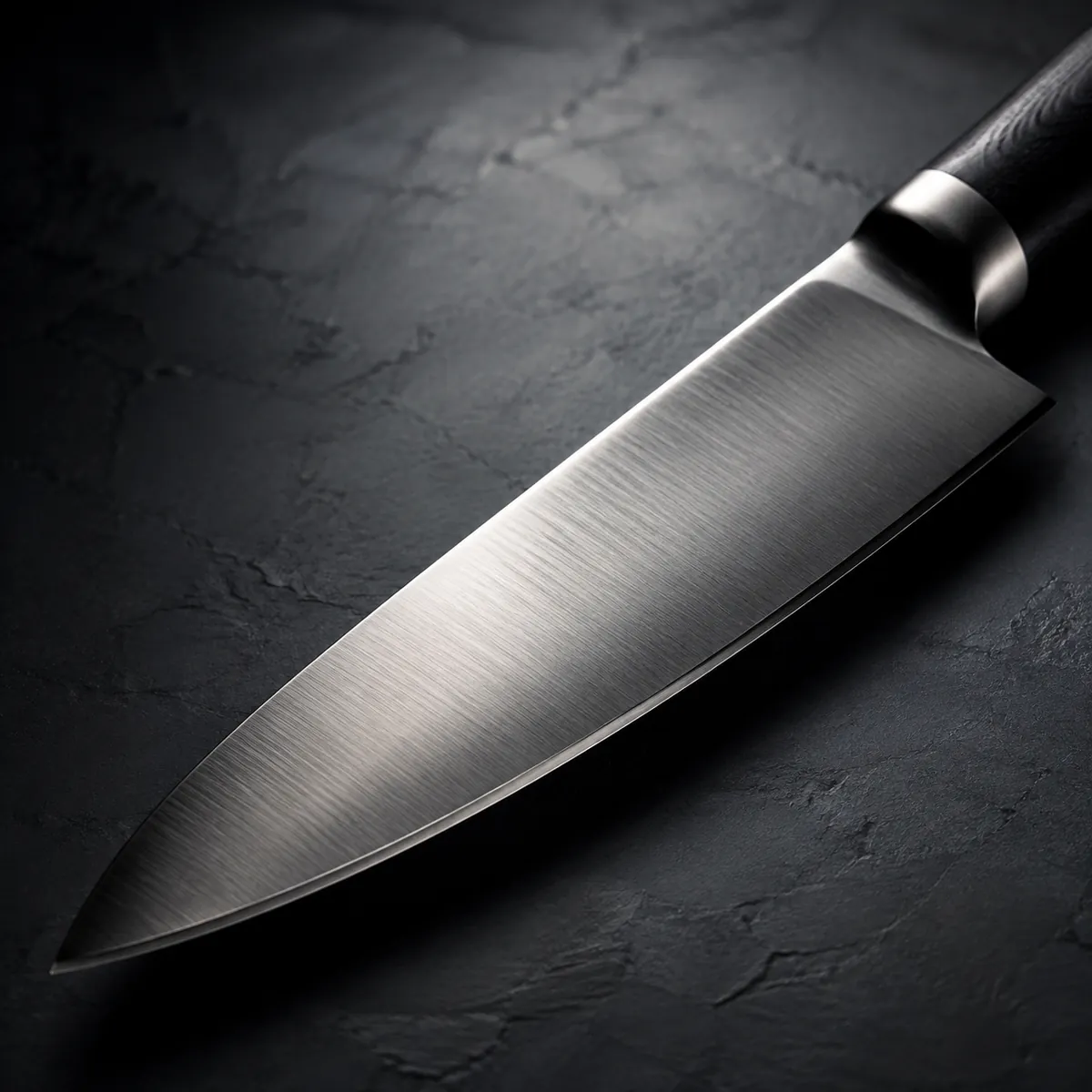
Each knife in the set has a job, and the blade shape should match it: the chef knife for general cutting, the santoku for vegetables, the utility knife for mid-size tasks and the paring knife for detail work. The steel grade sets the performance ceiling. A common, reliable starting point is a martensitic stainless grade around 3Cr13 to 5Cr15MoV, with the hardness target and edge angle confirmed in writing. Higher grades raise cost, so match the steel to the price point of each set.
Handle and Construction Options
Full tang and riveted handles
A full-tang blade runs the full length of the handle, usually with riveted scales. It signals durability and supports a premium price. The trade-off is cost: full-tang construction uses more steel and more labor.
Molded and seamless handles
Molded handles wrap the tang in resin, plastic or metal, which lowers weight and production cost. They are comfortable and easy to clean, and they dominate budget and mid-range sets. Choose by brand position, not by fashion.
If you supply the foodservice channel, compare your set program with restaurant kitchen cutlery buying patterns, where durability and dishwasher resistance matter more than presentation.
Retail Display Packaging That Sells
| Packaging type | Look and feel | Cost level |
|---|---|---|
| Printed sleeve | Light, flat-pack, easy to ship | Low |
| Gift box | Premium unboxing, strong holiday seller | Medium |
| Wooden block | Countertop display, classic kitchen look | Medium-high |
| Magnetic display box | Modern, opens like a book | Medium-high |
For online sales, packaging doubles as the hero image: a clean box with clear branding photographs better than a loose knife. Confirm artwork files, color proof and packaging MOQ with the factory before production.
The OEM Steps That Protect Your Brand
- Specification sheet: name the steel grade, hardness range, edge angle, handle style, set contents and packaging.
- Pre-production sample: order one complete set with your logo and packaging before mass production.
- Logo approval: confirm laser engraving or stamping position and depth on the sample.
- Inspection: book pre-shipment inspection against the approved sample and AQL.
- Carton plan: check packing count, carton size and edge protection to avoid damage in transit.
Quality Checks on OEM Knife Sets
Knife sets combine several quality streams, so the inspection list is longer than for a single knife. Check the sample and the production run against the same points:
- Edge straightness and consistency across every blade in the set.
- Handle fit: no gaps, no wobble, rivets flush on full-tang models.
- Logo position and depth: laser engraving should be even and readable.
- Balance: each knife should sit naturally in the hand, which matters for the premium feel.
- Packaging integrity: boxes, sleeves and blocks should arrive clean and intact.
Book pre-shipment inspection with the AQL level agreed in the contract, and ask for photos of the inspected cartons. The sample proves one set; the inspection proves the run.
Knife Set Trends Worth Watching
Set configuration follows the market. Compact sets are gaining space in urban kitchens where storage is tight, so a 5-piece set with a magnetic strip can outsell a 12-piece block in some channels. Gift season favors complete sets with premium packaging, while everyday retail favors value sets with visible steel grades on the box. Recycled and natural handle materials also appear more often in briefs from European buyers. You do not need to chase every trend, but choosing a configuration that matches the season and the channel makes the difference between a line that sits and a line that reorders.
Quick Checklist for Knife Set OEM
- Set configuration chosen against the target shelf price.
- Steel grade, hardness range and edge angle in the spec sheet.
- Handle construction matched to the brand position.
- Packaging artwork approved with a color proof.
- Pre-production sample kept as the inspection reference.
Frequently Asked Questions
What is the typical MOQ for kitchen knife OEM sets?
MOQs vary by factory and packaging. Catalog sets with standard packaging usually have lower minimums, while custom logos, custom boxes and higher steel grades raise them. Confirm the MOQ for the set, the packaging and the logo separately.
Can I mix knife types inside one OEM set?
Yes. The set configuration is defined by you: the factory can combine any blades it produces. Keep the mix simple for your first order, then expand once the line is proven.
How long does a knife set OEM order take?
Standard sets with existing tooling may take 30-45 days including production and packaging. Custom packaging and higher volumes add time. Confirm the schedule in writing and add buffer for sea freight.
Where can I see the full knife range?
Check the full product list or the kitchenware products range and shortlist the sets you want to quote.
Final Recommendation
Pick a configuration that matches your target price, confirm the steel and handle construction in a written spec, and validate everything on a pre-production sample with your logo and packaging. The set that photographs well, opens well and cuts well is the set that reorders.
The best sets survive the first dishwasher cycle and the first gift unwrap.Send us your knife set configuration for an OEM quote, including your target pieces, steel and packaging.
A knife that cannot hold an edge is a knife that comes back. Test the sample the way your customer will actually use it.