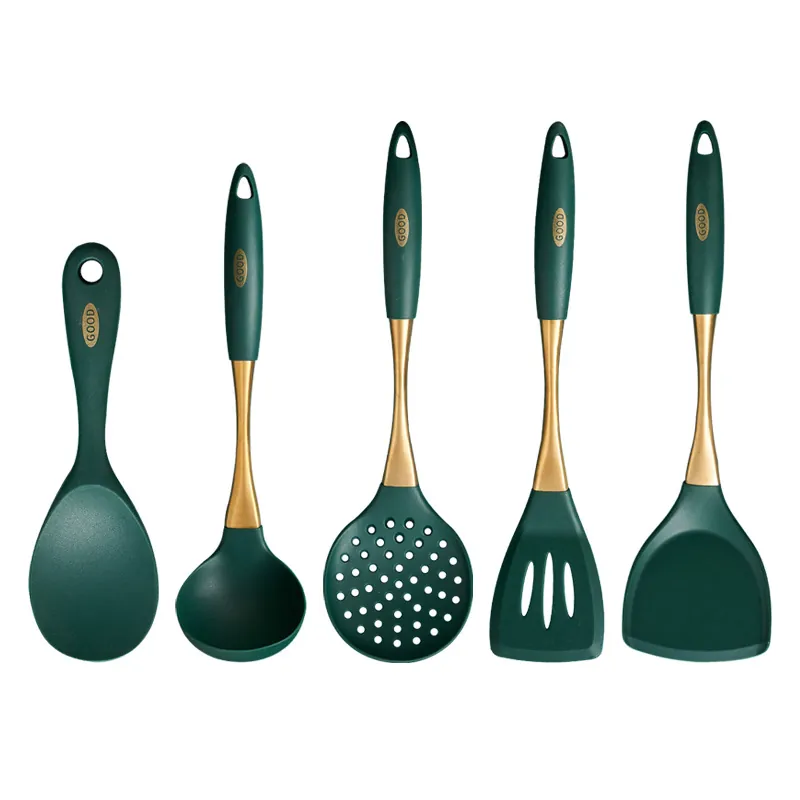
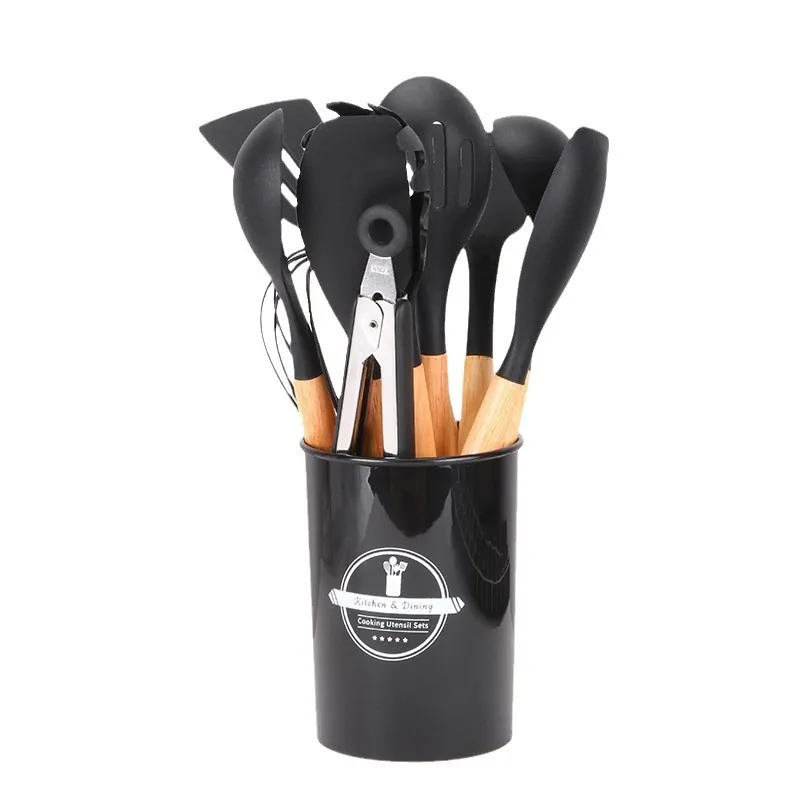
The fastest way to start a kitchen tools private label program is to take an existing factory catalog item and make it yours — your logo, your packaging, sometimes a handle color or material tweak — without paying for a new mold. Most buyers do this on their first order, then move to bigger changes later. This guide walks through which specs to lock down, how sampling works, and what MOQ and lead times usually look like for branded kitchen tools.
What “Private Label” Actually Means for Kitchen Tools
Private label sits between pure wholesale and full OEM. With wholesale you buy a catalog product as-is. With OEM you design a new product, pay for tooling, and own the mold. Private label keeps the factory’s existing tooling but changes the visible identity: the logo, the box, sometimes the color of the handle or the material of a small component. That is why it is the cheapest way to test a branded line — you are not paying development cost, and the factory has made the product before, so quality risk is lower.
Be precise about which changes are possible before you ask for a quote. A logo print on a silicone spatula is a simple change. Swapping the stainless handle for a wooden one may be possible, but it changes the assembly line and the food-contact statement. The factory will tell you what it can do, but the conversation goes faster if you arrive with a clear change list.
| Change level | What changes | Typical impact on MOQ and cost |
|---|---|---|
| Logo only | Print or laser mark on handle, blade or packaging | Lowest MOQ; small or no per-piece premium |
| Color | Handle, silicone accent or coating color | May add a material or coating batch; usually modest |
| Component swap | Handle material, rivet type, blade finish | Often needs a pre-production sample; may raise MOQ |
| New packaging | Custom box, blister or hang tag with your artwork | Packaging MOQ often applies separately |
| New tooling | New shape or size no catalog item covers | This is OEM; tooling cost and much higher MOQ |
Use the table as a negotiation map. If you want a low first order, stay in the top rows. Reserve the bottom rows for proven SKUs.
Specifications to Confirm Before You Commit
A private label order can fail on small details that are invisible on the sample photo. Confirm these in writing for every SKU, even catalog items:
- Material grade and thickness — for example 304 vs 201 stainless, or food-grade silicone shore hardness.
- Handle attachment — riveted, welded or glued — and the handle material.
- Coating or finish — non-stick system name, PFOA-free confirmation if relevant, or matte/satin finish.
- Weight and dimensions — your retail packaging and shipping cost depend on them.
- Packaging — inner box, color box, polybag, barcode placement, and carton packing quantity.
- Food-contact documents — the material declaration and any test reports the factory can provide.
Ask the factory to confirm these on the quotation, not just in chat. When the quote states the grade and finish, you have something to check against the pre-production sample.
What food-contact documents should a private label buyer ask for?
Ask for a material declaration and any food-contact test reports the factory holds for the same material and finish combination. For silicone, stainless steel and nylon tools, factories usually have declarations they can share. Confirm which market rules apply to your destination — the EU food-contact framework, FDA in the US, or others — because the supporting documents differ.
Samples, Artwork and Approval Steps
Plan for two rounds of samples on a first private label order. The first round checks the product itself: material, finish, weight, and how the logo looks. The second round checks the final version with your approved artwork, ideally on the same packaging that will ship. Each round takes time — usually one to three weeks for an existing catalog item, sometimes more for color or component changes. Build that into your launch calendar.
Send artwork in a format the factory can use directly: vector files for print, with clear placement on a template they provide. Ask for a digital proof before they print. Artwork mistakes are the most common reason branded kitchen tools arrive with wrong colors or off-center logos, and rework is expensive at container scale.
MOQ and Lead Times
For kitchen tools, private label MOQs usually start at a few hundred to a few thousand pieces per SKU, depending on the item. Small silicone tools and utensils often have lower minimums; stamped metal tools may have higher ones because of material batch sizes. Lead times for catalog items with logo and packaging changes are typically four to eight weeks after sample approval, but confirm per order.
Ask two questions before signing: what happens if the logo print fails inspection, and whether the MOQ applies per color or per SKU. A factory may quote a low MOQ per SKU, then add a minimum per colorway, which changes your cash outlay.
Can I start with a smaller first order?
Sometimes. Factories are more flexible when you take several SKUs in one shipment, pay a sampling fee, or accept a standard color instead of a custom one. Ask for the “small order” scenario explicitly rather than assuming the catalog MOQ is fixed.
FAQ: Kitchen Tools Private Label
What is the difference between private label and OEM?
Private label uses the factory’s existing product and tooling with your branding; OEM means a new product designed for you, with tooling you usually pay for and may own. Private label is faster and cheaper to start; OEM gives more control over the design.
Do I need my own packaging design?
You can start with a simple branded sticker on the factory’s standard box, but most retailers expect a proper retail package. Ask the factory for a packaging template and confirm the packaging MOQ separately, because carton printing has its own minimums.
How do I protect my brand when working with a factory?
Register your trademark in the markets where you sell, keep your artwork files controlled, and use written agreements covering exclusivity for your SKU if that matters to you. Confirm the factory will not sell the exact branded item to another buyer.
What documents do I need for retail?
Usually a material declaration, food-contact test reports where applicable, and product and packaging details for labeling. Your retailer may ask for more, so request the document list from your retail buyer before production.
Final Recommendation
Start private label with two or three proven catalog items, keep changes in the logo and packaging range, and validate with a pre-production sample before mass production. That gives you a branded line at low risk, and it builds the factory relationship you will need if you later move to custom designs. Browse the kitchenware product range for starting SKUs, and see the full product list to compare categories before you shortlist.
The same private label process applies across categories — kitchen tools, cookware, tableware and drinkware — so a range can grow from one order. If you are planning a branded kitchen tools line and want help shortlisting factories, send us your target items, quantities and market. We reply with sourcing notes, sample options and lead-time estimates. Request a quote or contact us directly via WhatsApp — a real sourcing specialist will respond.