Qualifying a kitchenware OEM supplier is a check of three realities: whether the license and facility actually cover your product type, whether the production evidence matches the product you want to order, and whether the MOQ they quote is a number they can defend. Each check is quick to run and expensive to skip – the license takes a photo, the production evidence takes a video call, and the MOQ takes one question: how is that number calculated?

Ask for the business license and read the registered scope – it should name the category of products you want to order. A license that says general trading, or names products far from cookware or bakeware, tells you the supplier may be sourcing rather than producing. Also check the registered address and the actual operating address, because some suppliers register one place and produce in another, which matters when you later plan a factory visit or an audit.
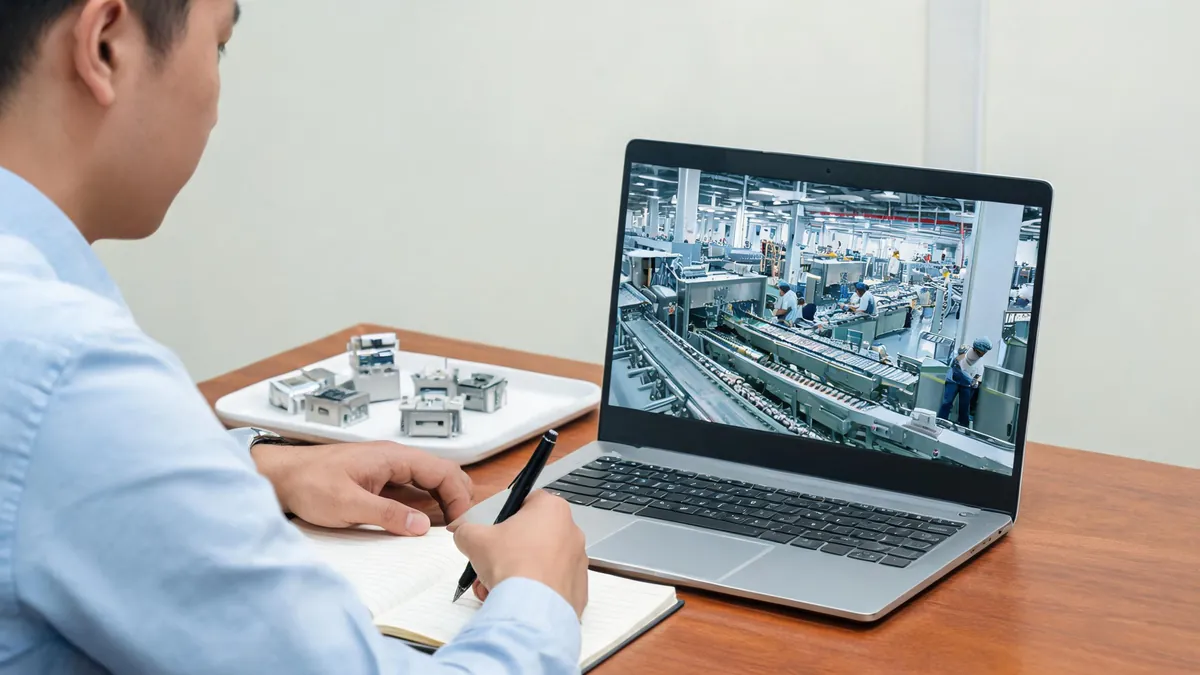
A supplier that makes one kitchenware category well may not make yours. Ask for a live video walk through the lines that would produce your product – coating lines for non-stick, stamping or forging for cookware, forming lines for bakeware – and compare what you see with the catalog. Photos can be reused; a video call with a specific request (‘show me the line that makes a 28cm frying pan’) is much harder to fake.
- Business license scope covers your product category.
- Live video shows the relevant production lines, not just the showroom.
- The factory address matches or explains the license address.
- Export experience exists for your destination market.
- The person quoting can answer production questions directly.
MOQ reality checks
MOQs exist for real reasons – material minimums, coating line setup, printing or packaging minimums – so a low MOQ is not automatically good. Ask how the MOQ is calculated for your product and what changes at the MOQ: price, lead time, packaging. A supplier quoting a suspiciously low MOQ on a fully custom item may simply be planning to batch your order with others, which affects your lead time and quality consistency.
| MOQ claim | Question to ask | What the answer tells you |
|---|---|---|
| Low MOQ, standard product | How is it calculated? | Whether the line really runs at that volume |
| Low MOQ, custom item | What changes at MOQ? | Whether setup costs are hidden elsewhere |
| High MOQ, first order | Can it be split with a sample order? | Whether the factory wants a trial relationship |
Sampling policy as a qualification signal
Ask what the sample process looks like before the first bulk order: sample fee, timeline, how many rounds are included and whether the sample is from the production line or a handmade prototype. A factory that offers a production-line sample at a defined cost is easier to qualify than one that treats samples as an afterthought – the sample is your first chance to test the QC the bulk order will actually get.
Turning the qualification into the order terms
Once the checks pass, put the results into the order: the license number and scope, the producing factory name, the MOQ and how it is calculated, the sample approval as the production standard, and the inspection point. Qualification is only useful when its conclusions are written into the contract – otherwise the next order starts the qualification from zero.
The order confirmation that follows qualification
Qualification ends where the order confirmation begins: the license entity, the producing factory, the MOQ calculation, the approved sample reference, the inspection point and the payment milestones all belong in the written order. A good qualification makes the order confirmation easy to write and easy to enforce. If the confirmation contradicts what you verified – a different entity, a vague MOQ, no sample reference – that is the moment to stop and resolve it before production starts.
FAQ
What should the business license show for a kitchenware factory?
The registered scope should name the product category you want – cookware, bakeware or similar manufacturing – and the registered address should match or be explained by the operating address. A trading scope means the supplier is likely sourcing, not producing.
Why ask for a live video instead of photos?
Photos can be reused or taken from other factories. A live video request for the specific line that makes your product is harder to fake and shows whether the person quoting has real production access.
Is a low MOQ a good sign?
Not necessarily. MOQs exist because of real setup and material costs, so a suspiciously low MOQ on a custom item may mean hidden costs or batching with other buyers. Ask how the number is calculated.
Should I order a sample before the first bulk order?
Yes – a production-line sample is the cheapest test of the QC your bulk order will receive. Confirm the sample fee, timeline and how many rounds are included before you pay.
Qualifying a kitchenware OEM supplier and want the license, production and MOQ checks structured?
Ask KitchenWareSourcingRelated reading: comparing kitchenware suppliers before an OEM order · how suppliers calculate OEM MOQs