Choose OEM when you own the design and want exclusivity. Choose ODM when you want to brand an existing factory design and get to market faster with a lower MOQ. For most kitchenware importers the right answer is a mix: start with ODM for your entry range, then move to OEM once you know which products sell and how your brand should differentiate.
This decision shapes everything after it — your MOQ, your lead time, your product cost, and how much control you have over quality and design. Yet it is often made by default, because the buyer simply accepted whichever model the supplier proposed first.
OEM and ODM defined
In OEM (Original Equipment Manufacturing), you provide the design, specification, or drawing, and the factory manufactures it for you. You are effectively buying the factory’s production capacity for your own product. Your brand owns the design, and competitors cannot easily copy it unless you share the drawings.
In ODM (Original Design Manufacturing), the factory already has a design — often a proven, catalogued product — and you brand it with your logo, packaging, and sometimes small tweaks such as colour or handle material. You get a faster route to market because the product is already developed and tested by the factory.
OEM vs ODM comparison
| Factor | OEM (your design) | ODM (factory design) |
|---|---|---|
| Design ownership | You own the design | Factory owns the design |
| Exclusivity | High, if the design is protected | Low; other buyers may sell the same base product |
| MOQ | Usually higher | Usually lower |
| Lead time | Longer, includes tooling and sampling | Shorter, product already developed |
| Product cost | Often higher per unit early on | Often lower per unit |
| Risk | You carry development risk | Factory carries development risk |
| Differentiation | Strong | Limited |
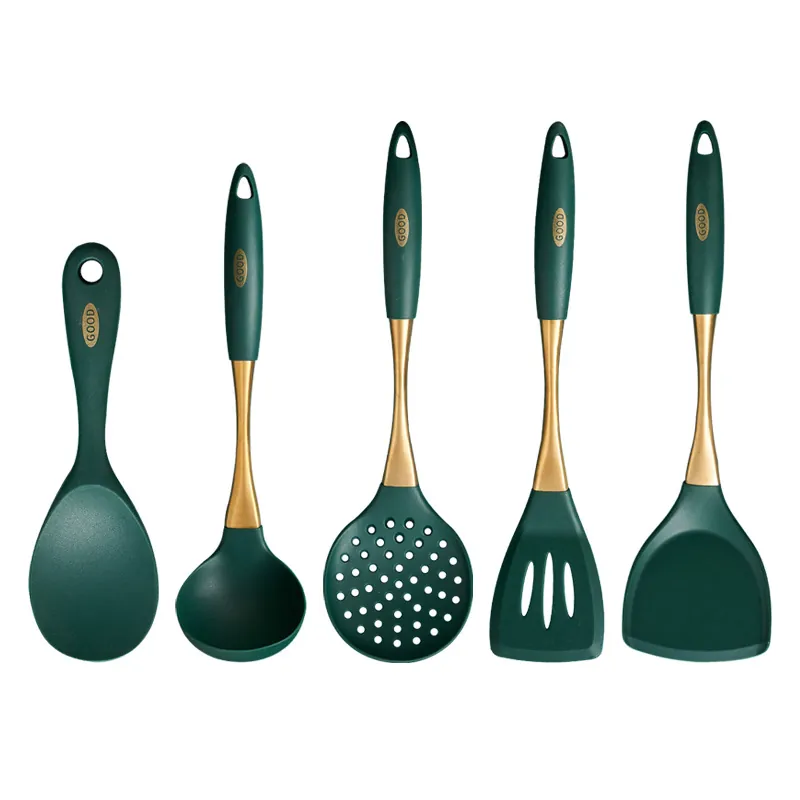
When OEM makes sense
Go OEM when you are building a brand that must look different from the shelf next to you. A kitchenware brand selling into premium retail, gift channels, or hotel supply usually needs its own dimensions, materials, and finish. OEM also makes sense when you have product knowledge and can specify exactly what you want, because you will not have to settle for a catalogue option.
The cost of OEM is not just money — it is time. Expect an extra round of sampling, tooling for moulds where needed, and stricter quality checks during first production. For stainless steel cookware or silicone tools with custom shapes, tooling cost is a real line item, so budget it before you commit.
When ODM makes sense
Go ODM when you are entering a market, testing a product category, or launching seasonal lines. ODM lets you place a smaller first order, receive a proven product, and put your brand on it quickly. Many importers use ODM for their first container, then shift selected products to OEM once sales data shows which ones deserve custom development.
ODM is also the pragmatic choice when the factory’s catalogue design already matches your target price point. You save the development cost and the risk of a design that does not sell, and you can react to trends faster.
The hybrid option
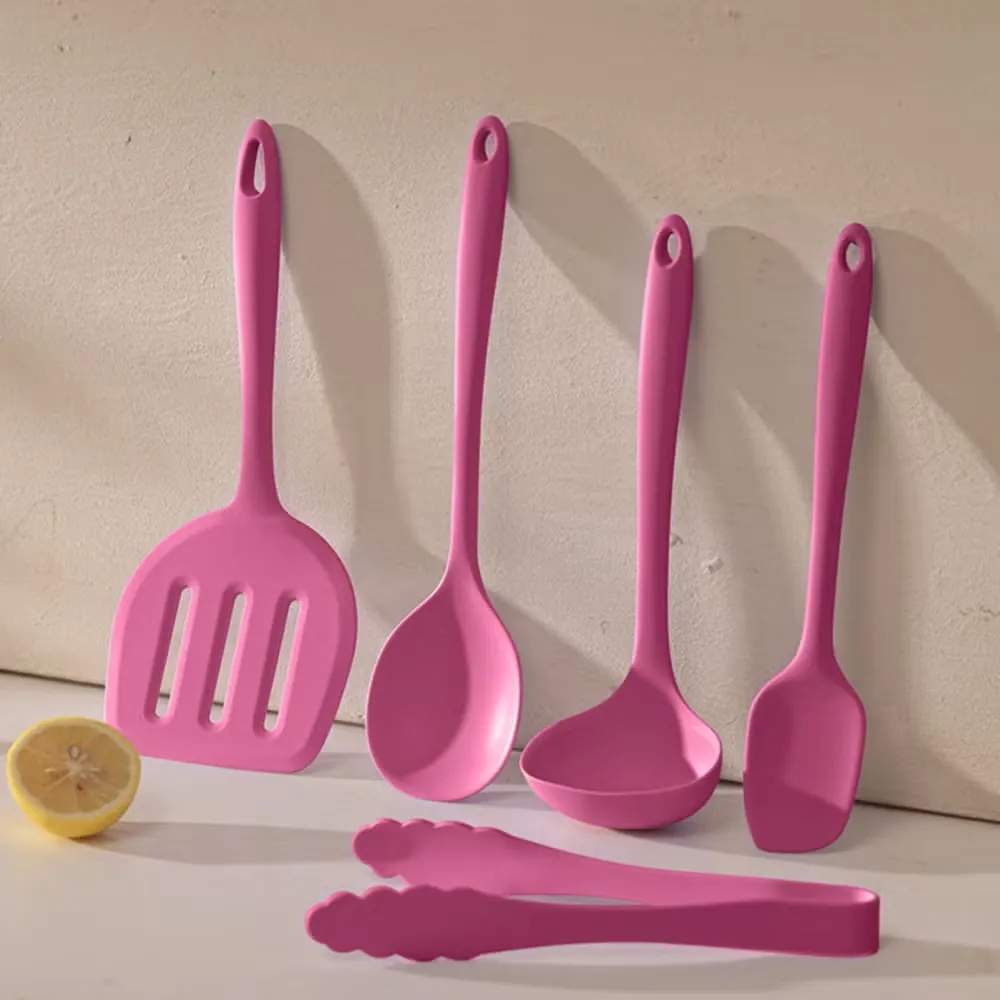
The most common model we see is hybrid: ODM for the base product, with OEM-style changes on the surface. You take a factory’s existing frying pan or utensil set, change the handle material, add your colour, and engrave your logo. The factory treats the base as ODM and the changes as OEM, so you get a middle path on MOQ and lead time while still owning a visible point of difference.
If the supplier can document the exact changes you asked for in the specification sheet, the hybrid model gives you a defensible product without full tooling investment.
Questions to ask before you choose
- Does the factory own this design, or is it a copy of another brand’s product?
- What is the MOQ for the catalogue version, and what is the MOQ if I change colour, handle, or packaging?
- Can the factory show the tooling cost estimate and the mould ownership terms for OEM?
- What is the sample cycle for ODM versus OEM for this product?
- Will my logo and packaging be exclusive to my territory or shared with other buyers?
- Can I lock the specification in writing, including the changes I requested?
One practical note before you sign: ask the supplier to write the agreed model into a short specification sheet, even for ODM. The sheet should list the product name, material, size, colour, packaging, logo placement, and the MOQ for both the base version and any customised version. A factory that can produce a clean spec sheet in one or two days usually has its production process under control. A factory that keeps describing the same thing verbally is harder to audit later, and disagreements about “what we agreed” are the most common source of friction after the first container arrives.
It also pays to check how the factory handles design changes after sampling. In OEM, a small handle or base change can mean a new mould and a new sample round. Ask which changes are free during the sampling stage and which ones trigger a new tooling charge. Getting this on paper protects both sides and makes the second order much smoother than the first.
FAQ
Which is cheaper: OEM or ODM kitchenware?
ODM is usually cheaper per unit in the short term because the factory has already absorbed development and tooling costs. OEM can become cheaper per unit at higher volumes, but it carries tooling and development costs upfront. Compare the total cost over your first two order cycles, not just the unit price.
Can I use the same factory for both OEM and ODM?
Yes. Many kitchenware factories run both models and will quote catalogue products (ODM) and custom production (OEM) from the same line. Ask the supplier to separate the quotes so you can compare the two routes clearly.
What is the typical MOQ for kitchenware OEM?
MOQ depends on the product and the amount of customisation. Simple OEM items may start around 500 to 1,000 pieces, while products requiring new tooling usually need 2,000 pieces or more. Confirm the MOQ for your exact specification, and always request it in writing.
Does ODM mean the factory can sell my branded product to someone else?
The factory owns the base design in ODM, so the same product may be sold to other buyers under different brands. Ask about territory or design exclusivity and get any exclusivity agreement in writing before placing a large order.
How long does OEM development take for a kitchenware product?
OEM development typically adds 3 to 6 weeks over an ODM order, depending on the product and tooling needs. The cycle includes drawing approval, sampling, and first production. Confirm the development schedule and milestone dates in the order contract.
Final recommendation
Do not let the supplier decide your manufacturing model for you. Write down your brand plan, estimate your first-year volume, and then ask for both an ODM and an OEM quote on the same product family. The comparison will quickly show which model deserves your first order.
If you are reviewing kitchenware sourcing options and want help comparing OEM and ODM quotes, send us the product list and target quantity. We will help you evaluate the options from the factory side.
Contact our sourcing team or request a quote for your kitchenware program.