Marketplace selling changes what you need from a kitchenware supplier. A supplier who is excellent for a traditional retail program can still sink an Amazon or Wayfair business if the packaging does not meet FBA rules, the compliance documents are missing for the marketplace category, or the factory cannot replenish fast enough to keep listings in stock. For marketplace sellers, the practical definition of a good kitchenware supplier is one who can deliver three things consistently: retail-ready packaging that passes marketplace requirements, compliance documentation that keeps listings from being suppressed, and replenishment lead times that match your sales velocity. This guide covers what to check on each of those three fronts before you commit to a supplier.
Why marketplace selling is not the same as retail buying
Traditional retail buyers order once or twice a season, receive goods on pallets, and hand the packaging job to a distributor or store team. Marketplace sellers operate on a different clock. Stock is ordered in smaller, more frequent batches; units must arrive ready to be received by an Amazon fulfillment center or a seller’s own warehouse; and a stockout at the wrong moment costs ranking position, not just a missed sale. The supplier’s packaging, documentation and lead time become part of your operating system, not just the terms of a purchase order.
The second difference is compliance exposure. Marketplaces require sellers to provide product information, safety documents and, for certain categories, test reports. A kitchenware listing can be suppressed or flagged if the marketplace cannot verify food-contact compliance, and the seller, not the factory, is the responsible party in the eyes of the platform. The supplier’s willingness to produce documents quickly is therefore a business-critical capability, not a nice-to-have.
The third difference is the cost of a mistake. A bad batch on a retail shelf costs you a return and a discount. A bad batch on a marketplace costs you reviews, listing suspension, and possibly the whole ASIN. The same container of frying pans behaves very differently in the two channels, which is why the supplier evaluation for marketplace sellers needs its own checklist.
Packaging that passes marketplace requirements
Every marketplace has packaging rules, and the most demanding for kitchenware sellers is usually Amazon’s. If you send products to an Amazon fulfillment center, every unit needs an FNSKU barcode label, and the cartons need shipment labels and specific dimensions. The supplier does not need to print Amazon labels for you, but it does need to build cartons to a size and strength that survives the journey, and it needs to be flexible about the labeling step, either printing labels at the factory or leaving space and a stable surface for you to label on arrival.
Retail-ready packaging matters even when you fulfill your own orders. Marketplace customers photograph the box, review the unboxing, and return items when packaging is flimsy. A kitchenware item that arrives with a dented carton, a scratched pan or a missing insert generates a return, and returns on marketplaces are disproportionately expensive because of return shipping and restocking effort. The supplier’s packaging spec should therefore be part of the product spec, with drop-test expectations agreed before production.
| Packaging element | What marketplace sellers need | Question to ask the supplier |
|---|---|---|
| Unit packaging | Protective, presentable, easy to open; supports barcode placement | What is the unit pack material, and does it protect the product in a single-unit shipment? |
| FNSKU/barcode surface | Flat, clean area for marketplace labels | Where on the unit can a barcode label be applied without obscuring the design? |
| Master carton | Right size for marketplace receiving; strong enough for freight | What is the carton size, gross weight and edge-crush rating? |
| Inner protection | Foam, paper or molded inserts that prevent movement | How is the product fixed inside the carton, and has it passed a drop test? |
| Case pack | Units per case matched to your replenishment math | Can the case pack be adjusted, and what are the pricing breaks? |
The case pack number is one of the most underrated specifications in marketplace sourcing. If your sales velocity is 40 units a week and the supplier’s minimum case pack is 200 units, you are either overstocking or ordering cases and breaking them yourself. A supplier who can offer multiple case pack options, or who can pack to your requested quantity, is worth more than one who only ships a fixed master carton.
Compliance documents marketplace sellers actually need
Kitchenware sits in a category where marketplaces and regulators both pay attention to food contact. The documents you need depend on the product and the marketplace, but a solid baseline includes a food-contact test report for the materials, a declaration of compliance for the finished article, and, where relevant, certificates such as LFGB or FDA statements that the marketplace or your category manager may request. For products sold in California, Proposition 65 considerations matter for materials like certain coatings or metals; sellers usually ask the factory for material information to make their own Prop 65 assessment.
The key skill is reading the documents, not just collecting them. A test report should name the product, the test standard, the laboratory, and the result values against the limits. A generic “food grade” statement with no underlying report is not a document; it is a sentence. When a marketplace asks for compliance evidence, it will not accept a marketing phrase. Ask the supplier to provide reports per SKU family, and check that the product description on the report matches what you are actually selling.
| Document | Why marketplace sellers need it | Red flag |
|---|---|---|
| Food-contact test report | Shows migration limits are met for the materials | Report describes a different product or has no lab header |
| Declaration of compliance | Documents the finished article’s compliance chain | Generic wording, no SKU or material list |
| Material specification | Supports your own Prop 65 and safety assessment | “Food grade” with no underlying spec |
| LFGB/FDA certificate where applicable | Required by some marketplaces or regional rules | Certificate cannot be traced to the factory or product |
| Factory export registration | Confirms the legal entity you are buying from | Name does not match the supplier on your invoice |
Ask for this document set at the quoting stage, not after the first order. A supplier who can produce it quickly is signaling that compliance is managed as a process. A supplier who stalls or sends incomplete documents is signaling that your marketplace listing will be the one that gets flagged. The cost of finding this out before ordering is a few emails; the cost of finding it out after a suppression notice is a lot more.
Replenishment and lead time planning
The marketplace advantage is velocity: small batches, frequent reorders, and inventory that turns. That only works if the supplier’s lead time and MOQ fit your ordering rhythm. Before choosing a supplier, map your own numbers: expected weekly sales, the lead time from order to arrival, the shipping time from the factory to your warehouse or fulfillment center, and the safety stock you need to cover the gap. The supplier’s production lead time is one variable in that map, and it should be stated in writing, including how it changes during peak season.
Lead time is not a single number. It is the factory’s order slot, production time, QC time and packing time, followed by your freight time. A factory that quotes “45 days” may mean 45 days to the port, with another 30-45 days on the water. Marketplace sellers who plan only the factory lead time run out of stock during the shipping leg. Get the supplier to break the timeline down: sample confirmation, production slot, production, QC, packing, and ready-for-shipment date. That breakdown turns a vague promise into a schedule you can manage.
| Timeline stage | Typical range | What to confirm |
|---|---|---|
| Sample confirmation | 1-2 weeks | Do changes to the sample reset the clock? |
| Production slot | 1-4 weeks depending on season | When is the factory’s next available slot? |
| Production | 2-5 weeks depending on volume | Is the lead time per product line or per order size? |
| QC and packing | 3-7 days | Can QC reports be shared before shipment? |
| Ready for shipment | Date agreed in the PO | What happens if the date slips? |
For marketplace replenishment, most sellers do well with two production slots per quarter per SKU, ordered to a forecast rather than to a fixed calendar. That keeps inventory fresh, spreads risk across batches, and lets you adjust quantities as sales data comes in. A supplier who accommodates split orders and partial containers is easier to plan with than one who insists on full-container programs.
Product selection for marketplace kitchenware
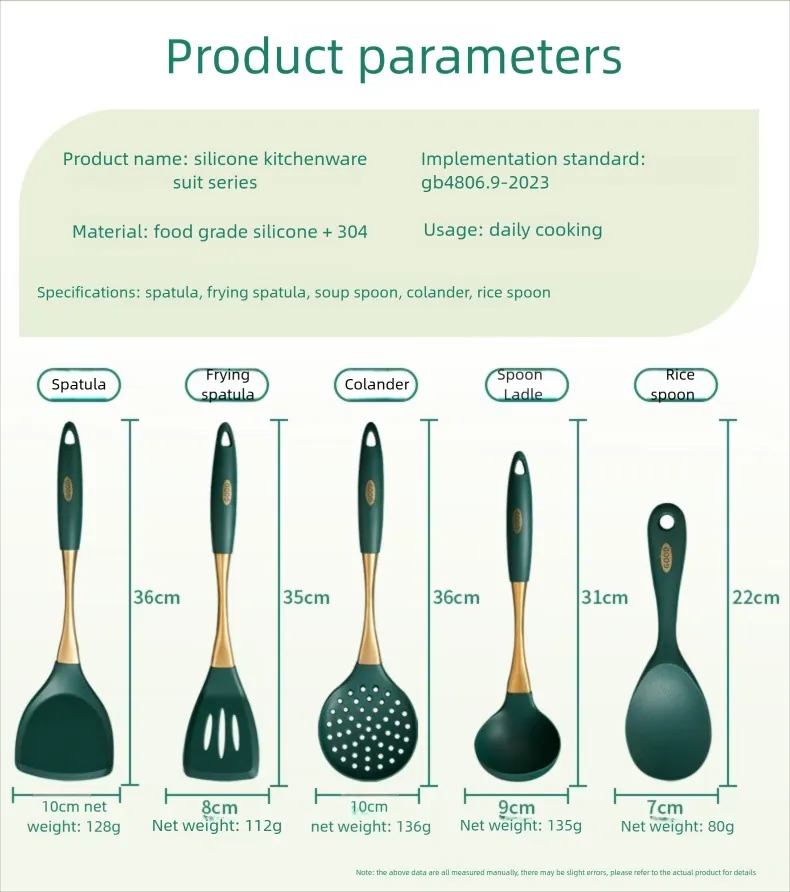
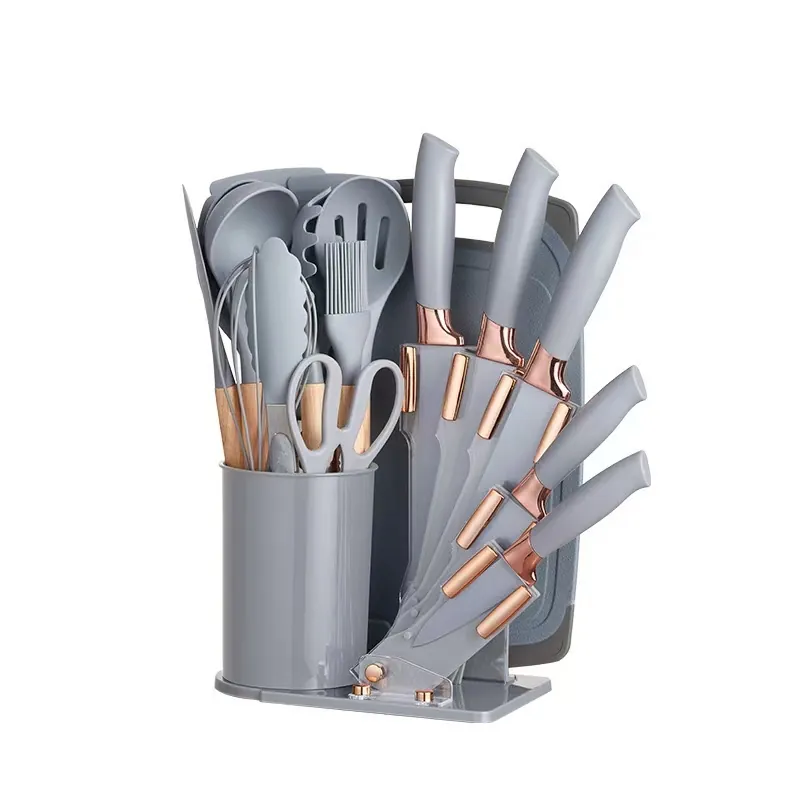
The supplier conversation is only half of the equation; the other half is choosing products that fit marketplace demand and your margin structure. Kitchenware categories with steady marketplace demand include non-stick frying pans, stainless steel cookware sets, silicone baking molds, wooden cutting boards and kitchen utensils, and the demand is spread across price points. The products that work best on marketplaces tend to be lightweight enough to keep shipping costs sane, compact enough to store efficiently, and differentiated enough to avoid competing purely on price with every other listing.
Differentiation can come from packaging and branding rather than from a unique product. Private-label kitchenware on marketplaces usually starts from a catalog product with your brand, your colors and your packaging. That is exactly the model most kitchenware suppliers support: take a stock product, add your branding, adjust the packaging, and ship at a quantity that matches a marketplace launch. You can compare how suppliers present their ranges through the site’s kitchenware product range to see the breadth a wholesale supplier is expected to cover.
Before committing to a SKU, run the marketplace math: landed cost per unit, marketplace referral fee, fulfillment or shipping cost, and the price point your competitors hold. The product only works if the numbers close after fees. The supplier’s job is to give you accurate unit pricing at your order volume, including packaging, and the earlier that pricing is transparent, the easier the margin planning.
What to verify beyond packaging, documents and lead times
The three headline checks are the start, not the end. A marketplace program also depends on QC consistency, because a single bad batch becomes visible reviews. Ask the supplier how QC is structured: incoming material checks, in-line checks, final inspection, and whether you can request a third-party inspection before shipment. For marketplace sellers, a pre-shipment inspection on the first two batches is usually worth the cost, because it catches problems before they become reviews.
Check the supplier’s flexibility on small changes. Marketplace listings change: a logo color, a packaging size, a barcode placement. A supplier who charges a full tooling fee for every small change is harder to work with than one who treats minor revisions as normal. Ask how change requests are handled and quoted, because you will need that process within the first year.
Also verify the supplier’s own marketplace experience. A supplier who already serves marketplace sellers will understand FBA terms, know what “retail ready” means in your channel, and be able to advise on case pack and labeling. A supplier who only serves traditional retail may need several painful orders to learn your requirements. Asking “do you work with other marketplace sellers, and what do they typically order?” is a fair question, and the answer tells you how much hand-holding to expect.
Common mistakes in marketplace kitchenware sourcing
The most common mistake is optimizing for unit price and ignoring the cost of poor packaging, missing documents or slow replenishment. A pan that is $0.30 cheaper but generates returns and a suppressed listing is the most expensive pan in the catalog. The second mistake is ordering a full container of a single SKU to hit a low unit price, then discovering the marketplace demand is not there; a marketplace launch usually deserves a test order, not a bet.
The third mistake is assuming the supplier’s compliance documents cover your marketplace. The marketplace may require documents in a specific format, for a specific jurisdiction, or with the seller named. Confirm what the platform asks for and check that the factory’s documents can satisfy it. The fourth mistake is ignoring seasonality in lead times. The supplier’s 45-day lead time in March becomes 70 days in August when holiday production starts; if your plan assumes the March number in August, you will stock out at the worst time.
The fifth mistake is treating the first order as the end of the evaluation. The first batch is when you learn whether the factory delivers to spec, ships on time, and responds when something goes wrong. Keep the QC records, compare batches, and build the relationship on documented performance rather than on the initial sample.
FAQ: Do marketplace sellers need a different supplier than retail buyers?
Answer: Not necessarily a different supplier, but a supplier evaluated for marketplace needs. The same factory can serve both channels if it can produce retail-ready packaging, provide compliance documents quickly, and replenish in smaller, faster batches. The evaluation criteria differ more than the factories do. Ask the supplier directly about marketplace experience and FBA-friendly packaging before you order.
Building the supplier relationship for the long run
A marketplace kitchenware program is a repeating loop: order, receive, sell, reorder. The supplier that fits the loop is the one that makes each cycle predictable. That means written lead times, per-batch QC records, stable pricing for agreed volumes, and a named contact who can answer change requests. It also means planning the seasonal calendar together: marketplace demand peaks around the holidays, and the factory’s production slots fill up months in advance.
For adjacent categories that often sit next to kitchenware in a marketplace catalog, such as custom drinkware and bottles, specialists like Frozl handle that line separately. Keeping the drinkware line with a specialist while sourcing kitchenware from your main supplier is a common way to avoid stretching one factory across too many categories. The point is to build a supplier map where each category has a reliable source, so a stockout in one line does not threaten the whole catalog.
Finally, document everything the marketplace will ask for later. Keep the compliance documents per SKU, the packaging specs, the case pack numbers and the lead-time breakdowns in a folder that survives staff changes. When the marketplace asks a question, the answer should be minutes away. A supplier program built on documentation is also the easiest to scale when you add the next SKU.
FAQ: What is a reasonable MOQ for a marketplace kitchenware launch?
Answer: It depends on the product and whether you use stock items or custom branding. Stock kitchenware items often have MOQs of a few hundred to a couple of thousand units, while custom packaging or private-label programs raise the minimum. A common approach is to test with the lowest MOQ that still gives you a viable landed cost, then scale once the marketplace data confirms demand. Confirm with the supplier what changes when you move from the minimum to the next volume tier.
A practical walkthrough: sourcing the first marketplace kitchenware order
To make the framework concrete, walk through a typical first order: a marketplace seller wants to launch a line of non-stick frying pans and silicone baking molds under their own brand. The seller shortlists two suppliers, both of whom quote similar unit prices, and sends each one the same brief: two SKUs, a target of 500 units per SKU for the first order, private-label branding via a printed label on the pan base, and FBA-compatible packaging with the case pack set to 12 units.
The first supplier replies with a quote that lists only the unit price and a vague “45 days” lead time. When asked for the packaging spec, the compliance documents and the case pack options, the response takes a week and the documents are generic, with no product names on the test reports. The second supplier replies with a tiered quote, a packaging spec sheet that includes carton dimensions and drop-test results, food-contact test reports naming the exact SKUs, and a production schedule broken into sample, production, QC and packing stages. The second supplier’s unit price is three percent higher. The seller chooses the second supplier, not because the price is better, but because the documents prove the factory can support the marketplace operating model.
The order proceeds through the stages the supplier described: samples arrive in two weeks, the seller runs the packaging test by sending one unit through the standard fulfillment receiving process, and the pre-shipment inspection checks the QC records against the agreed AQL. The first batch lands, the listings go live, and the seller reorders at 800 units per SKU six weeks later, using the same brief. The second order arrives in time for the holiday peak, and the compliance folder the supplier built in the first order answers every marketplace document request without a scramble.
The lesson is not that the more expensive supplier is always better. It is that the evaluation criteria in this guide, packaging, documents and replenishment, are what separate the suppliers who can support a marketplace program from the ones who can only sell a product. The same brief, sent to two factories, produces two very different pictures of the relationship ahead. The supplier who answers the marketplace questions in detail at the quoting stage is the one who will answer them quickly when a listing is at risk.
Frequently Asked Questions
What documents do I need to sell kitchenware on Amazon or similar marketplaces?
At minimum, keep a food-contact test report for the materials, a declaration of compliance for the finished article, and material specifications per SKU. Depending on the platform and region, you may also need LFGB or FDA certificates and Prop 65 information. Ask the supplier for the document set at quoting stage, and check that reports name the actual product you are selling.
Can a kitchenware supplier handle FBA packaging and labeling?
Many can, but confirm the details before ordering. The supplier can pack to your case pack quantity and provide cartons that survive freight, while FNSKU labels are often applied by you or by a prep service after arrival. Ask whether the factory can apply marketplace labels directly, and whether there is an extra fee per unit.
How much stock should a marketplace seller order for the first kitchenware order?
Start with a test order that covers your expected sales for the full lead-time window plus safety stock, rather than ordering for a long horizon. For most SKUs that means a few hundred units per variant at the supplier’s minimum or slightly above. Scale after the first batches sell and you have real velocity data.
How do I verify that a kitchenware supplier is reliable for marketplace replenishment?
Ask for written lead times broken down by stage, request QC records for previous batches, and place a test order to see the actual cycle. Confirm how the factory handles peak-season slots and what happens when a date slips. The first two or three batches are the real proof of reliability.
What is the difference between sourcing for Amazon and sourcing for a retail store?
The factory capabilities are similar, but the operating requirements differ. Marketplace programs need retail-ready packaging that passes receiving rules, compliance documents ready on request, smaller and more frequent reorders, and case packs matched to sales velocity. Retail programs can tolerate bigger batches and looser documentation. Evaluate the supplier against your channel’s requirements, not against a generic checklist.
For marketplace sellers, the supplier decision is really a decision about your operating system: packaging, documents and replenishment have to work together or the listings suffer. Choose a kitchenware supplier who can demonstrate all three before you order, test with a small batch, and build the documentation folder as you grow. If you are launching a marketplace kitchenware line and want a supplier who understands FBA-ready packaging and per-batch QC, send your product list and target quantities through our contact page and we will confirm what we can support. You can also review our full kitchenware range to shortlist the categories for your first order.