When you buy silicone baking molds wholesale for an online brand, the winning move is to plan the listing before you place the order: decide the SKU depth, the bundle size, the packaging that survives fulfillment, and the specification data your product pages will need. Silicone molds are one of the fastest-moving bakeware categories online, but they are also one of the most price-compared, so your margin depends on bundling and spec differentiation rather than on the mold alone. This guide covers the ordering decisions — material grades, bundle construction, packaging, and listing-ready specs — that turn a wholesale container of silicone molds into a sellable catalog.
Why Silicone Baking Molds Work So Well for Online Retail
Silicone molds sell online for three reasons: they are light (low shipping cost), they photograph well (bright colors, flexible shapes), and they solve a specific cooking problem (easy release, easy cleaning, oven and microwave safe). They also have a wide gifting angle — novelty shapes, seasonal themes, and bakeware sets are frequent Q4 purchases.
The flip side is competition. The same molds are listed by hundreds of sellers, so an online brand cannot win on the product alone. It wins on the bundle, the spec story, and the packaging experience. That is the sourcing mindset: you are not ordering molds, you are ordering a listing concept with physical goods attached.
For a wholesale buyer, the practical implication is to choose molds with spec features you can actually verify and communicate: food-grade material, temperature range, BPA-free declaration, dishwasher safety, and cavity size. Each verifiable spec is a bullet point your listing can own and competitors without factory documentation cannot copy easily.
Material Grade: The Spec That Decides Price and Trust
Food-grade silicone is the baseline, but not all food-grade silicone is the same. The useful distinctions for a buyer: the raw material standard (typically food-contact silicone with LFGB or FDA declarations), the hardness (usually measured in Shore A), the temperature range (most molds are rated -40°C to 230°C, some higher), and the color system (pigments used in the compound).
Ask the supplier for the material declaration and any test reports for the specific mold you are buying. A generic “food grade” claim is not a spec; a certificate or test report naming the material and the standard is. Confirm the temperature rating in writing because oven safety is the single most common customer question on silicone bakeware.
| Spec | Typical value | Why it matters for your listing |
|---|---|---|
| Material | Food-grade silicone (LFGB/FDA declared) | Trust anchor for food-contact products |
| Hardness | 40–70 Shore A | Flexibility vs shape retention; easy release story |
| Temperature range | Usually -40°C to 230°C | Oven, microwave, freezer use claims |
| BPA-free | Compound declaration | Expected by marketplace shoppers |
| Cavity size | Per mold, in ml or cm | Recipe compatibility and portion sizing |
One caution: temperature ratings and food-grade claims should be confirmed with the supplier’s documentation for the exact product. If a listing claims 230°C oven safety, the mold should be tested for that use; “usually safe” is not a retail claim.
Bundle Design: Turning Units Into Higher Average Orders
Single molds sell at low price points and thin margins. Bundles are where online kitchenware brands build average order value: a 3-piece set of muffin molds, a 6-piece set of novelty shapes, or a baking kit that pairs molds with a whisk or spatula. The bundle math matters before you order, because the packaging and the SKU structure are decided at the factory.
When designing bundles for wholesale, decide: the number of pieces, whether the pieces share a color story (retail shoppers expect coordination), the packaging type (single-piece polybag, boxed set, or display-ready set), and the price point you want the listing to hit. Then work backward to a unit cost that leaves margin after marketplace fees and shipping.
A common mistake is to bundle leftover random molds. Bundles sell when they tell a story — “muffin baking set”, “party shapes set”, “kids baking kit” — not when they are a grab bag. Name the bundle like a product, not like a clearance bin.
Packaging That Survives Fulfillment
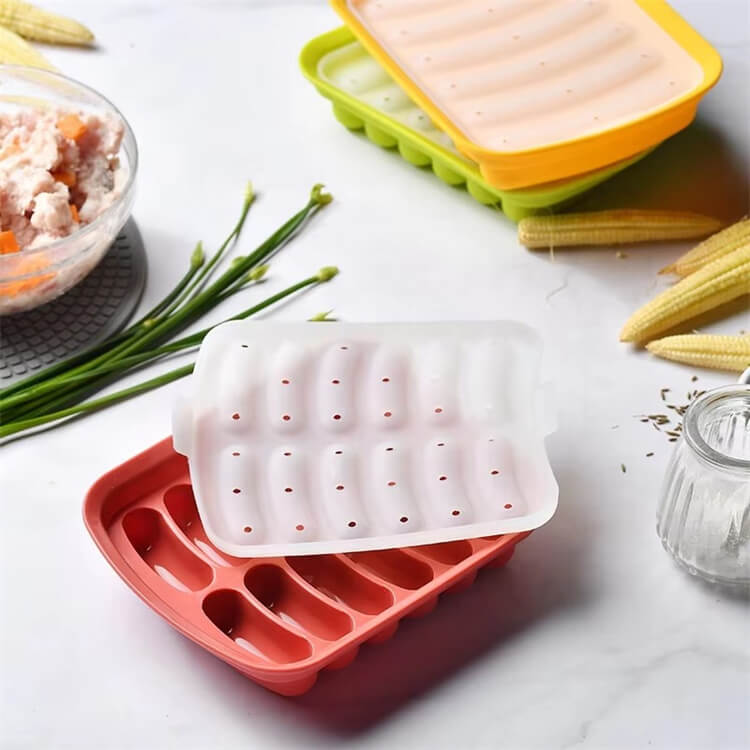
Silicone is flexible, which makes it forgiving in transit, but the packaging still decides the unboxing experience and the return rate. For online sales, packaging has three jobs: protect the mold from dust and damage, carry the spec information and safety claims, and present well in photos and unboxing.
Retail-ready options range from a simple hang-tag polybag (cheapest, common for single molds) to a printed box with a window (better for sets and gifting). For marketplace sales, a polybag with a printed insert can be enough; for your own store or gifting programs, a boxed set justifies a higher price.
Two practical details: check that the packaging can carry the required marketplace information (specs, safety marks, country of origin) without extra stickers, and confirm the carton packing count so fulfillment is simple — a bundle box that ships 6 per master carton, with inner boxes that survive a 2-meter drop test, is a much better operations story than loose molds rattling in a master carton.
SKU Depth: How Many Mold Designs to Launch
A typical online launch starts with 10 to 30 SKUs: a few evergreen shapes (muffin, loaf, round cake), a few novelty best sellers (animal shapes, seasonal themes), and bundle versions of the strongest single SKUs. Launching too many SKUs stretches your photography, listing copy, and inventory budget; launching too few leaves you without a testing strategy.
Your order quantities should follow the same logic: order test quantities on new shapes, deeper stock on proven shapes, and reserve reorder capacity with the supplier for winners. Because silicone molds are lightweight and mold tooling is relatively inexpensive, suppliers can usually produce small runs of new shapes, which makes the category friendly to online testing.
If custom shapes are part of your plan, confirm the tooling cost and ownership terms before committing. Custom mold tooling typically involves a steel or aluminum mold and a development cycle; the supplier may amortize the tooling into the unit price or charge it separately. Get the terms in writing, because mold ownership affects your ability to switch suppliers later.
The SKU plan should also consider the product lifecycle. Silicone molds follow trends — a novelty shape can spike and fade within a season — so the catalog needs a rotation policy: evergreen shapes that carry the line, seasonal shapes that capture the trend, and a clear decision point for dropping shapes that underperform. A catalog that never retires shapes slowly fills with slow movers and stale photos, which drags down the store’s overall performance metrics.
Listing-Ready Specs: What to Collect at the Factory
The data you need for listings should be collected during sourcing, not reverse-engineered after the container lands. For every mold SKU, collect: dimensions and cavity volume, weight, material declaration, temperature range, care instructions (dishwasher safe or hand wash), and packaging dimensions. Also collect the product photos — and ideally ask for lifestyle shots or approve your own photography against the sample.
The same spec sheet feeds your listing copy, your compliance file, and your QA process. A spec sheet with real numbers also protects you if a customer disputes a claim: you can show the factory documentation behind “BPA-free” or “oven safe to 230°C”.
For a deeper look at the material and geometry questions behind silicone molds, our earlier guide on silicone baking molds wholesale testing covers the checks that separate verified molds from claims.
Should I order custom colors or stick to standard ones?
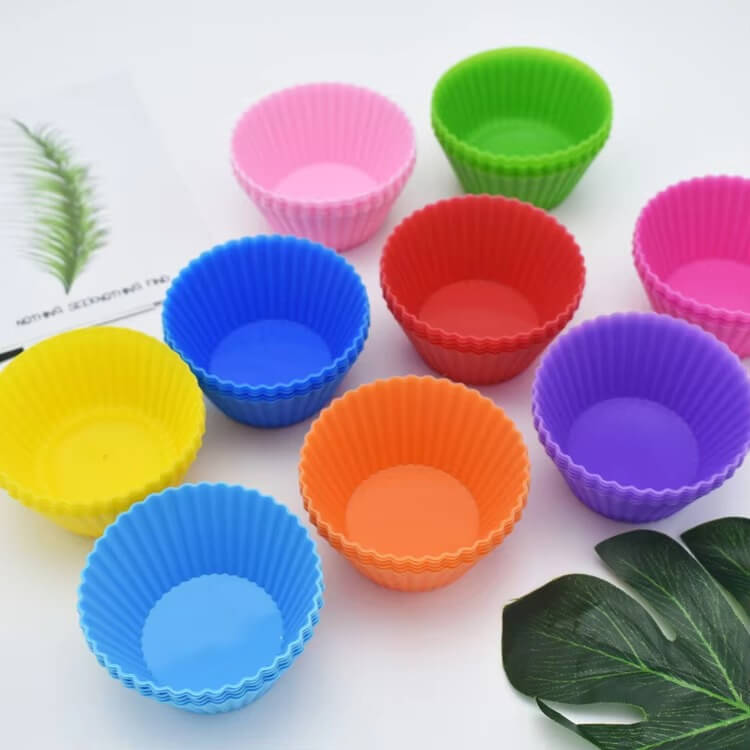
Standard colors (red, blue, green, orange, and pastels) keep costs low and lead times short. Custom colors add a color-matching cycle and usually a small MOQ uplift. For a first launch, standard colors are safer; reserve custom colors for bundle differentiation once you know what sells.
Do silicone molds need food-contact certification for marketplace listings?
Most major marketplaces expect food-contact claims to be backed by documentation, and some require test reports on request. The practical standard is a material declaration and test report showing food-grade silicone compliance with your target market’s rules (for example, LFGB for Germany, FDA for the US). Confirm what your marketplace requires and ask the supplier for the matching documents.
Order Quantities and the Testing Strategy
Ordering for an online launch is a balancing act: enough stock to cover the first sales wave, little enough that a slow launch does not strand inventory. A practical model is to order the MOQ for your core shapes, add test quantities for new shapes, and keep a reorder path open with the supplier. Because silicone molds are lightweight and compact, the freight cost per unit is low, which makes smaller test orders more affordable than in most cookware categories.
The testing strategy should be written into the first order: define what success looks like for each SKU (units sold per week, return rate, review average), and set a review point before the second order. The data from the first 60 to 90 days tells you which shapes to deepen, which to drop, and which bundles to expand. Buyers who reorder on sales data rather than on intuition consistently build healthier catalogs.
One caution on quantities: the bundle decision changes the unit economics completely. A 3-piece set at a $19.99 price point has different margin math than a single mold at $6.99, even when the product cost is similar. Run the margin model for each bundle before you commit the order quantity, including marketplace fees, shipping, and the packaging cost per unit.
Photos and Listing Assets: What to Plan at Sourcing Time
Online kitchenware is sold with photos before it is sold with specs. Plan the image set at sourcing time: a hero shot of the mold or bundle, a scale or size reference shot, a use shot (batter in the mold, baked result), a flexibility shot (folded or bent silicone), and an in-packaging shot. Some of these can be factory photos, but the shots that differentiate your listing — the use shot and the lifestyle context — are usually worth commissioning yourself against the sample.
The listing assets also include the spec table for your product page: dimensions, cavity volume, material, temperature range, care instructions, and packaging contents. A spec table with real numbers answers the questions shoppers actually ask and reduces the returns caused by wrong expectations. The factory spec sheet is the source; turn it into shopper-facing language without changing the numbers.
Finally, collect the compliance and safety copy for your listings from the supplier documentation: BPA-free declaration, food-grade statement, and the temperature rating. Do not write safety claims from memory or from competitor listings; the claims should match the documentation you hold, because marketplace reviewers and regulators both ask for proof eventually.
Should I use factory photos or commission my own?
Use factory photos for the spec-complete catalog shots, but commission or shoot your own hero and lifestyle images for the main listing. Identical factory photos appear across hundreds of listings; the original images are where your brand signal comes from. At minimum, verify the factory photos are accurate for the exact product you receive.
Seasonal Planning for Silicone Bakeware
Silicone bakeware has a pronounced seasonal rhythm, and the sourcing calendar should follow it. Q4 is the gifting peak: novelty shapes, baking sets, and holiday-themed molds move fastest in November and December. Q1 brings New Year baking resolutions and healthy-eating content, which drives muffin and bread molds. Spring and summer favor party shapes, ice-pop molds, and outdoor baking accessories. If you plan one order a year, you are missing the seasonal lifts; a two- or three-window plan matches production to demand.
The lead times matter for the seasons. Standard molds usually run 45 to 60 days; custom shapes with new tooling run 70 to 100 days after sample approval. For a Q4 gifting program, the custom shapes must be approved by June or July, and the order placed by August at the latest. A calendar that starts with the retail peak and works backward — exactly as in general kitchenware sourcing — keeps the silicone line aligned with the rest of your bakeware program.
Seasonal planning also affects packaging. Holiday gifting programs often need premium boxes, which add their own 10 to 20 day lead time and their own MOQ. Confirm the packaging minimums in the same conversation as the product MOQ, so the seasonal bundle economics are complete before you commit.
Working With Your Supplier on Custom Molds
Custom silicone molds are one of the most accessible custom programs in kitchenware because the tooling is relatively inexpensive compared to metal cookware tooling. The development path is: mold drawing, tooling production, trial run, sample approval, then bulk production. Your job in the process is to approve the drawing before the tooling is cut — changes after tooling cost time and money.
Ask the supplier three questions before committing to a custom mold: what is the tooling cost and is it separate or amortized, who owns the tooling after production, and what MOQ follows from the tooling investment. Also confirm the sample approval criteria in writing: dimensions, cavity depth, edge thickness, and the color standard. A mold approved without measurements is a mold whose bulk production has no reference.
For the first custom program, limit the number of new shapes. One or two custom shapes added to a standard mold order let you test the process without betting the season on tooling development. When the custom shapes prove themselves in sales, the reorder program can expand with more shapes and deeper quantities.
Returns and Customer Expectations
Online buyers of silicone bakeware return products for predictable reasons, and the sourcing decisions determine how many of those returns happen. The top return drivers are size surprises (the mold is smaller or larger than the photos suggest), temperature disappointment (the mold does not work in the oven as expected), and quality perceptions (thin molds that feel flimsy). Each driver maps to a sourcing fix: accurate spec data and photography for size, verified temperature ratings for oven claims, and a mold thickness decision that matches the price point.
The return math belongs in the sourcing model. If your category return rate is a few percent and your margin model assumes zero returns, one bad batch can erase the profit on the whole SKU. Plan the price and the bundle so the margin absorbs the expected return rate, and use the return data to decide which molds deserve a thicker, higher-quality version in the next order.
Customer reviews are the other feedback channel. The reviews on your first molds tell you exactly what to fix in the second order: if reviewers say the mold is too flexible, specify a higher Shore A hardness; if they say the cavities are too small, adjust the design; if they say the packaging was damaged, upgrade the inner protection. Sourcing decisions driven by review data are the fastest way to improve a silicone bakeware line.
Frequently Asked Questions
What is the typical MOQ for silicone baking molds wholesale?
MOQs vary by shape and supplier, but standard molds commonly start around 500 to 2000 pieces per SKU, with custom shapes and custom colors requiring higher minimums. Confirm the exact number with your supplier, because tooling and color runs move it significantly.
Are silicone baking molds oven safe?
Most food-grade silicone molds are rated for oven use, usually up to around 230°C, but the rating should be confirmed in the supplier’s documentation for the exact product. Do not assume a universal rating for every mold.
How do I choose between standard and custom mold shapes?
Standard shapes launch faster and cost less; custom shapes differentiate your brand but add tooling cost, development time, and usually a higher MOQ. A common strategy is standard shapes first, then custom shapes for the proven best sellers.
What packaging is best for selling silicone molds online?
For single molds, a polybag with a printed insert works and keeps costs low. For sets and gifting, a printed box with a window supports a higher price point. Whichever you choose, make sure the packaging carries the spec and safety information your listings claim.
Final Recommendation
Plan the listing before the order: pick a focused SKU set, design bundles with a story, choose packaging that survives fulfillment, and collect verifiable specs at the factory. Silicone baking molds are a great online category precisely because they are light, colorful, and giftable — but the margin is made in the bundle and the spec, not in the raw mold.
If you are building a silicone bakeware line for your online store, we can quote standard molds and custom shapes with the documentation your listings need. Send your bundle concept through the contact page, or start from the bakeware product range and the full catalog to build your first order.