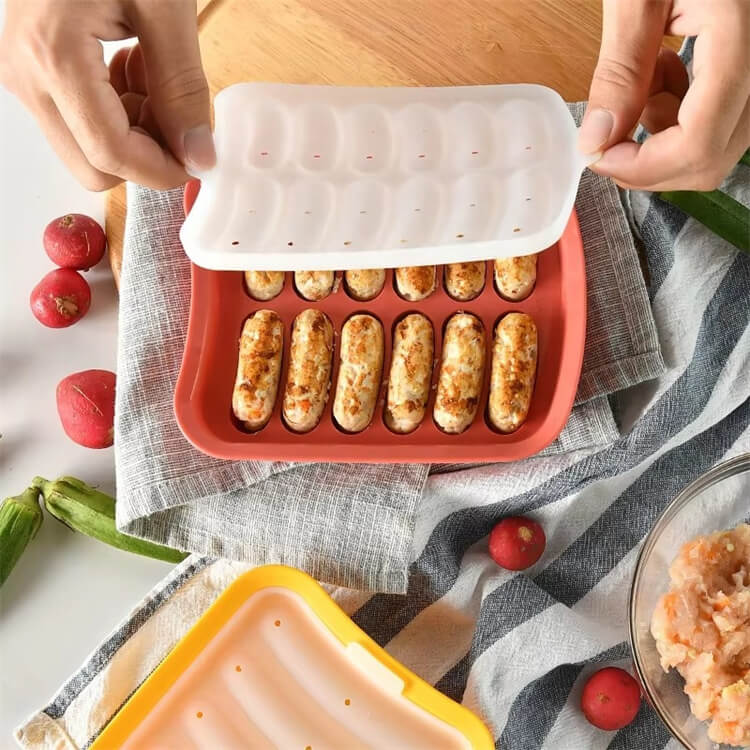
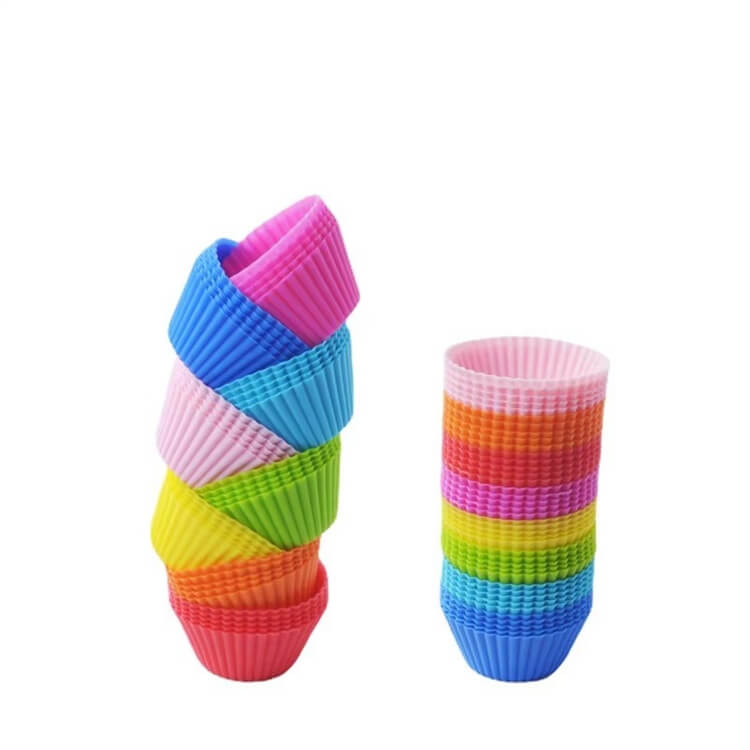
Food-grade silicone kitchenware comes down to three verifiable things: the raw material grade, the curing system, and the test reports the factory can actually produce. If a supplier cannot show a material declaration and a food-contact test report for the same grade they plan to ship, treat the product as non-food-grade until proven otherwise. This guide walks through what to ask for at each stage of a B2B silicone kitchenware order.
What “Food-Grade Silicone” Actually Means
Silicone is a synthetic rubber made from silicon, oxygen, carbon and hydrogen. The term “food-grade” refers to the grade of raw material and how it is processed, not to one universal certificate. Most kitchenware factories work with two curing systems, and the difference matters more than the brand of the material.
| Curing system | How it works | Typical use | What buyers notice |
|---|---|---|---|
| Platinum-cured | Catalyzed with platinum compounds | Baby products, baking molds, premium kitchenware | Low smell, fewer by-products, usually higher cost |
| Peroxide-cured | Catalyzed with organic peroxides | General kitchen tools, some baking items | May smell at first, can leave by-products if not post-cured well |
Platinum-cured silicone is generally preferred for food contact because it produces fewer residual by-products, but peroxide-cured silicone can still pass food-contact tests when the factory post-cures properly. Ask the supplier which system they use for the exact SKU, not for the factory in general.
Test Reports to Request from a Silicone Kitchenware Supplier
A supplier saying “food grade” is not evidence. Ask for documents that match the destination market, because the rules differ:
- For the US market, tests aligned with FDA 21 CFR 177.2600 for rubber articles intended for repeated food contact.
- For the EU, compliance with the EU food-contact framework (Regulation 1935/2004) and, where applicable, the plastics/silicone measures such as EU 10/2011.
- For Germany and some other markets, LFGB-style testing is often requested by retail buyers.
Check the report details: does it name the same material grade and colorant set you are buying? A report for clear silicone does not automatically cover the red version of the same mold, because pigments are part of the formulation. Confirm the scope in writing before production.
Temperature Claims and Oven Safety
Silicone kitchenware is usually rated for a wide temperature range, often around -40°C to 230°C, but the exact rating depends on the compound and the color. Do not assume every silicone item is oven-safe. A silicone baking mold may tolerate 230°C while a silicone spatula with a metal core or a painted handle has a lower limit. Ask the supplier to state the maximum service temperature on the quotation and on the label.
Microwave and dishwasher claims are separate from oven claims. A mold can be oven-safe but not dishwasher-safe if the print or coating is not durable. List each claim separately in your specification sheet so the factory cannot answer with one generic statement.
Can silicone kitchenware go in the oven?
Only if the supplier confirms the maximum oven temperature for that exact SKU. Most baking molds are designed for oven use, but temperature limits vary by compound and color. Confirm the rating in writing, and test a pre-production sample in your own oven if the item will carry an oven-safe claim on your retail packaging.
Fillers, Smell and Color Migration
Low-grade silicone is sometimes extended with fillers such as calcium carbonate to cut cost. The visible signs are a whitish residue when the item is bent, a chalky feel, or a strong smell that does not disappear after washing. High-filler material can also release particles over time, which is exactly what food-contact tests are designed to catch.
Do a simple bend and boil check on the sample: bend the item sharply and look for white lines; boil it in water for a few minutes, then smell and inspect. These checks are not a substitute for a lab report, but they are a fast screen before you spend money on formal testing.
QC Checks on a Production Sample
Before approving a bulk silicone order, run these checks on the pre-production sample:
- Material declaration matching the quoted grade, curing system and colorant.
- Food-contact test report covering the same grade and color.
- Temperature rating stated per SKU, not a generic range.
- Bend test, boil test and label durability check.
- Weight and dimensions matching the spec, because silicone thickness affects both cost and performance.
How do I check silicone quality on a sample?
Start with the bend test and the boil test described above, then compare the sample weight and shore hardness against the factory’s data sheet. For formal assurance, send the sample to a third-party lab for the food-contact test that matches your destination market. Keep the tested sample as the approval reference for the whole order.
FAQ: Silicone Kitchenware Safety for B2B Buyers
What does food-grade silicone mean?
It means the raw material and production process are suitable for repeated food contact, usually verified by a material declaration and a food-contact test report. The term alone is not a certificate, so request documents that match your destination market.
Which test reports should I ask for?
Ask for reports aligned with the rules of your market: FDA 21 CFR 177.2600 for the US, the EU 1935/2004 framework and EU 10/2011 for Europe, and LFGB-style testing where retailers request it. Confirm the report covers the same grade and color you are buying.
Is platinum-cured silicone better than peroxide-cured?
Platinum-cured silicone generally has less smell and fewer residual by-products, which is why it is common in baby and baking products. Peroxide-cured silicone can still pass food-contact tests when post-cured correctly and is often less expensive. Choose based on the test report and your market, not the label alone.
What temperature range can silicone kitchenware usually withstand?
Most silicone kitchenware is rated around -40°C to 230°C, but limits vary by compound, color and construction. Confirm the maximum temperature for each SKU in writing and test a sample before you print oven-safe claims on retail packaging.
How can I check silicone quality on a sample?
Do a bend test for white filler lines, boil the item and check for smell or color change, compare weight and shore hardness with the data sheet, and send a sample to a third-party lab for the food-contact test required by your market.
Final Recommendation
Build your silicone program around documented material and test evidence, not around a supplier’s word. Start with a pre-production sample, run the bend and boil checks, and send that same sample to a lab for the test your market needs. When the report comes back clean, you have an approval reference you can use for every reorder.
If you are sourcing silicone baking molds, see the bakeware product range, and compare wider options on the kitchenware products page before shortlisting factories. The same document checklist applies to silicone drinkware accessories such as sippy cups and straws, so one sourcing process can cover several categories.
Tell us the silicone items you plan to import, the quantities and your destination market. We will reply with sourcing notes, sample options and the document list to request. Request a quote or reach us on WhatsApp — a sourcing specialist will respond directly.