If you are sourcing stainless steel kitchenware and a supplier quotes “stainless steel” without a grade, stop and ask which one you are buying. The two grades you will meet most often in kitchenware are 304 and 201, and they are not interchangeable for every product. 304 contains roughly 18% chromium and 8-10% nickel; 201 substitutes part of the nickel with manganese and nitrogen, which changes corrosion behavior, formability and price.
What Is 304 Stainless Steel?
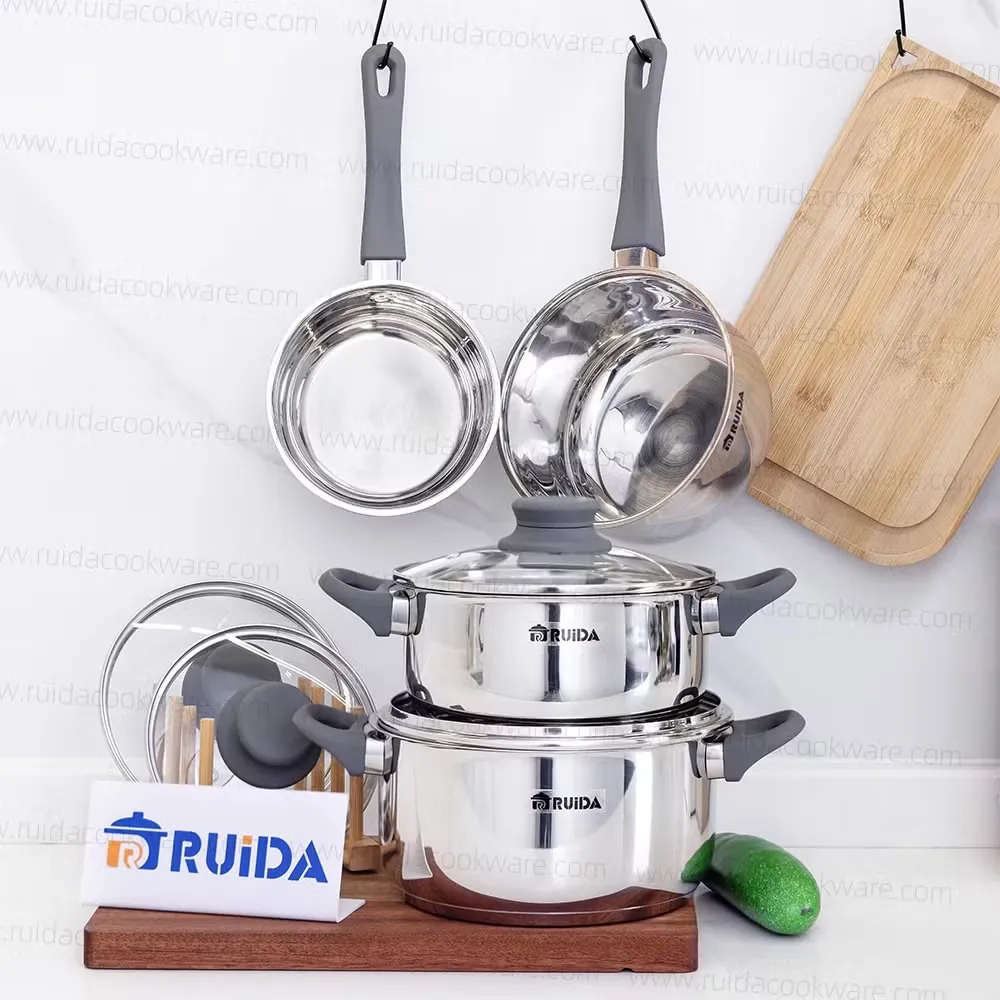
304 (also sold as 18/8 or 18/10 when nickel content is higher) is the workhorse food-grade stainless. Its higher nickel content gives it better resistance to chlorides, acids and everyday kitchen abuse. Cookware, mixing bowls, cutlery and flatware for hotel and restaurant programs are usually specified in 304 because the products face frequent washing, salt and acidic food.
What Is 201 Stainless Steel?
201 was developed as a lower-cost alternative. Manganese and nitrogen replace a large share of the nickel, which lowers the raw material cost. It can be formed and polished to look similar to 304, which is why visual inspection alone cannot tell them apart. The trade-off is weaker corrosion resistance, particularly around scratches, edges and salty or acidic residues.
304 vs 201: The Buyer’s Comparison Table
| Factor | 304 (18/8, 18/10) | 201 |
|---|---|---|
| Nickel content | Roughly 8-10% | Lower, partly replaced by manganese and nitrogen |
| Corrosion resistance | Higher, better with salt and acids | Lower, more prone to pitting and tea-staining |
| Typical price | Higher | Lower |
| Formability / deep drawing | Good | Good, but springback and work hardening differ |
| Common uses | Cookware, bowls, flatware, food contact surfaces | Budget cutlery, trays, handles, decorative items |
| Dishwasher suitability | Generally better | More care needed; depends on finish |
That table is a starting point, not a specification. The exact behavior of a finished product depends on the surface finish, wall thickness and how the item is used. For example, a thin 304 tray can still show marks in a commercial dishwasher if the water chemistry is aggressive.
Which Grade Should You Specify?
Cookware and food-prep surfaces
For pots, pans, bowls and utensils that touch food directly, 304 is the safer default for most European and North American markets. Some buyers also accept 430 (ferritic) for specific items, but 201 is usually not the first choice for cookware bodies.
Budget cutlery and tableware
201 shows up in price-sensitive cutlery sets and some trays. If the retail price point forces this choice, ask for the material certificate, test a sample in salt water and confirm how the product is expected to be cleaned.
What to write in your RFQ
Do not write “stainless steel” and leave it open. Specify the grade, the surface finish (for example #4 brushed or mirror), and the acceptance check you will use, such as the mill certificate per batch. If a supplier hesitates to put the grade in writing, treat that as a risk signal.
How to Verify the Grade Before Bulk Order
Verification usually happens in three steps. First, request the material certificate for the batch that will be used in your order. Second, ask for a pre-production sample in the final finish. Third, if the order size justifies it, arrange a third-party inspection that includes material testing at the factory.
One common shortcut is the magnet test: 304 and 201 are both mostly austenitic and both can show weak magnetic response after cold working, so the test tells you little. A portable XRF (PMI) test is the practical way to check grade composition on site.
FAQ: Is 201 stainless steel food-safe?
Food-safety regulation is about migration limits, not simply “304 or 201”. A 201 item can pass food-contact tests for some uses, but its lower corrosion resistance means the result depends on finish, coating and the food involved. If your market requires LFGB or FDA compliance, confirm the test scope with the supplier and request the report for the exact product.
Material Checklist for Your Next Inquiry
Use this list when you send your next RFQ for stainless steel kitchenware:
- Specify the exact grade (304 or 201) and the surface finish in writing
- Request the mill certificate for the batch that will be used in your order
- Confirm whether the product will be marketed as dishwasher-safe
- Ask for a pre-production sample in the final finish before the bulk order
- If the order size justifies it, arrange third-party material testing at the factory
The grade conversation is also a market-positioning question. A retailer that advertises "18/10 stainless" sets an expectation that 201 material cannot safely meet. When you choose the grade, choose the story that goes with it, and make sure the factory can document what it ships.
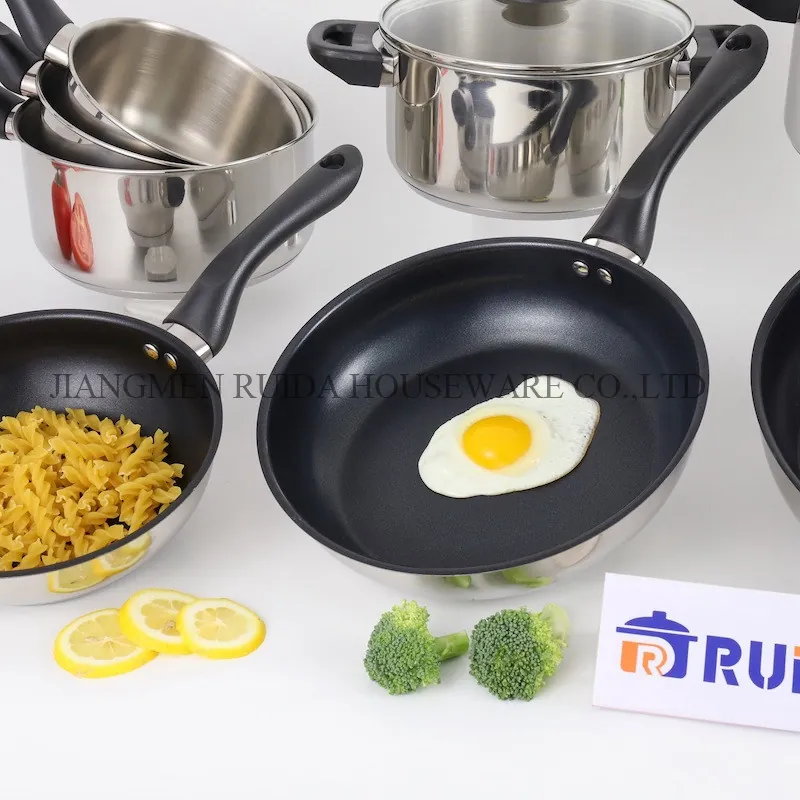
For more sourcing context, browse our stainless steel products and kitchenware products collections.
One more practical point: prices, lead times and material grades should always be confirmed with the supplier in writing before an order is placed. Market conditions change, and a written confirmation protects both sides when the container finally ships.
For buyers comparing several suppliers, keep one specification sheet per factory and update it after every call. A shared document makes it easier to compare quotes and harder for details to get lost between emails.
Finally, keep a record of every approval: artwork, sample photos, packing instructions and payment terms. When the second order comes, that record becomes the fastest way to get an accurate quote.
One more practical point: prices, lead times and material grades should always be confirmed with the supplier in writing before an order is placed. Market conditions change, and a written confirmation protects both sides when the container finally ships.
Frequently Asked Questions
Is 304 stainless steel always better than 201 for kitchenware?
Not always. 304 resists corrosion better and is the safer default for food contact, but 201 is cheaper and can work for short-life or non-acidic kitchen tools if the supplier confirms the actual material certificate. Match the grade to the product and the market.
How can I check whether a supplier is really using 304 stainless steel?
Ask for the material certificate (mill test certificate) and the grade stamp on the item or carton. A simple magnet test is not reliable because both grades are mostly austenitic; a PMI test at the factory is the stronger verification.
Does 201 stainless steel rust in dishwashers?
It can be more vulnerable to pitting and tea-staining, especially with salt and acidic residues. If dishwasher-safe claims matter for your retail market, confirm the finish and grade with the supplier and test a sample first.
Which kitchenware products commonly use 201 stainless steel?
Budget cutlery, baking trays, tool handles and some decorative items. Cookware bodies and food-prep surfaces more often use 304, 430 or clad materials. Confirm the grade per SKU, not per product line.
Planning a kitchenware order? Send us your product list or target specs and get a sourcing quote. We work with importers, retailers and brands on OEM and wholesale programs.