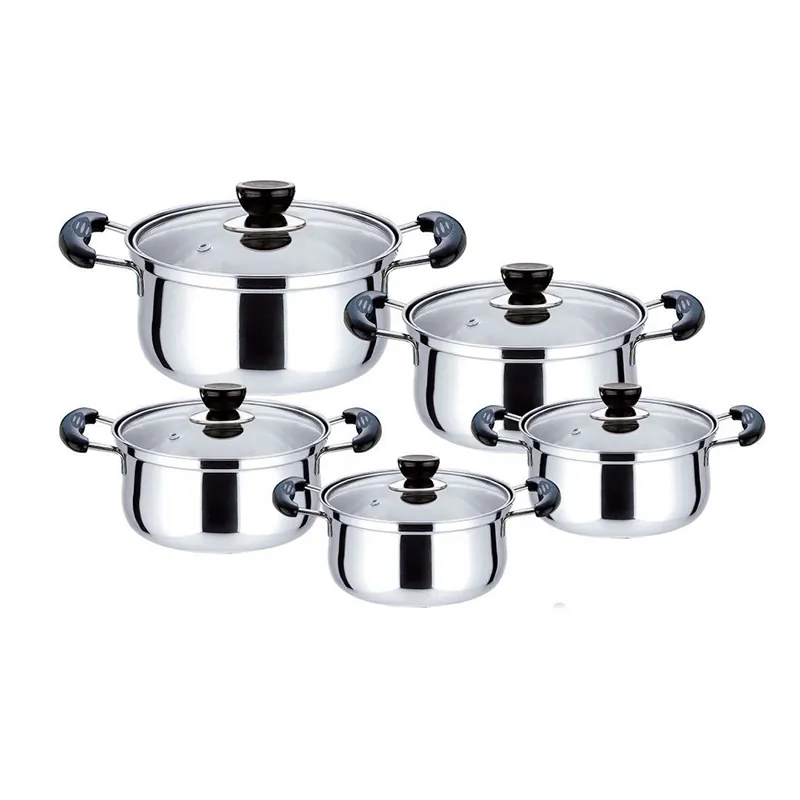
Three specifications decide how stainless steel cookware performs: the steel grade, the base construction and the gauge. Price differences between wholesale lines are mostly explained by these three numbers, so knowing them lets you compare quotes honestly and stock the right tier for your market. This guide explains each spec and ends with a buying checklist you can send to any factory.

Steel Grade: 18/10 vs 18/0
The grade describes the chromium and nickel content. It is the first number on any specification sheet and the easiest to verify on a sample.
| Grade | Chromium | Nickel | Typical use |
|---|---|---|---|
| 18/10 (304) | ~18% | ~10% | Quality cookware, corrosion-resistant, warm shine |
| 18/0 (430) | ~18% | ~0% | Budget lines, less corrosion resistance |
For cookware that boils water, simmers sauces and goes in the dishwasher, 18/10 is the usual choice for mid and premium lines. The exact alloy can vary by batch, so ask for the mill certificate or test report if the grade matters to your brand claim.
Base Construction: Encapsulated Disc vs Fully Clad
Stainless steel alone conducts heat poorly, so cookware adds a conductive layer. The construction determines how evenly the pan heats and how much it costs.
| Construction | How it works | Heat distribution | Cost |
|---|---|---|---|
| Encapsulated disc base | Aluminum or copper disc bonded to the bottom, sealed inside stainless steel | Good across the base, less on the walls | Lower |
| Fully clad (tri-ply) | Conductive layer runs through the body and up the sides | Even across base and walls | Higher |
Fully clad cookware is the premium tier: even heat, no hot spots on the sides, but heavier and more expensive. A well-made disc base covers most retail needs. When comparing quotes, ask which construction each line uses and look at the pan from the inside: clad lines show the layer on the rim, disc-base pans only at the bottom.
Gauge Thickness and What It Changes
Gauge refers to the thickness of the stainless steel layer. Thicker metal feels solid, resists warping and holds heat, but adds weight and cost. Thinner metal heats faster but can warp on high heat and feels flimsy in the hand.
| Gauge range | Feel | Typical use |
|---|---|---|
| Thin (0.4-0.5 mm) | Light, heats fast | Budget lines, promotional sets |
| Mid (0.5-0.7 mm) | Balanced weight and durability | Mainstream retail |
| Thick (0.7 mm+) | Solid, heavy, warp-resistant | Premium and commercial lines |
Confirm the gauge in the spec sheet rather than guessing from weight. Two pans of the same size can differ a lot in gauge, and the difference shows up in the first customer review.
Heat Distribution and Induction Notes
Heat distribution is the practical result of construction and gauge. A disc base with a thick aluminum core spreads heat well across the base; a fully clad body spreads it up the sides too. For induction cooktops, the base must be magnetic, so 18/0 stainless or a magnetic stainless layer is typically added under the disc. Confirm the induction rating with the supplier and test a sample on an induction hob before ordering.
Browse the stainless steel products range and the cookware product range to see the tiers available for wholesale.
Wholesale Buying Checklist
- Grade: write 18/10 or 18/0 into the specification and request the test report.
- Construction: identify disc base vs fully clad on every line you quote.
- Gauge: confirm the stainless layer thickness in millimeters.
- Induction: test with a magnet and verify the induction rating.
- Lids and handles: confirm lid material, handle heat resistance and whether handles are riveted or welded.
- Sample test: boil water and compare heat spots across the pan before approving the sample.
Comparing Quotes on the Same Specification
Stainless cookware quotes drift apart when the spec sheet is vague. One factory quotes 18/10 with a 2.5 mm disc base; another quotes 18/0 with a thinner base, and the prices look similar only because the products are not. Level the comparison by requiring every quote to state the grade, the construction, the gauge, the lid and handle details, and the packaging in writing. Then compare landed cost per unit, not list price, and judge the sample against the written spec, not against the picture.
Care Instructions and Return Rates
Stainless cookware fails in the field mainly through misuse: overheating empty pans, thermal shock from cold water on hot metal, and dishwasher cycles that dull mirror finishes. The retail line that sells best comes with clear care instructions on the box or hang tag. That small document lowers return rates noticeably, because most “defective” stainless pans are actually misused pans. Confirm the care claim with the supplier before printing it, and keep the instruction language simple enough for the end customer to follow.
Quick Checklist for Stainless Cookware Wholesale
- Grade (18/10 or 18/0) and gauge written into the RFQ.
- Base construction identified: disc or fully clad.
- Induction compatibility tested with a magnet and a hob sample.
- Lid, handle and packaging specs included in the quote comparison.
- Care instructions approved for the retail box.
Frequently Asked Questions
Is stainless steel cookware dishwasher safe?
Usually yes, but confirm with the supplier: finishes and handle materials vary, and harsh dishwasher cycles can dull mirror finishes over time. If your market relies on dishwasher claims, get the claim in writing.
Why does stainless steel cookware sometimes stick?
Stainless is not naturally non-stick. Proper preheating and oiling matter. If a non-stick surface is essential to your line, consider coated cookware instead and compare the coating tier separately.
What should I send the factory for a stainless cookware quote?
Send the size range, grade, construction type, gauge, lid and handle requirements, packaging and target quantity. A complete spec sheet gets you a comparable quote the first time.
Where can I see stainless cookware wholesale options?
Check the stainless steel products page and the cookware product range to shortlist items, then request quotes on the exact specifications.
Final Recommendation
Write the three specs, grade, construction and gauge, into every RFQ, and verify them on the pre-production sample. Stainless cookware is a long-life product: the small cost of a better base and thicker gauge pays back in fewer returns and stronger reorders. Start your shortlist from the stainless steel products range, then request a wholesale quote with your target specs.