Stainless steel cookware wholesale is a game of configurations, not individual pots. The set size, the pot mix, the finish, and the lid design decide your retail price and your margin. Plan the SKU line before you place the order, and you avoid the classic failure: a container full of pieces nobody buys together. To see the configurations suppliers commonly offer, browse the stainless steel products and cookware products collections.
Start with Set Configurations
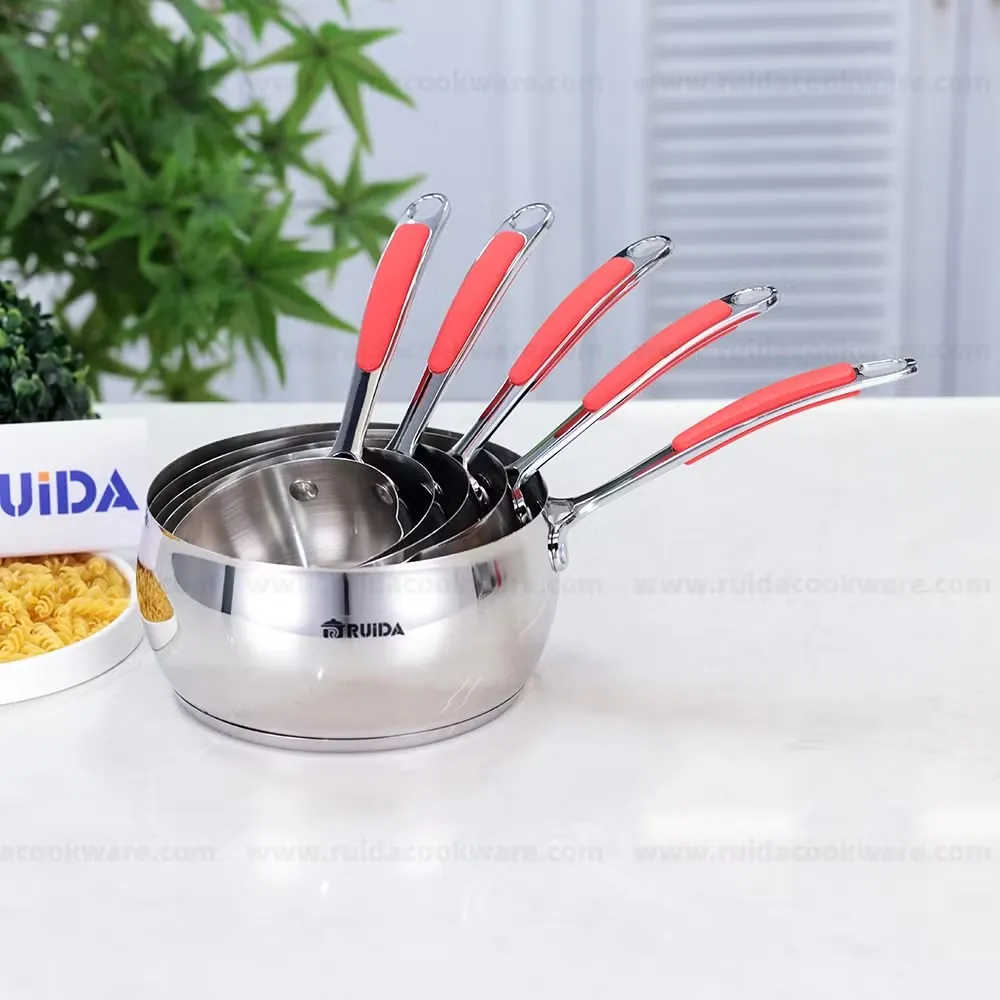
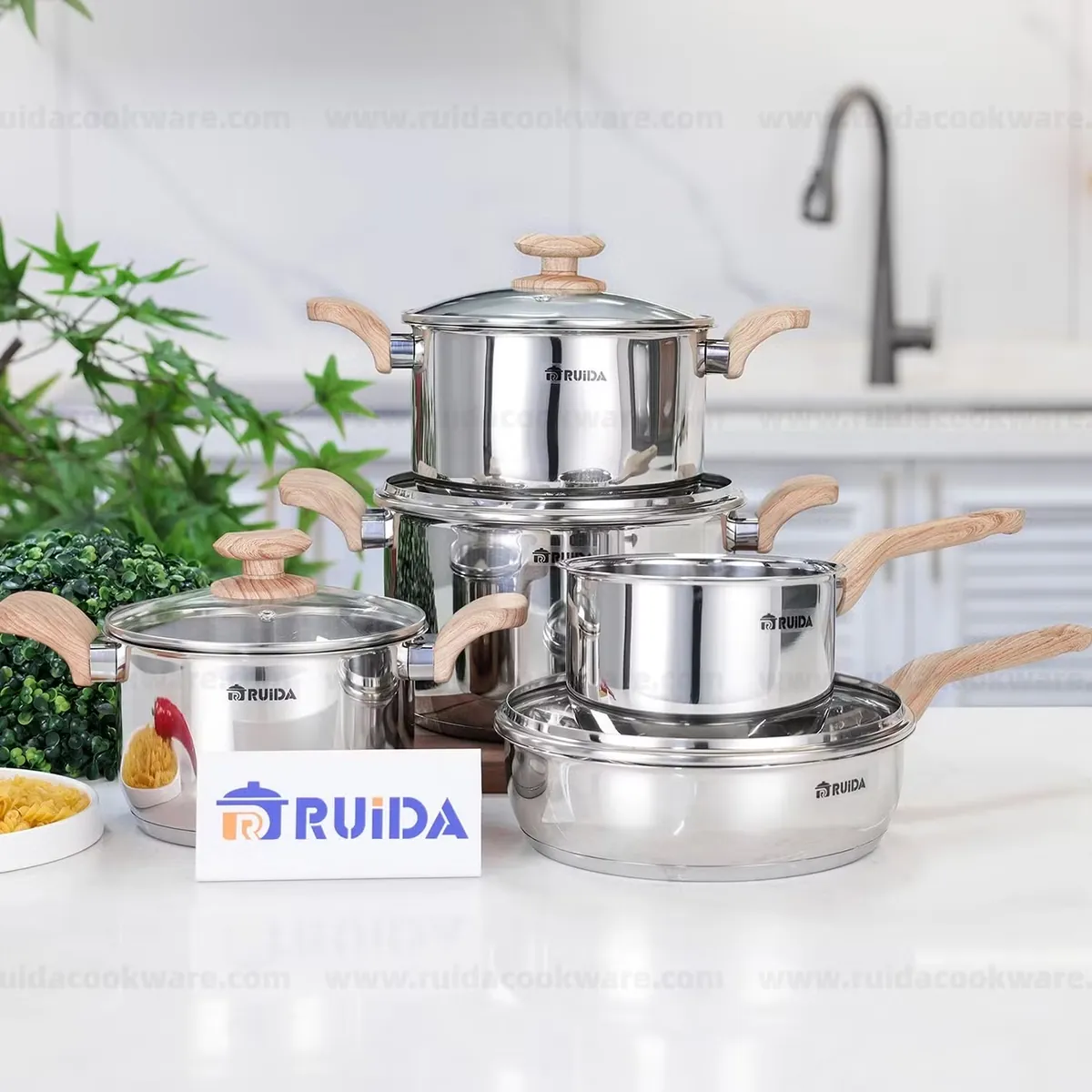
Most retail buyers purchase stainless cookware as sets because the price point supports a better margin and the value story is clearer. A typical set ranges from 8 to 14 pieces: a stock pot, a saucepan, a frying pan, lids, and often a steamer insert or utensils.
The configuration should match the target household. A small set suits apartments and first-time buyers; a larger set targets family kitchens and gift buyers. Look at the set sizes your competitors sell, then decide whether to match them or differentiate with an extra piece.
Open Stock: The Second Layer
After the sets, add a few open-stock pieces: a large stock pot, a big frying pan, or a specific saucepan size. Open stock serves three purposes: replacement buyers, customers who already own a set, and commercial kitchens that buy singles. It also helps you test demand for a size before committing to a full set.
Keep open stock limited. It adds SKUs, packaging, and inventory cost. A common ratio is two to three set configurations for every three to five open-stock pieces.
SKU Planning Table
| Line | Example SKUs | Purpose |
|---|---|---|
| Entry set | 8-piece set, 2 pots + saucepan + pan + lids | Price-point traffic |
| Mid set | 12-piece set with steamer insert | Main volume |
| Premium set | 14-piece set, tri-ply base, glass lids | Margin and gifting |
| Open stock | Stock pot 24 cm, frying pan 28 cm | Replacement and commercial |
Every SKU should have a role: traffic, volume, margin, or replacement. If a SKU has no role, cut it before production, not after.
Finish, Base, and Lid Decisions
The visible finish sells the set. Mirror polish looks premium but shows fingerprints; brushed or satin finishes are more forgiving in daily use. Many brands combine a brushed body with a mirror-polished rim for a premium look at a moderate cost.
The base construction is the performance story. Single-layer stainless heats unevenly; a clad base with an aluminum or copper core distributes heat better. Tri-ply (three-layer) construction is a strong selling point for the premium line. Confirm the base construction with the supplier and state it accurately on the label.
Lids are a cost and compatibility decision. Glass lids let buyers see the food and usually look more premium; stainless lids are cheaper and more durable but hide the contents. Match the lid design across the set so lids are interchangeable where possible.
Finish Options Compared
| Finish | Look | Trade-off |
|---|---|---|
| Mirror polish | Premium, reflective | Shows fingerprints and water marks |
| Satin / brushed | Modern, matte | Hides marks, popular for daily use |
| Combination | Brushed body + polished rim | Premium look at moderate cost |
| Colored / coated exterior | Brand color on the outside | Adds a production step and cost |
The finish choice affects both the price and the retail story. A mirror-polished set photographs well but needs more care in use; a satin finish is easier to live with and usually the safer choice for everyday cookware. If you want a premium look without the fingerprint problem, the brushed body with polished rim is a proven middle ground.
Retail Pricing and Margin Planning
The set configuration drives the retail price. An 8-piece entry set anchors your promotion price, a 12-piece set carries the volume, and a 14-piece premium set protects the margin. Work backward from the retail price to the target import price, including freight, duties, warehousing, and packaging. A common mistake is pricing the premium set so high that it never moves, while the entry set sells at a loss after costs.
Ask the manufacturer for price breaks at the quantities you actually plan to order. A small price break at a volume you cannot sell is not a saving. Plan the container mix so the fast-moving SKUs carry the slow-moving premium pieces.
Set Packaging and Gift Readiness
Cookware sets are often bought as gifts, and the packaging has to carry that. A gift-ready set usually needs a stronger outer carton, an inner tray that holds each piece, and printed artwork that explains the set. If the set is heavy, the packaging also needs handles or an easy-opening design, because a frustrating box hurts the gift experience.
Ask the manufacturer for a packaging mockup or photo before production. Check how the set is protected during shipping, how easy it is to open, and whether the pieces stay in place. Gift-season buyers will notice the difference between a set that arrives pristine and one that arrives with pieces rattling inside.
Set Configurations by Market
Set configuration tastes differ by market. US retail favors large sets with more pieces and value messaging, while European buyers often prefer smaller sets with higher quality finishes. Gift markets like the holiday season push bigger, more premium configurations, while everyday household buyers look for a compact set that fits a small kitchen.
Match the configuration to your target market, not to a generic catalog. If you sell into two regions, plan two configurations rather than one compromise set. The packaging, finish, and even the lid style may need to change between markets, and that is easier to decide before the container is loaded.
Open Stock as a Testing Tool
Open-stock pieces are also your cheapest market test. Before committing a full container to a new set configuration, test the demand for a new size or finish by adding one open-stock piece to an existing order. The data from that SKU tells you whether to build a full set around it.
This approach keeps your container flexible. Fast-moving open-stock pieces can graduate into a set configuration, while slow movers disappear without a large write-off. It is a low-risk way to build a line from real sales data.
Grade Selection and Labeling
304 stainless is the standard food-grade choice for retail cookware and the safest default. 201 is cheaper but less corrosion-resistant and may not suit every market. 316 offers higher corrosion resistance but costs more and is rarely needed for home cookware. Choose the grade that fits your price tier and market, and print it on the label so buyers can compare.
Frequently Asked Questions
What is a good stainless steel cookware set configuration?
A common retail configuration is 10 to 14 pieces: two or three pots, a saucepan, a frying pan, lids, and sometimes a steamer or utensils. The exact mix depends on your market and price tier. Start with the sizes your competitors sell, then adjust for your margin.
How many SKUs should a stainless cookware line have?
Start small and deepen later. A typical launch is 6 to 10 SKUs: two or three set configurations plus a few open-stock pieces. Too many SKUs early means slow-moving inventory and cash tied up in finished goods.
Is 304 stainless steel the right choice for wholesale?
304 is the most common food-grade stainless for cookware and is usually the safe default for retail. 201 is cheaper but less corrosion-resistant, and 316 offers higher corrosion resistance for special applications. Confirm the grade with the supplier and state it on the label.
Final Recommendation
Design the line, then order the container. Decide the set configurations, the open-stock pieces, the finish, the base, and the grade before you ask for quotes. A planned SKU line is easier to price, easier to stock, and easier to sell than a random collection of pots. If you are planning a stainless steel cookware wholesale line and want help with set configurations, send your target market and price points to our contact page.