Stainless steel cookware lasts longer and works on induction; aluminum cookware heats faster and costs less. That one sentence explains most of the range planning you will do as a wholesale buyer, because the two metals are not really competitors — they are complementary. A typical mid-market cookware set uses an aluminum core inside a stainless pan to get the best of both, and a typical budget line uses pure aluminum with a coating to keep the price down.
This guide compares stainless steel and aluminum cookware for buyers who source from cookware wholesale suppliers: how the metals behave, what “aluminum core” actually means, which lines to stock, and the questions to ask before you order.
How the two metals behave
Aluminum is one of the best heat conductors in common use — better than stainless steel — which is why cookware manufacturers have used it for decades. But pure aluminum is soft, reacts with acidic food, and does not work on induction hobs by itself. Stainless steel is hard, durable, non-reactive and magnetic in most grades, but it is a poor conductor on its own. A bare stainless pan heats unevenly unless the manufacturer adds a layer of aluminum or copper to spread the heat.
| Factor | Stainless steel | Aluminum |
|---|---|---|
| Heat conduction | Poor on its own; good when combined with an aluminum core | Excellent |
| Heat distribution | Even in multi-layer pans | Even in thicker bases; uneven in thin ones |
| Durability | Very high; resists scratching and dents | Soft; scratches easily unless anodized or coated |
| Weight | Heavier | Light |
| Induction compatibility | Yes (magnetic grades) | No, unless a magnetic base is added |
| Reaction with acidic food | Non-reactive | Can react; usually covered by a coating or anodized layer |
| Care | Dishwasher-safe in most cases | Hand-wash recommended for coated lines |
| Typical retail price level | Mid to premium | Budget to mid |
The practical takeaway: if a pan is pure aluminum, expect it in the budget or mid segment with a coating. If a pan is stainless, ask what is in the base — the answer separates a cheap stainless pan from a good one.
What “aluminum core” and “multi-layer base” mean
Most stainless cookware sold today is not solid stainless. The common constructions are:
Tri-ply (clad): a stainless layer, an aluminum layer, and another stainless layer rolled together across the whole pan body. Heat spreads evenly through the walls as well as the base. This is the premium construction used by most well-known brands.
Encapsulated base (disc bottom): an aluminum disc pressed into the bottom of a stainless pan, with a magnetic stainless layer on the outside for induction. The walls stay single-layer stainless, so the base performs like a thicker pan but the body stays lighter and cheaper. Most mid-range pans from Chinese factories use this construction.
For a wholesale buyer, the distinction changes the price and the cooking performance. Clad pans cost more and heat more evenly; disc-bottom pans are cheaper and fine for boiling and everyday frying. If your line targets induction users, confirm the disc actually has a magnetic layer — some export pans labelled “induction compatible” use only aluminum in the base and fail the magnet test.
Which lines buyers actually stock
A practical three-line strategy keeps your range simple:
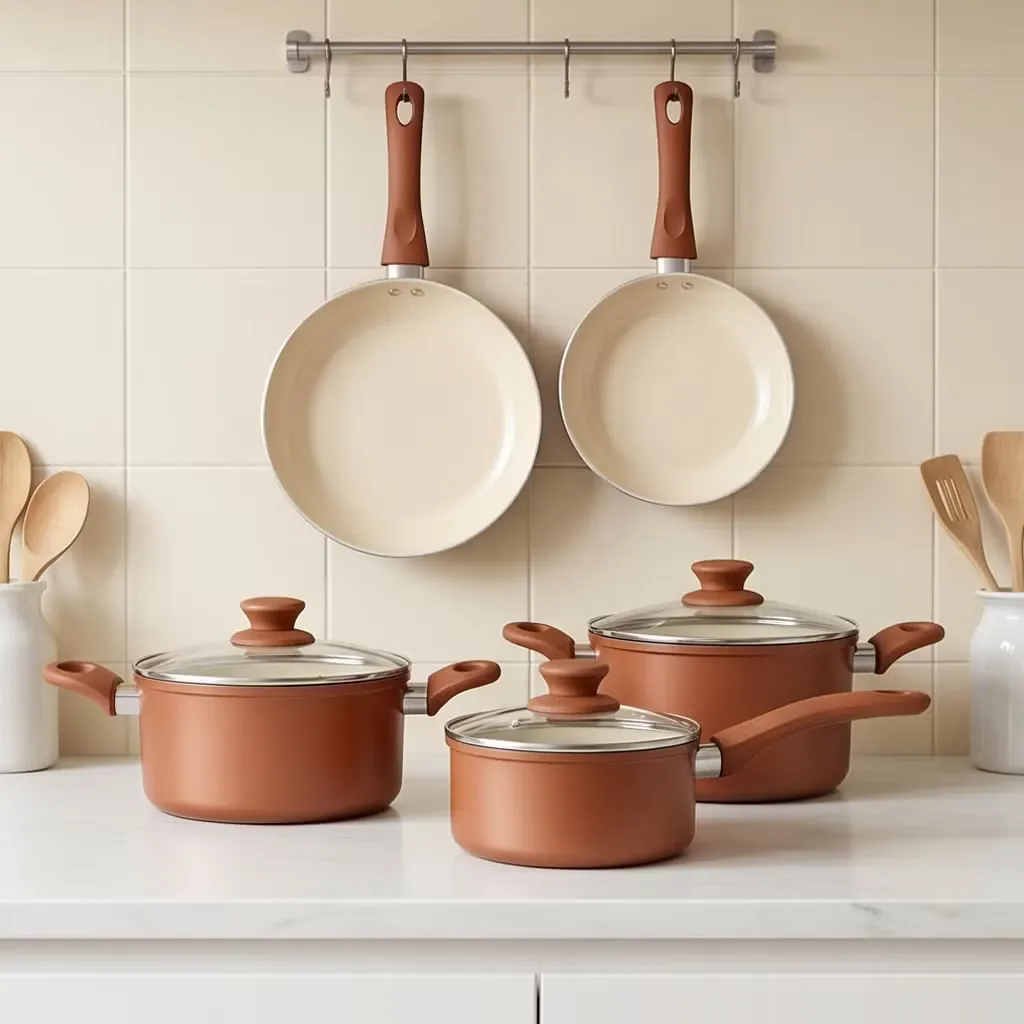
Budget line: coated aluminum pans and sets. Light, inexpensive, and the easiest volume seller. Confirm the coating warranty and the base thickness (2.0 mm or more) to keep warping complaints down.
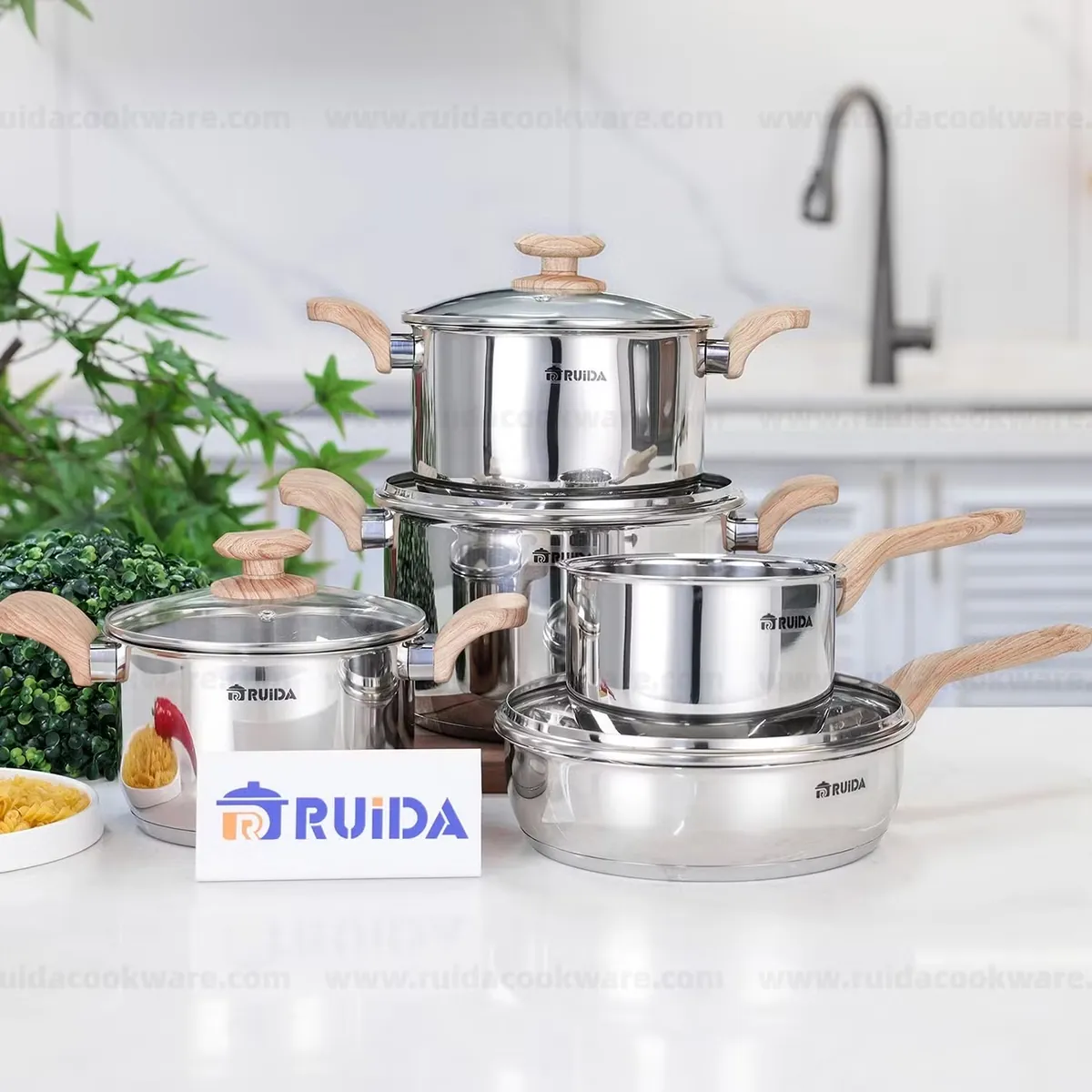
Mid line: stainless pans with an encapsulated aluminum base, sold as sets. This is the safest category for a first order: it covers induction users, looks more premium than coated aluminum, and avoids the coating-failure warranty risk entirely.
Premium line: tri-ply clad stainless or stainless with a thicker base. Fewer units, higher margin, and usually bought by customers who research before purchasing.
You can see the range structure on our stainless steel product page to compare typical set configurations and finishes before you define your own spec.
Maintenance, warranty and returns
Stainless cookware is the easiest to own: most pieces are dishwasher-safe, do not need seasoning, and do not scratch from metal utensils. The downside is that cheap stainless can show water spots and discolour over heat, so your listing should set expectations (“stainless steel may develop a golden patina on high heat; this is cosmetic”).
Coated aluminum is the opposite: the coating is the product, and it wears out. Your main return risk is coating failure, so the coating brand, the number of layers, and the factory’s warranty terms belong in your spec sheet. Hard-anodized aluminum is a good middle option — the anodizing hardens the surface, and the pan is usually more scratch-resistant, though still not induction-compatible unless a magnetic base is added.
Food safety considerations
Aluminum can react with acidic foods such as tomatoes and vinegar, which is why food-contact aluminum is almost always coated, anodized, or used only in the core of a stainless pan. Stainless steel in common grades is widely considered non-reactive for cooking. If your market requires food-contact documentation, ask the supplier for the test report against the relevant framework — for European markets that usually means EU 1935/2004 and related standards, and for Chinese exports the GB 4806 series. Do not rely on the sales description; ask for the certificate that matches your destination market.
Questions to ask your supplier
1. What is in the base of your stainless pans? Aluminum disc, tri-ply, or solid stainless? Ask for the thickness in millimetres.
2. Is the pan actually induction-compatible? Pass a magnet over the base on the sample. Confirm in writing.
3. What coating brand and warranty do your aluminum pans carry? If the answer is vague, treat the coating as low-grade.
4. Can you provide food-contact test reports for my destination market? Ask for the document, not a promise.
5. What is the MOQ per model? Typical first orders start around 500–1,000 pieces per model for stock designs, with set programs higher — confirm the exact number.
FAQ
Which is better, stainless steel or aluminum cookware?
Neither is better overall — they serve different segments. Aluminum heats faster and costs less but needs a coating and is usually not induction-compatible. Stainless lasts longer and works on induction but needs an aluminum core for even heating. Most ranges stock both.
Is aluminum cookware safe to use?
Coated or anodized aluminum cookware is widely considered safe for everyday cooking. Bare aluminum can react with acidic foods, so it is uncommon in retail cookware. For food-contact requirements in your market, ask the supplier for the relevant test report, such as EU 1935/2004 for Europe or the GB 4806 series for China.
Why is stainless steel cookware often called “induction compatible”?
Magnetic stainless grades respond to induction hobs, while aluminum does not. Many stainless pans have an aluminum core for heat distribution plus a magnetic stainless layer on the outside of the base, which is what makes the whole pan induction-compatible. Test with a magnet to be sure.
What is the difference between tri-ply and disc-bottom stainless cookware?
Tri-ply (clad) stainless rolls a stainless-aluminum-stainless sandwich across the whole body, so heat spreads evenly through walls and base. Disc-bottom pans add an aluminum disc only in the base, which is cheaper and lighter but heats less evenly in the walls. Clad is premium; disc-bottom is mid-range.
Final recommendation
For a first wholesale order, put most of your budget into stainless pans with an encapsulated aluminum base — they cover induction users, avoid coating warranty risk, and carry a premium look at a mid-range price. Add one coated aluminum line for the budget segment, and test a small tri-ply line only when you have sales data to justify it.
Want to compare stainless and aluminum cookware options for your market? Send our team your target sizes and price range through the contact page, and we will shortlist production lines with samples available before you commit.