If you buy tableware for hotels, restaurants or catering companies, the product that wins is the one that survives the dishwasher 1,000 times, not the one that photographs best in the catalogue. That is why professional buyers care more about material thickness, glaze quality and packaging than about decorative patterns. Ordering wholesale from a factory that already supplies hospitality programs is the fastest way to get that durability at a reasonable price.
This guide covers the main tableware products categories, the materials used in hotel and restaurant service, packaging and MOQ expectations, and the questions to ask before you commit to a supplier.
What hospitality tableware includes
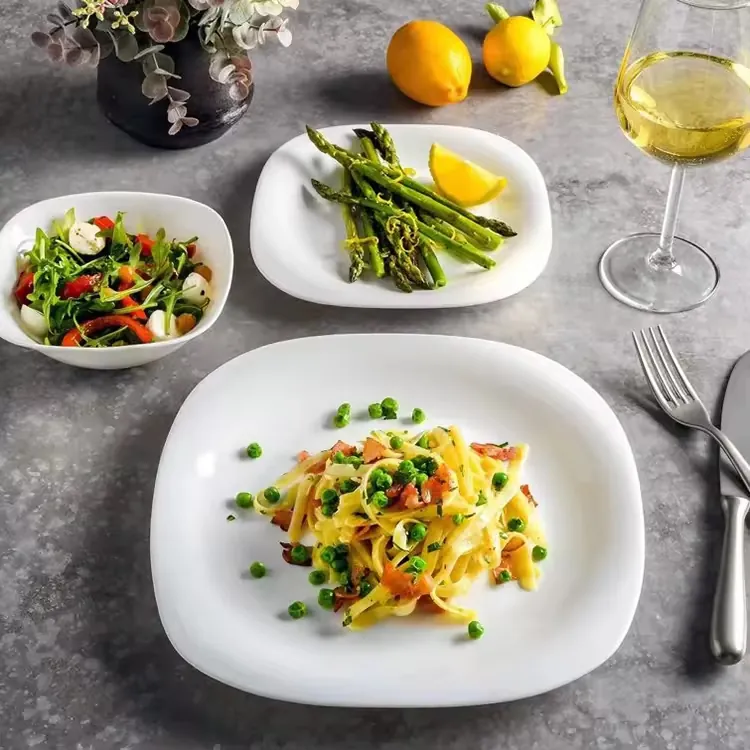
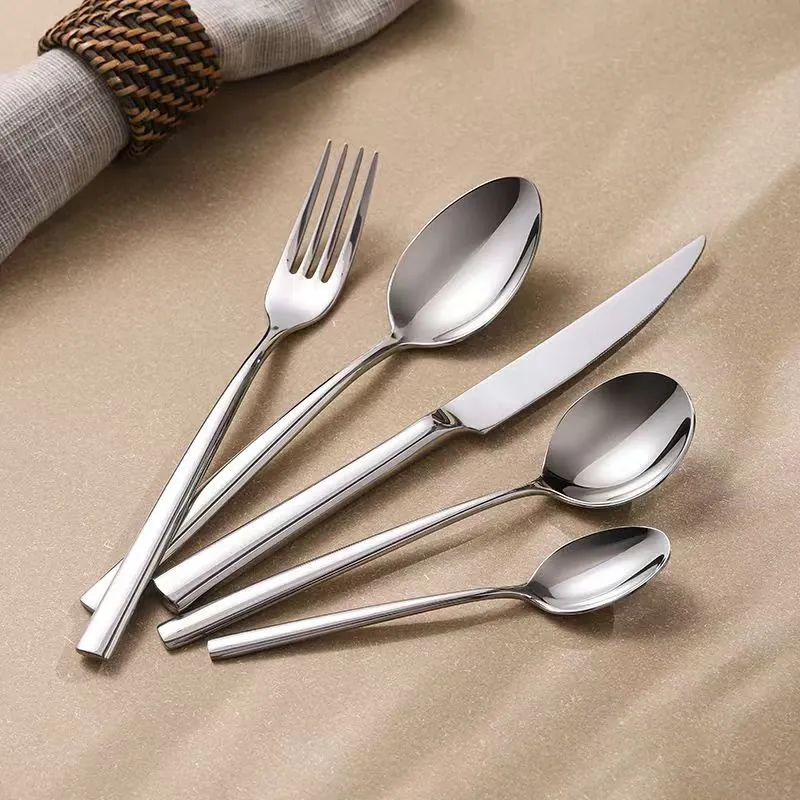
Tableware for hotels and restaurants is broader than a dinner set for home. Typical orders include: dinner plates, side plates, bowls, cups and saucers, cutlery (knife, fork, spoon), serving platters, and sometimes coffee and tea ware. Many projects bundle all of these into one container order so the style matches across the dining room.
Your product list determines the supplier you need. A porcelain factory may not make cutlery; a stainless steel flatware factory will not make ceramic bowls. For a full project, you often work with two factories or one supplier who coordinates both.
Materials compared
Each material has a place in hospitality service. The choice depends on your price point, the style of the venue, and how much abuse the items will take.
| Material | Strength | Common use | Notes |
|---|---|---|---|
| Stainless steel 304 (18/10) | High | Cutlery, trays, serving pieces | Good corrosion resistance; standard for quality flatware |
| Stainless steel 430 (18/0) | Medium | Budget cutlery, trays | Magnetic, lower cost, less resistant to harsh detergents |
| Porcelain / bone china | High (with quality glaze) | Dinner plates, bowls, cups | Classic hotel look; chipping depends on glaze and body |
| Melamine | High impact | Cafeteria, outdoor dining, kids’ areas | Lightweight, unbreakable; check temperature limits |
| Toughened glass | Medium | Plates, bowls in casual venues | Breakable but dishwasher-safe; cheaper than porcelain |
For cutlery, most hotel buyers specify 304 stainless steel (18/10) because it resists pitting in commercial dishwashers. The difference between 304 and 430 shows up after a few hundred wash cycles: 430 pieces develop spots and lose their shine faster. Confirm the grade in writing; the price gap between the two is small per piece but large per container.
Durability: what “hotel grade” actually means
“Hotel grade” is a marketing phrase until you define it with numbers. For ceramic, the practical questions are: how thick is the glaze, how many dishwasher cycles does the supplier claim, and what happens to the pattern after repeated washing. Patterns printed on top of the glaze wear off; patterns under the glaze last.
For stainless steel flatware, ask about the alloy, the finish (mirror vs satin), and the edge quality on forks and spoons. Cheap flatware often has rough edges that irritate guests. Run your fingers along the tines of a sample — a rough edge is an instant quality signal.
Packaging for hospitality orders
Hospitality packaging is different from retail packaging. Hotels and restaurants do not need printed gift boxes; they need protection in transit and easy storage. The common options are bulk packing with dividers, individual poly bags, or wrapped sets. Bulk packing lowers cost per piece but increases the risk of surface scratches in transit, especially for polished items.
Ask for the packaging breakdown in the quotation: carton size, pieces per carton, and the type of inner protection. For cutlery, many suppliers wrap each piece or use foam inserts to prevent rubbing marks. Confirm whether the packaging is included in the unit price or charged separately.
MOQ and lead times
Tableware MOQs are usually quoted per item, not per set. A typical factory minimum is 500–1,000 pieces per model for stock designs, and 1,000–2,000 pieces for custom color or logo. A full hospitality project with several items can hit a MOQ of 5,000–10,000 pieces combined, which is often fine for a container order.
| Item | Typical MOQ | Lead time |
|---|---|---|
| Porcelain plate (stock) | 500–1,000 pcs | 25–40 days |
| Stainless steel cutlery (stock) | 1,000–2,000 pcs | 25–40 days |
| Custom glaze color or logo | 1,000–2,000 pcs | 35–50 days |
| Full tableware set project | 5,000–10,000 pcs combined | 40–60 days |
These are typical ranges, not guarantees. Confirm the schedule in writing and add a buffer for sea freight, which usually takes 20–35 days from a Chinese port to the US or Europe.
Sample and QC checklist
Before a container order, order samples of every item you plan to include. Test them the way your staff would: run them through a dishwasher cycle, stack plates, check that cups fit saucers and that cutlery pieces sit together in a set. Check the weight and dimensions against the spec sheet — lightweight “porcelain” that is actually stoneware changes the feel in guests’ hands.
For production, request a pre-shipment inspection covering quantity, material, finish, packaging and carton marking. If the supplier offers a third-party inspection report, take it.
FAQ
What is the best material for hotel tableware?
For plates and bowls, quality porcelain with a durable glaze is the classic choice. For cutlery, 304 stainless steel (18/10) resists commercial dishwasher chemicals better than 430. Melamine suits cafeterias and outdoor areas where breakage is the main concern.
What MOQ should I expect for tableware wholesale?
Stock items usually start around 500–1,000 pieces per model. Custom colors or logos raise the MOQ to 1,000–2,000 pieces, and a full hospitality project may combine 5,000–10,000 pieces. Confirm per item, not per set.
How long does a tableware order take from China?
Allow 25–40 days for production of stock items, plus 20–35 days for sea freight. Custom glazes or full set projects take longer, so plan 8–12 weeks from confirmed order to delivery.
Is 304 stainless steel cutlery worth the extra cost?
For hotels and restaurants, usually yes. 304 (18/10) resists pitting and keeps its shine through repeated commercial dishwasher cycles, while 430 (18/0) is cheaper but shows wear faster. The per-piece difference is small, so most buyers choose 304 for guest-facing cutlery.
How should tableware be packed for export?
Bulk packing with dividers is common and cost-effective, but polished items may need individual wrapping or foam inserts to prevent transit scratches. Ask the supplier for the packaging breakdown and confirm it is included in the price.
Final recommendation
Define your dishwasher-cycle requirement, specify 304 stainless for cutlery and quality glaze for ceramic, and test samples under real service conditions before ordering. A supplier that has shipped to hotels before will already have the packaging and QC habits your project needs.
If you are planning a tableware program, our sourcing team also works with stainless steel products and other kitchenware categories from verified production lines. Share your venue type and target quantity, and we will help you build a matching product list.
Request a quote for wholesale tableware or contact our sourcing team directly.