Wooden chopping boards are one of the most consistent movers in grocery retail, but the way they sell in a store is different from the way they sell online. Grocery buyers want boards that fit a display hook or a shelf slot, carry the right food-contact documentation, and reorder on a predictable schedule. If you are planning a wooden chopping board OEM program for grocery retail, the product is only half the job; the display format and the paperwork decide whether the buyer takes the line.
Why Grocery Retail Is a Different Channel for Wooden Boards
In grocery retail, a chopping board is an everyday replenishment item, not a gift or a specialty product. Shoppers replace boards for practical reasons: a warped board, a deeply cut surface, or a new kitchen. That means the category rewards consistency: the same sizes, the same finish, the same packaging, delivered on a schedule the store can rely on. A grocery program is built on repeat orders, and repeat orders are built on product uniformity.
Grocery stores also constrain how the board can be presented. Most kitchenware aisles use pegs, hooks, and shelf trays, and the board’s packaging has to work in that system. A board that only sells as a standalone boxed item will not fit a standard pegboard slot, which narrows your placement options and your buyer’s interest. Designing for the display system first is the practical way to approach grocery retail.
Finally, grocery buyers are risk-averse about food contact. Boards touch food directly, so the chain wants documented evidence that the wood, the finish, and the glue are food-safe. A supplier who arrives with the documentation ready is ahead of one who promises to provide it later.
The Board Program: Sizes, Styles and Sell-Through Logic
A grocery board program usually has a simple structure: a small board for fruit and prep, a medium board for daily cutting, and a large board for roasting and carving, plus maybe a specialty format such as a cheese board or a serving board. The sizes that sell best in grocery are driven by household use, so keep the program tight: three to five SKUs with clear use cases outsell a long list of near-identical boards.
| Board type | Typical size | Primary use | Retail format |
|---|---|---|---|
| Small prep board | 20–25 cm x 15–18 cm | Fruit, snacks, small prep | Hanging hook or peg card |
| Medium daily board | 30–35 cm x 20–23 cm | Everyday cutting, vegetables, meat | Hanging hook or boxed |
| Large carving board | 40 cm and up x 25–30 cm | Roasts, bread, large prep | Boxed with handle or sleeve |
| Cheese / serving board | 25–35 cm | Entertaining, cheese, charcuterie | Boxed, gift-oriented |
The sell-through logic matters more than the individual SKU. Grocery buyers want to know which board is the traffic item, which carries the margin, and which one differentiates the range from the current supplier. A small prep board at an accessible price builds traffic; a large carving board with a juice groove carries margin; a branded cheese board creates the point of difference. Present the program that way and the category manager can defend it internally.
Wood Choice and Food-Contact Documentation
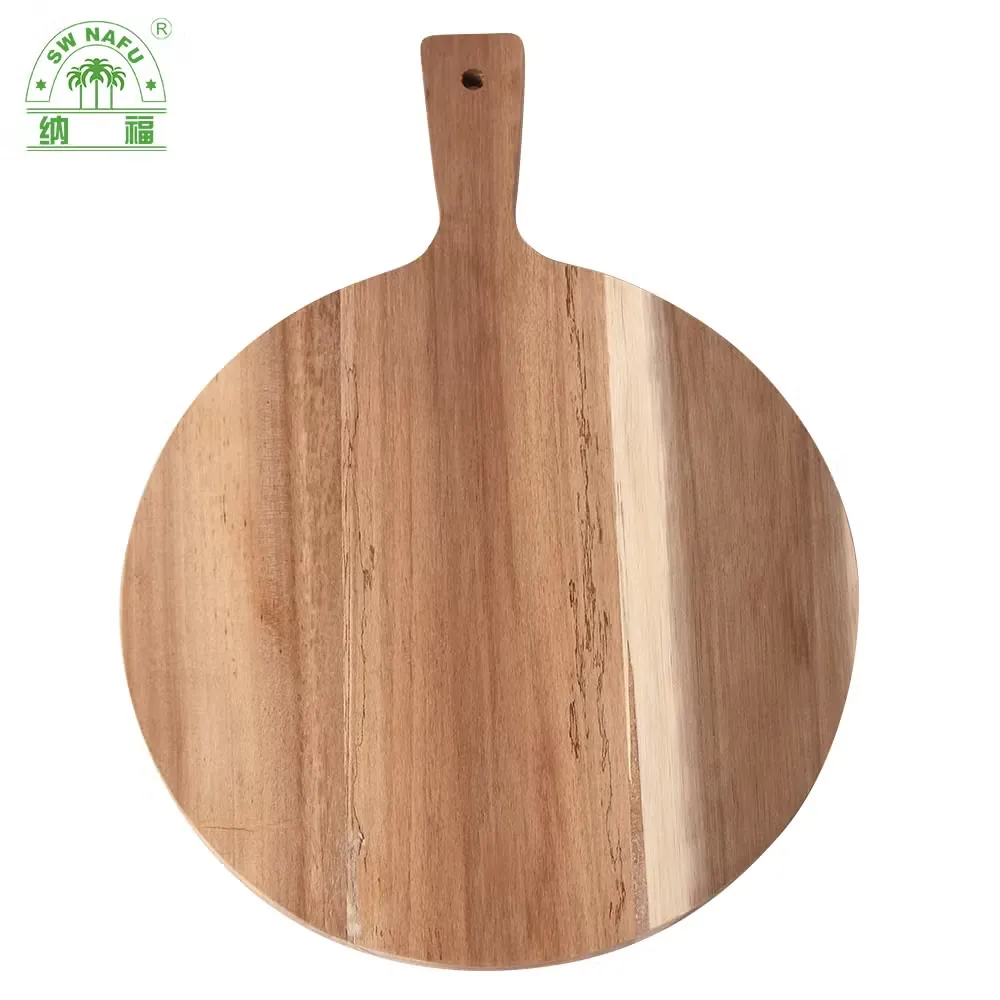
The wood species you offer shapes both the price point and the documentation conversation. Common options include bamboo, rubberwood, acacia, beech, and walnut or other hardwoods for premium lines. Each has different hardness, grain, and price characteristics, and each requires a food-safe finish that matches how the board will be used and washed.
For grocery retail, the documentation you need usually covers three things: the wood or bamboo source and treatment, the finish or oil used on the surface, and the glue used in any edge-joined or bamboo construction. Food-contact test reports may be required by the destination market; the exact requirement varies by country and by chain, so confirm the vendor requirement list with the buyer. State the finish clearly in the specification, because an unfinished board and an oiled board are different products with different care instructions.
A common mistake is assuming that “natural” wood needs no documentation. In most export markets, a wood product that touches food still requires evidence about its finish and treatment. Ask the factory for the material and finish details, arrange the test reports your market needs, and keep the documents current because chains often renew them by season or by batch.
Wood sourcing is also becoming a question buyers ask about. Some chains want to know where the wood comes from and whether it is from managed sources, while others focus only on food contact and price. Ask the factory about its raw wood sources and any origin documentation it can provide; even if your current market does not require it, the answer prepares you for the next buyer who asks. Sustainability claims should be verified with documents, not repeated from a sales page, and the safest position is to describe what the factory can prove rather than what it hopes to claim.
What finish is best for grocery boards?
Food-safe mineral oil and food-safe oil blends are the most common choice for wooden boards, with some suppliers using a beeswax top coat for a smoother feel. The right finish depends on the wood and the target market’s requirements; confirm the finish specification and any test report with the supplier, and print the care instruction on the packaging so the consumer knows how to maintain the board.
Display Formats That Work in Grocery
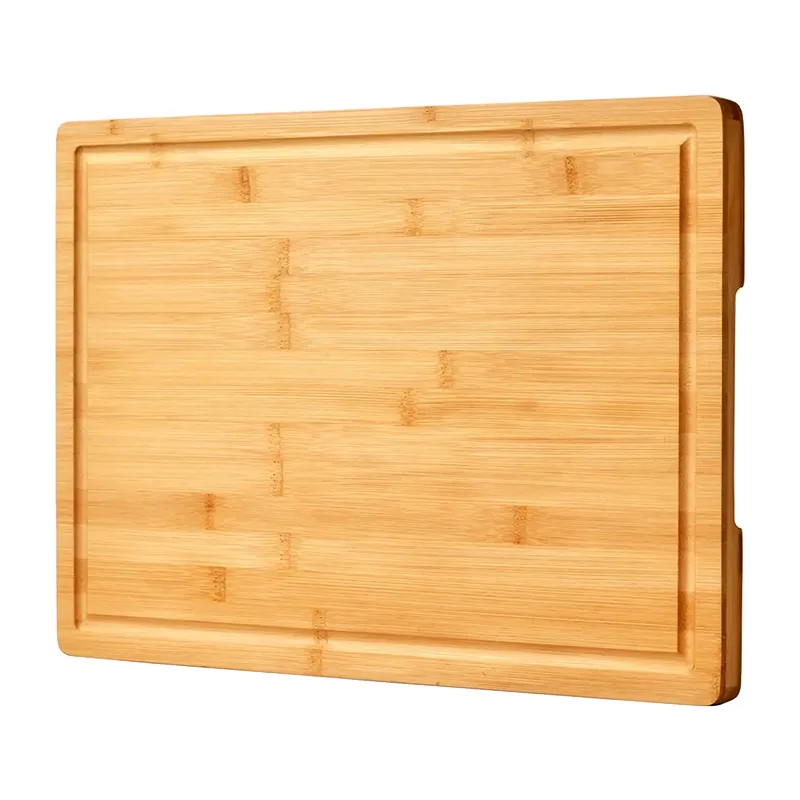
The display format is the first thing a grocery buyer evaluates, so design it early. The main options are hanging hooks, peg cards, boxed units, and shelf-ready trays.
- Hanging hooks: boards with a hole or a slot hang on standard pegboard hooks. This format suits small and medium boards and maximizes shelf density.
- Peg cards: a board attached to a printed card with a hang hole, carrying the product name, size, and care instructions. Cards add branding space and work where loose hanging is not allowed.
- Boxed units: boards in printed boxes suit larger and premium boards. The box protects the board, carries the brand story, and supports a higher price point.
- Shelf-ready trays: for chains that stock boards flat, a tray that opens into a display unit reduces store labor and improves shelf presence.
Whichever format you choose, the barcode and the labeling must match the chain’s system. Confirm the retail pack barcode and the outer case label format with the buyer before production; a barcode that scans at the wrong price point creates a returns problem no one wants.
Food-Contact and Safety Checks for the Board Itself
Beyond the documentation, the board’s construction has to survive grocery retail quality expectations. Check the moisture content of the wood, because boards that ship too wet will warp or crack in the container and on the shelf. Check the surface finish for roughness and splinters, especially on the cut face. Check the glue joints in edge-joined and bamboo boards, because a failing joint is a returns disaster. Check the edge profile, because sharp edges break in transit and look bad on the shelf.
Grocery chains also care about how the board behaves in the consumer’s kitchen: whether it stains, whether it absorbs odors, and whether the finish wears off in washing. You cannot test consumer behavior in a factory, but you can specify a finish that matches the care instruction and test the board with the recommended cleaning method before final approval. Include the care instruction on the packaging, because a board that warps after the consumer ignores the care label still comes back as a return.
MOQ, Pricing and First Order for Grocery Programs
Grocery board programs usually start with a test order of 300 to 800 units per SKU, depending on the chain and the store count. The MOQ conversation should be tied to the display format: standard boards with standard packaging carry a lower minimum, while custom shapes, custom branding, and printed boxes raise it. If the chain wants a private label board with its own logo, confirm the branding process and the artwork approval timeline early, because printing and finish layers add lead time.
Price the program on total landed cost, not on the factory price. Wood is a commodity input, and its price moves with the market, so ask for a price validity period in the quote, usually 60 to 90 days, and revisit the price when wood costs shift. Grocery buyers plan months ahead; a quote that expires in two weeks is hard for them to use.
Reorder Programs and Lead Times
The goal of a grocery program is the reorder lane. After the test period, chains reorder boards on a rhythm that matches sell-through, typically every 4 to 12 weeks. For that rhythm to work, the supplier needs a stable lead time and the ability to repeat the exact specification: the same wood, the same moisture treatment, the same finish, the same packaging. A board program that drifts between batches will be delisted even if the first order sold well.
Typical lead times for wooden boards range from 45 to 75 days for standard stock boards with a printed box, and longer for custom shapes or special finishes. Confirm the lead time for your specific SKU and packaging, and plan seasonal peaks: board sales rise before the holiday season, and production slots fill early. Reserve reorder capacity with the factory if the program is committed.
What reorder lead time should I expect for wooden boards?
Standard boards with standard packaging usually take 45 to 75 days after order confirmation, while custom shapes, branded packaging, or special finishes add two to four weeks. Confirm the lead time per SKU with the factory and plan seasonal peaks early, because holiday demand fills production slots in advance.
Quality Checks Before Shipment
Grocery boards travel in containers, sit in warehouses, and hang on shelves, and each step exposes construction weaknesses. Run these checks before you approve a batch, and put them in the inspection plan so the factory knows what you will verify.
| Check | What to verify | Why it matters |
|---|---|---|
| Moisture content | Wood dried to a stable range for the destination climate | Boards that ship too wet warp, crack, and split on the shelf |
| Flatness | Board lies flat with no bow or twist across the surface | Warped boards look defective and fail the consumer’s first impression |
| Surface finish | No splinters, rough patches, or raised grain on the cut face | Rough surfaces fail food-safety perception and cause returns |
| Glue joints | Edge-joined and bamboo boards show no open joints or gaps | A failing joint splits in use and becomes a safety complaint |
| Edge profile | Edges are clean, without sharp corners or chipped laminate | Sharp edges chip in transit and look bad in retail packaging |
| Print and branding | Logo, care label, and barcode print match the approved artwork | Print errors create shelf problems and compliance issues |
| Transit simulation | Sample boards survive the planned carton and pallet configuration | A board that breaks in transit is a write-off before it reaches the shelf |
Schedule the checks at two points: on the pre-production sample and on the batch before loading. The pre-production sample proves the specification; the batch inspection proves the factory repeated it. If the factory knows the checks are part of the order, the batch quality is usually better from the start.
Questions to Ask the Factory Before the First Order
When you shortlist a factory for a grocery board program, the questions you ask determine the quality of the answers. Use a written list so you can compare suppliers on the same basis.
- Which wood species do you regularly process, and which are in stock now? A factory with the wood on hand samples faster and quotes more accurately.
- What is the moisture treatment process, and can you provide the moisture readings for a batch? The answer tells you whether warping is managed or ignored.
- What finish options do you run, and which are food-safe for the destination market? Confirm the finish specification in the quote.
- Can you provide material and finish test reports, and which laboratory issues them? Confirm the lab is accepted by your market and the chain.
- What is the minimum order per SKU for standard packaging, and what raises it? Ask for the breakdown by packaging, branding, and custom shape.
- What is the lead time for standard stock boards and for branded boards? Ask for both, because the packaging adds time.
- Can you hold a reorder slot for a committed program? The answer shows whether the factory treats your program as a program.
- What inspection do you accept before shipment? Confirm third-party inspection is available.
Compare the answers across two or three factories before sampling. The factory with the clearest answers on moisture, finish, and documentation is usually the one that has served grocery programs before; the factory that answers vaguely on those points will not get clearer after you order.
Seasonal and Promotional Board Programs
Beyond the everyday line, grocery chains buy boards in seasonal and promotional windows, and these programs have their own rules. The holiday season is the biggest window: carving boards, serving boards, and gift-oriented sets move in the fourth quarter, and the orders are placed months earlier. Spring and summer bring lighter formats, such as small prep boards for picnics and outdoor eating, while back-to-school drives lunch-related formats.
Promotional boards are bought differently from the everyday line. The chain plans a promotion with a price point and a display, and the supplier must be able to deliver a defined quantity in a defined window. Because promotional orders do not reorder, the quantity decision is final: underselling wastes a promotion, overselling creates leftover inventory. Use the chain’s expected sell-through and the promotion duration to size the order, and confirm the production slot with the factory before you commit to the chain.
Seasonal programs also reward a small custom element. A holiday carving board with a seasonal box, or a summer prep board in a seasonal color, gives the chain a reason to choose your program over the incumbent’s. Keep the customization simple: a printed box or a stock color change adds less risk than a new mold, and it is enough to differentiate the program.
Working With the Buyer on the Reorder Program
The reorder conversation is where grocery board programs are won or lost. After the test period, the buyer wants to know three things: can you hold the specification, can you hold the lead time, and can you adjust quantities to sell-through. Answer all three in writing.
Holding the specification means the next batch matches the approved sample: the same wood, the same moisture treatment, the same finish, the same packaging. Put the specification in a document that travels with every order, and require the factory to confirm it before production. Drift between batches is the most common reason a program gets delisted after a strong start.
Holding the lead time means the factory’s production slot is reserved for your reorders, not renegotiated every time. A committed program justifies a reserved slot; a one-off order does not. If the chain’s reorder rhythm is 6 weeks and the factory’s lead time is 8, the program will not survive; fix the gap with capacity planning before you promise the rhythm.
Adjusting to sell-through means the reorder quantity follows actual movement, not a fixed forecast. Agree with the buyer on the reorder trigger, typically a stock level or a sell-through percentage, and build the factory’s flexibility to accept quantity changes within a band. Suppliers who can flex quantities within the program are the ones category managers keep.
Common Mistakes in Grocery Board Programs
The first mistake is designing the board without the display format, which forces a redesign when the chain explains its peg system. The second is treating food-contact documents as a shipping-stage task; they belong in the supplier approval stage. The third is approving a sample that looks great but does not survive transit: thin boards warp, sharp edges chip, and printed boxes crush. The fourth is quoting on factory price and discovering the landed cost is wrong after the chain compares you with the incumbent. The fifth is promising a reorder lead time the factory cannot hold, which erodes trust in the first season.
Each mistake has the same root cause: treating a grocery program like a one-off product sale. The channel rewards suppliers who think in programs, documentation, and rhythm.
Frequently Asked Questions
What wood do grocery retailers usually choose for chopping boards?
Bamboo and rubberwood are common at accessible price points, while acacia, beech, and walnut appear in mid and premium lines. The choice depends on the chain’s price architecture and the finish specification. Confirm the wood species, moisture treatment, and finish with the supplier in writing.
Do wooden chopping boards need food-contact certificates for grocery retail?
Usually yes, for the finish and treatment that touches food. The exact requirement varies by market and by chain; request the vendor requirement list and arrange the test reports before production, because chains often renew them by season or by batch.
What packaging works best for grocery display?
Hanging hooks and peg cards suit small and medium boards, while boxed units work for large and premium boards. Confirm the chain’s display system and the barcode format before producing custom packaging, because the planogram determines which format fits.
How many SKUs should a grocery board program start with?
A tight program of three to five SKUs with clear use cases outsells a long list of similar boards. A common structure is a small prep board, a medium daily board, a large carving board, and optionally a cheese or serving board for differentiation.
Final Recommendation
Start a grocery chopping board program with the display and the paperwork, not the wood. Choose three to five SKUs with clear use cases, pick the display format that fits the chain’s planogram, lock the food-contact documentation before production, and price on total landed cost with a 60 to 90 day validity. Once the test order proves sell-through, the reorder lane becomes the asset: a stable specification, a held production slot, and a category manager who can rely on the line.
If you are building a wooden chopping board OEM program for grocery retail, send your target market, sizes, and packaging plan through the contact page. We will confirm the wood and finish options, the food-contact documentation, and the realistic lead time for your first order. Related reading: wood types, finishes and MOQ for wooden boards and wooden chopping board OEM for foodservice. See the kitchenware products and the full range we supply.