If you are looking for a kitchenware supplier in China, the most useful question is not “which factory” but “which cluster.” Chinese kitchenware production is concentrated in a small number of industrial towns, and each town has a different specialty: Yangjiang for knives and scissors, Yongkang for frying pans and cookware, Foshan and Jieyang for stainless steel products and kitchen tools. A buyer who understands clusters gets better shortlists, faster sampling, and more realistic pricing, because the factory you pick is almost always a product of its town.
Why Chinese Kitchenware Production Is Clustered
Clusters exist for practical reasons that matter to you as a buyer. A knife factory in Yangjiang sits next to blade blank suppliers, heat-treatment shops, handle makers, and packaging printers within a short drive. When every component is nearby, prototypes take days instead of weeks, and a factory can quote a custom knife without waiting for a material shipment from another province. The same logic applies in Yongkang, where cookware factories share coating suppliers and aluminum suppliers, and in Foshan, where stainless steel coil, polishing workshops, and testing labs are part of the same industrial ecosystem.
The concentration also creates skilled labor. Workers in a cluster grow up doing one process, so a Yangjiang blade grinder is genuinely better at edge geometry than a general worker would be. That skill depth is what makes cluster suppliers competitive on quality, not just on price. For an importer, the practical consequence is simple: when you source from the right cluster, you are buying decades of accumulated process knowledge, and when you source from the wrong one, you are asking a factory to build competence from scratch.
None of this means every factory in a cluster is good. It means the odds and the support system are different. A serious buyer treats the cluster as a starting point for supplier selection, not as a guarantee of quality.
The Main Kitchenware Clusters and What They Produce
Four clusters cover most of the kitchenware categories that importers buy. The table below is a practical map; the boundaries between them blur as factories expand, so always verify a supplier’s actual production lines rather than relying on its location alone.
| Cluster | Main products | Typical supplier profile | Best suited for |
|---|---|---|---|
| Yangjiang, Guangdong | Knives, scissors, peelers, kitchen tools, some stainless cutlery | Mid-size knife factories with blade blanking, heat treatment and grinding in-house; many OEM shops with 200–1,000 workers | Kitchen knife OEM, knife sets, kitchen tool programs |
| Yongkang, Zhejiang | Non-stick frying pans, cookware sets, pressure cookers, thermos and insulated products | Cookware factories with coating lines, aluminum stamping and handle assembly; a large share also produce thermos bottles | Frying pan wholesale, non-stick cookware programs |
| Foshan, Guangdong | Stainless steel cookware, stainless sinks, small kitchen appliances, kitchenware components | Larger stainless fabricators with polishing and disc-bottom assembly; nearby Shunde district is an appliance hub | Stainless steel cookware wholesale, commercial stainless programs |
| Jieyang and Chaoshan, Guangdong | Kitchen tools, stainless tableware, aluminum cookware, household metalware | Dense network of mid-size metalware factories, many export-oriented with strong packaging capabilities | Mixed kitchenware orders, tableware, budget-friendly metal lines |
Use this map to build the first version of your shortlist. If your order is knives, your shortlist should come from Yangjiang; if it is non-stick pans, from Yongkang; if it is stainless cookware, from Foshan. That single habit eliminates most mismatched suppliers before you ever send an inquiry.
Do I have to visit the cluster to source well?
No, but it helps at the decision stage. You can qualify a factory remotely through video calls, samples, test reports, and third-party inspection, and many importers run entire first orders without visiting. The value of a visit is concentrated: seeing the coating line or the blade grinding floor tells you more about a factory than any document. A reasonable middle path is to shortlist remotely, run samples, and visit only the finalists before a large order.
How Buying From a Cluster Changes Your Sourcing Logic
Cluster sourcing changes four things compared with picking a random factory on a B2B platform.
First, supplier density. A cluster gives you three to five comparable factories for the same product, which means you can benchmark samples and prices instead of accepting a single quote. Second, component access. Custom handles, blades, or coatings that would be special orders elsewhere are everyday items in a cluster, so custom work is faster and usually cheaper. Third, flexibility. Factories in a cluster can often split a custom order across sub-suppliers, which helps with mixed programs. Fourth, risk concentration: if a factory fails you, a replacement is nearby, and freight from the cluster to the port is similar, so switching suppliers does not disrupt your logistics.
The trade-off is that everyone in the cluster shares the same market information. When you ask for a price, the factory knows what its neighbor quoted, so aggressive bidding wars are rare. Your negotiation lever is order structure, product specifications, and packaging, not the hope of finding an isolated factory with no competitors nearby.
Using Clusters in Supplier Selection: Step by Step
Step 1: Build a cluster-specific shortlist
Take your product list and map each category to its cluster. For each category, list three to five candidate factories that make that product type as their core business. A Yangjiang factory whose main output is stainless steel water bottles is not a knife specialist even if it lists knives in its catalog; ask what percentage of production is in your category.
Step 2: Verify the factory, not the address
Many trading companies operate inside clusters with office addresses that look like factories. Ask for production line photos or a live video call from the specific workshop that makes your product, and cross-check the business license with the address. The useful distinction is not factory vs trading company in the abstract; it is whether the company you are paying actually controls the line that will make your goods.
Step 3: Sample from two or three clusters when the product allows
For borderline products, such as stainless tableware that could come from Jieyang or from a Yangjiang stainless line, order samples from both. The price difference may be small, but the finish, edge quality, and packaging standards often differ enough to decide the program. Sample cost is trivial compared with a container of product that does not match your target market.
Step 4: Confirm logistics and inspection before the first PO
All four clusters are within reasonable trucking distance of major southern China ports, but transit time and inland freight differ slightly. Ask your forwarder for the inland leg cost from each cluster, and plan the inspection point accordingly. A factory in Yongkang, for example, may ship from Ningbo, while a Yangjiang factory typically ships from Shenzhen or Guangzhou; this affects your freight quote and the inspection scheduling.
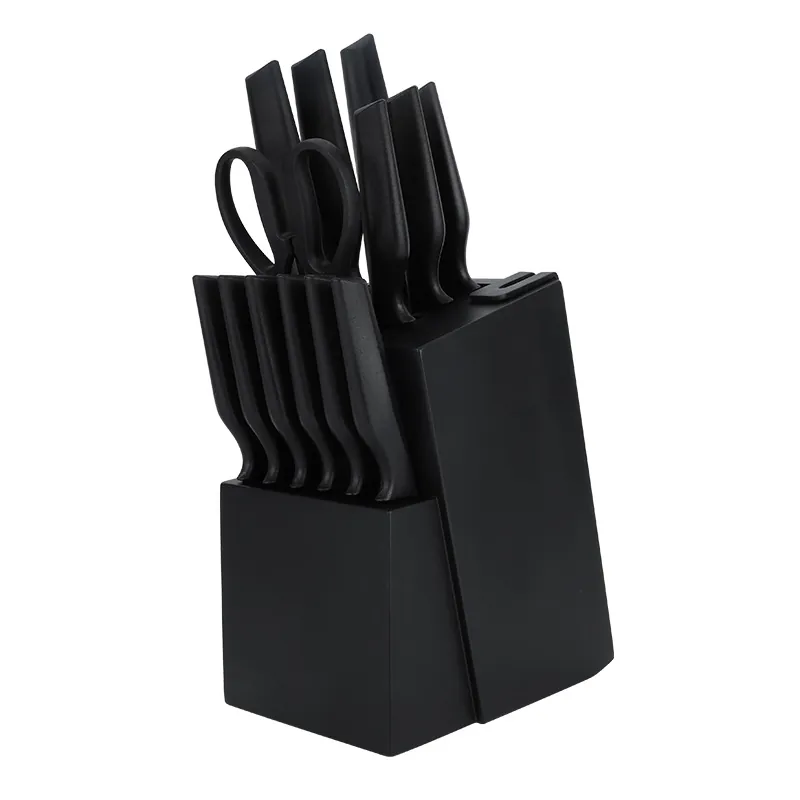
Yangjiang Knives: What to Check With a Knife Factory
Yangjiang is the center of Chinese knife production, and it is the right place to start a kitchen knife OEM program. What separates a serious Yangjiang knife factory from a reseller is what happens in the workshop: blade blanking from steel coil, heat treatment with controlled hardness, grinding on both faces, handle assembly, and edge finishing. When you evaluate a Yangjiang supplier, ask for the steel grade specification, the heat-treatment process and any hardness test report, the blade finish options, and the handle materials available. Confirm the HRC range for the specific steel, because different grades target different hardness; a high-carbon blade and a 3Cr13 blade are not held to the same standard.
Yangjiang factories are also where custom knife sets and kitchen tool sets are assembled. If your program mixes knives with peelers, scissors, and graters, a Yangjiang supplier can usually coordinate the whole set, which simplifies your supplier count. Confirm the packaging line as part of the quote: knife blocks, magnetic strips, and printed boxes each add lead time and cost.
Yongkang Cookware: What to Check With a Frying Pan Factory
Yongkang is the default answer for non-stick frying pans and cookware sets. The factories there run aluminum stamping, coating lines, and handle assembly, and many can produce a full cookware set program. The checks that matter: base gauge and material (aluminum or stainless base), the coating system and its supplier, the coating test reports (scratch, abrasion, and heat), handle attachment method and rivet quality, and induction compatibility if your market needs it.
Coating is the item buyers most often under-specify. Ask which coating supplier the factory uses and request the coating test data rather than a verbal assurance. If your market requires PFOA-free or PFAS-free products, put that requirement in writing and ask for the corresponding test report; do not assume it from the product photos. For wholesale programs, confirm the packaging configuration early, because frying pans ship with a wide range of retail packaging, from bare pans in export cartons to full-color retail boxes with inserts.
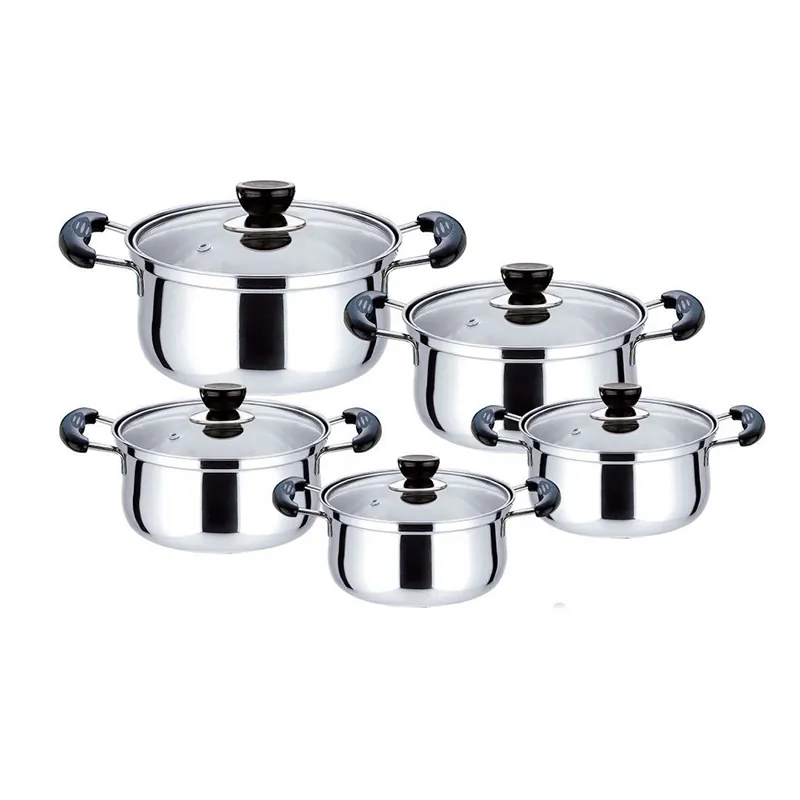
Foshan Stainless Steel: What to Check With a Stainless Cookware Factory
Foshan combines stainless steel production with cookware manufacturing, which makes it the strongest cluster for stainless steel cookware wholesale. The factories there work with 304 and 201 grade coils, produce clad or disc-bottom bases, and have polishing lines for brushed and mirror finishes. When evaluating a Foshan supplier, verify the steel grade per SKU, the base construction (tri-ply clad versus disc-bottom), the base thickness, and the finish specification. Ask for the material certificate for the steel used in your batch; a reputable factory can provide the mill certificate from its coil supplier.
Foshan suppliers also tend to be stronger on commercial stainless programs, such as stockpots, chafing dishes, and catering equipment. If your mix includes both retail stainless cookware and commercial items, a Foshan supplier may cover both, which reduces your vendor count.
Are cluster suppliers cheaper than generalist suppliers?
Usually, for the same specification, but the difference is often smaller than buyers expect, and it comes from component supply and labor efficiency, not from lower margins. The bigger benefit is capability: a cluster factory can do custom work, match finishes, and respond to changes faster. Compare total landed cost, not just the unit price, and treat a suspiciously low quote as a reason to check the specification, not a reason to celebrate.
How Clusters Affect MOQ and Lead Time
Cluster density generally works in your favor on MOQ. Because component suppliers are local, a factory can accept smaller custom batches without a large material commitment; a knife factory can order blade steel for a small run, and a cookware factory can schedule a coating slot for a modest quantity. That said, MOQ still varies by product: standard stock items may have a low minimum, while custom colors, custom molds, and printed packaging raise it. Ask the factory to break down what the MOQ pays for; the answer tells you where you have room to negotiate.
Lead times follow the cluster’s rhythm. During peak export seasons, coating lines and grinding shops in these clusters book up, and lead times stretch by two to four weeks. Chinese New Year adds another shutdown window that affects January and February production. Plan seasonal orders around these cycles and confirm the current lead time for your specific SKU, because cluster-wide load changes month to month.
Cluster Sourcing vs Platform Sourcing: What Changes
Most buyers first meet Chinese suppliers on a B2B platform, where the search is by product keyword and the results are a mix of factories, trading companies, and agents from every cluster. Cluster sourcing replaces that keyword search with a geographic shortlist. The two approaches differ in what they optimize.
| Dimension | Platform sourcing | Cluster sourcing |
|---|---|---|
| Shortlist logic | Keyword and price ranking across all regions | Product specialty by region, then factory verification |
| Supplier density | Mixed quality tiers, harder to compare | Several comparable specialists in one town |
| Custom work | Slower, component supply may be distant | Faster, components and finishing are local |
| Sampling | Varies by supplier | Usually quick because material is on hand |
| Price transparency | Platform pressure, but quotes vary widely | Local market pricing, less price dispersion |
| Risk | Harder to verify what the supplier controls | Still need verification; design copying risk is real |
The practical advice is not to abandon platforms; it is to use them to discover names, then use cluster knowledge to verify and compare. A supplier in the right cluster with the right production focus is a stronger starting point than the top-ranked result for a keyword, because the cluster already tells you something about their supply chain.
A Worked Example: Sourcing a Three-Category Program
To see how clusters work in practice, take a simple import program: a knife set, a non-stick frying pan line, and a stainless steel cookware set, all destined for a retail chain launch. Without clusters, the buyer sends the three product lists to a platform and compares quotes from ten companies. With clusters, the buyer runs three parallel shortlists: knife set suppliers in Yangjiang, frying pan suppliers in Yongkang, and stainless cookware suppliers in Foshan.
Each shortlist gets the same three-step treatment: request a capability confirmation (what percentage of production is in the category), request samples of the closest existing product, and request a quote with the specification. The buyer then compares samples within each cluster and picks one finalist per category. That leaves three suppliers for three categories, which sounds like more work than one supplier, until you consider what a single multi-category supplier would actually do: source two of the three categories from other factories and resell them with a margin on top.
The consolidation step is where the container comes together. The three factories ship to the same forwarder, and the buyer combines the categories into one container or a series of LCL shipments. The inland freight from three clusters costs a little more than from one, but the product quality and the direct control over each line usually justify it. For a first program, keeping each category with its cluster specialist is the lower-risk choice; consolidating into one supplier is a second-order optimization after the products have proven themselves.
How to Verify a Cluster Supplier Remotely
You do not have to travel to a cluster to qualify a supplier, but remote verification has to be systematic. Use this checklist before you commit to a first order.
- Business license and address: confirm the registered address matches the production address you are told, and that the license scope includes your product category.
- Production focus: ask what percentage of the factory’s output is in your category, and ask for a live video call from the relevant workshop, not the showroom.
- Line and equipment: for knives, ask to see the heat-treatment and grinding area; for cookware, the coating line; for stainless, the polishing and disc-bottom assembly area.
- Component control: ask which components are made in-house and which are bought; the answer shows how much of the product the factory controls.
- Sample quality: order the closest existing product first, and compare it against your specification before requesting a custom sample.
- Test reports: request material, coating, or food-contact test reports relevant to your market, and check the issuing laboratory.
- Reference orders: ask for two or three export markets the factory already serves and, if possible, a reference contact you can verify.
- Inspection readiness: confirm the factory accepts third-party inspection before shipment; a factory that resists inspection is a warning sign in any cluster.
Remote verification does not replace a visit for large orders, but it removes most of the risk from a first program. The goal is to confirm that the company you are paying controls the line that makes your goods, in the cluster where that product is actually manufactured.
Risks of Cluster Buying and How to Manage Them
Cluster buying has three risks that importers should plan for. The first is the trading company inside the cluster: companies with a cluster address but no production line of their own. They can still deliver good products, but your leverage and traceability are weaker, so verify what the company actually controls before you commit. The second is quality tiers. A cluster contains both export-grade and domestic-grade production, and the same product photo can hide different coating or steel specifications. Put every material and finish requirement in the written spec, and inspect against it. The third is design copying. In a dense cluster, your custom design can be seen by many factories; protect it with a written confidentiality agreement, order the tooling from a supplier you control, and avoid sharing the full spec with more factories than necessary.
None of these risks is a reason to avoid clusters. They are reasons to buy the same way you would anywhere: with verified suppliers, written specifications, samples, and inspection. The cluster simply raises the quality of the pool you are selecting from.
Frequently Asked Questions
Which China cluster should I use for kitchen knives?
Yangjiang in Guangdong is the established knife production cluster, with blade steel, heat treatment, grinding, handle, and packaging capabilities in one area. Most kitchen knife OEM programs in China are built there. Confirm the steel grade and HRC range with the factory rather than assuming them from the catalog.
Can one supplier cover products from different clusters?
Sometimes, but rarely well. A factory that mainly makes knives may still source stainless cookware from another province and resell it, which means you lose direct control. For mixed programs, either work with one verified supplier that clearly controls its lines, or split the order by cluster and consolidate at a forwarder.
Do cluster suppliers ship from the same ports?
No. Yongkang and eastern Zhejiang factories typically ship through Ningbo, while Yangjiang, Foshan, and Jieyang factories usually ship through Shenzhen or Guangzhou. Confirm the inland leg with your forwarder; it changes the freight cost and the inspection logistics.
Is a factory visit necessary before the first order?
Not mandatory, but recommended before a large or highly customized order. For a first order, samples, test reports, video verification, and third-party inspection cover most of the risk. If you do visit, focus on the specific line that makes your product and compare two or three finalists in the same trip.
Final Recommendation
Start your China kitchenware sourcing with a cluster map, not a platform search. Decide which cluster matches each product category, build a three-to-five factory shortlist inside that cluster, verify what each factory actually controls, and let samples and inspection decide the winner. For a mixed program, plan the container mix early, and coordinate companion categories with a drinkware supplier if your assortment includes cups or bottles, because consolidation works better when the whole container is planned together.
If you are building a kitchenware program and want a supplier that matches your categories and market, send your product list and target quantities through the contact page. We will confirm which of our production lines fit your program, the MOQ per category, and the lead time before you commit. Related reading: how to tell a supplier from a trading company and what to verify before your first factory order. Review the full range of kitchenware products, cookware and stainless steel lines we supply.